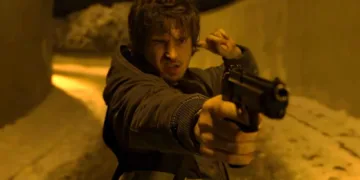

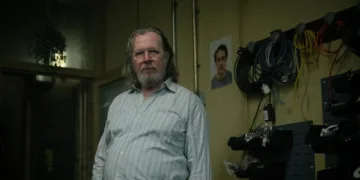

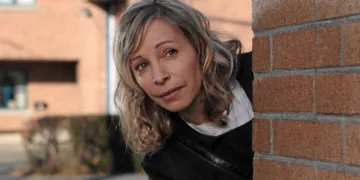











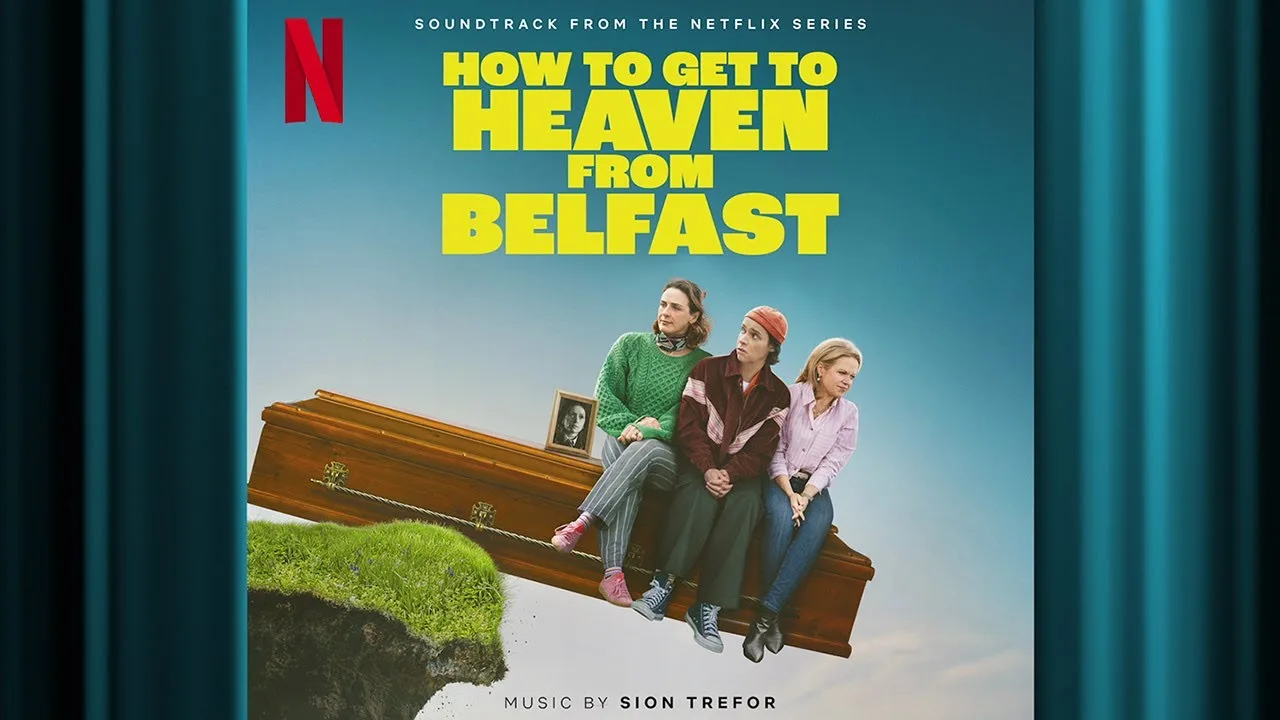

Belfast treats death like a local ritual: black tea, brutal hangovers, and a razor-sharp tongue that slices through grief. An email about their old schoolmate Greta lands with Saoirse, Robyn, and Dara and at first it feels remote. They have not seen her in twenty years. They remained in the city while she moved to the village of Knockdara. The news of her sudden passing wakes a survival instinct rather than an immediate outpouring of tears. The three share a secret tied to a fire in a remote cabin and they need to know whether Greta spoke before she died.
This series hits a quick tempo from the start. It skips the patient accumulation common to many modern dramas. The women pack bags and head for the border with expectations of a quiet wake. They arrive in a place of goats, a mechanic who doubles as a police officer, and a husband who could have wandered out of a nightmare. The show pivots from a comedy about aging friends into a high-stakes conspiracy. It watches how old trauma refuses to remain buried and treats the friendship among these women as the single stable element in a collapsing world.
Three Friends and a Funeral
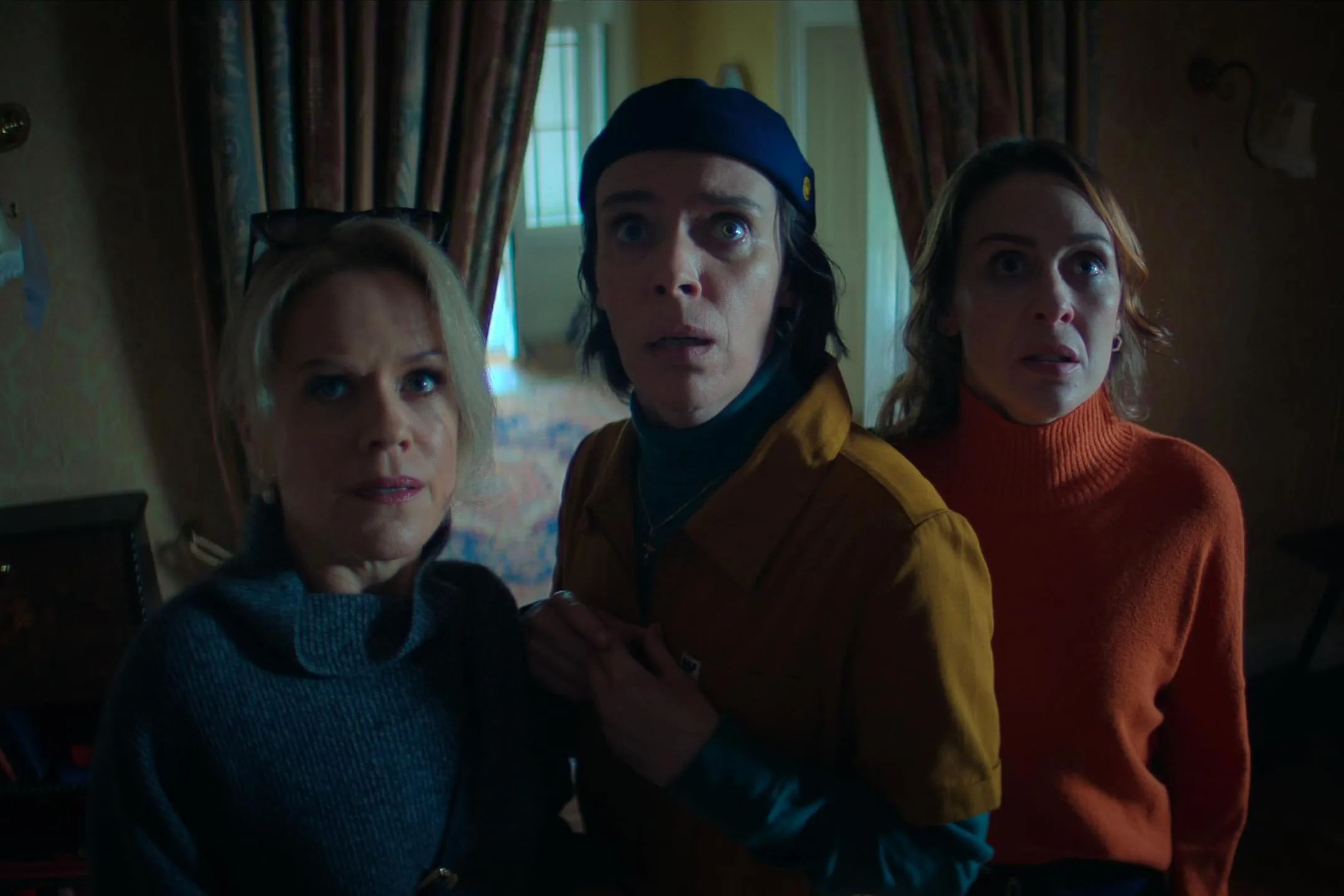
Character dynamics drive everything here. Saoirse steers the group. She writes for a hit crime show on television, loathes the actors and the scripts, and catalogs her own life as a string of plot points. Her professional distance makes her an effective investigator. She wants out of a failing relationship and a dull career. Greta’s death offers a chance to feel something authentic again. She arrives as cynical and driven.
Robyn supplies the domestic friction. She raises three young boys and hovers near a breakdown. She schedules a makeup artist to erase her face and draw a new one. She suspects her eighteen month old son is gaslighting her. Wit functions as armor. She hesitates to join the inquiry because her life is already chaotic. She embodies the exhausted woman in her late thirties who is carrying everyone else’s needs.
Dara completes the trio. She cares for her mother and shoulders the heaviest guilt. She is spacey and kind and often seems lost in thought. Loneliness follows her. She still carries the memory of that night in the woods. When the three reunite they slip back into teenage patterns. Insults are traded like currency.
They argue about petrol and diesel. They drink until they cannot stand. Dialogue races at a frantic clip. This verbal combat is how they show affection. They understand one another in ways partners and families never will. Their shared history is thick and messy and it shapes who they are now.
Occult Symbols and Empty Coffins
The mystery opens on a missing tattoo. All four friends share the same symbol on their skin and it comes from the night of the fire. When Saoirse peers into Greta’s coffin the corpse inside feels unfamiliar. The tattoo is gone. The find rewires their assumptions. The wake becomes a crime scene in their heads. They notice the house lacks mourners. The sister-in-law who sent the email may be a fiction.
The antagonists bring real unease. Owen serves as Greta’s husband and the local police chief. He carries an icy tension that alters the mood each time he appears, shifting the tone from comedy to horror. Greta’s mother, Margo, answers to coldness as well. She works as a therapist and seems to analyze every person who crosses her path.
She hints at knowledge about the night in the woods without offering full disclosure. The show uses symbols to layer dread. Occult markings from the burnt cabin recur in the present. The mystery enlarges beyond a simple murder and extends into secret societies and psychological games.
The plot moves the women from the rainy hills of Donegal to a resort in Portugal and the stakes climb with every mile. They survive car crashes and dodge potential assassins. The puzzle is intricately structured. Information drips out to keep the viewer guessing. Each episode lifts a new layer of the “Very Bad Thing” from twenty years earlier. The series shifts from character comedy into outright thriller with an ease that feels earned. Danger sits on-screen as a real force. The women are out of their depth and terrified of being found out. The mystery functions because it is braided into their personal past.
Slang, Pop, and the Catholic Conscience
The writing leans on a distinct cultural grain. The dialogue is pure Belfast: fast, colorful, and laced with profanity. Humor blooms from how the characters meet danger. They joke about closed caskets and argue about Catholic rules while sprinting for safety. One character frets that she is having an “attack of the Catholics” when conscience nags at her. Religious background supplies steady comic fodder and explains the deep-seated guilt most of them carry.
The soundtrack celebrates the early 2000s with Jamelia, Atomic Kitten, and Girls Aloud. Those selections pin the series to a particular era and recall the girls these women once were. Music builds a bridge between flashbacks and present day and adds a nostalgia that tastes both sweet and bitter. The show also points to tensions between the North and the Republic of Ireland. Jokes about petrol prices and the Garda ground the story in place.
Dark farce steers much of the storytelling. A biker priest declines to help because he wants to protect his work life balance. A local waitress dispenses spectacular grouchiness. These peripheral figures populate a lived-in world. The comedy does not feel contrived. It rises from the absurdity of situations. The women inhabit a high-stakes thriller and still must navigate hangovers and childcare. That interplay contains the series’ best moments. Life retains its humor even as the peril intensifies.
Timing, Tension, and the Purple Wig
Performance stands as the production’s central strength. Roisin Gallagher captures Saoirse’s brittle edges. Sinéad Keenan arrives as a force of nature in the role of Robyn, her timing surgical. A single look can deliver a devastating insult. Caoilfhionn Dunne gives Dara a soft, tragic line that balances sharper edges in the trio. Together they operate like a cohesive unit.
The supporting work impresses as well. Saoirse-Monica Jackson turns up in a purple wig and steals scenes with a wild, unexpected energy that reveals a different facet of her range. Emmett J. Scanlan creates genuine fear; his physicality keeps a constant sense of threat on hand. Michelle Fairley supplies a regal coldness in the role of Margo.
Direction by Michael Lennox shows confidence. He frames the Irish landscape so it reads as both beautiful and menacing. Tone shifts feel managed and sure. Flashbacks carry a distinct energy that captures youthful chaos. Editing keeps momentum high and the series avoids lingering on any single emotion for too long.
It can jump from a laugh to a scream in seconds. Light and shadow in the forest scenes produce a haunted look. Production values read as costly and carefully considered. Every technical choice reinforces the central theme of friendship. Younger versions of the leads are cast to mirror the adults in look and behavior and that care makes the group’s history believable
A witty balance of laugh and dread runs through the series. The tone flirts with farce even as it tightens into menace. The questions it presses are simple and stubborn: how does shared history bind these women, and how far will they go to keep a secret that should have stayed buried?
Created by Lisa McGee (the mind behind Derry Girls), How to Get to Heaven from Belfast premiered worldwide as a Netflix original series on February 12, 2026. The eight-part comedy-thriller follows three lifelong friends in their late 30s who reunite for the wake of an estranged classmate, only to be swept into a dark, cross-country odyssey involving long-buried secrets. All episodes are currently available for streaming exclusively on Netflix.
Where to Watch How to Get to Heaven from Belfast


Full Credits
Title: How to Get to Heaven from Belfast
Distributor: Netflix
Release date: February 12, 2026
Rating: TV-MA
Running time: 47–60 minutes per episode
Director: Michael Lennox, George Kane, Rachna Suri
Writers: Lisa McGee, Tobias Beer, Bronágh Taggart, Ava Pickett
Producers and Executive Producers: Brian J. Falconer, Caroline Leddy, Liz Lewin, Jimmy Mulville, Lisa McGee, Michael Lennox, Jessica Sharkey
Cast: Roísín Gallagher, Sinéad Keenan, Caoilfhionn Dunne, Bronagh Gallagher, Darragh Hand, Natasha O’Keeffe, Michelle Fairley, Emmett J. Scanlan, Saoirse-Monica Jackson, Ardal O’Hanlon
Director of Photography (Cinematographer): Ashley Barron, Nathalie Pitters, Daniel Stafford-Clark
Editors: Lucien Clayton, Nigel Williams, Ed Coltman
Composer: Sion Trefor
The Review
How to Get to Heaven from Belfast
How to Get to Heaven from Belfast succeeds through its sharp wit and the chemistry of its leads. It offers a chaotic ride through Northern Ireland that feels grounded in real friendship. The thriller plot moves with purpose. The laughs come fast. It remains a wild ride from start to finish.
PROS
- Strong lead performances from the trio.
- Fast-paced comedic dialogue.
- Sharp regional observations.
- High stakes thriller elements.
CONS
- Mid-season plot density.
- Abrupt shifts in secondary characters.