
























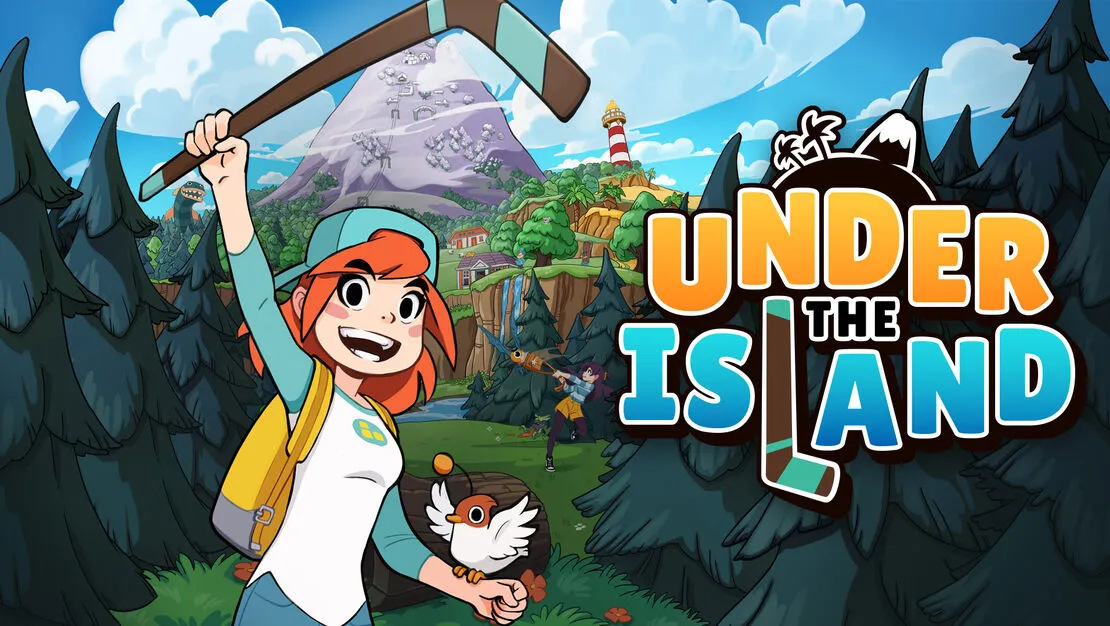

Under the Island, from German developer Slime King Games, plays like a study in transatlantic nostalgia and the way pop storytelling travels. The story follows Nia, a teenager pushed into a seasonal move to the strange, self-contained Seashell Island.
Her parents, archeologists with their attention fixed on ancient ruins, land in a familiar portrait of academic detachment that leaves their daughter’s social life as collateral. Nia arrives irritated and withdrawn, carrying grief for the life she had before. The premise echoes displacement narratives from 20th century youth literature, where location change becomes its own emotional plot.
That emotional baseline shifts once she meets Avocado, a local kid whose fruit-name energy fits the playful character-naming habits common in Japanese media exports. Together they break a sacred rule by touching a shrine, and the consequences send them below ground into a world of decaying technology.
They encounter a surviving voice of an ancient civilization, who explains that the island stays afloat through four massive gears. The gears are missing, and Nia has to recover them to stop the island from collapsing. The game frames that threat with the bright, quick-turn pacing of a 1990s Saturday morning cartoon, keeping the tone buoyant even as the stakes point toward literal disaster. In that choice, Under the Island links European indie craft to a late-analog pop sensibility that circulated widely across markets.
Cartography as Cognitive Exercise and Cultural Space
Seashell Island’s layout spreads across forty distinct zones, arranged like a patchwork of mini-worlds. One stretch runs up into frozen peaks filled with penguins; another drops into deserts where eccentric food enthusiasts set the tone.
The top-down view invites memories of the tight, grid-minded clarity of 1990s Japanese adventures, with geography designed for legibility and repetition. Under the Island builds on that lineage by keeping the interface restrained and putting direction back into the player’s hands. Orientation comes from landmarks, personal notes, and the habit of checking the environment again, so progress feels earned through attention instead of UI prompts.
Exploration rewards players who learn a biome’s visual language. Recognition depends on details like the exact look of a wall that can be bombed or the patterning of grass that can be cut, and those cues carry practical meaning from area to area. Mapping stops being an afterthought and becomes a core skill.
New regions open through tool acquisition in a classic loop that makes returning to earlier spaces feel purposeful, since newly gained abilities reframe old terrain. Fast travel arrives as something you work for, tied to block-pushing puzzles that activate transit points and turn convenience into a payoff for problem solving.
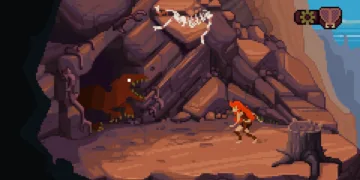
The pixel art keeps the surface friendly, giving the island a cheerful skin even when the navigation demands focus. Small actions, like petting cats or feeding stray dogs, push back against the sense of the world as pure obstacle course. Those quiet gestures add domestic warmth and help the island read like a lived-in community with routines, not a series of rooms built only to be cleared.
Subverting the Heroic Blade Through Domestic Utility
Progression runs on tools that reshape the usual adventure iconography. Nia’s main implement is a hockey stick, and that choice carries a different cultural signal than the expected legendary sword. It frames her competence through suburban recreation and practical improvisation, shifting the adventure’s symbolic language in a way that fits her status as a displaced teenager learning the rules of a new place. The hockey stick still covers the basics, working for combat and puzzle interaction, and the rest of the kit leans into environment play.
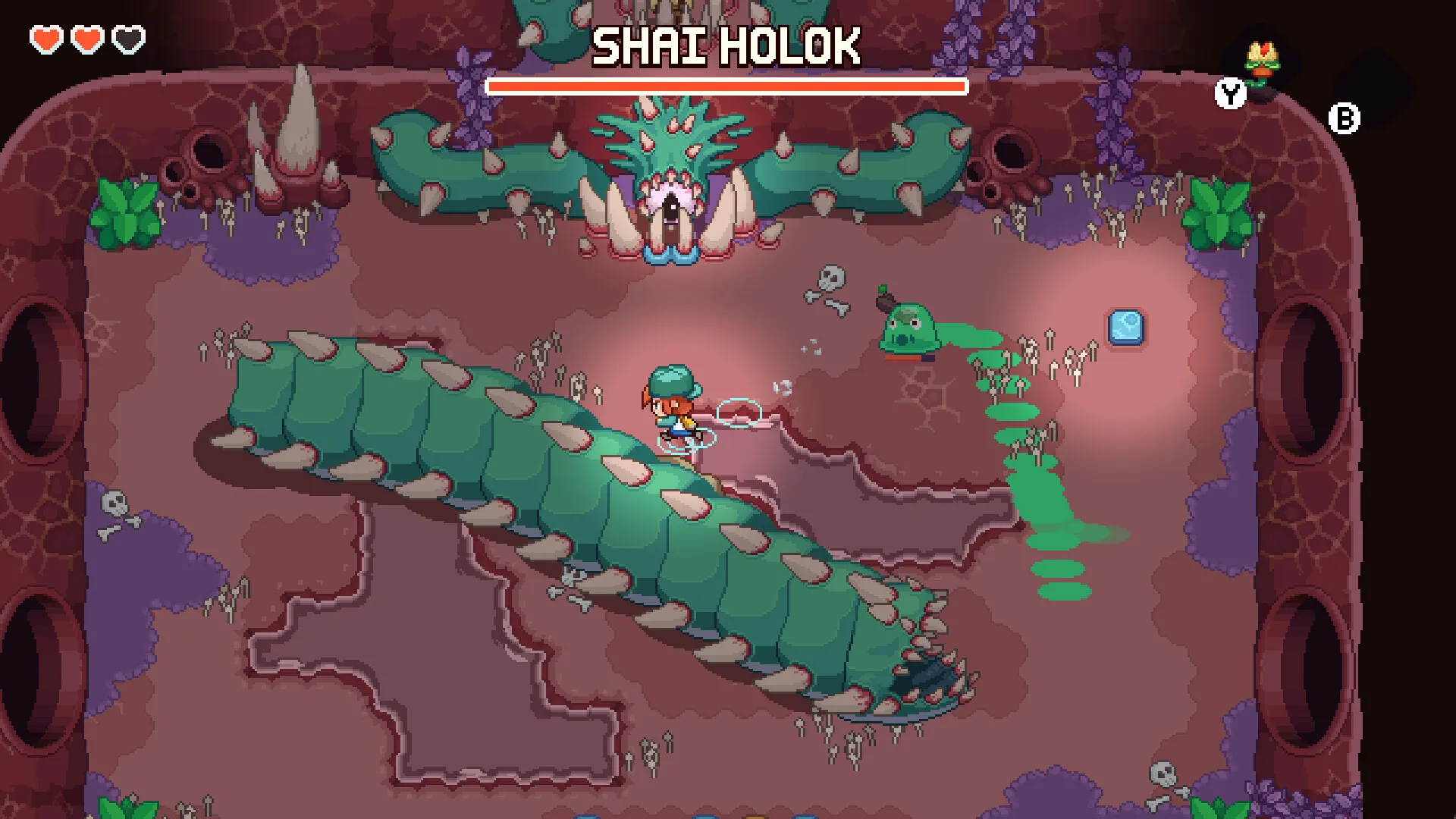
The Fireball Flower doubles as illumination for dark caverns and a way to clear organic barriers, turning light itself into a mechanic with consequences. The Small Treat Bag adds a sly layer of cooperation: snacks become a tool for guiding animals onto switches or into barriers, so progress sometimes depends on reading local wildlife behavior instead of brute force.
Puzzle variety pulls from a wide library of logic traditions. You might move between weight-based scales in one dungeon and grid puzzles shaped like Japanese nonograms in the next, then later face more elaborate sudoku-style variations. The challenge stays mentally engaging without tipping into fatigue, in part because the game keeps its toolset relevant across the full run.
Early equipment keeps resurfacing in new configurations as later items arrive, so problem solving feels cumulative and interconnected. Puzzles become the game’s primary language, translating Nia’s arc from frustrated newcomer to capable solver through repeated contact with systems that demand observation, memory, and combination.
Culinary Combat and the Subversion of the Boss Fight
Combat carries a particular kind of friction on Seashell Island. Nia fights without the safety net of a dodge move or a shield, so survival rests on her three-hit hockey stick combo and careful placement. Enemies often come with hefty health bars, turning routine encounters into exercises in timing and patience.
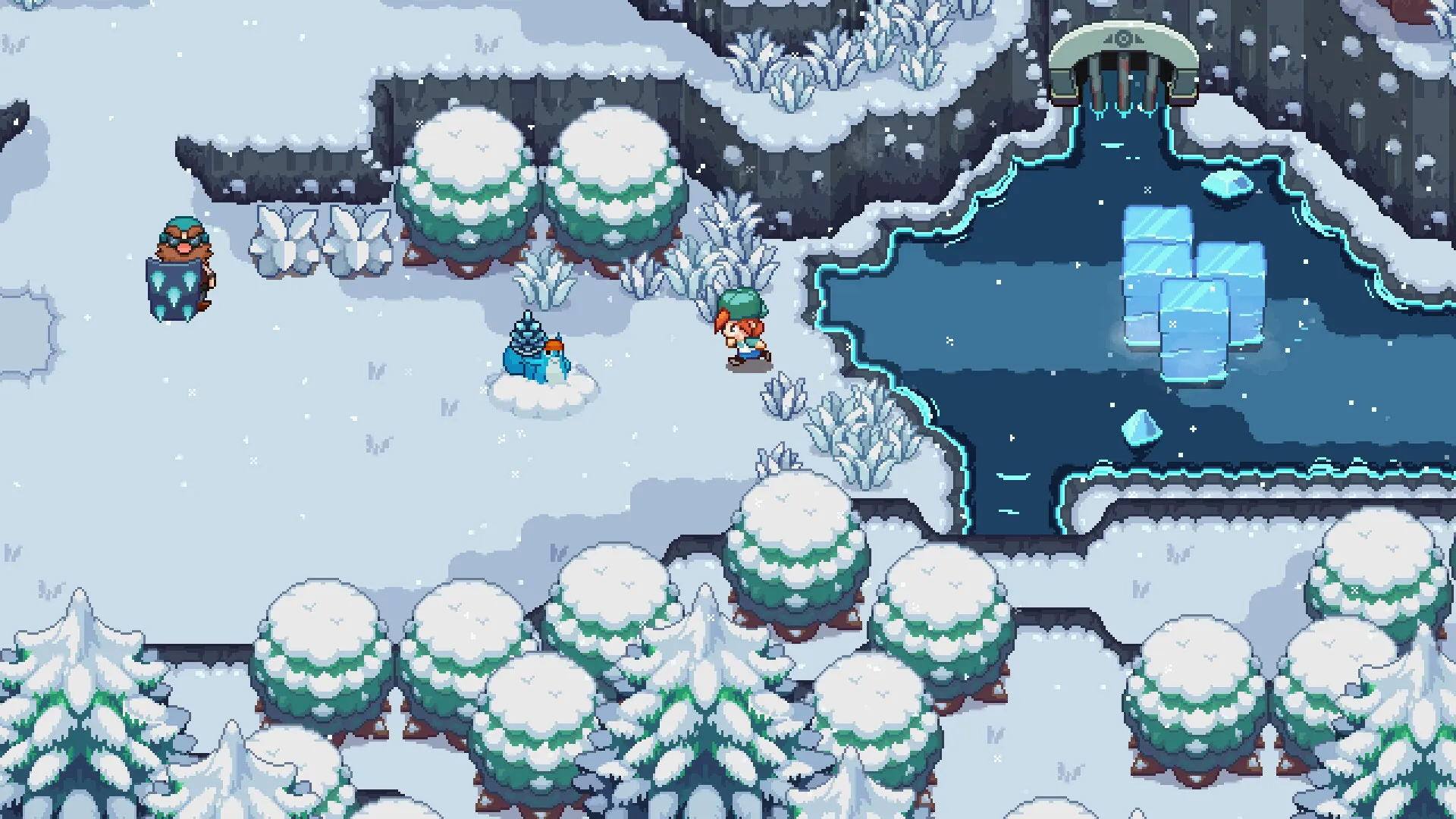
Some fights ask for targeted tactics, like using bombs to force burrowing wolves to surface. Power growth is tied to collecting everyday materials such as wood or leeks, connecting upgrades to the island’s natural inventory and keeping advancement grounded in the rhythms of gathering.
Boss encounters are where the game reaches its sharpest ideas. These set pieces step away from straightforward trading of hits and instead commit to themed challenges with strong identities. One major sequence has Nia managing stage lighting for a theatrical production while keeping fans from derailing the performers.
Another pivots into a tense cooking simulator, demanding speed and coordination under pressure. The choices reflect a media moment where culinary spectacle and stagecraft sit comfortably beside combat as cultural entertainment forms, and the game treats them as equally valid arenas for tension.
Difficulty stays steady through most of the campaign, then spikes in the final encounter, where precision becomes the defining demand. Between big beats, the island opens space for arcade minigames and fishing, reinforcing Seashell Island as a place with leisure and communal texture alongside danger.
A museum that displays achievements adds a curatorial layer, as if the game wants to archive the player’s footprint in the world. High-stakes heroics and everyday hobbies sit in the same frame, and that pacing choice lets Under the Island nod to its nostalgic influences while still staking a clear identity of its own.
The Review
Under the Island
Under the Island is a vibrant love letter to the 90s era of handheld exploration. It successfully trades typical heroic tropes for a refreshing, domestic charm. While the combat occasionally lacks the fluidity of its inspirations, the sheer density of its world and the creativity of its non-traditional boss encounters make Seashell Island a place worth saving. It is a thoughtful, layered adventure that respects the player's intelligence.
PROS
- Exceptional, varied puzzle design.
- Charming 90s-inspired pixel aesthetics.
- Creative, non-combat-focused boss battles.
- Rewarding, hand-hold-free exploration.
CONS
- Combat feels stiff due to a lack of defensive options.
- Enemy health bars can feel excessively high.
- Absence of a quest log may frustrate some players.