




















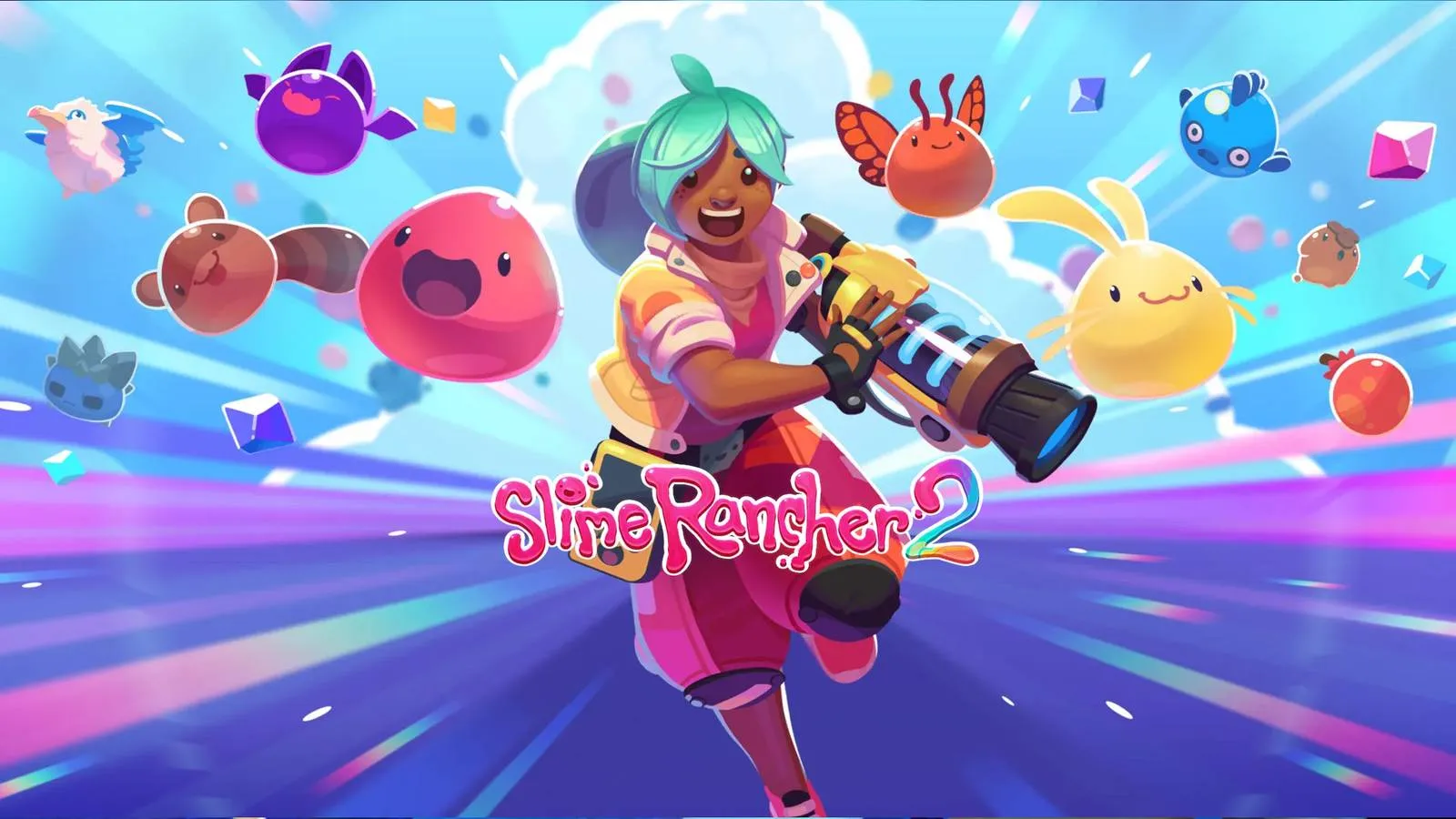

Three years after entering Early Access, Slime Rancher 2 arrives as a curious hybrid of American frontier mythology and Japanese kawaii culture. Developer Monomi Park places players back in the boots of Beatrix LeBeau, who receives a mysterious summons to Rainbow Island, an uncharted landmass promising new creatures to capture and domesticate.
The Slime Conservatory becomes your homestead, and the game wastes little time on exposition. This minimalist narrative framework mirrors the structure of agricultural simulators from Harvest Moon to Stardew Valley, where the act of cultivation supersedes the need for elaborate storytelling.
The sequel refines rather than reimagines its predecessor’s formula, a decision that speaks to specific design philosophies about iterative development common in Japanese game studios, even as Monomi Park operates from California. Rainbow Island’s vibrant palette and emphasis on creature collection echo the sensibilities of Pokemon and Studio Ghibli, filtered through the American indie game scene’s preference for first-person exploration and player-directed pacing.
Domestication and Labor: The Mechanics of Pastoral Capitalism
The vacpack functions as your primary interface with Rainbow Island’s ecosystem, a vacuum device that extracts slimes, vegetation, and livestock from their natural habitats. This tool embodies the game’s central tension between preservation and exploitation, a theme common in post-colonial discussions of land management.
You wander through biomes sucking creatures into portable containment, managing inventory limits that create friction between your desire to collect and your physical capacity to carry. The game frames this extraction as benign, even adorable, yet the underlying mechanics replicate patterns of industrial farming.
Building pens requires understanding each species’ environmental needs. Phosphor Slimes, sensitive to daylight, demand upgraded enclosures with dimmed lighting and roofing to prevent their escape. This requirement acknowledges that captivity necessitates infrastructure, a cost that games focused purely on collection often elide.
You feed your captive slimes by harvesting fruits, vegetables, and chickens from the island, establishing a supply chain that mirrors real agricultural systems. The slimes produce Plorps when fed, crystalline waste products you sell for currency. Different species generate Plorps of varying market value, creating hierarchies of desirability. Pink Slimes yield the cheapest Plorps, while rarer species command premium prices. This economic stratification reflects capitalist valuation of scarcity over intrinsic worth.
The game introduces hybrid slimes when two species merge, producing offspring with combined traits and enhanced Plorp production. A Pink Slime merging with a Cotton Slime creates a bunny-eared variant capable of extraordinary jumps, requiring high walls to contain. These hybrids drive economic optimization, tempting players to breed specific combinations for maximum profit.
The mechanics echo discourse around GMO agriculture and selective breeding, though the game’s pastel aesthetics discourage deeper ethical reflection. Gardens allow you to cultivate specific crops, reducing dependence on wild foraging but increasing management overhead. The progression systems gate new areas behind monetary thresholds, ensuring players can’t access challenging regions until they’ve demonstrated economic success.
Character upgrades require both currency and Plorps as materials, binding personal advancement to productive output. Early gameplay feels hectic precisely because you lack the infrastructure to scale operations efficiently. The tutorial’s freeform approach mirrors the minimal guidance offered to actual homesteaders, learning through experimentation and frequent failure.
Cartographies of Control: Space, Movement, and Narrative Absence
Rainbow Island sprawls across multiple biomes, each visually distinct yet often narratively hollow. You traverse this landscape through sprinting, jumping, and jetpack propulsion, movement mechanics that prioritize vertical exploration over horizontal density. The Grey Labyrinth stands out as particularly surreal, its strange geometries and vivid colors suggesting alien architecture rather than natural formation.
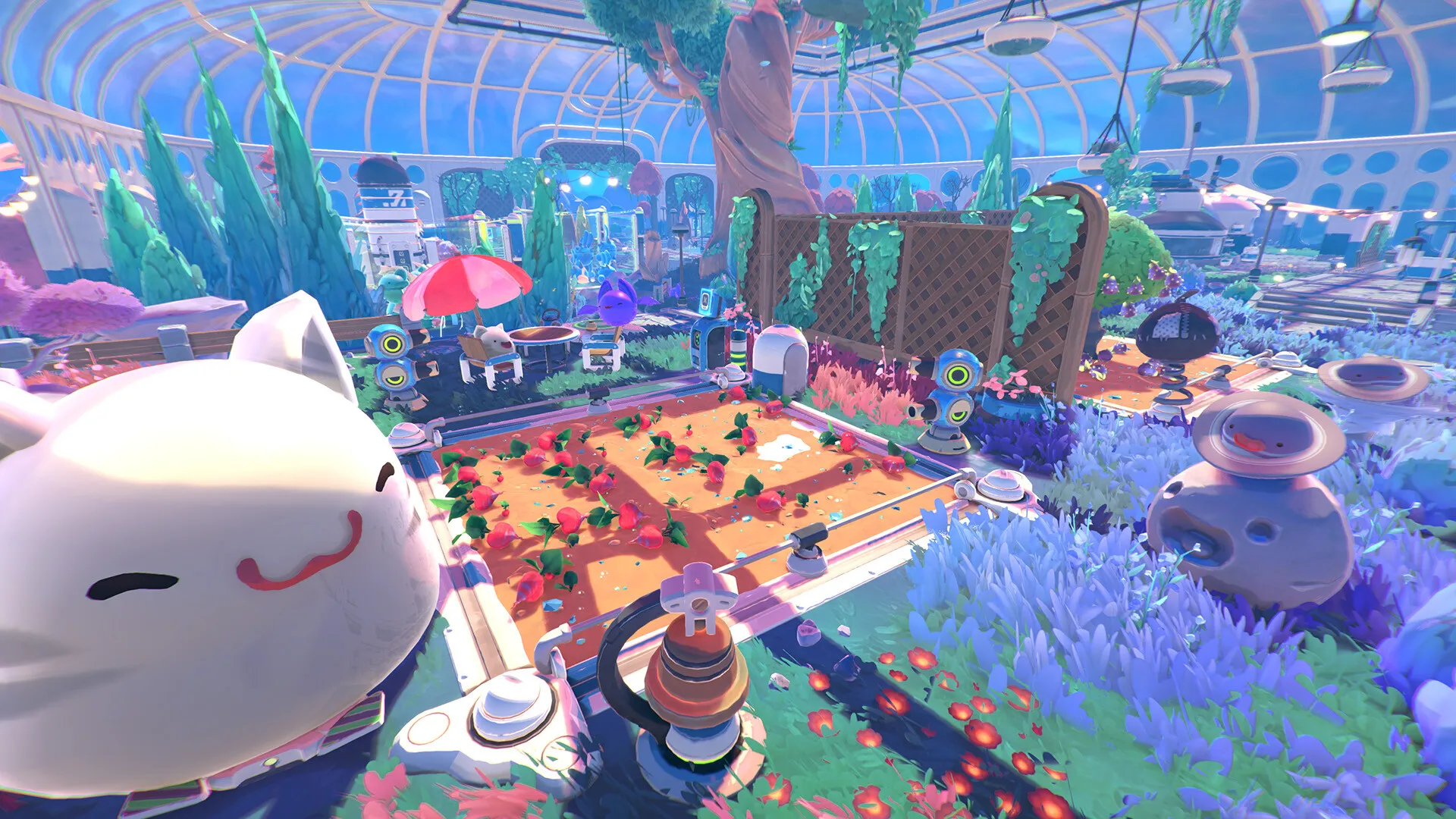
This area hints at more ambitious environmental storytelling that the rest of the island rarely matches. Many zones feel empty, pathways leading nowhere meaningful, a common critique of open-world design that prioritizes scope over substance. The world assumes jetpack traversal, making earlier exploration before acquiring this tool feel constrained and incomplete. This design choice raises questions about whether Beatrix, established as an experienced rancher, should have begun with full capabilities rather than being artificially reset to tutorial status.
Progression barriers create frustrating momentum breaks. You discover an obstacle, realize you need a specific Plorp type or device, return to base to craft or gather materials, then backtrack to the original location. These loops add no meaningful challenge beyond time expenditure. The game conflates gating with difficulty, treating resource possession as equivalent to skill demonstration. Gordo Slimes serve as living locks, requiring players to feed them until they burst and reveal new paths.
This mechanic grows repetitive, reducing exploration to a checklist of feeding stations. Butterfly Slimes complicate this further by demanding nectar that cannot be farmed, creating artificial scarcity that punishes players who over-harvest early. Certain areas and progression routes remain easy to miss without exhaustive searching or consulting external guides, a problem that suggests either inadequate signposting or deliberate obscurity meant to extend playtime.
Optional puzzles scattered throughout require familiarity with slime properties, rewarding players who’ve internalized the game’s ecosystem logic. These challenges offer rare moments where knowledge translates to practical problem-solving. However, puzzles feel sparse relative to the map’s size, leaving vast stretches devoted solely to resource extraction.
The game’s story elements arrive late, providing retrospective purpose to earlier exploration that initially feels directionless. This back-loaded narrative structure resembles mystery fiction where late revelations recontextualize earlier events, though it risks losing players before those revelations occur.
Materialist Anxieties: When Scarcity Undermines Leisure
The crafting system expands considerably from the original game, offering decorative objects, functional machines, and permanent character upgrades. Plot-based structures for gardens and pens remain rigid, offering limited customization despite the ranch’s sprawling footprint.
Drone automation becomes available for resource collection and slime feeding, though acquiring these labor-saving devices requires significant material investment. Teleporters promise reduced travel time through one-way quick travel to specific biomes or two-way connections between arbitrary points. These devices dramatically improve quality of life by eliminating repetitive traversal, making their acquisition feel essential rather than optional.
The resource node system represents a significant regression from the predecessor’s automation philosophy. The first game allowed players to place machines that passively harvested materials at fixed locations, respecting player time by reducing manual labor once infrastructure was established. Slime Rancher 2 demands active collection, requiring you to physically locate hives, ore deposits, and other nodes before vacuuming their contents.
Resources spawn in biome-specific locations with semi-random respawn timers ranging from two to four or more in-game days, creating uncertainty about when and where materials will reappear. The game provides resource flags to mark node locations, implying eventual respawning, yet many marked spots remain barren indefinitely. This inconsistency suggests either buggy implementation or intentionally unpredictable spawning meant to encourage continuous exploration.
Strange Diamonds exemplify the system’s most frustrating aspects. These rare materials appear in specific locations but never consistently or abundantly. They’re required for crucial recipes including teleporters, meaning the tools that most effectively reduce tedium are themselves tedious to acquire.
Players must repeatedly check already-explored areas hoping the correct nodes have spawned with needed resources, a loop that transforms exploration into chore-like grinding. The contrast with the first game’s passive systems highlights how active mechanics don’t inherently create more engaging gameplay. Sometimes automation serves player enjoyment better than constant manual interaction.
Money’s relevance diminishes in late game, becoming necessary only for expensive decorations and niche upgrades. The Plorp market maintains reasonable balance, avoiding the wild price fluctuations that characterized the original.
Eventually you’ll accumulate excess Plorps without meaningful outlets for selling them, highlighting how the economic systems lose coherence as you outgrow their constraints. This progression from scarcity to abundance mirrors critiques of late-stage capitalism where productive capacity exceeds consumptive needs, creating stockpiles that serve no purpose beyond their own accumulation.
Interspecies Relations: Character, Behavior, and Ethical Discomfort
The slimes themselves justify the game’s existence, creatures whose behavioral improvements make ranching feel genuinely responsive. Returning species mix with new variants, each displaying distinct personalities through animation and sound. Bat Slimes hover peacefully while sleeping.
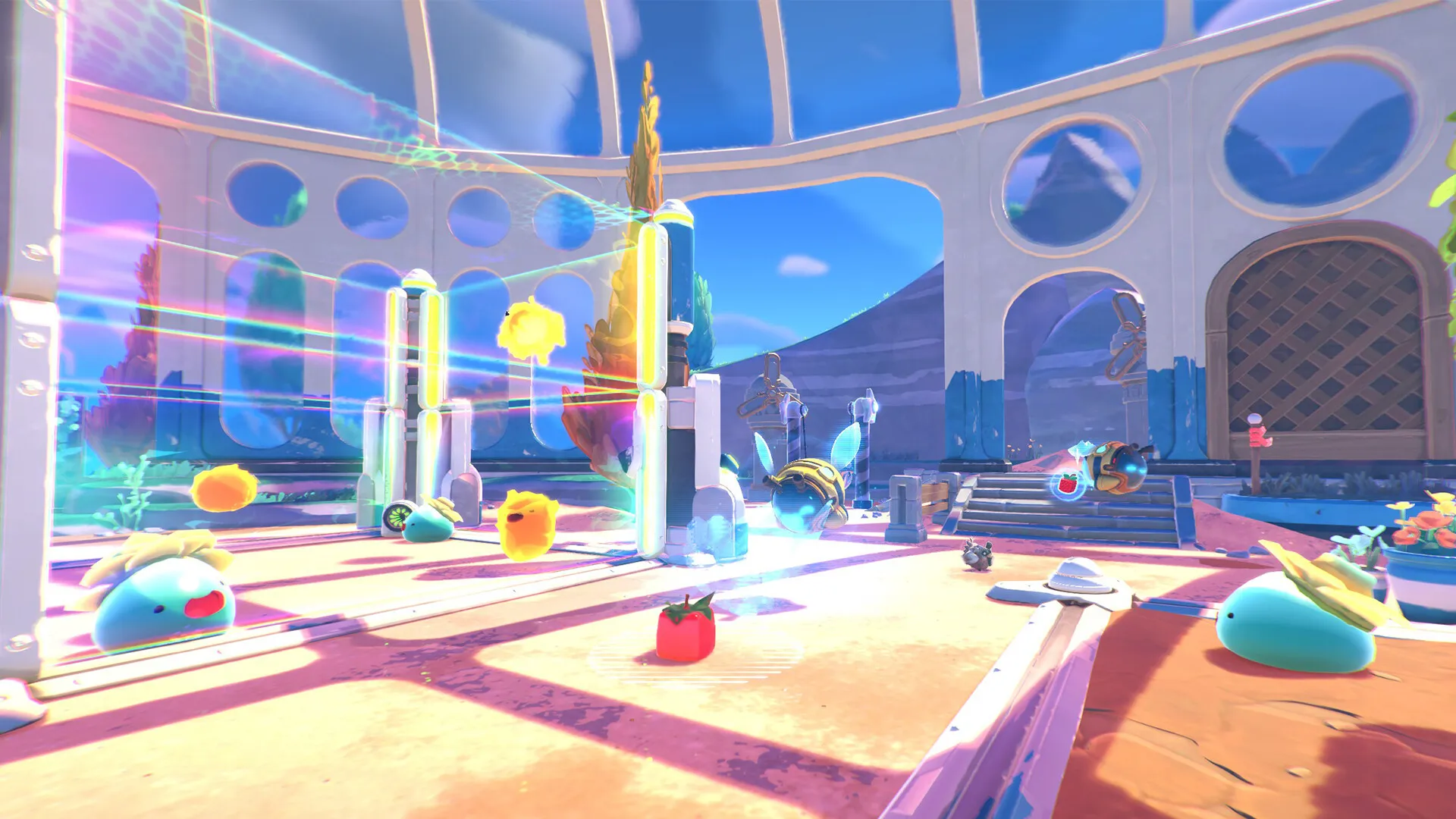
Cotton Slimes (the community’s preferred name over their official designation) bounce enthusiastically around enclosures. Ringtail Slimes eat compulsively, requiring careful monitoring of their facial expressions to maximize Plorp production before they consume beyond satiation. Yolk Slimes interact directly with chicken coops, laying special eggs that hatch into both Plorts and baby chickens, creating symbiotic production chains.
Water Slimes no longer skid awkwardly across their pools, a small correction that demonstrates attention to ecological plausibility within fantastical constraints. Facial expressions provide gameplay feedback while reinforcing each species’ distinct character, transforming functionally identical resource generators into individuals worth observing.
The game’s opening hours lean heavily on familiar species. Pink, Tabby, and Cotton Slimes dominate early encounters, offering little novelty for returning players. Phosphor Slimes appearing at night provide welcome variation, their light-sensitive requirements adding complexity to ranch management.
The conservative early-game design perhaps aims to onboard new players, yet it creates a missed opportunity to immediately establish this sequel’s distinct identity through unfamiliar species. The Conservatory’s fixed plot layout creates awkward negative space, the ranch feeling oversized relative to buildable infrastructure. This wasted space might accommodate extensive decoration, yet decorating feels premature when automation remains incomplete.
Late-game ranch management introduces uncomfortable ethical dynamics. Once you’ve accumulated numerous slimes across multiple pens, feeding them all becomes laborious. Upgraded enclosures prevent escapes even when slimes grow agitated from hunger, meaning you’ll frequently pass visibly unhappy creatures who cannot die from starvation but remain in perpetual dissatisfaction.
This scenario creates cognitive dissonance within a game marketed around cozy aesthetics and responsible stewardship. Drones can automate feeding, though building multiple units requires rare materials, forcing players to choose between grinding for automation or accepting their role as negligent caretaker. Chickens present their own management challenges, populations exploding if not carefully culled, another uncomfortable reminder that pastoral fantasy contains darker logistics.
Tarr represent the game’s hostile element, corrupted slimes created when a creature consumes Plorps from two different species beyond its own type. These aggressive entities appear with surprising frequency in certain zones, introducing danger that contradicts the relaxation-focused marketing. Their prevalence suggests either spawn balancing issues or intentional challenge spikes that feel tonally inconsistent.
Voices Across the Void: Narrative Fragments and Cultural Memory
The story arrives through fragments, beginning with a mysterious letter summoning Beatrix to Rainbow Island. An abandoned conservatory hints at previous explorers, raising questions about who came before and why they left.
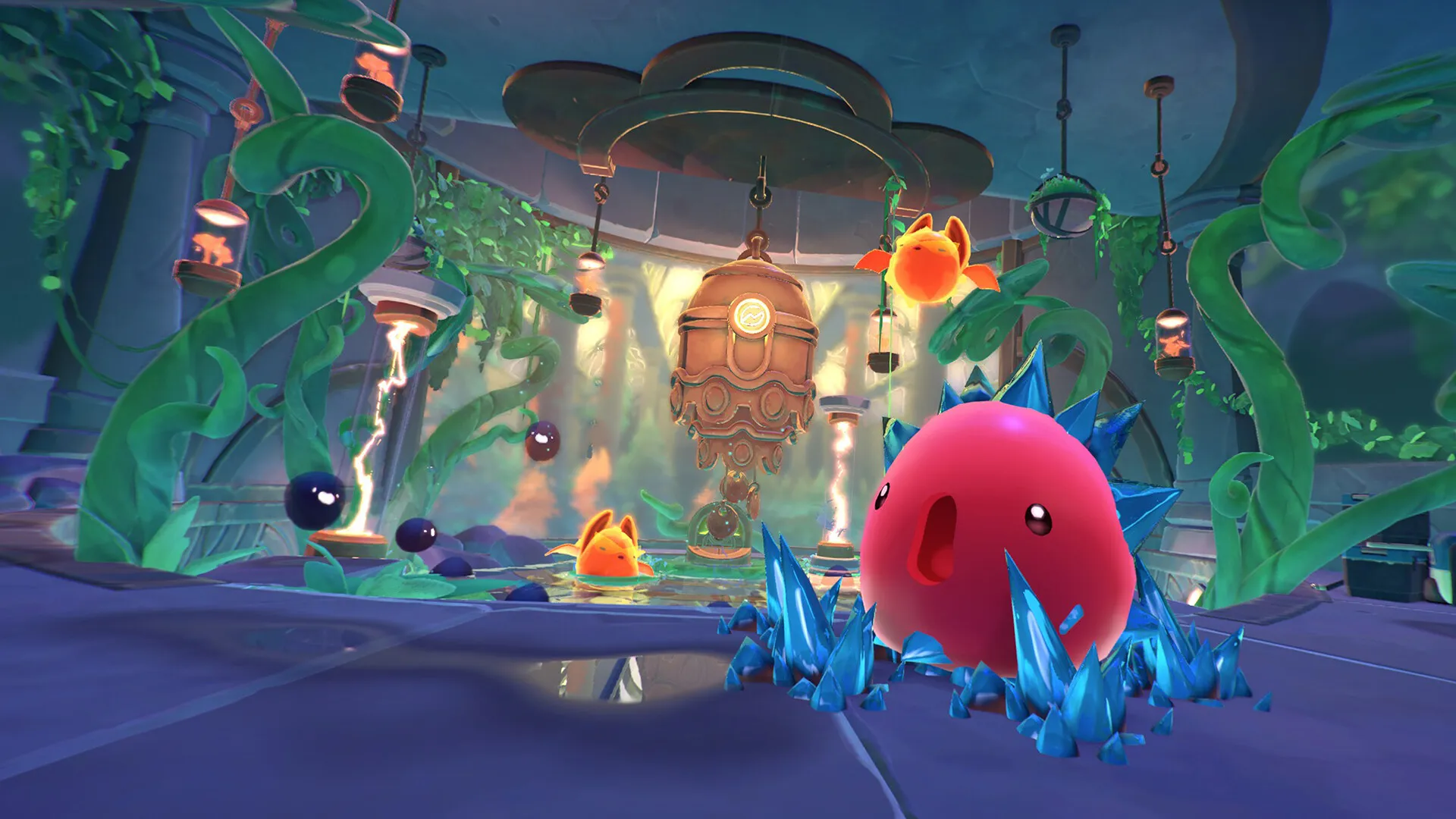
The narrative unfolds through text logs and “video calls” with NPCs, static images accompanied by dialogue that explores what happened on the island and why its geography seems warped beyond normal parameters. The game gestures toward themes of time travel, environmental conservation, and corporate exploitation without deeply examining any. This restraint might stem from awareness that explicit moralizing would conflict with the relaxed gameplay tone, yet it leaves interesting ideas underdeveloped.
NPC conversations possess warmth and empathy, particularly dialogue with Gigi, introduced midway through and exploring themes of love, sacrifice, and regret with surprising emotional weight. Victor’s calls become primary motivation for continued exploration, his hints at larger mysteries providing narrative momentum when gameplay alone falters.
Beatrix remains largely silent, offering only optional dialogue prompts to extract information or skip ahead. This design makes her a cipher for player projection, though it prevents the kind of character development that might justify her return to ranching after the first game’s conclusion.
NPCs eventually exhaust their dialogue, continuing to call primarily to justify sending gifts, a mechanical necessity framed as social interaction. These perfunctory exchanges highlight the limitations of text-based relationship systems in maintaining long-term engagement. Sweet character moments exist, particularly Gigi’s arc, yet they feel isolated rather than woven throughout the experience.
Environmental storytelling remains sparse until the main narrative activates, leaving early exploration feeling archaeologically empty despite clear signs of prior habitation. The writing quality itself remains solid and engaging when it appears, making its delayed and sporadic implementation more frustrating.
“Light bulb” moments where connections crystallize provide genuine satisfaction, the kind of revelatory pleasure associated with well-constructed mystery narratives. The game simply rations these moments too conservatively, assuming players will persist through dozens of hours before receiving meaningful narrative payoff.
Sensory Territories: Aesthetic Achievement and Technical Reality
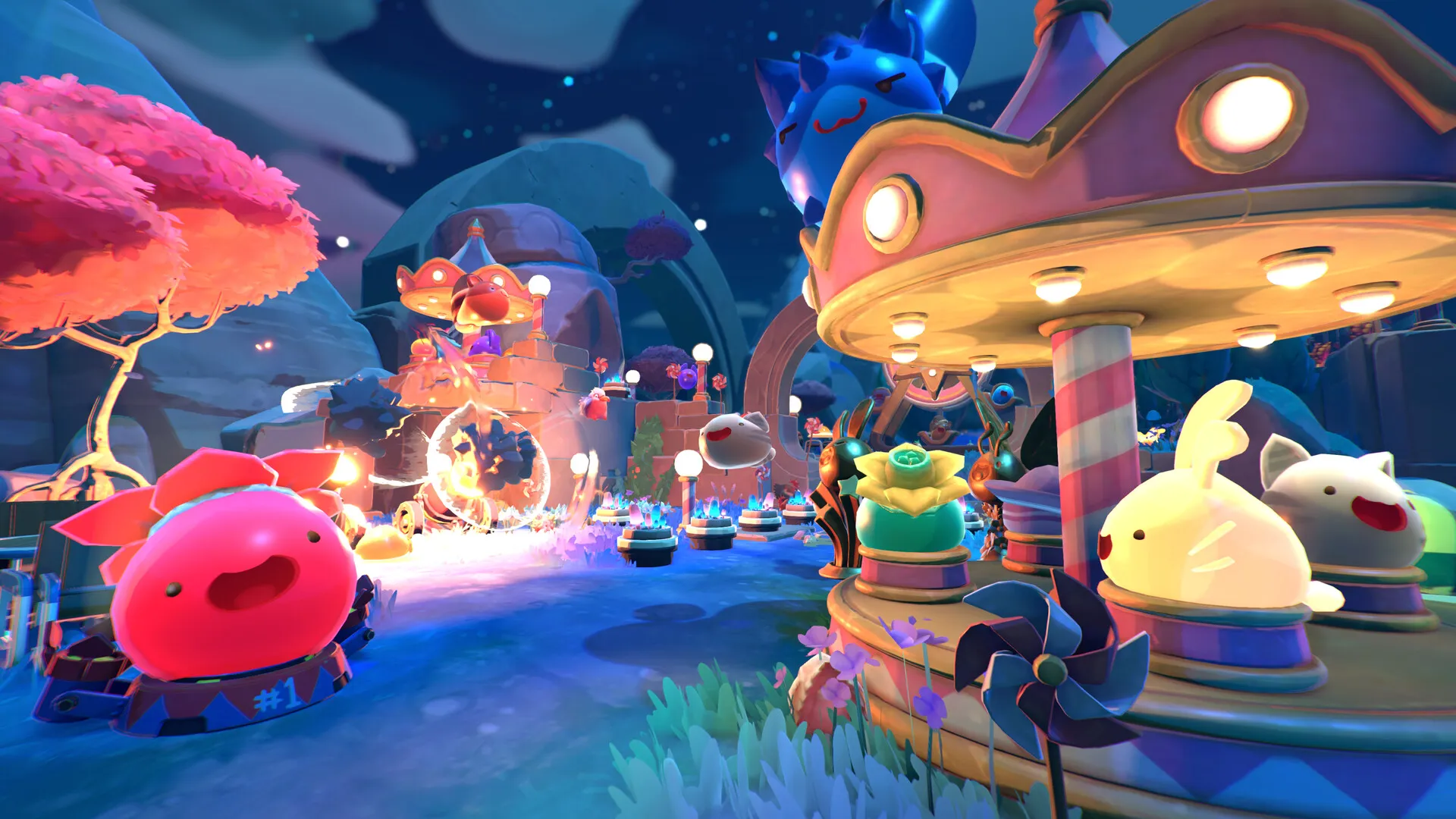
Rainbow Island earns its name through aggressive color saturation, environments pulsing with vibrancy that borders on overwhelming. Each slime species remains visually distinct through color coding, unique features, and expressive faces that communicate emotional states.
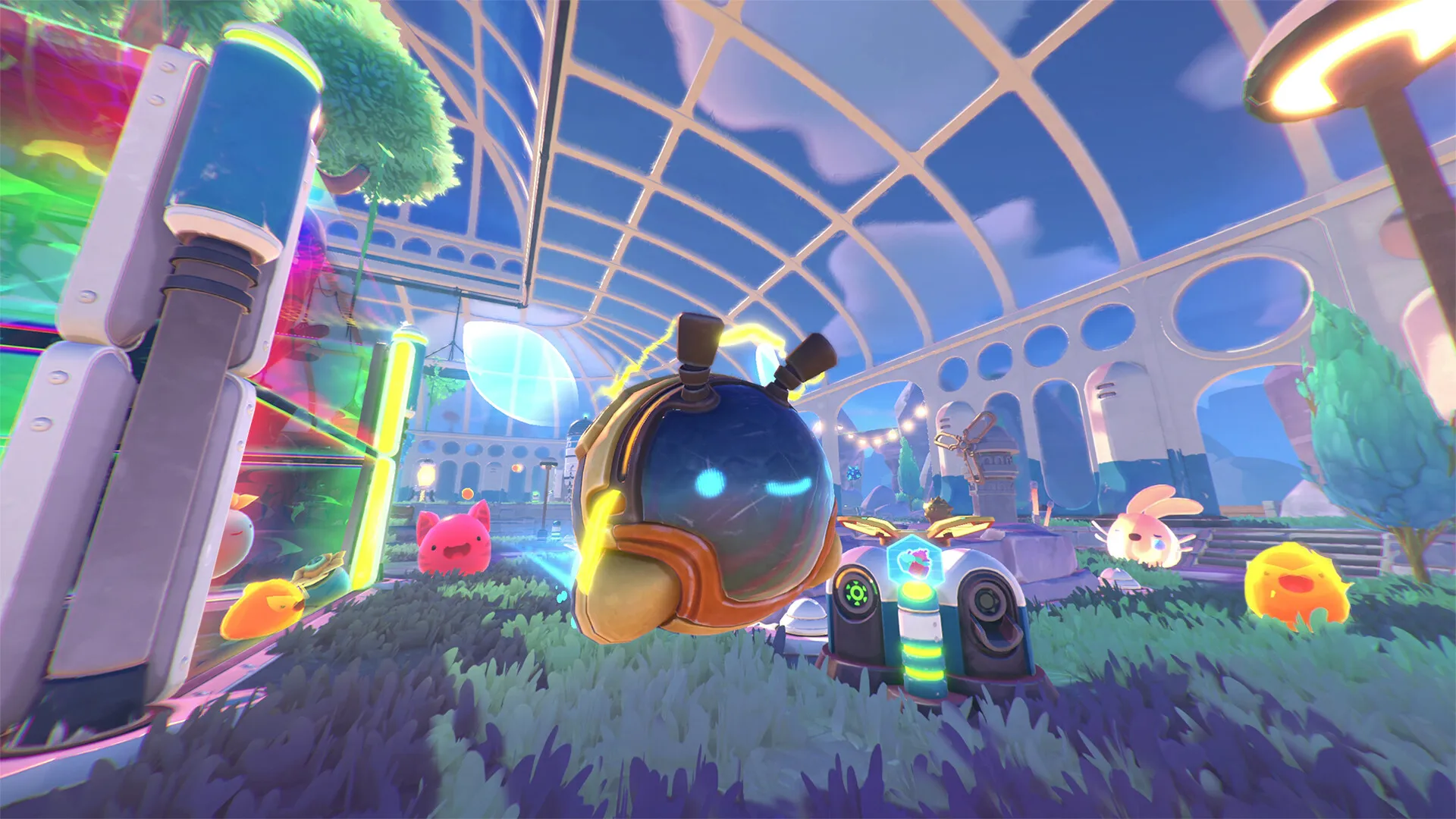
Nighttime transforms the landscape, lava glowing with intensified luminosity while water generates ambient light that creates meditative atmosphere. The color palette clearly aims for psychological effects associated with relaxation and stress reduction, leveraging chromotherapy principles whether consciously or intuitively. Weather systems enhance immersion, rain viewed from the ranch creating serene moments of passive observation.
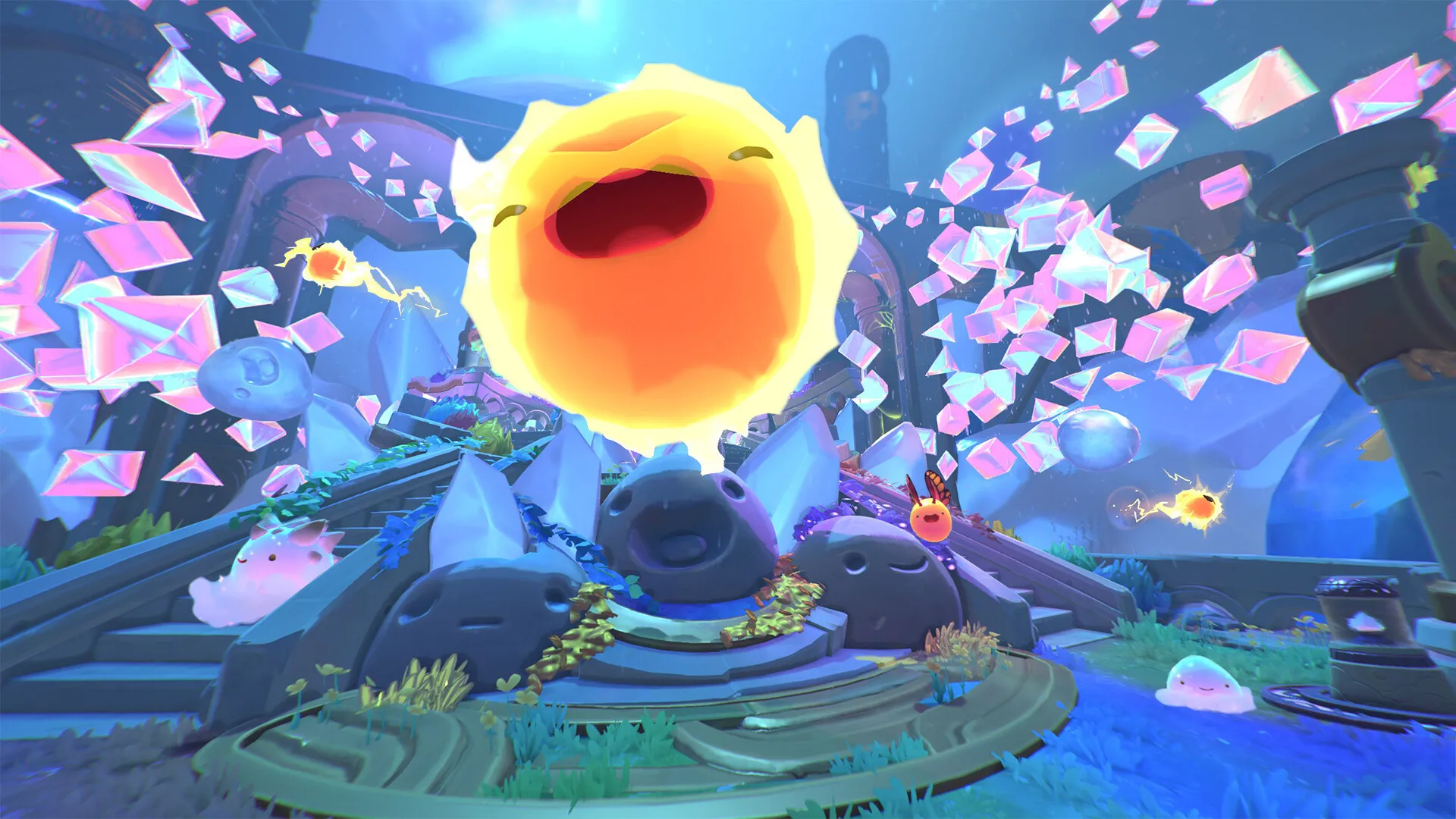
“Plort rain” events reverse the tone entirely, chaos erupting as resources fall from the sky and slimes scatter in confusion, brief disruptions that paradoxically enhance appreciation for normal tranquility. The Grey Labyrinth and similar zones demonstrate what the game achieves when prioritizing visual storytelling, strange geometries and unexpected color combinations creating genuine alien wonder.
The soundtrack cycles through relaxing compositions intercut with ambient environmental audio, rain sounds particularly effective in establishing peaceful atmosphere. Individual slimes produce distinctive vocalizations allowing identification by sound alone, creating acoustic texture that makes the ranch feel populated and alive. The vacpack emits satisfying mechanical feedback, its “thunk” when ejecting slimes providing tactile-adjacent pleasure through audio cues. The music’s lullaby qualities serve players seeking genuine relaxation, compositions gentle enough for actual sleep playlists.
Technical performance on high-end PC hardware maintains smooth 120-140 fps, with initial stuttering during asset loading resolving within minutes. Steam Deck compatibility at 30fps on reduced settings expands accessibility, though certain late-game areas cause noticeable framerate drops across platforms. These performance dips likely correlate with increased particle effects or dense geometry in specific zones rather than systemic optimization problems. The game runs stably enough that technical concerns rarely intrude on the experience it promises.
Cultural Synthesis and Market Tensions
Slime Rancher 2 exists for players seeking refined iterations rather than radical reinvention, a design philosophy more common in Japanese development studios than American indie scenes influenced by constant innovation pressure. The game’s charm and visual beauty stand in constant tension with progression systems that interrupt flow through mandatory grinding.
Resource gathering regresses from the predecessor’s automation, replacing passive collection with active hunting that respects neither player time nor the relaxation-focused marketing. Slime AI improvements and new species represent genuine achievements, creatures whose behaviors justify observation beyond functional necessity. Rainbow Island feels larger than the Far, Far Range yet less purposefully designed, space prioritized over density.
Story and world-building arrive too late to guide early exploration, creating aimless wandering that tests patience before narrative rewards materialize. Ranch management introduces ethical discomfort at odds with cozy aesthetics, forcing choices between grinding for automation or accepting roles as neglectful caretakers.
The core loop of exploring, collecting, ranching, and upgrading remains satisfying when flowing smoothly, systems interlocking to create momentum. Technical and audiovisual polish support the intended experience, visual and sonic elements aligned in serving relaxation goals.
The game delivers strongest for those who prioritize atmospheric immersion over optimized progression design, players willing to embrace grinding as meditative ritual rather than obstacle. Series fans and cozy game enthusiasts will find much to appreciate despite structural frustrations. Those expecting significant evolution from the original or tightly balanced progression may feel the sequel doesn’t justify its separate existence.
This remains a game of significant highs and notable lows, enjoyment dependent on whether its specific pleasures outweigh its particular frustrations. The cultural synthesis it represents, American frontier mythology filtered through Japanese cute aesthetics and agricultural simulation traditions, creates something simultaneously familiar and strange, a hybrid that, like the slimes it depicts, doesn’t always combine traits in predictable or comfortable ways.
The Review
Slime Rancher 2
Slime Rancher 2 achieves atmospheric charm through improved creature AI and stunning visual design, yet undermines itself with regressive resource systems that transform exploration into tedious grinding. The delayed narrative arrival and uncomfortable late-game ranch dynamics conflict with its cozy branding. Players prioritizing aesthetic immersion over progression balance will find rewards, but those expecting meaningful evolution from the original face disappointment. A beautiful, flawed iteration.
PROS
- Significantly improved slime AI with distinct personalities and behaviors
- Gorgeous, vibrant visual design with excellent weather and lighting systems
- Relaxing soundtrack and satisfying audio feedback
- Expanded building and decoration options
- Strong character writing when narrative elements appear
- Stable technical performance across platforms
CONS
- Regressive resource gathering system creates mandatory grinding
- Story arrives too late to guide early exploration
- Fixed ranch layout wastes space with limited customization
- Progression gates create frustrating backtracking loops
- Late-game ranch management introduces ethical discomfort
- Many areas feel empty or lead nowhere meaningful
- Rare materials needed for quality-of-life improvements are tedious to acquire