



























The fifth season of this alternate-history drama jumps to 2012 and presents a world in which the space race continued without interruption. Mars now stands far from its early days as a fragile scientific outpost. Happy Valley has grown into a crowded colony with thousands of residents, and the story resumes after the heist of the Goldilocks asteroid secured the Red Planet’s financial future. This season turns its attention to the strain between Martian settlers and the governments on Earth that still insist on ruling them.
The setting imagines technical development beyond our own timeline, with space elevators and advanced habitats shaping daily life. Yet the series keeps its attention on the emotional and social cost of exploration, pairing sweeping political change with intimate struggles on an extraterrestrial frontier. The season works as a passage between the first generation of pioneers and the younger people born beneath Martian skies.
Corporate Domes and the Class Divide
Happy Valley has completed its transformation into a city. The food court includes corporate Earth staples such as Domino’s Pizza, and that detail lands as sharp commentary on the endurance of consumer culture. Humanity may live millions of miles from Earth, yet capitalism still arrives with the promise of fast delivery.
That image points to a permanent shift in human history, though the social habits of Earth remain fully intact. Dev Ayesa, now leading the Meru Project, imagines a self-sustaining city built for family life. His goal is clear: research labs give way to glass domes, green spaces, and a settlement designed to last. The space elevator becomes the defining image of that ambition, a monumental engineering achievement that joins Martian ground to the wider cosmos.
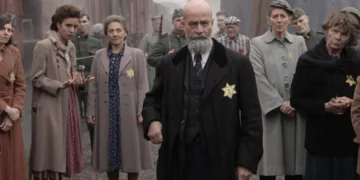
That progress carries a social order that feels painfully familiar. The colony contains the “Craters,” undocumented workers pushed into the margins of habitat life. They exist far below the scientists who hold prestige and authority, and the divide mirrors class inequality in cities on Earth. The 2012 setting sharpens the show’s sense of irony.
Settlers gather for flash mobs and dance to “Gangnam Style” in shared public spaces. Robotics and AI have surged ahead, yet popular culture still clings to recognizable habits and fads. The contrast gives the season a wry edge. Human beings can engineer new worlds while reproducing the same pecking orders and cultural routines they carried from the old one. The series uses those details to argue that social hierarchy travels just as easily as technology.
Aging Legends and the Martian Youth
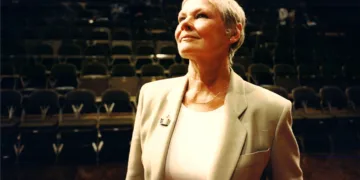
The original characters now face age in direct and unavoidable ways. Ed Baldwin lives on Mars as an eighty-year-old man under house arrest, tending a secret weed farm in his quarters while his health declines. He refuses any idea of returning to Earth because he sees Mars as his home in full. His identity is now inseparable from the planet. Margo Madison offers another angle on legacy from her prison cell.
Her brilliance remains intact, and she continues working as a secret adviser to Aleida Rosales. Their connection gives the season one of its clearest ideas about knowledge and inheritance. Political disgrace can damage public standing, yet intellectual influence survives and keeps moving through the next generation. Kelly Baldwin follows her own scientific ambitions by pursuing the search for life on Titan, Saturn’s moon. Her drive carries the spirit of discovery and places it in friction with the profit motive represented by Helios.
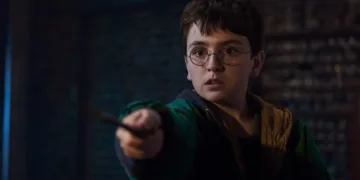
The younger generation gradually claims more of the story. Alex and Lily stand for the future of the colony because Mars is the only home they know. Earth exists for them as an abstraction, a place without memory or emotional ownership. That reality opens a deep rift between parents and children, between founders who remember sacrifice and heirs who expect belonging.
Miles Dale becomes one of the season’s central figures through this shift. He begins as a manual laborer and grows into a leader of the “Sons and Daughters of Mars,” speaking for independence and collective identity. His rise feels grounded in circumstance. The movement needs a voice, and he becomes one. Through characters like him, the series studies the formation of a Martian culture that sees itself as separate from Earth and increasingly uninterested in Earth’s authority.
Political Resentment and the Martian Law
The discovery of a corpse outside the habitat alters the season immediately. Mars records its first murder, and that event destroys any lingering fantasy of the colony as a pure scientific utopia. Crime enters the settlement in a form nobody can dismiss, and the investigation quickly becomes a political flashpoint. President James Bragg runs on an “Earth First” platform and seeks tighter control over Martian resources.

He treats the colonists like subjects who have forgotten their place, and his protectionist politics fuel outrage in Happy Valley. The settlers see Earth as greedy, remote, and hungry for command. Their resentment grows from distance, labor, and lived experience. They reject being ruled by officials who have never walked on Martian soil.
Celia Boyd leads the murder investigation as an officer in the peacekeeping force, and her work exposes corruption inside the multinational administration. Suspicion lands on Lee Jung-Gil, a North Korean ujunaut, which keeps older geopolitical rivalries alive within this futuristic setting. The murder becomes the spark that energizes the independence cause.
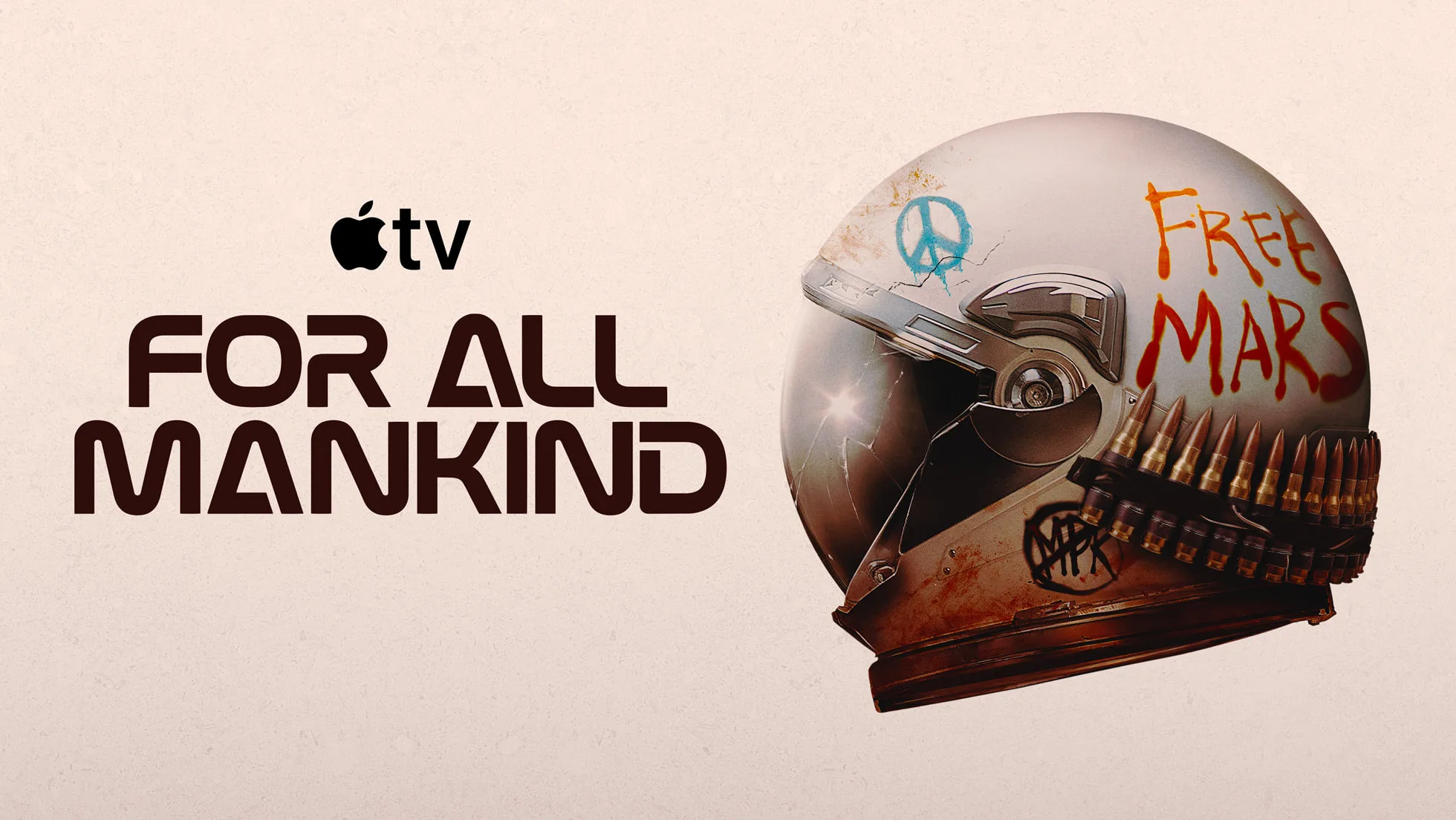
Activists seize on the event and push harder for autonomy, insisting that Mars must govern itself. “Free Mars” emerges as a common rallying cry, echoing the language of historic independence struggles and tying the season to recurring patterns of self-determination. The series frames political conflict as a persistent human habit. Space travel does nothing to purify power. It simply transfers the same fights to a harsher and more distant landscape.
The Aesthetic of Space and Modern Parallels
Production design remains one of the show’s greatest strengths. The aging makeup for Ed and Margo works with striking effectiveness and gives the actors the physical burden of long lives. Inside the colony, the design favors an industrial realism. Hallways feel cramped, rooms feel functional, and the limited space creates steady claustrophobia.
Every setting reinforces the pressure of Martian life and reminds the viewer that survival on this planet demands constant adjustment. The visual effects on the Martian surface carry a large sense of scale, and the domes, paired with the Titan mission, communicate the ambition of the series. The show chooses grit over polish and builds a version of science fiction that feels worn, practical, and inhabited.
Its pacing follows the same methodical logic. The season gives character development room to breathe, letting political changes emerge from personal motives rather than forcing them into abrupt plot turns. That structure makes the social themes clearer. The story of the “Craters” brings refugee rights into view. The labor system opens questions about automation and the workforce. The peacekeeping investigation touches police corruption.
These strands tie the season to present-day anxieties and show how little human behavior changes when institutions carry old values into new spaces. The series treats the future as an extension of the present, shaped by the same prejudices, ambitions, and inequalities. It remains an absorbing study of human aspiration and asks a difficult question about progress: can any society build a fairer world while carrying its inherited biases into every new frontier?
For All Mankind is a critically acclaimed science fiction drama that premiered on November 1, 2019, as one of the flagship originals for Apple TV+. The series presents an alternate history where the global space race never ended after the Soviet Union beat the United States to the moon. Spanning several decades, the show explores how this persistent competition accelerates technological progress and social change across the globe and beyond. The fifth season, which premiered on March 27, 2026, continues this epic saga by pushing the narrative into 2012, focusing on the complex political and social dynamics of a now-thriving Martian colony.
Where to Watch For All Mankind Season 5 Online





Full Credits
Title: For All Mankind
Distributor: Apple TV+
Release date: November 1, 2019 (Series Premiere), March 27, 2026 (Season 5 Premiere)
Rating: TV-MA
Running time: 48–82 minutes per episode
Director: Sergio Mimica-Gezzan, Meera Menon, Dan Liu, Andrew Stanton, Wendey Stanzler, Craig Zisk, Lukas Ettlin, Maja Vrvilo, Sylvain White
Writers: Ronald D. Moore, Ben Nedivi, Matt Wolpert, Stephanie Shannon, Sabrina Almeida, Bradley Thompson, David Weddle, Kira Snyder, Joe Menosky, Colby Day, Jovan Robinson, Eric W. Phillips
Producers and Executive Producers: Ronald D. Moore, Matt Wolpert, Ben Nedivi, Maril Davis, Bradley Thompson, David Weddle, Seth Edelstein, Kira Snyder, Nichole Beattie, Ben McGinnis, Huey M. Park
Cast: Joel Kinnaman, Wrenn Schmidt, Cynthy Wu, Coral Peña, Edi Gathegi, Toby Kebbell, Tyner Rushing, Daniel Stern, Svetlana Efremova, Krys Marshall, C.S. Lee
Director of Photography (Cinematographer): Stephen McNutt, Ross Berryman, Evans Brown
Editors: Miklos Wright, Michael O’Halloran, Peter B. Ellis, Geoff Ashenhurst, Dan Hanley
Composer: Jeff Russo, Paul Doucette
The Review
For All Mankind Season 5
The fifth season maintains its position as a premier exercise in speculative fiction. It effectively uses the 2012 setting to mirror current social anxieties regarding labor rights and national identity. The shift from scientific wonder to gritty realism feels earned through decades of storytelling. The pacing remains slow. The emotional payoff for legacy characters provides a sense of closure. This series proves that the most effective science fiction focuses on the people within the machines. It is a thoughtful exploration of how humanity exports its flaws to the stars.
PROS
- Detailed aging effects add physical weight to the performances.
- The "Craters" storyline provides direct social commentary on immigration and labor.
- Effective handover to a new generation of characters born off-planet.
- Gritty and functional set design that prioritizes realism.
CONS
- Narrative momentum builds slowly across the initial chapters.
- The focus on interior habitat locations reduces the visual scope.