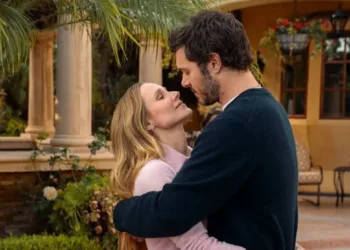














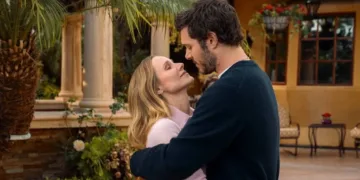










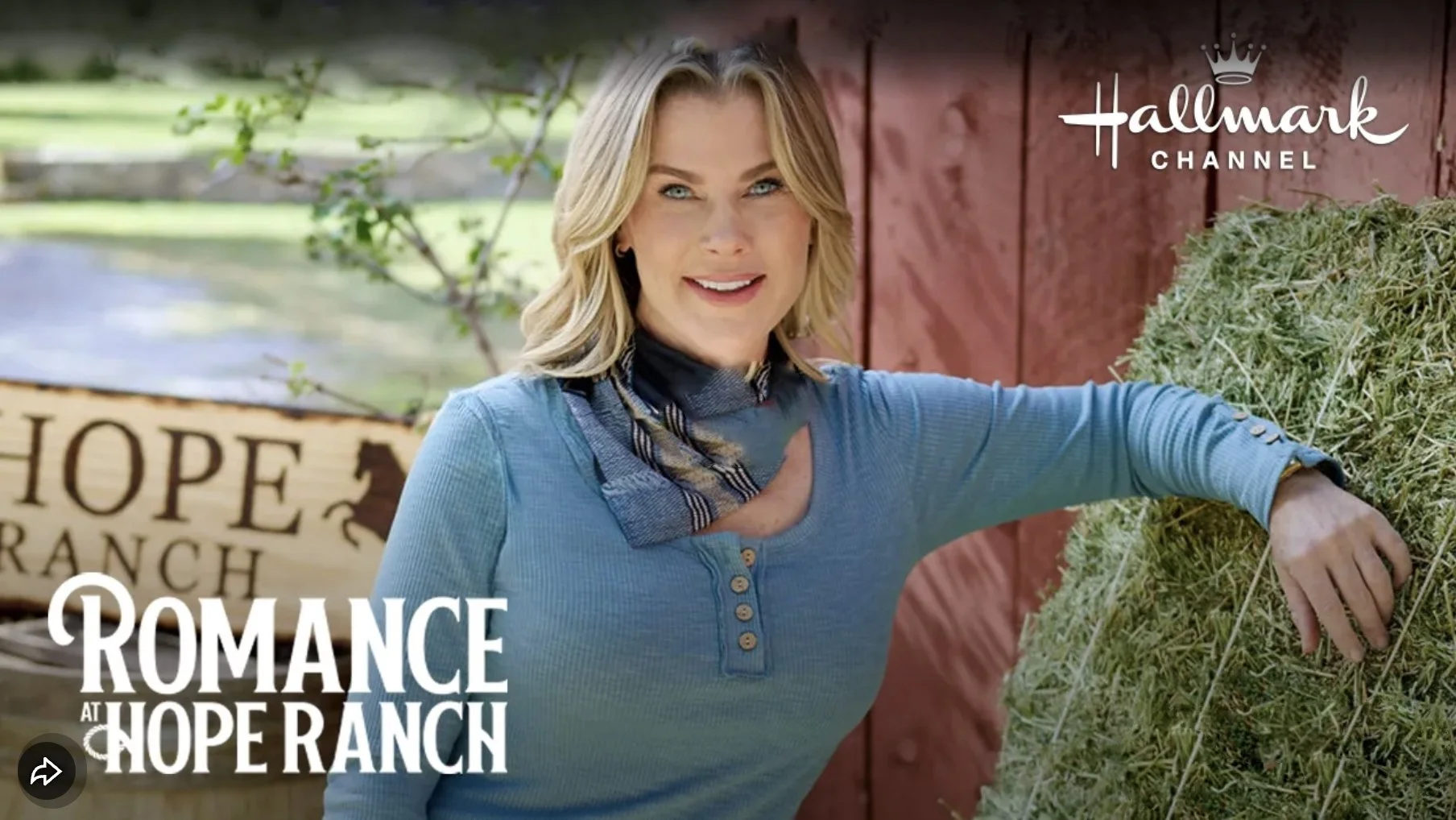

Romance at Hope Ranch begins with a life already in motion. Hope Morgan has dropped her daughter off at college, and the silence that follows becomes its own kind of summons. She heads to Ruidoso, New Mexico, chasing a dream that feels both newly possible and long deferred: a ranch of her own, a new business, a new rhythm, a chance to reclaim a place tied to family memory. The return of the Giddy Up Gala gives that dream a public shape. Hope is not merely buying property. She is trying to restore a version of herself that daily responsibility had placed on hold.
The film understands the appeal of that premise. Ruidoso is presented as a place where reinvention can still look sunlit and tangible, where horses, barns, and mountain air carry the promise of emotional reset. Hallmark has always been drawn to stories in which geography does quiet therapeutic work, and this one leans into that strength with conviction.
Yet the script wastes little time before placing Hope under siege. Inspections, repairs, permits, bills, livestock, event planning, and unexpected emotional complications arrive in quick succession. Then Jack, an old flame, resurfaces at the precise moment Hope is trying to construct a future untouched by old instability. The film wants to be gentle and restorative. It also keeps manufacturing panic, and that tension shapes nearly every scene.
Too Many Fires, Too Little Heat
The film’s central mechanism is simple enough. Hope insists on doing everything herself, and the screenplay keeps testing that resolve by piling one practical disaster on top of another. A ranch has to be brought up to standard. An event has to be organized on a punishing schedule. Taxes appear. Permits need signatures. Rooms get tangled in booking confusion. Food becomes a crisis. Horses wander. Chickens refuse to stay where chickens are supposed to stay. Every fresh obstacle is meant to push Hope toward a lesson in interdependence.
In theory, that structure should generate mounting pressure. In practice, the film often drifts. Scenes register as fragments of labor, flirtation, and interruption rather than parts of a steadily tightening dramatic chain. The gala is framed as a looming deadline, yet urgency rarely settles into the movie’s bones. Time is said to be running out, but the storytelling keeps wandering off to admire the scenery, stage a comic beat, or pause for a social interaction that barely alters the stakes. That looseness can be pleasant in a comfort-viewing register. It can also make a supposed race against the clock feel oddly sleepy.
The repetition of the film’s central lesson compounds the issue. Hope must ask for help. The movie states this so often that the idea shifts from theme to slogan. A stronger script might have trusted behavior, friction, and consequence to carry that insight. Here it is announced again and again, as if saying it often enough might deepen it. The result is a story whose emotional architecture stays visible at all times, with very little left beneath the surface.
A Woman Rebuilding, A Romance That Never Quite Settles
Hope is still the film’s most worthwhile subject. She is written as capable, disciplined, and proud, a woman who has survived by relying on herself. That trait gives the character shape, even when the writing pushes her into stubbornness so pronounced that it strains sympathy. The film is reaching for something recognizable about midlife reinvention, especially for a mother stepping into a new phase of life after years of defining herself through care, endurance, and routine. There is grief in the margins here, along with loneliness and the fear that asking for help might expose weakness rather than trust. Those notes give the material a little weight.
The scenes with Maggie supply some of the film’s strongest emotional grounding. The early college drop-off carries genuine tenderness, and the mother-daughter bond gives Hope’s life outside romance a texture the screenplay badly needs. Those moments suggest a richer film about transition, inheritance, and maternal identity than the one that finally emerges.
Jack, by contrast, is a messier proposition. He is meant to embody unfinished feeling, the romance that never fully resolved, the possibility that timing rather than incompatibility caused the fracture. Yet his reentry into Hope’s life feels engineered in a way that is hard to ignore. What the film presents as persistence can read as intrusion. Gabriel Hogan works hard to bring humor and ease to Jack, and there are flashes where the chemistry between him and Alison Sweeney smooths out the discomfort. Still, the romance never becomes fully persuasive.
Tom, the neighboring rancher, comes across as the steadier and more emotionally coherent option. He offers practical support without theatrical grandstanding, which gives his presence a grounded charm. Lori also lifts the film whenever she enters. She brings energy, decisiveness, and a welcome sense that someone in this story knows how to move events forward.
What Holds the Film Together
The saving grace of Romance at Hope Ranch is Alison Sweeney. She gives Hope an emotional clarity the screenplay does not always earn. There is sincerity in the way she handles the ranch scenes, the logistical chaos, the maternal exchanges, and the lighter comic business. She commits fully to the world of the film, which matters in a story this fragile. Without that steadiness at the center, the movie might collapse under the weight of its own contrivances.
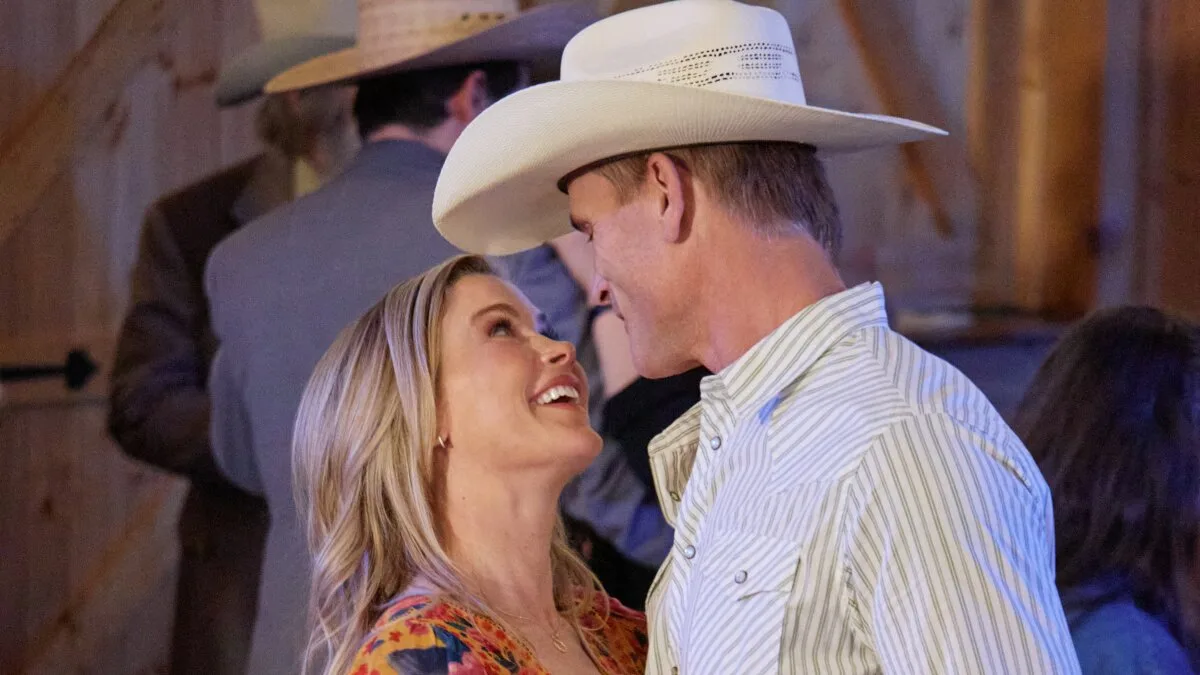
Hogan, tasked with making Jack feel charming rather than alarming, finds a workable tone even if the character remains a narrative gamble. Scott Martin gives Tom an appealing calm, and Stephanie Beran brings a lively charge to Lori that sharpens every scene around her. The supporting cast helps the film feel inhabited, even when the script leaves side motivations vague or half-formed.
The setting does a great deal of heavy lifting as well. New Mexico lends the movie a spacious beauty that the writing cannot match. The ranch, the horses, the mountain views, the local event atmosphere, even the mildly chaotic chicken business all contribute to a kind of low-stakes pastoral coziness. That is where the film finds its most reliable pleasure. It plays best as a softly textured comfort watch, built from scenery, familiar sentiment, and a lead performance sturdy enough to carry weak material. The emotional premise has value. The execution leaves too many seams exposed.
Romance at Hope Ranch premiered this past weekend, Saturday, February 28, 2026, as the grand finale of Hallmark Channel’s annual “Loveuary” programming event. The film follows Hope Morgan, played by Alison Sweeney, as she returns to Ruidoso, New Mexico, to fulfill her lifelong dream of running a ranch and reviving the community’s beloved Giddy Up Gala. The movie is notable for featuring the acting debut of Sweeney’s real-life daughter, Megan Sweeney. For those who missed the broadcast premiere, the film is currently available for streaming on Hallmark+ and will continue to air in encore presentations on the Hallmark Channel throughout the month of March.
Where to Watch Romance at Hope Ranch (2026) Online






Full Credits
Title: Romance at Hope Ranch
Distributor: Hallmark Channel, Hallmark+
Release date: February 28, 2026
Rating: G
Running time: 121 minutes (2 hours 1 minute)
Director: Tailiah Breon
Writers: Juliana Wimbles
Producers and Executive Producers: Alison Sweeney, Scott Martin, Michael Shepard
Cast: Alison Sweeney, Gabriel Hogan, Megan Sweeney, Scott Martin, Stephanie Beran, Craig Fones, Stephen R. Estler
Director of Photography (Cinematographer): Michael Balfry
Editors: Richard Schwadel
Composer: Hamish Thomson
The Review
Romance at Hope Ranch
Romance at Hope Ranch has a lovely setting, a warm lead turn from Alison Sweeney, and enough small-town charm to stay agreeable. The script leans too hard on manufactured obstacles, and the central romance never feels fully earned. What remains is an easygoing Hallmark watch with scenic appeal and a stronger emotional idea than dramatic payoff.
PROS
- Alison Sweeney’s warm, committed lead
- Beautiful New Mexico ranch scenery
- Cozy small-town Hallmark atmosphere
- Touching mother-daughter emotional thread
CONS
- Central romance feels undercooked
- Conflict relies on weak contrivances
- Pacing drifts and lacks urgency
- Character choices strain credibility