






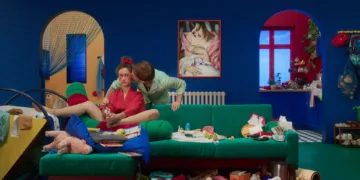










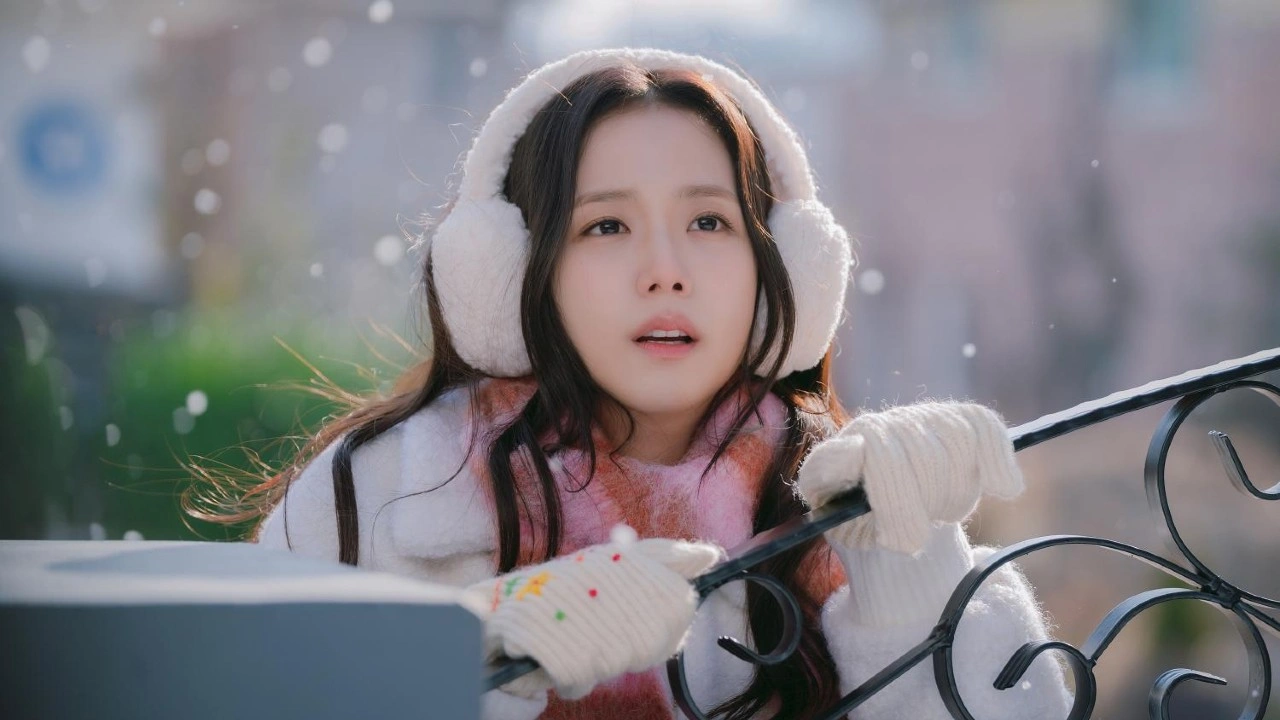

Boyfriend On Demand introduces Seo Mi-rae, a webtoon producer whose preferred shelter from Seoul’s professional pressure is simple: a bathtub, a glass of wine, and distance from romance. After a painful split with her college sweetheart, she has retreated from the hazards of actual connection.
That retreat meets its digital counterpoint when she becomes a beta tester for a virtual reality dating service. Directed by Kim Jung-sik, the series moves between the grounded strain of editorial deadlines and the sleek artificiality of a computer-generated boyfriend.
Mi-rae tests simulations that include campus idols and secret agents, giving the story a playful framework for studying modern loneliness through technological convenience. The setup hints at breezy escapism, yet the series keeps one foot in professional burnout and workplace friction. Its interest lies in how people seek companionship during an age of digital insulation, especially while dealing with office rivalries and creative pressure.
The Mechanics of Virtual Romance
The central application is built around a library of over nine hundred romantic archetypes. Each scenario works like a compact narrative, giving Mi-rae curated intimacy without the unpredictability of real people. The show uses these segments to bring in a rotating group of high-profile actors, including Lee Soo-hyuk and Seo Kang-joon.
Their appearances carry a clear thematic purpose. They embody the polished, unattainable standards the app sells to its subscribers. For Mi-rae, the simulations become a controlled space where she can work through the grief left by Kim Se-june. Inside these digital frames, she can revisit emotional milestones without public exposure.
The series keeps a sharp eye on the price of that comfort. Romance can be interrupted by trial period limits. Access can depend on subscription tiers. Affection, in this world, has a menu and a paywall. The gamified structure slowly exposes its own limits, especially once Mi-rae realizes that her digital partners are repeating recycled scripts. That discovery drains the fantasy of spontaneity.
Her decision to invest in a bespoke partner creates the story’s cleanest narrative pivot. The algorithm produces a boyfriend who looks exactly like her colleague, Park Kyeong-nam. The plot then shifts from private fantasy into an awkward collision with her daily life. The most polished code still draws from the reality Mi-rae wants to escape.
Workplace Dynamics and the Webtoon Industry
The workplace material gives the series its necessary weight, anchoring the romantic simulations in the tiring demands of the webtoon industry. Mi-rae lives inside a cycle of relentless deadlines and the emotional labor required to manage creative personalities.
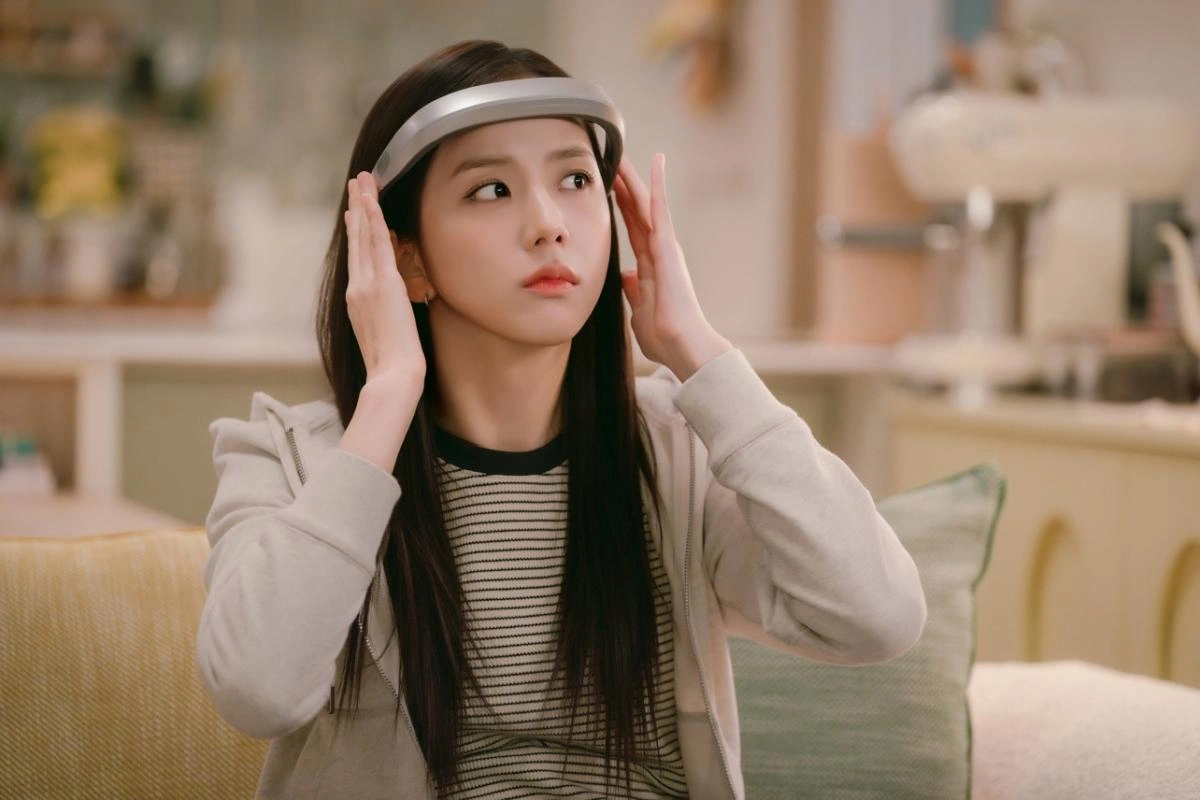
Her professional life is shaped by a steady rivalry with Park Kyeong-nam. Their relationship has a black cat rhythm, with his stoic efficiency clashing against her tense, overextended dedication. That friction supplies much of the comedy and tension outside the virtual dating sequences.
A major source of stress comes from Yun Song, a popular author whose volatile temperament requires constant attention. Yun Song absorbs every piece of online criticism, turning the editorial process into a field of fragile egos and sudden crises. The plagiarism subplot complicates these professional ties and pushes the series toward its strongest thematic question: what happens to originality when digital tools make imitation so easy?
This thread reflects the dating app’s central idea, raising doubts about authenticity in a world where everything can be copied, adjusted, and sold back as convenience. Mi-rae’s early refusal to join office rituals, including after-work dinners, reveals the depth of her burnout. She experiences her job as a chain of demands to endure. That exhaustion explains the appeal of a virtual boyfriend. He offers escape from a life where she is always responsible for other people’s success.
Character Analysis and Performance
Kim Jisoo anchors the series through a performance built on awkward charm and visible emotional weather. Her Mi-rae is transparent in the best sense, with every twitch and facial reaction giving the audience access to her interior life. That physical expressiveness matters for a character who spends so much time responding to digital prompts. Jisoo moves from slapstick embarrassment to quiet vulnerability with steady control.
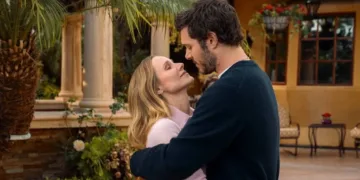
Opposite her, Seo In-guk gives the series its sharpest performance contrast through his dual presence. As the virtual Gu Yeong-il, he is bold, direct, and aggressively charismatic, a walking romantic ideal programmed for maximum effect. As Park Kyeong-nam, he pulls inward, relying on quiet intensity and small gestures to suggest feelings he refuses to say aloud.
The lead chemistry depends on this difference in energy. Kyeong-nam’s restraint gives Mi-rae’s erratic tendencies something firm to push against. The supporting cast adds useful texture. Gong Min-jeung plays Yun Song with high-wire unpredictability, turning a character who could have become exhausting into a believable professional obstacle. Mi-rae’s arc is clearly shaped.
She begins from a defensive posture of isolation and slowly moves toward awkward, uncertain engagement with the people around her. Her movement away from bathtub-and-wine solitude toward actual interpersonal risk gives the story its emotional spine. She comes to see that a simulation’s safety has a limited emotional range. Real connection has friction, and that friction is precisely what gives it meaning.
Narrative Execution and Thematic Weight
Boyfriend On Demand updates the romantic comedy by folding digital-age anxiety into familiar genre machinery. Office rivalry and slow-burn romance remain central, filtered through the language of VR technology. The middle portion of the season loses some structural momentum. The recurring dating sequences begin to feel repetitive, holding the plot in place at points where character development needs sharper motion. That repetition can read as a reflection of digital content’s addictive loops, yet it still tests patience.
The show’s view of modern loneliness is clear and often effective. Through its supporting cast, it gives voice to a shared exhaustion with contemporary dating. These characters describe a world where finding a partner feels nearly impossible, which makes the appeal of an app like Boyfriend On Demand easy to understand. The resolution of the main conflicts arrives with brisk efficiency. Some professional problems are settled so quickly that viewers looking for a tougher workplace drama may find the payoffs light.
The series keeps its focus on Mi-rae’s emotional truth. Technology gives her a way to process the past, then becomes a station she needs to leave. The story’s final argument is direct: real life matters because it is unpredictable, inconvenient, and resistant to scripting. The perfect simulation can comfort Mi-rae for a while. Another person can change her.
Boyfriend on Demand (Korean: 월간남친; RR: Wolgan namchin) premiered globally on March 6, 2026, as a Netflix Original series. Spanning ten episodes, the romantic comedy centers on Seo Mi-rae, a high-strung webtoon producer played by Blackpink’s Jisoo, who attempts to escape the crushing weight of her professional life and past heartbreak by subscribing to a cutting-edge virtual reality dating service. As she navigates various idealized digital romances, she must also confront a growing real-world tension with her workplace rival, Park Kyeong-nam (Seo In-guk). The series is currently available for streaming exclusively on Netflix.
Where to Watch Boyfriend On Demand Online


Full Credits
Title: Boyfriend on Demand (Wolgannamchin)
Distributor: Netflix
Release date: March 6, 2026
Rating: TV-MA
Running time: 50–68 minutes per episode
Director: Kim Jung-sik
Writers: Namgung Do-young
Producers and Executive Producers: Oh Hwan-min, Jang Se-jung, Choi Ho-sung, Park Min-soo
Cast: Jisoo, Seo In-guk, Gong Min-jeung, Ha Young, Lee Hak-joo, Jo Han-chul, Kim Ah-young, Park Hae-rin, Han Ga-eul, Yoo Seon-ho, Lee Soo-min
Director of Photography (Cinematographer): Park Sung-yong, Park Im-hwan
Editors: Kim Soo-hyun, Lee Hae-min
Composer: Gaemi (Kang Dong-yoon)
The Review
Boyfriend On Demand
"Boyfriend On Demand" anchors a story about professional burnout and the fear of vulnerability in its virtual reality premise. While the middle episodes cycle through repetitive dating loops, the sharp workplace dynamics and the chemistry between the leads keep the narrative grounded. It avoids being a hollow tech showcase by focusing on the friction of real-life connection. The story becomes a thoughtful exploration of how we hide behind screens to avoid the messiness of being seen.
PROS
- Kim Jisoo provides a highly expressive and physically comedic lead performance.
- Seo In-guk manages a sophisticated contrast between his virtual and real-world personas.
- The webtoon industry setting adds authentic professional weight.
- The central romance relies on a steady, earned chemistry.
CONS
- The mid-season narrative structure suffers from repetitive dating simulations.
- Several secondary plot resolutions feel rushed or simplified.
- The technology remains a background gimmick for long stretches.