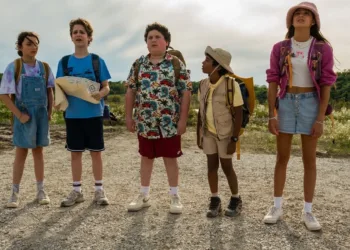


























Prime Video’s adaptation of the Elle Kennedy novel series brings Briar University to life across an eight-episode first season. The story follows an unlikely arrangement between Hannah Wells, a focused music student, and Garrett Graham, the star captain of the campus hockey team. Garrett faces academic pressure that threatens his athletic future. Hannah remains fixated on a musician who ignores her.
Their lives collide when Garrett proposes a mutual exchange of services: her tutoring skills to help him pass a philosophy exam, and his willingness to pose as her boyfriend to attract the attention of her crush. This setup draws on familiar tropes while grounding the romance in the specific pressures of collegiate life. The fictional setting provides a backdrop for a narrative moving between the ice rink and the recording studio.
As their fake relationship progresses, layers of each character’s individual history begin to surface. This season focuses primarily on the events of the first book, establishing a foundation for a wider world of athletes and artists. The show presents a story about trust and personal growth inside the high-stakes environment of competitive sports and academic aspiration.
Transactional Chemistry: Deconstructing the Graham-Wells Dynamic
The physical rapport between Ella Bright and Belmont Cameli serves as the essential tether for the show’s credibility. Their interaction begins with a cold, transactional agreement that evolves through shared study sessions and domestic routines into a genuine friendship.
The fake dating trope’s success depends on the actors’ ability to sustain tension through subtle glances and body language that signal a growing intimacy neither character is prepared to name. Their initial meeting feels awkward and clinical. Later scenes of shared vulnerability over late-night meals trace a transition from strangers to confidants.
Hannah Wells carries defined academic goals and songwriting aspirations that drive her choices. Her initial skepticism toward hockey culture functions as a critique of campus social structures, framing players as recipients of unearned special treatment.
This perspective shapes her early interactions with Garrett. As the story progresses, she reclaims her personal agency, using her music as a medium to process a difficult history. Ella Bright portrays Hannah with sharp wit and a guarded emotional interior. The character feels grounded in her own ambitions, bypassing the shy wallflower tropes common to the genre.
Garrett Graham represents a departure from the typical jock archetype. He is a campus celebrity and a hockey nepo baby whose status is tied directly to his father’s fame in the NHL. This connection generates immense internal pressure around his academic performance and professional future. He faces the constant threat of losing his place on the team if his grades fall.
His role as a consent king marks a meaningful shift in how television depicts athletic masculinity, with an emphasis on communication and respect for personal limits. Belmont Cameli’s performance surfaces Garrett’s insecurities through quiet moments of introspection, revealing the cracks in his confident exterior.
He portrays a man who is physically dominant and emotionally attentive. The pairing of a focused artist with a sensitive athlete gives the series space to examine how different forms of pressure can produce mutual understanding. Their relationship becomes a space where both characters can shed their public masks.
Interconnected Standalones: Building the Briar U Cinematic Universe
The hockey house functions as a physical and emotional anchor for the male characters. Garrett shares this environment with three main teammates: John Logan, Dean Di Laurentis, and John Tucker. Dean delivers a specific comedic energy as the wealthy playboy of the group.

John Tucker manages household logistics, and a key scene features him preparing a Thanksgiving dinner for students who remain on campus during the holiday, reinforcing the sense of a found family. The bond between Garrett and Logan carries significant emotional weight, with the two supporting each other through personal crises and professional setbacks.
Hannah’s social world is anchored by her relationship with best friend Allie Hayes, who supports her romantic and creative choices while managing her own subplot about a recent breakup. The show introduces Jules, Logan’s younger sibling, as a non-binary character. This casting choice expands the social circle past the limits of the source material, reflecting a shift in how streaming platforms approach representation inside established genres.
The series uses an interconnected standalone structure to position supporting players for lead roles in future seasons. This format allows secondary characters to be introduced without pulling focus from the central romance. It creates a community at Briar University where different social groups overlap and star athletes mingle with drama students at local parties.
The show positions itself as an anthology that will spotlight different couples while keeping the original cast as a consistent presence. This strategy ensures that viewers remain invested in the wider university world. The move from a single-couple narrative to an ensemble drama reflects current trends in serialized romance, offering a way to extend the show’s life while honoring the structure of the books.
Pucks and Progressivism: Rewriting the Rules of the Rink
The series takes on the image of hockey players while offering a critique of the surrounding culture. Garrett rejects the aggressive behavior modeled by his father, Phil Graham, a rejection central to his identity. He carries the weight of memories involving his father’s violence on and off the ice.
The show places the progressive values of the main cast against the backdrop of sports scandals and toxic environments. The male leads display emotional intelligence typically absent from traditional depictions of collegiate athletes, prioritizing camaraderie and mutual respect over dominance.
Communication shapes the intimate moments between Hannah and Garrett. The series treats respecting physical and emotional limits as a recurring priority. One scene spotlights Hannah’s choice to avoid alcohol in public. Garrett responds with understanding, ensuring her safety without becoming overbearing. This approach to consent signals a shift in tone for modern romance adaptations, distancing the series from older films that routinely ignored such issues. The characters discuss their expectations and comfort levels openly.
Healing from trauma runs through the narrative as a central thread. Both leads carry backstories involving sexual assault and domestic violence. The show approaches these topics through dialogue and character growth, avoiding graphic depictions of these events. The romance functions as a space where trust is built through shared honesty, and both characters find a sense of safety in their relationship that they lack elsewhere.
This attention to the psychological impact of past experiences adds depth to the plot and suggests that recovery is a slow process requiring the support of others. The series uses the romance genre to engage serious issues without slipping into exploitation, showing how healthy relationships contribute to personal growth. This approach reflects a shift in how television handles sensitive subjects.
Visual Polish and the Commercial Sound of Romance
The production maintains a glossy look that captures the feel of a college dramedy. Split screens and montages sustain a quick pace while echoing the rhythms of classic romantic comedies. The hockey sequences are filmed with enough energy to feel authentic, capturing the speed and physical intensity of the sport without overshadowing character moments.
Music drives the narrative forward. Hannah’s songwriting is integrated into her personal development, and needle drops mark emotional beats across the season. The visible presence of digital music apps and playlists drives interactions and reveals character tastes, reflecting how current students engage with music while pointing toward the commercial interests of the streaming platform.
Modernizing the source material required shifting the timeline to the present day. The eight-episode format allows for greater character depth than a film would permit, and expanding the roles of secondary characters improves the narrative’s flow. The adaptation stays true to the spirit of the books while adjusting the story to meet modern audience expectations.
The ensemble focus gives the show room to grow across future seasons. The series also functions as a fantasy, imagining a world where star hockey players attend drunk Shakespeare performances to mingle with drama students. This strand of wish fulfillment targets an audience seeking relief from real-world cynicism. The strategy aligns with current streaming trends, converting a single book into a sustainable television property.
Off Campus is a highly anticipated romantic drama series based on the popular “New Adult” book series by Elle Kennedy. The first season is set to premiere tomorrow, May 13, 2026, and will be available to stream exclusively on Prime Video in over 240 countries and territories. The story follows the “opposites attract” romance between Hannah Wells, a focused music major, and Garrett Graham, the star captain of the Briar University hockey team, as they navigate the complexities of college life, personal trauma, and unexpected love.
Where to Watch Off Campus (2026) Online



Full Credits
Title: Off Campus
Distributor: Amazon Prime Video, Amazon MGM Studios
Release Date: May 13, 2026
Rating: TV-MA
Running Time: 8 episodes, 60 minutes
Director: Silver Tree, Louisa Levy
Writers: Louisa Levy, Gina Fattore, Nick Bragg, Ian Deitchman, Kristin Robinson, Cheech Manohar, Liv Coron, Emmy St. Pierre
Producers and Executive Producers: Louisa Levy, Gina Fattore, Wyck Godfrey, Marty Bowen, James Seidman, Leanna Billings, Neal Flaherty, Ryan Silva
Cast: Ella Bright, Belmont Cameli, Mika Abdalla, Antonio Cipriano, Jalen Thomas Brooks, Josh Heuston, Stephen Kalyn, Steve Howey, Chad Willett, Julia Sarah Stone
Director of Photography (Cinematographer): Colin Hoult, Nick Thomas
Editors: Nicole Brik, Nathan Easterling, Gordon Rempel, Lisa Robison
Composer: Amanda Krieg Thomas (Music Supervisor), Anna Romanoff (Music Supervisor), Alana Da Fonseca (Executive Music Producer)
The Review
Off Campus
A sharp adaptation that updates the collegiate romance for a more conscious era. It balances trope-driven wish fulfillment with serious discussions on consent and masculinity. While the visual style is somewhat derivative, the chemistry between Bright and Cameli carries the weight of the story. It marks a promising start for a new anthology series on Prime Video.
PROS
- Captivating lead chemistry between Ella Bright and Belmont Cameli.
- Respectful and clear portrayal of boundaries and communicative consent.
- Thoughtful deconstruction of toxic masculine athletic stereotypes.
- Effective ensemble character building for future installments.
CONS
- Derivative visual aesthetic that lacks a distinct artistic identity.
- Blatant and intrusive digital product placement.
- Initial pacing feels slightly rigid and formulaic.