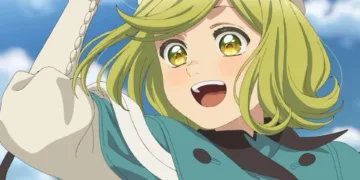




















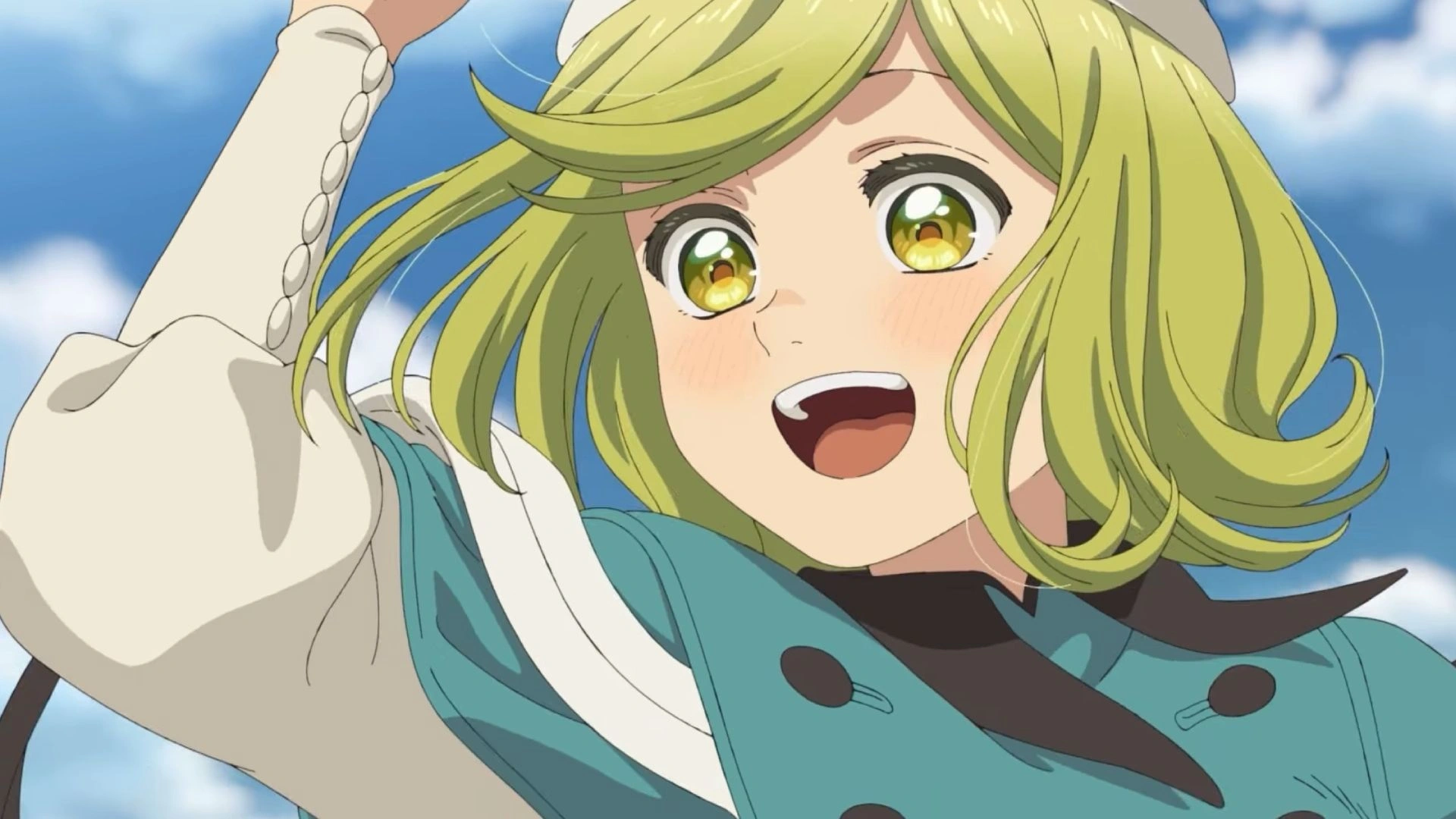

Witch Hat Atelier follows Coco, a girl born without magical abilities in a world where magic is kept under strict secrecy. Her ordinary life as a dressmaker’s daughter changes after she learns that magic works through careful drawing.
A tragic accident tied to a forbidden spell leads her into the care of Qifrey, an enigmatic witch who takes her on as an apprentice. At Qifrey’s atelier, Coco studies beside Agott, Tetia, and Richeh, learning the rules of artistry along with the risks carried by the craft.
The series pairs childlike wonder with grief, responsibility, and the moral weight of power. Its coming-of-age structure treats magic as a tactile discipline, shaped through study, hand movement, and practice. Against sweeping fantastical landscapes, the story reshapes familiar wizarding traditions by grounding enchantment in artistic labor.
Demystifying the Divine: The Science of Ink
The series reclaims fantasy from inherited privilege by building a magic system rooted in science, craft, and creativity. Spells are drafted with magical ink and pens, demanding precise command of glyphs and circles. This mechanical approach reflects a growing turn in global television toward systems that echo real-world expertise, training, and academic discipline.
Bug Films translates that physicality through animation that lingers on the act of drawing. The camera follows the movement of a pen across paper, the flex of a wrist, and the discipline behind each mark. A stray line can reshape reality, making artistic creation feel both wondrous and dangerous.
The world-building carries that precision into its environments. The witch town of Kalhn and the underwater Great Hall arrive packed with texture and density. Production design favors cluttered, lived-in detail, from food stalls bright with color to stationery shops weighted with memory.
Also Read






This visual richness gives the setting an authenticity often absent from the polished sterility of many expensive streaming productions. The imagery changes sharply when the story enters spaces created by forbidden magic. The dragon’s maze brings a stark gray palette to a world otherwise defined by whimsy. That visual shift mirrors the movement from discovery toward consequence.
The Labor of Belonging: Character and Class
Coco’s movement from frightened beginner to inventive problem-solver gives the series a sharp view of social mobility within a rigid hierarchy. Her past as a seamstress becomes her greatest strength. She approaches magic through the instincts of a craftsperson, using patience, observation, and the discipline learned from a tradeswoman’s household.
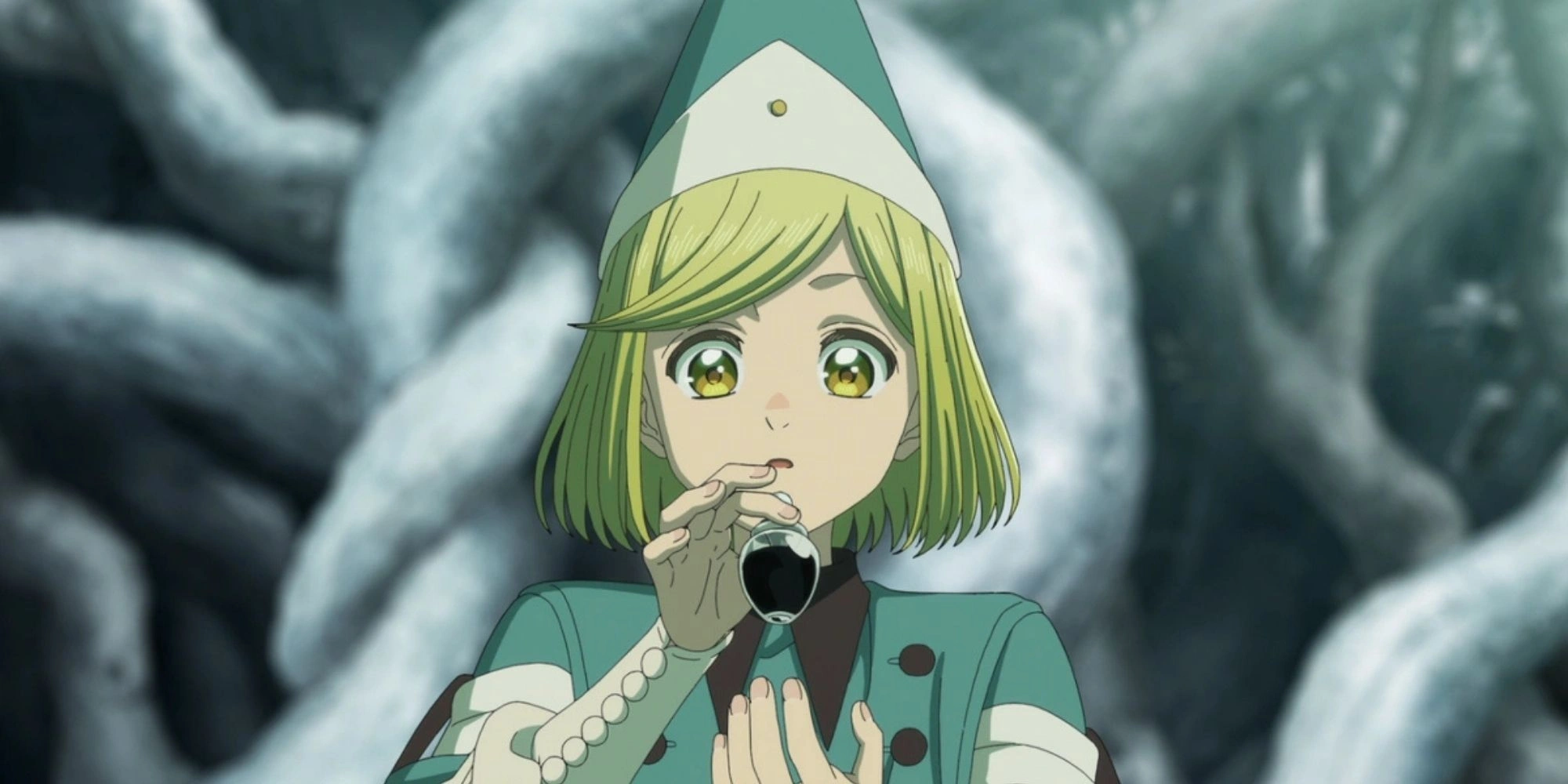
That background lets her find solutions unavailable to students shaped by privilege and formal expectation. Inside the atelier, the apprentice group becomes a small study of social friction. Agott represents the gatekeeper with punishing standards, and her early hostility toward Coco comes from fear that the untrained will disturb the established order. Tetia carries expectation differently, longing for magic to remain joyful while wrestling with its capacity for harm. Richeh follows a self-directed, eccentric path that questions the authority of the magical establishment.
Qifrey works as a layered mentor figure. He projects calm support, yet the direction repeatedly suggests oppressive power and concealed motives. That ambiguity implies that the systems designed to protect apprentices rest on secrecy.
The voice performances keep those tensions grounded. Rena Motomura gives Coco a soft melancholy that keeps her from feeling generic. Natsuki Hanae gives Qifrey an enigmatic charm that can slide into intimidation. Their chemistry sharpens the power imbalance built into apprenticeship, where every gift of knowledge carries a cost.
Cinematic Grandeur and the Rhythms of Stillness
Bug Films handles a difficult translation of Kamome Shirahama’s intricate, art-nouveau-inspired manga into fluid animation. The production thrives during high-pressure action, including Qifrey’s rescue of Coco and the battle against the dragon. Its deeper strength appears in the spaces between spectacle.
The direction allows quiet, reflective sequences to breathe. Coco sits alone in a boat, thinking through her next move. These pauses create tension, giving later bursts of kinetic, sakuga-dense animation a sense of narrative purpose.
Yuka Kitamura’s score is central to that atmosphere. She steps away from generic orchestral swells common to the genre, choosing whimsical motifs and devastating minor notes. The music sometimes disappears during chilling revelations, turning silence into a dramatic tool.
The direction reinforces that weight through unusual framing. Overhead shots in the spiraling maze make the young girls appear fragile against the architecture. The animation pays close attention to gait and physical presence. This focus on small bodies against an enormous world reflects a growing television tendency to privilege human vulnerability over digital spectacle.
The Ethical Blueprint: Merit vs. Mystery
Witch Hat Atelier examines the “Chosen One” tradition through a pointed social lens. The conflict around forbidden magic and suspicion toward the uninitiated echoes modern debates about access to technology and control over specialized knowledge. The story treats merit as something built through repetition, diligence, and failure. Its emphasis on labor challenges an industry habit of leaning on destiny, making power feel earned through work.
The series combines whimsy with investigation. Creatures such as the Brushbuddy seem ready-made for commercial appeal, yet they exist inside a story shaped like a biographical character study. The Brimmed Hat witches bring investigative pressure into the narrative.
Their interest in Coco’s reckless, rough-edged magic suggests that new methods often threaten established power. That tension gives the series cultural weight beyond its beauty. It becomes a thoughtful critique of who receives “the pen” in a society, and what changes once people pushed to the margins learn to write their own spells.
Witch Hat Atelier premiered globally on April 6, 2026, marking a significant milestone for high-fantasy anime on streaming platforms. The series is currently available for streaming on Crunchyroll, where it debuted with a special two-episode premiere. This adaptation has been highly anticipated by fans of the award-winning manga, offering a lushly animated look into a world where magic is a craft of precision and artistry.
Where to Watch Witch Hat Atelier Online




Full Credits
Title: Witch Hat Atelier
Distributor: Crunchyroll
Release date: April 6, 2026
Rating: TV-14
Running time: 24 minutes per episode
Director: Ayumu Watanabe
Writers: Hiroshi Seko (Series Composition), Kamome Shirahama (Original Story)
Producers and Executive Producers: Hiroaki Kojima, Zach Bolton (ADR Producer)
Cast: Rena Motomura, Natsuki Hanae, Hibiku Yamamura, Kurumi Haruki, Hika Tsukishiro, Kotono Mitsuishi, Misaki Kuno
Director of Photography (Cinematographer): Tadashi Kitaoka
Editors: Yuki Honda
Composer: Yuka Kitamura
The Review
Witch Hat Atelier
Witch Hat Atelier is a masterclass in world-building that strips away the vanity of the "chosen one" trope to celebrate the grit of the artisan. By framing magic as a rigorous, tactile craft rather than an innate birthright, the series offers a grounded yet breathtaking exploration of power and its consequences. It is a visually divine and narratively sharp critique of gatekeeping, wrapped in a story that honors the labor of those who dare to innovate.
PROS
- Meticulous attention to detail that honors the intricate art style of the source material.
- A refreshing, logic-based approach to sorcery that emphasizes skill, study, and creative problem-solving.
- Yuka Kitamura’s music perfectly balances whimsical wonder with an underlying sense of urgency and dread.
- The relationship between Qifrey and his students adds a layer of mystery and ethical ambiguity.
CONS
- The commitment to stillness and process may feel slow to viewers seeking constant, high-octane action.
- The sudden transition from cozy "slice-of-life" moments to devastating tragedy can be jarring.