




























A quiet morning at the Kreinberg Museum shatters when a priceless gemstone disappears, and the theft quickly expands into a homicide case. Feline Forensics and the Meowseum Mystery, developed by Nobody Crown and published alongside Devcats, builds its point-and-click detective setup around that sudden disruption.
Released on PC through Steam in May 2026, the game places players in the polished shoes of The Detective, a sharp, suited cat investigator. Its mystery uses a soft-boiled comic tone, replacing the usual severity of crime fiction with animal wordplay, patient observation, long conversations, and light puzzle work. The result is a relaxed investigation built around personality, setting, and steady clue collection.
Exhibition Crimes and Anthropomorphic Suspects
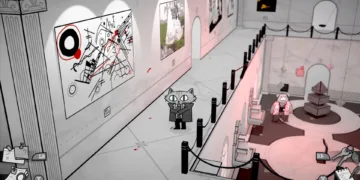
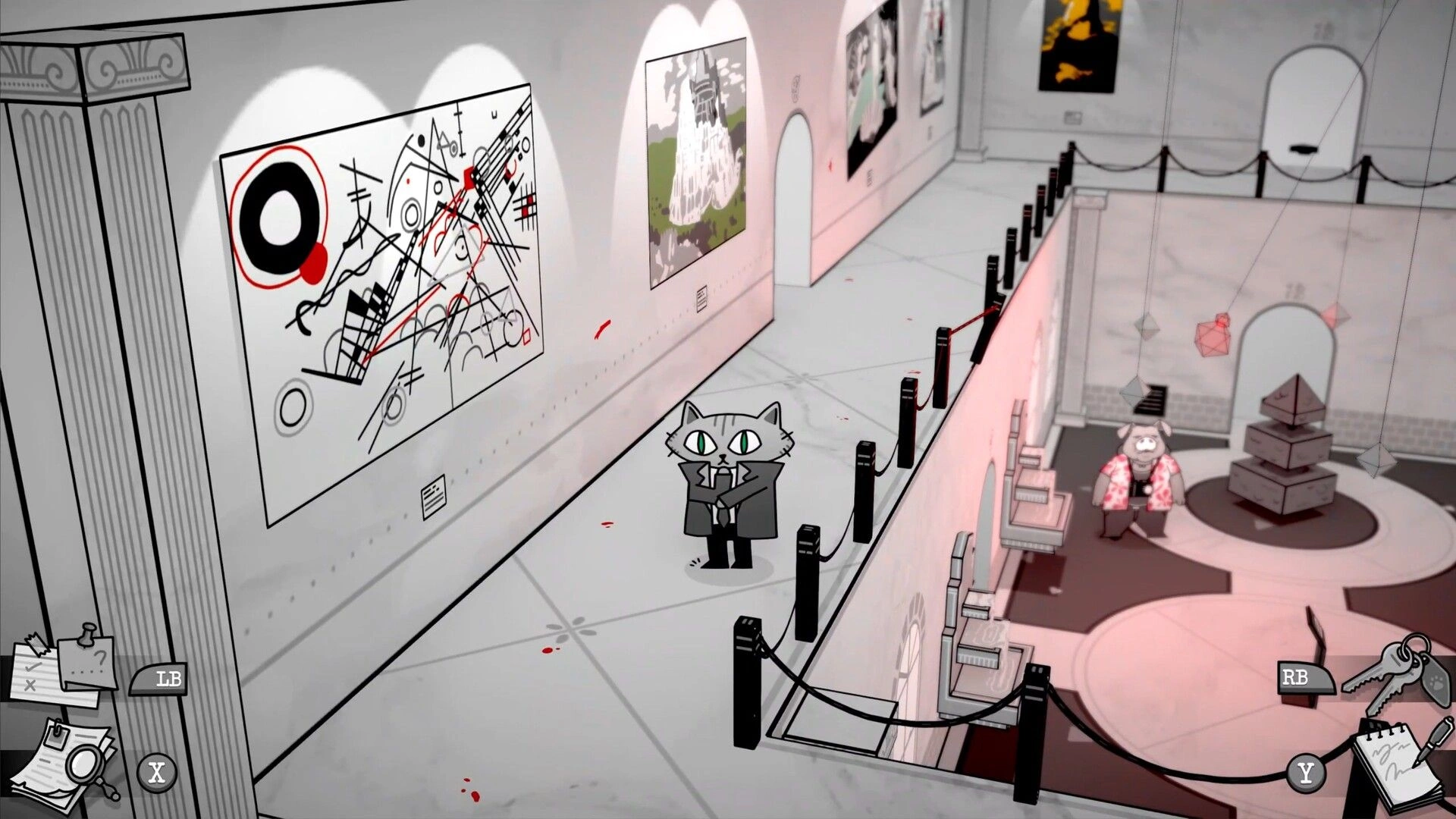
The full story stays inside the Kreinberg Museum, known locally as the Meowseum. The location works through environmental storytelling, with gallery walls filled by animal-themed riffs on classical and modern masterpieces. Much of the pleasure comes from inspecting these altered paintings and catching jokes hidden in the faux brushwork.
This satirical museum backdrop supports a lineup of eccentric suspects, giving the game a tone that sits near anthropomorphic noir works like Chicken Police and Backbone. The suspect list includes a true-crime obsessed raccoon who filters events through television procedural clichés, a pig with a private past, and a proud dog whose guarded behavior points toward missing timeline details.
The script packs animal puns into conversation trees, room descriptions, and witness exchanges. That writing style reshapes the rhythm of the case. The jokes soften the murder premise and move attention toward character-based exploration. The game keeps its pace through curiosity, conversation, and small behavioral reveals.
Players can study the odd habits of each museum resident at leisure, letting interrogations play like comic sketches with investigative value. The crime gives structure to a series of character studies, so clue tracking stays light, readable, and dialogue-heavy. Each exchange supports the same comic mode, turning the search for the culprit into a close reading of witty banter.
Also Read





Deductions and the Mechanical Log
The game’s structure uses a loop of information gathering and witness questioning that closely recalls The Duck Detective: The Secret Salami. Progress depends on talking to suspects, collecting statements, and comparing testimonies until direct contradictions appear.
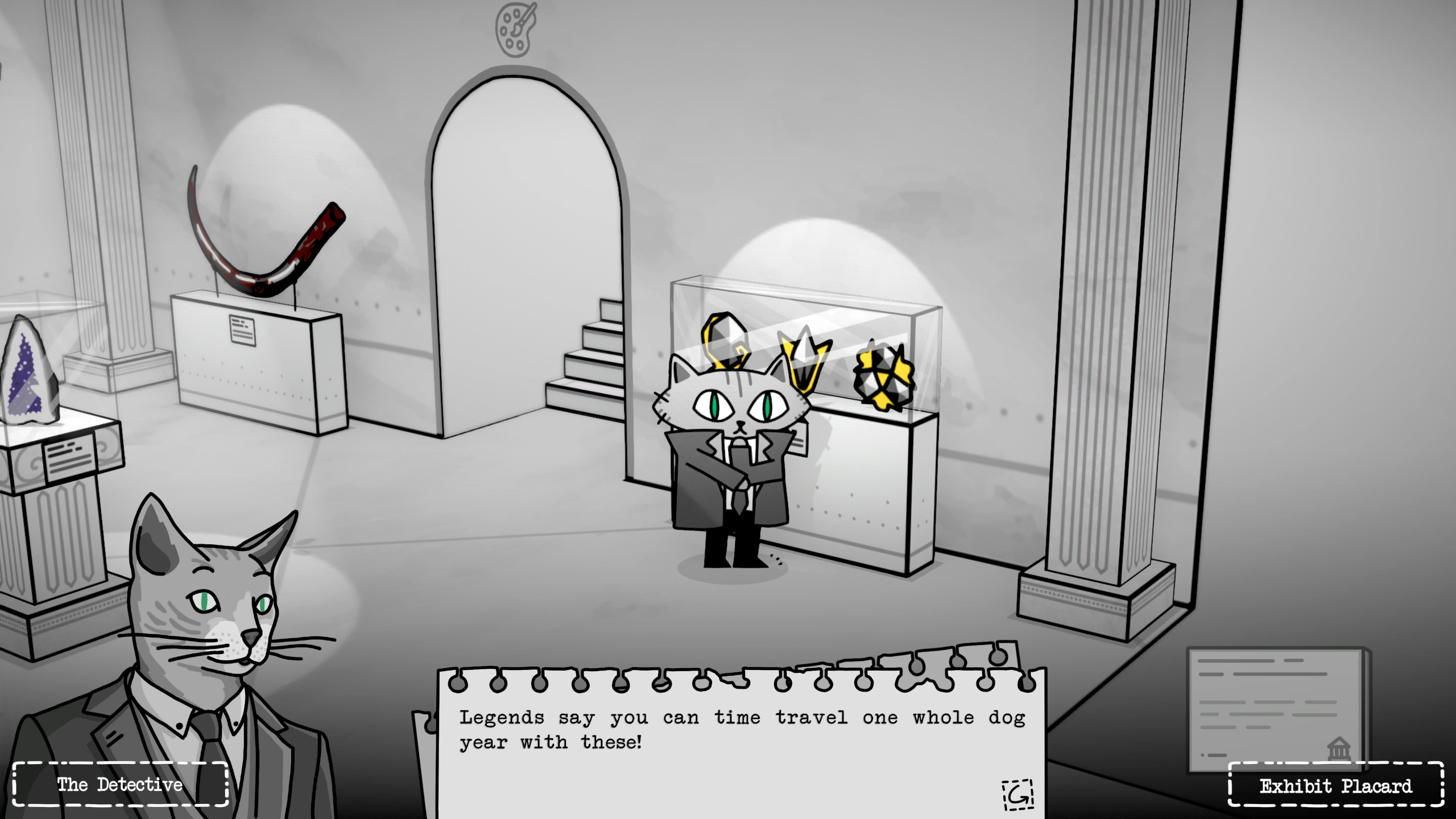
Once the player spots an inconsistency and calls attention to it, new conversation routes and fresh leads open. The investigator journal gathers discovered information and uses a fill-in-the-blanks timeline system. To rebuild the crime, players choose nouns, verbs, or locations from unlocked keywords and place them into pre-written lines.
The journal gives immediate feedback through a color-coded evaluation setup. A fully correct timeline section receives a green underline. A sequence with small errors gets a yellow underline, and multiple wrong choices produce a red underline. The game also includes an automated alert system that tells the player the moment a new lead or possible contradiction becomes available.
This design removes penalties, game-over screens, and strict time limits. Ace Attorney builds tension through punitive meters, and Feline Forensics takes a gentler route by making mistakes mechanically harmless. The systems favor legwork, conversation management, and organized checking over heavy puzzle pressure.
Since the journal automatically tracks and sorts clues, the player’s main activity becomes moving between characters, triggering dialogue, and testing the right information at the right time. Deduction becomes a calm sorting exercise, methodical and approachable, with forward motion built into the interface.
Aesthetic Textures and Interface Architecture
The presentation uses hand-drawn 2D character sprites set against fully rendered 3D isometric environments. That pairing creates a graphic-novel effect, strengthened by a monochrome noir palette. Grey spaces receive sudden bursts of bright color that guide attention toward major items or narrative beats.
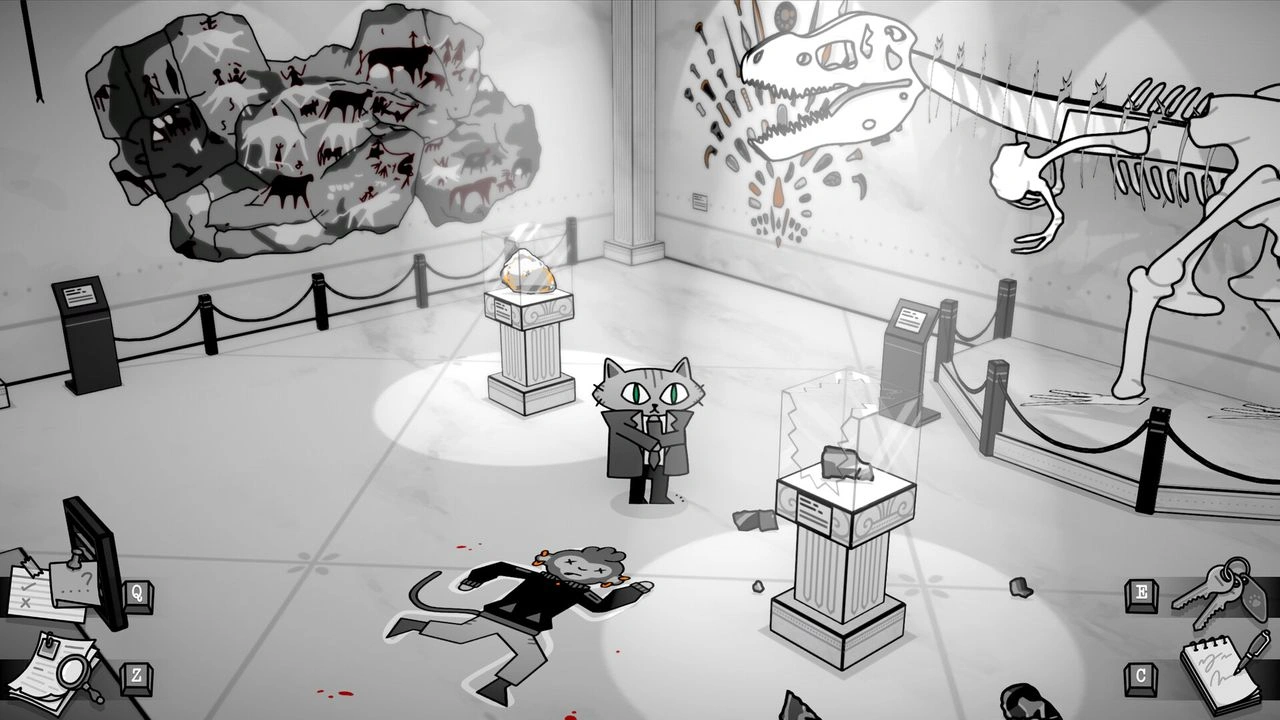
The audio follows the same controlled style. A mellow jazz score, built from saxophones, speakeasy piano, and plunger trumpet, gives the museum a steady rhythm. Typewriter sound effects click during text delivery, making each line feel like part of an active case file.
The interface divides findings into separate screens for leads, physical evidence, and witness testimony. This keeps information cleanly sorted, yet the strict folder separation leads to frequent menu switching and extra button presses compared with a single notebook layout.
Conversation design creates its own friction, since nested dialogue trees often send the player back to the main sub-menu after one line of questioning ends. The game also requires keyboard or gamepad input, with native mouse support absent.
That gamepad-focused control scheme changes how evidence handling feels during close inspections, including moments where players rotate cards to discover hidden text. The customization options are stronger. The settings menu includes dyslexic-friendly fonts, adjustable text speeds, and a puzzle assistance mode with explicit hints. These tools make the experience flexible for different reading needs, helping offset the heavier menu structure.
The Review
Feline Forensics and the Meowseum Mystery
Nobody Crown delivers a charming, casual detective experience that succeeds through whimsical writing and a striking visual aesthetic. The low-stakes mystery relies on steady legwork and automated tracking, providing a stress-free environment for fans of light narrative adventures. While the heavy interface design and nested dialogue trees introduce minor technical friction, the abundant humor and jazz-infused atmosphere create an enjoyable, relaxed playthrough. It represents a solid, cozy entry for point-and-click players seeking lighthearted entertainment over intense mental challenges.
PROS
- Charming hand-drawn 2D sprites combined with 3D isometric environments.
- Clever animal parodies of classical and modern artwork.
- Relaxing, mellow jazz soundtrack and immersive typewriter sounds.
- Accessible options including dyslexic fonts and puzzle assistance toggles.
CONS
- Bloated interface with data split across too many separate screens.
- Nested dialogue trees that regularly reset during questioning.
- Lack of native mouse support and heavy reliance on controllers or keyboards.
- Low mechanical difficulty that features no penalties for incorrect deductions.