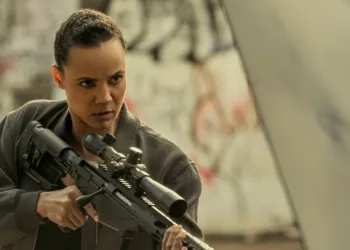























Hélène Rosselet-Ruiz makes her debut feature appearance with Madame, a chilling architectural procedural co-written with Pauline Guéna. The story is fixed inside a grand, hyper-monitored mansion in Paris’s ultra-wealthy Golden Triangle district. Laura, played with exceptional stillness by Malou Khebizi, enters this limestone fortress as a pragmatic twenty-year-old using domestic work as a financial bridge before joining the French military.
She accepts a highly paid, live-in position serving Souria, portrayed by Soundos Mosbah, the glamorous and fully stranded mistress of an absent Saudi prince. From that premise, the film constructs a volatile psychological enclosure. Laura steps into a house governed by rigid domestic caste systems, grotesque waste, and panoptic observation. She must learn its rules under an employer who becomes her tormentor and, with grim irony, her fellow prisoner. Domestic space turns into occupied territory. The wallpaper seems to know too much.
The Geometry of Subjugation
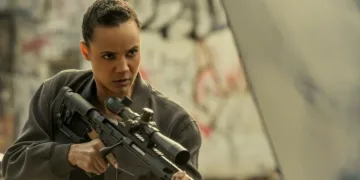
Laura’s stony charisma reads as tactical armor. Her military preparation occurs in stolen fragments, through disciplined push-ups inside a cramped servant’s room hidden behind seamless wallpaper. Her small acts of autonomy carry their own charge, including playful selfies taken inside her employer’s cavernous wardrobe.
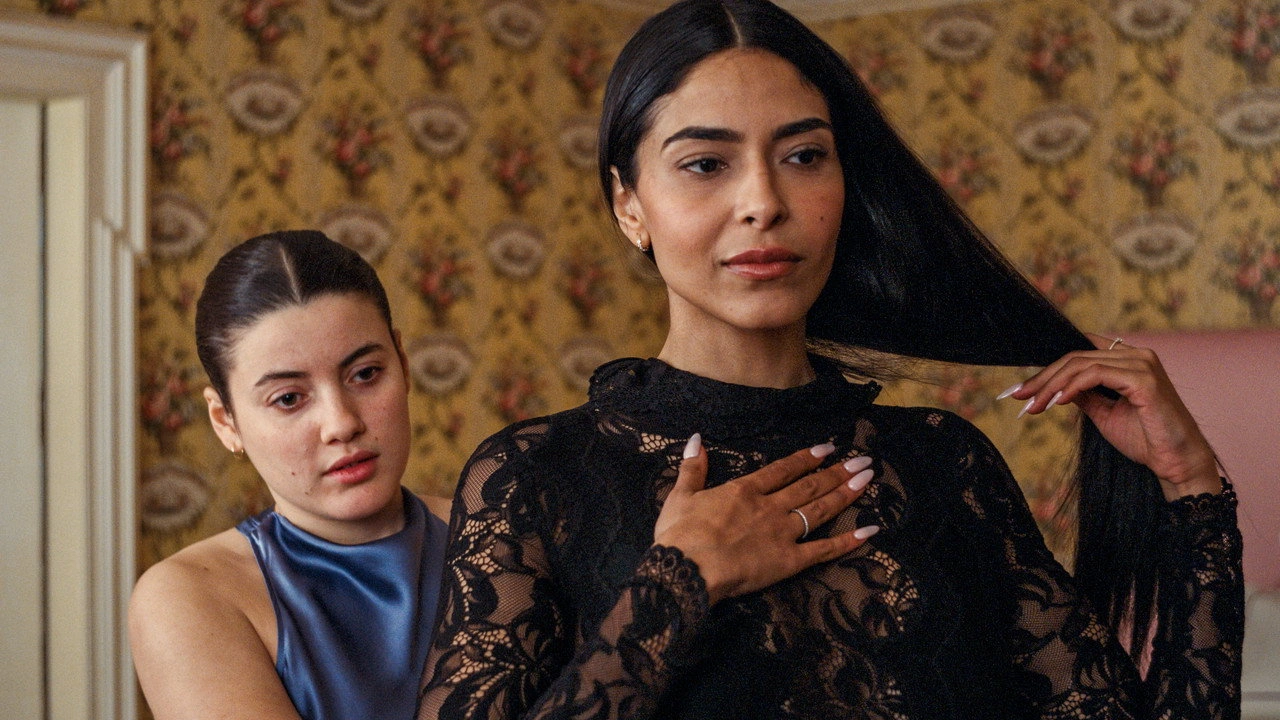
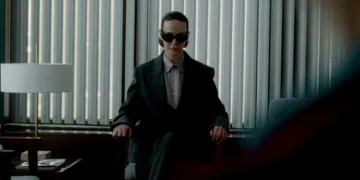
Souria answers that quiet dignity with a loud, brittle performance of control. She turns authority into transaction and humiliation, ordering Laura to sprint on a treadmill and hurling classist insults with the precision of someone terrified of silence.
That cruelty grows from a pathetic delusion: Souria believes her royal lover will dissolve his legal marriage and raise her status. The fantasy curdles the air around her. During a sharp confrontation, Laura threatens to resign, and Souria’s imperious façade collapses into the desperate contrition of a frightened child. The breakdown creates a fragile alliance, unstable from its first breath.
The social design grows harsher through Emre, the Palestinian chauffeur and majordomo played by Ziad Bakri with heavy-lidded exhaustion. He guides Laura through the household’s serpentine protocols and carries his own systemic grief. He endures exploitation because the prince controls his family’s emigration prospects.
The hierarchy fully cracks when Emre tells Laura her real function: she is expected to spy on the mistress. Souria’s authority is decorative. She is a maintained asset under constant surveillance. Every resident occupies a tier of captivity, surrendering agency for survival.
The Optics of the Panopticon
Cinematographer David Chambille builds the film’s thriller grammar through expressionistic spatial pressure. Low-resolution security footage and soaring drone shots mimic omnipresent CCTV grids. These cold, timestamped images turn the frame into a clinical panopticon, making the viewer an unwilling participant in the monitoring process. A chilly honor, really.
Chambille places that mechanical surveillance beside a stalking, hesitant hand-held camera that follows the characters through vast, echoing salons. The mansion dwarfs its inhabitants. Shot composition becomes a diagram of control: bodies pinned beneath ceilings, swallowed by corridors, cut down by sharp angles and deep shadow. The lighting carries a noir inheritance through chiaroscuro effects and expressionistic framing, yet the modern deviation is digital and remote. The old alleyway has become a camera feed.
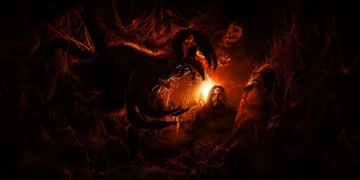
Dom La Nena’s sparse, discordant score sharpens the spatial anxiety, pushing low-frequency dread into scenes of polished domestic quiet. The film’s symbolic objects carry the smell of existential rot. Abundance appears as waste: untouched fast food cooling on marble counters, red roses rotting in tall arrangements. The bluntest metaphor is also hard to shake, a depressed black panther pacing inside a tiny closet enclosure, sedated by the staff to silence its cries. Subtle? No. Effective? Annoyingly so.
Suzana Pedro’s pacy editing keeps a tense rhythm inside the house, making the labor feel properly draining. The claustrophobia loosens during a brief, beautifully lit scooter ride along the Seine. The sequence gives the film a rare breath, and its optimism feels deliberately breakable. A later scene following Laura’s short reunion with her sister’s working-class peers clarifies her alienation. She has become foreign to the ordinary world outside the gates.
The Cold Mechanics of Impunity
The screenplay works as a lean psychological thriller, using genre mechanics to strip romance from labor exploitation. Rosselet-Ruiz treats class division as a physical law, a force that presses bodies into place. Free will exists here in cramped gestures: a resignation threat, a stolen selfie, a glance toward a camera. Identity becomes occupational, surveilled, purchased, and revised by whoever controls the system.
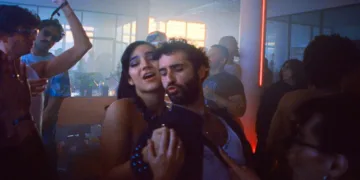
The tension shifts during a late, destabilizing scene in which Laura, Souria, and Emre drop their professional roles during heavy drinking. Their shared communion feels dangerous because the house’s social architecture was never built to survive intimacy. For a moment, tormentor, servant, and intermediary seem to occupy the same human register. The moment cannot hold. The film knows this, and it has the manners to make us hope anyway.
The script resists comforting catharsis common to mainstream domestic dramas, accelerating toward a sudden, icy climax. A single chilling glance at a security camera signals an abrupt departure and exposes the impunity granted to those who own the lenses. The film ends without traditional narrative resolution or moral balancing. Some viewers may find that refusal severe. The severity fits its thesis. In this social tier, power operates without accountability, and structural captivity rarely receives a tidy answer.
The French drama and psychological thriller Madame premiered on May 19, 2026, at the 79th Cannes Film Festival as part of the Special Screenings selection. Directed by Hélène Rosselet-Ruiz, the feature film is distributed internationally by mk2 films and inside France by Ad Vitam. Following its prestigious festival run, the movie is slated for streaming availability on MUBI later in the year, alongside select art-house theatrical rollouts.
Full Credits
Title: Madame (also known as Le Triangle d’Or)
Distributor: Ad Vitam, mk2 films
Release date: May 19, 2026
Running time: 90 minutes
Director: Hélène Rosselet-Ruiz
Writers: Hélène Rosselet-Ruiz, Pauline Guéna
Producers and Executive Producers: Marie-Ange Luciani, Nancy Grant
Cast: Malou Khebizi, Soundos Mosbah, Ziad Bakri, Kassem Al Khoja
Director of Photography (Cinematographer): David Chambille
Editors: Suzana Pedro
Composer: Dom La Nena
The Review
Madame
Madame is a chilly, unsparing anatomy of captivity that trading-in comforting melodrama for the tense architecture of a psychological thriller. Hélène Rosselet-Ruiz avoids preachy moralizing, utilizing an ominous surveillance aesthetic to turn luxury into a claustrophobic prison. While the narrative trajectory occasionally follows predictable genre grooves, the remarkable, understated performances from Malou Khebizi and Ziad Bakri ground the cold atmosphere in sharp human desperation. It is an impressive, uncompromising debut that cuts straight to the bone of structural exploitation.
PROS
- The brilliant integration of low-resolution CCTV textures and rigid drone framing creates an authentic, chilling atmosphere of constant paranoia.
- Malou Khebizi provides a quiet, charismatic anchor that prevents the character from slipping into simple victimhood.
- Dom La Nena’s discordant musical score builds an underlying tension that effectively clashes with the visual luxury.
CONS
- The overall narrative momentum relies on familiar thriller tropes once the reality of the household dynamic becomes clear.
- The sudden structural shift and rapid acceleration toward the end can feel somewhat hasty rather than organic.