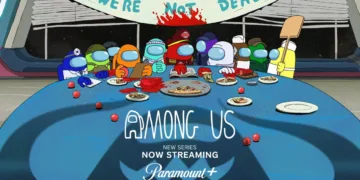













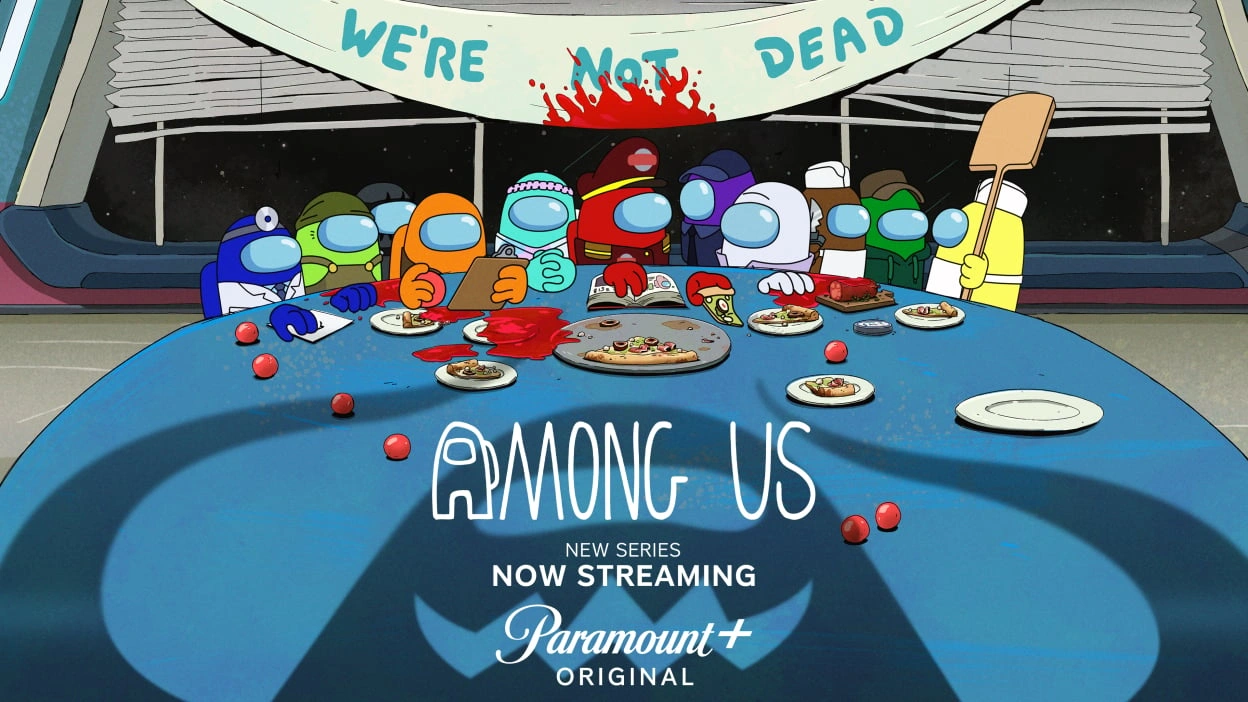

Among Us turns one of gaming’s strangest success stories into a compact animated murder mystery with a surprisingly sharp sense of comic timing. Innersloth’s 2018 social deduction game became a pandemic-era fixture through online play, Twitch streams, YouTube chaos, and the universal pleasure of accusing friends with reckless confidence.
Paramount+’s adaptation carries that same basic anxiety into scripted television: a crew of color-coded astronauts is transporting Ore+ for the Mira corporation, only to discover that a shapeshifting alien imposter is hiding among them, sabotaging systems and killing crewmates with alarming creativity.
Created by Owen Dennis, the 10-episode season keeps the familiar ingredients intact: emergency meetings, accusations, suspicion, ejections, and the grim comedy of watching a tiny jellybean astronaut meet a horrible end. The episodes run roughly 10 to 15 minutes, which gives the series a quick, snackable rhythm. That brevity helps, since the source material is intentionally thin. The game thrives on player interaction, panic, and social betrayal. The show has to generate those same sparks through character, performance, editing, and scripted farce.
From Button Presses to Blood Tests
The smartest structural choice in Among Us is its loyalty to the game’s loop. Tension builds in the corridors. Someone dies. The crew gathers. Everyone starts talking too fast. A verdict lands, sometimes with all the accuracy of a group text argument at 2 a.m. The debate scenes carry the strongest charge because they preserve the anxious pleasure of the original game. They are messy, funny, and often powered by terrible logic, which feels right. Suspicion is the show’s real oxygen supply.
The murder mystery format gives each episode a useful snap. A death, a reveal, or a fresh shift in suspicion usually arrives near the end, nudging the viewer into the next short chapter. The runtime keeps the pacing buoyant, though it can also expose weaker material. A few side plots feel like comic padding, especially when relationships or emotional turns arrive before the characters have earned that weight.
The tonal progression is stronger. Early episodes lean into silliness, workplace absurdity, and goofy character business. As the body count climbs, the atmosphere darkens without turning the show into a grim sci-fi dirge. Death is still cartoonish, sometimes grotesquely so, but the series does not always wink after the knife lands. That restraint gives the mystery a little bite. For a show about walking capsule people, it knows when to stop mugging for the camera.
Also Read




Big Voices, Tiny Bodies
The series faces an obvious character problem: nearly everyone has the same rounded silhouette, a visor, and a color for a name. That design is faithful to the game, but television needs sharper distinctions than “the green one seems nervous.” The voice cast does the heavy lifting, then carries a few extra crates while the ship’s captain looks busy.
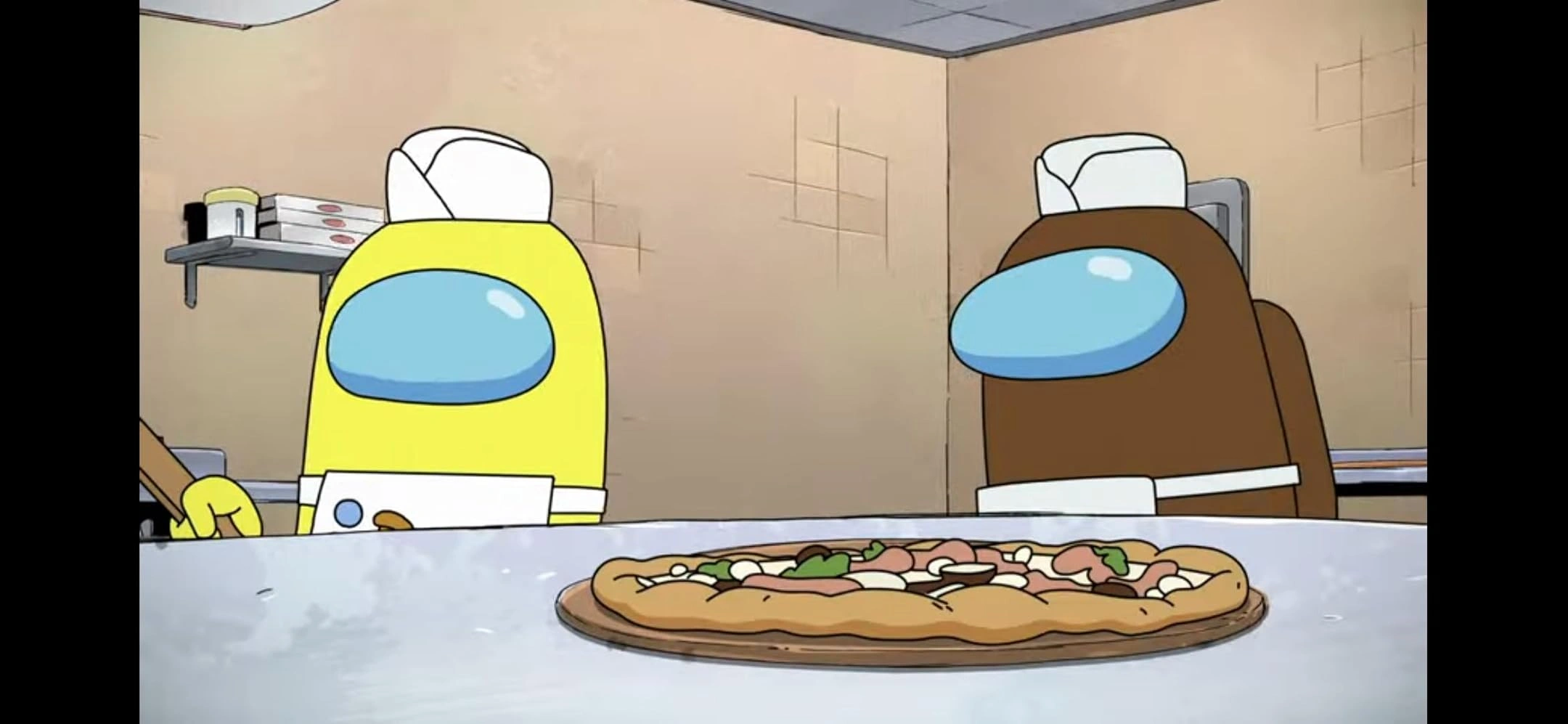
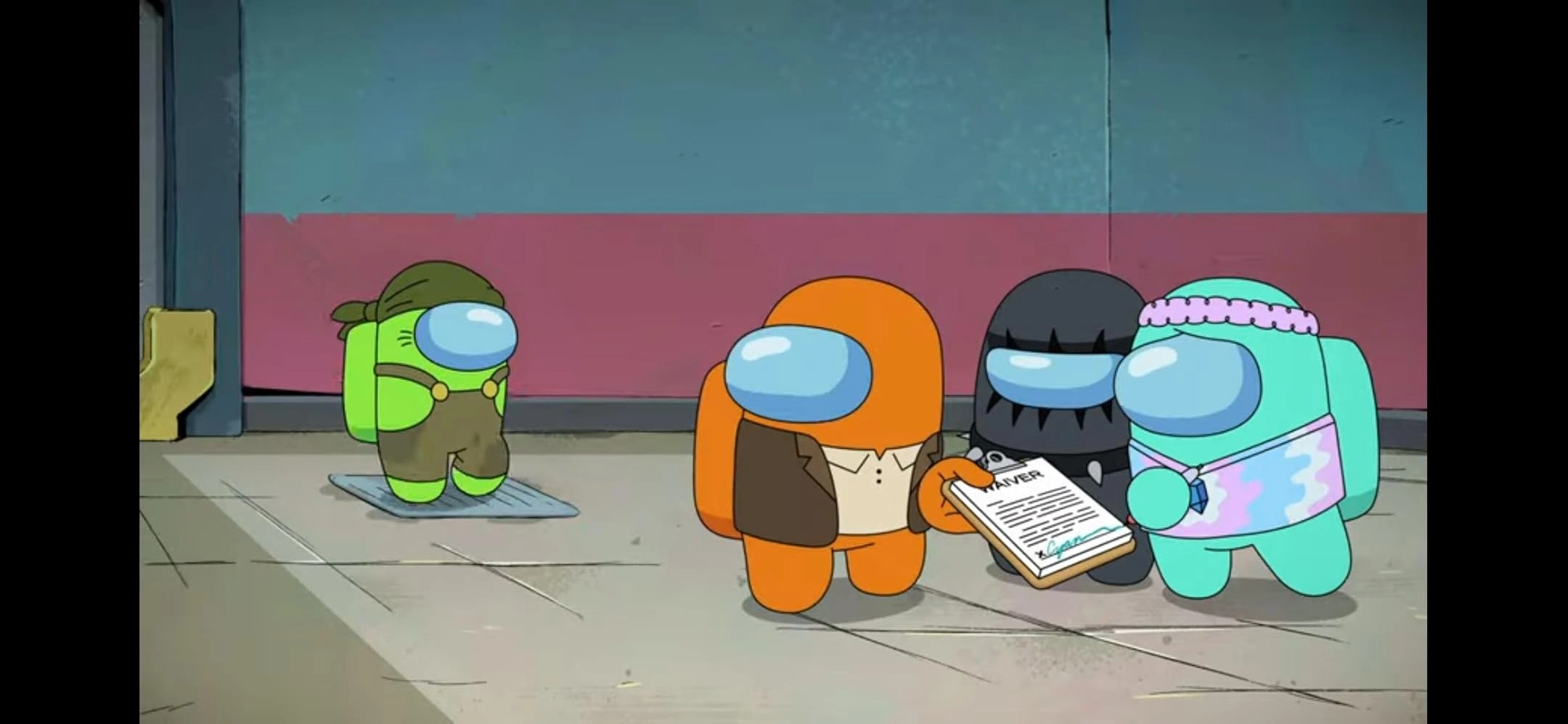
Elijah Wood gives Green a bright, needy desperation as an unpaid intern who wants to stay aboard, preferably near pizza and far from death. Yvette Nicole Brown turns Orange into a chillingly cheerful HR presence, the kind of corporate loyalist who could watch a murder report get filed under “team incident.” Randall Park’s Red is an insecure captain with very little command aura, which becomes funnier each time the crew needs actual leadership. Dan Stevens makes Blue’s doctorly smoothness absurdly magnetic, proving that a visor and a spacesuit cannot kill vocal charisma.
Ashley Johnson brings welcome steel to Purple, the security figure who often feels like the only crewmate with a functioning survival instinct. Kimiko Glenn’s Cyan adds spiritual optimism, sometimes charming and sometimes stretched thin. Wayne Knight gives Lime a cranky, paranoid mechanic energy, while Patton Oswalt’s White enters as a rich contest winner whose competence lands with suspicious comic precision.
The comedy works best when it grows from these personalities. The show’s funniest material comes through dry dialogue, corporate satire, power imbalance, and the petty nonsense people cling to while death stalks the vents. It avoids leaning too heavily on stale meme references, a wise move for any animated comedy produced years after its source became a cultural obsession. Some jokes still run out of air, and several characters leave before their full potential registers. The cast keeps the ship lively, even when the writing gives them slightly recycled emergency rations.
Cute Crewmates, Ugly Deaths
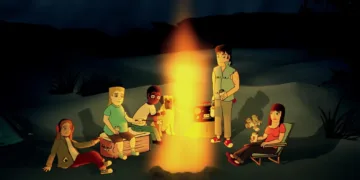
Titmouse’s animation walks a narrow corridor between fidelity and expression. The series keeps the game’s clean, minimal crewmate designs, which could have made the show visually flat. Instead, the animators pull personality from posture, timing, props, costume details, and visor behavior. A small lean or pause can sell a joke. A stiff silence after an accusation can do half the work.
The imposter imagery gives the show its nastier visual kick. The alien transformations bring a squishy body-horror edge to the polished spaceship setting, pushing the series closer to The Thing by way of Saturday morning panic. The violence remains cartoonish, yet it is frequent and pointed enough to make the TV-PG label feel a little optimistic. Parents expecting harmless game-brand fluff may find severed crewmates and chewed faces floating around the airlock. Surprise: the bean people bleed.
The sound design and editing keep the episodes moving. Quick cuts sharpen accusations, awkward pauses underline failed jokes, and the sterile hum of the ship adds a faint sci-fi chill under the comedy. Certain episodes also bend the ship’s visual logic, letting the series slip into strange, surreal territory. Those flashes are welcome because they make the adaptation feel less like a replay and closer to an animated comedy with its own pulse.
Among Us is fast, funny, uneven, and clever about the absurdity of its own existence. It finds real entertainment in panic, suspicion, and workplace dysfunction in space. The premise is thin, the side plots wobble, and the whole thing may vanish from memory like a crewmate tossed into the void. Still, for a show built from emergency meetings and tiny astronauts trying not to die, how much heavier did it need to be?
Among Us is an animated sci-fi mystery-comedy television series that made a surprise debut in its entirety on Paramount+ on June 5, 2026. Created by Owen Dennis and produced by CBS Studios, Titmouse, and Innersloth, the adaptation stays faithful to the massive social deduction video game of the same name. The plot tracks a colorful group of crewmates aboard the spaceship known as The Skeld as they try to complete daily operational tasks while dealing with a lethal, shapeshifting alien impostor who is covertly murdering the staff and sabotaging the vessel. Viewers can stream all ten episodes of the first season exclusively on the Paramount+ streaming platform.
Where to Watch Among Us Online







Full Credits
Title: Among Us
Distributor: Paramount+
Release date: June 5, 2026
Rating: TV-14
Running time: 22–24 minutes per episode
Director: Kristi Reed, Melissa King
Writers: Owen Dennis, Kiran Deol, Brian David Gilbert, Karen Han, Alex Horab, Justin Michael, Madeline Queripel, Ayla Glass
Producers and Executive Producers: Owen Dennis, Forest Willard, Marcus Bromander, Carl Neisser, Chris Prynoski, Shannon Prynoski, Antonio Canobbio, Ben Kalina
Cast: Randall Park, Yvette Nicole Brown, Elijah Wood, Ashley Johnson, Dan Stevens, Liv Hewson, Kimiko Glenn, Debra Wilson, Patton Oswalt, Phil LaMarr, Wayne Knight
The Review
Among Us
Among Us delivers a fast, amusing, and occasionally tense take on the beloved social deduction game. The voice cast shines, comedy lands in unexpected ways, and the animation injects personality into minimalist crewmates. Its thin premise and uneven side plots prevent it from reaching lasting depth, but the series succeeds at creating suspense, humor, and the thrill of suspicion in bite-sized, bingeable doses.
PROS
- Engaging voice performances from a star-studded cast
- Clever mix of comedy, suspense, and light horror
- Maintains the game’s tension and paranoia effectively
- Quick, accessible 10–15 minute episodes
- Surprising flashes of surreal animation and visual creativity
CONS
- Premise remains thin; narrative depth is limited
- Some side plots feel unnecessary or padded
- Certain characters die before full development
- Humor occasionally relies on repetitive gags
- TV-PG rating underestimates the level of cartoon violence