
















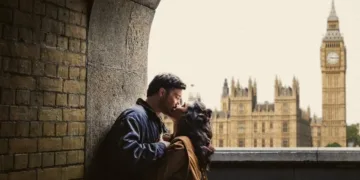










Gerald Fox’s Kinaesthesia treats silent cinema as a sleeping body that never stopped moving. The documentary essay turns toward the early decades of film, roughly from 1900 to 1929, and asks what happened when artists first discovered that projected images could disturb the nerves, bend time, and make the spectator feel motion from a chair in the dark.
The title refers to the sensation of movement felt within the body. Fox connects that bodily response to dreaming, where the mind falls through space while the flesh remains still. Drawing heavily from Vlada Petrić’s 1978 essay Film and Dreams, the film becomes an homage to the late film historian and a guided descent through cinema’s first great oneiric age.
Archival clips, voice-over, Alan Snelling’s music, and appearances by Goran Kostic as Petrić shape the work into a scholarly séance. Kinaesthesia argues, with deep affection, that silent film was never primitive. It was sensual, erratic, morbid, ecstatic. It understood that cinema could think like a dream before it learned to talk.
The Archive of the Unconscious
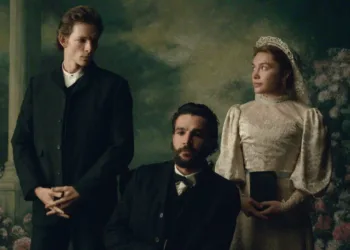
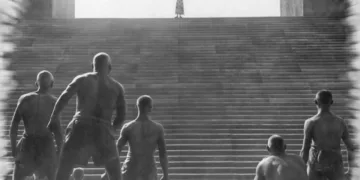
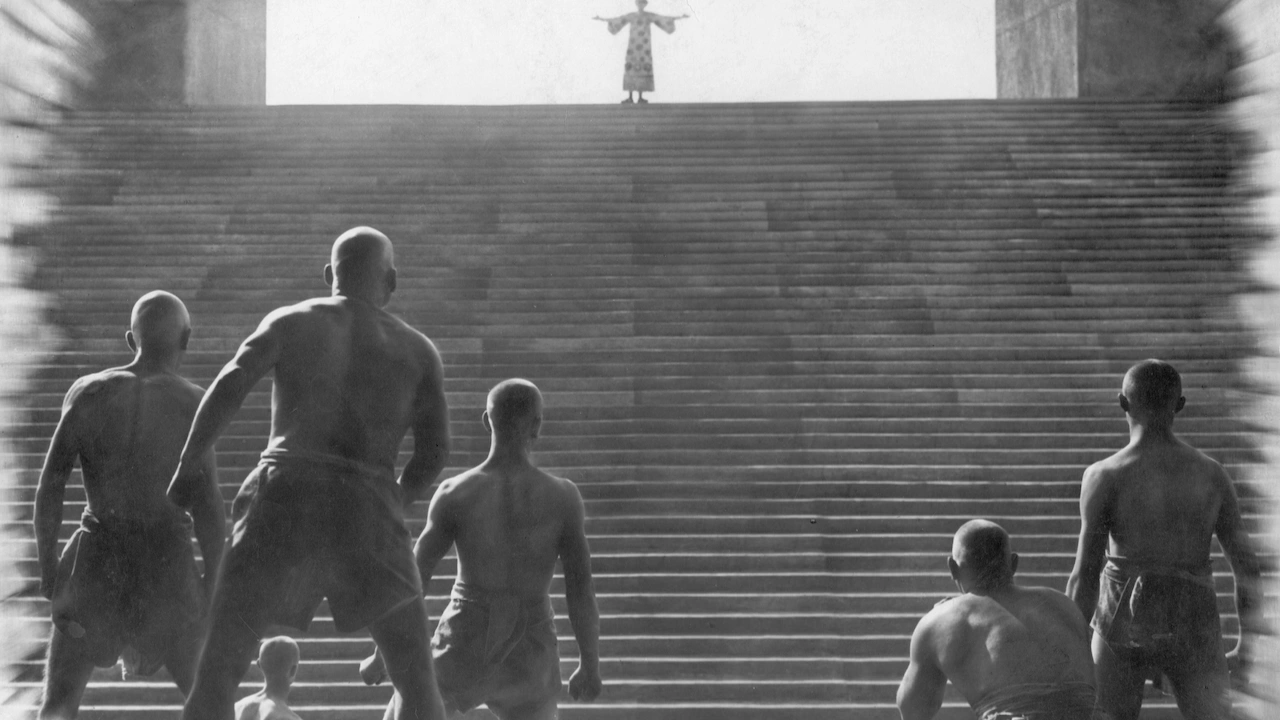
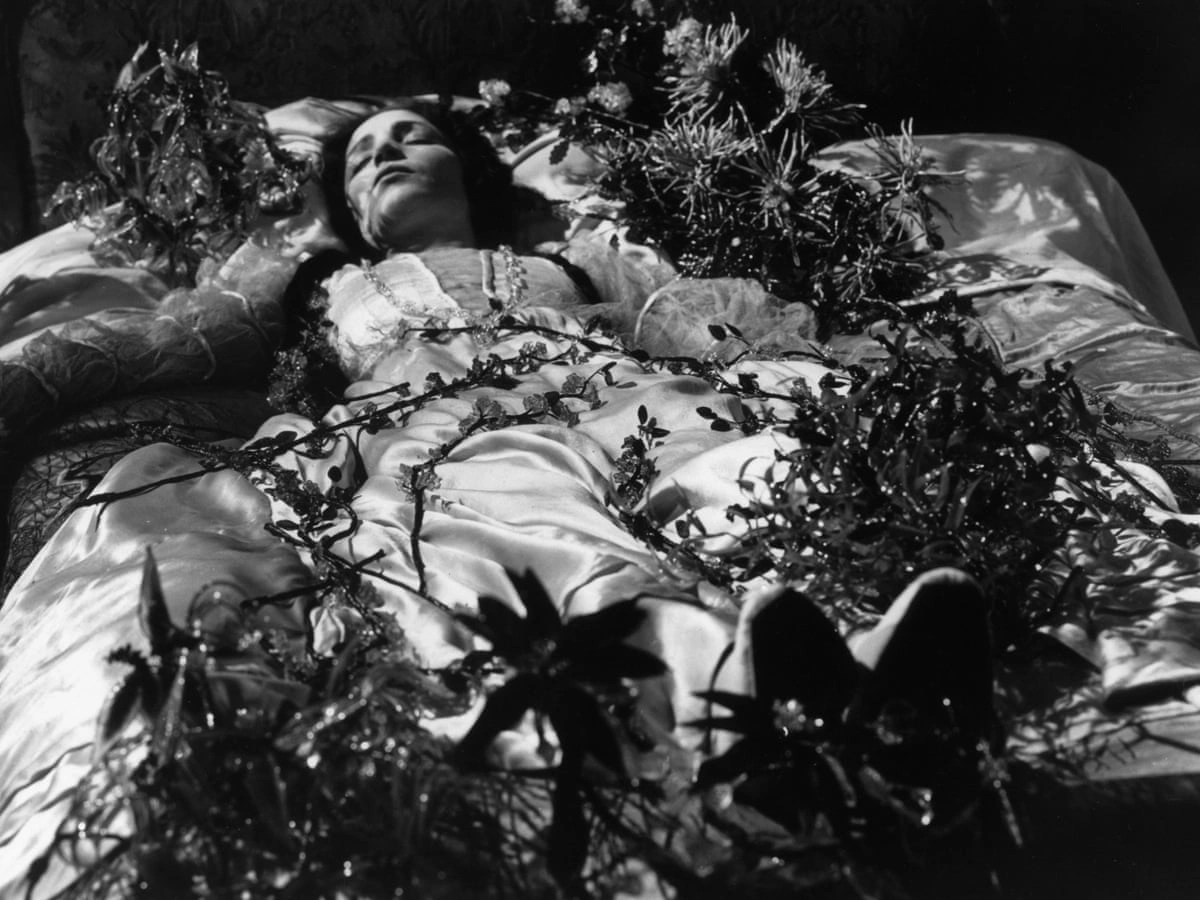
The most potent force in Kinaesthesia lies in its chosen images. Fox moves through fantasy, French Impressionism, German Expressionism, Soviet montage, avant-garde experiment, and silent comedy as if arranging relics from a collective dream.
Georges Méliès gives cinema its magician’s pulse. D.W. Griffith’s The Avenging Conscience turns guilt into ghostly apparition. F.W. Murnau and Fritz Lang carve dread into architecture, while Metropolis makes machinery look almost religious in its hunger.
The film’s argument gathers strength through technique. Superimposition, double exposure, reverse motion, distorted angles, shifting camera speeds, montage, and symbolic design become instruments of inward life. These were practical effects, yet they feel metaphysical. A body vanishes, a face fractures, a city mutates into nightmare. The screen becomes less a window than a nervous system.
Fox’s range is generous. Eisenstein, Abel Gance’s Napoléon, Buñuel and Dalí’s Un Chien Andalou, Chaplin’s The Gold Rush, Buster Keaton, Jean Epstein, Germaine Dulac, Teinosuke Kinugasa’s A Page of Madness, Jean Vigo, and Maya Deren’s Meshes of the Afternoon all enter the procession. Some clips feel canonical, others arrive like recovered dreams from a buried chamber.
What Kinaesthesia restores is the shock of invention. These films have been placed inside history books for so long that their danger can look tamed. Fox lets the danger breathe again: comic, grotesque, erotic, childish, death-haunted.
Reverence, Rhythm, and the Weight of the Lecture Hall
As a film essay, Kinaesthesia is meticulously assembled, driven by curatorial devotion and a sincere belief in cinema as thought made visible. Its recurring dramatized scenes, with Goran Kostic embodying Petrić, try to thread the archive into a single nocturnal passage. Kostic becomes a spectral guide, a professor wandering through the house of images, watching history watch him back.
The device sometimes works beautifully. His presence gives the film a human temperature, a sense that scholarship can be a form of longing. At other moments, it interrupts the spell. The archival clips possess such strange authority that any added framing risks feeling smaller than the images it surrounds.
Fox’s narration brings intellectual structure, though its theatrical quality may test some viewers. The film wants to honor Petrić’s voice, his theory, his mode of attention. Yet a voice can guide a dream or wake the dreamer. Kinaesthesia occasionally leans toward the latter, explaining images that already know how to haunt us.
Snelling’s score is a major strength. Since the film is rooted in silent cinema, music becomes the bloodstream. It connects eras, countries, and styles with a continuous current, allowing fragments from wildly different sources to feel part of one fevered sleep.
The pacing is less certain. At 97 minutes, the film has sweep and density, yet its associative structure sometimes circles familiar points. A film about dreams might have risked sharper ruptures, stranger silences, more violent edits. Fox prefers reverence to disorientation. That choice is understandable, perhaps admirable, perhaps too safe.
A Beautiful Lesson in the Dark
Kinaesthesia will be especially rewarding for silent cinema devotees, who will find here a treasure chest of masterpieces, oddities, and rediscoveries. Film students and cinephiles may find it a dense, valuable lesson in how cinema developed a language for inner life before synchronized sound changed its instincts.

Newcomers could find the essayistic tone demanding, yet the images themselves offer a persuasive invitation. Watch a face dissolve, a room tilt, a body drift through impossible space, and theory suddenly needs fewer words.
The film’s central tension is clear. It celebrates radical cinema with a form that often remains cautious. It studies dream logic without always surrendering to it. That restraint keeps the documentary lucid, elegant, and educational, but it also prevents it from reaching the delirium of the works it admires.
Still, Kinaesthesia has real value. It is intelligent, visually absorbing, and touched by an almost mournful tenderness for the vanished laboratory of silent film. Fox reminds us that early cinema was born close to the abyss: a flicker, a phantom, a body in darkness believing it had moved. In that belief, cinema found one of its first great truths.
Kinaesthesia is a poetic and lyrical British documentary film that celebrated its world premiere at the BFI Southbank before opening in United Kingdom and Irish cinemas on April 17, 2026. Directed by BAFTA and Grierson award-winning filmmaker Gerald Fox, the feature serves as a cinematic homage to early silent film history and the late influential Harvard film professor Vlada Petrić. The narrative marks the centenary of the “dream film” in cinema, tracing how pioneering filmmakers used the language of the moving image to capture human consciousness and surrealist dream states before the advent of synchronized sound. Film enthusiasts can experience the project through regional theatrical screenings across the UK and Ireland, with a streaming release anticipated on the BFI Player platform later this year.
Full Credits
Title: Kinaesthesia
Distributor: Tull Stories
Release date: April 17, 2026
Rating: 15 (BBFC)
Running time: 97 minutes
Director: Gerald Fox
Writers: Gerald Fox, Vlada Petrić
Producers and Executive Producers: Gerald Fox, Jason Wood, Dasha Cowley
Cast: Goran Kostić, Ana Ćilaš, Gerald Fox
Director of Photography (Cinematographer): Douglas Hartington
Editors: Dasha Cowley, Gerald Fox
Composer: Alan Snelling
The Review
Kinaesthesia
Kinaesthesia is a richly curated homage to silent cinema and the mind behind its study, Vlada Petrić. It captures the wonder, strangeness, and inventiveness of early film, restoring its dreamlike intensity. While its essayistic framing and the recurring dramatized appearances occasionally interrupt the archival spell, the documentary remains visually stunning, intellectually rigorous, and emotionally resonant. It offers both cinephiles and newcomers a meditation on movement, perception, and the cinematic imagination, even if it stops short of fully surrendering to the delirium of the films it celebrates.
PROS
- Exceptional archival selection spanning global silent cinema
- Illuminates the concept of kinaesthesia with philosophical depth
- Strong, continuous musical score that binds diverse clips
- Thoughtful homage to Vlada Petrić
- Highlights lesser-known works alongside canonical films
CONS
- Recurrent dramatized sequences can distract from the archival material
- Narration may feel theatrical or heavy-handed at times
- Pacing occasionally repetitive, limiting risk-taking in structure
- Formal caution restrains the dreamlike potential of the documentary