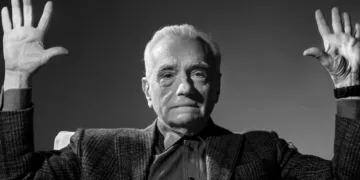























Martin Scorsese, one of cinema’s most celebrated defenders of craft and artistic integrity, has ignited a fierce industry backlash after signing on as an adviser to Black Forest Labs, a German generative-AI startup, and publicly endorsing its image-generation tools for use in storyboarding and pre-visualization.
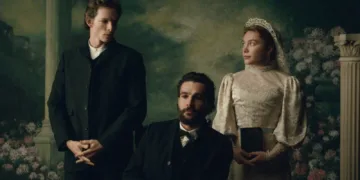
The partnership, disclosed June 2, includes a video shot at Scorsese’s New York City office showing him using the company’s FLUX generative-AI model to storyboard scenes from his next film, What Happens at Night, a drama starring Leonardo DiCaprio and Jennifer Lawrence about a couple traveling to a small European town to adopt a child.
Scorsese drew on his own history with emerging technology to frame the move, noting he used 3D on Hugo and de-aging technology on The Irishman, and arguing the AI tool lets him share his visual ideas more clearly and efficiently with his production designer, art director, and cinematographer.
The Art Directors Guild, IATSE Local 800, responded with a pointed public rebuke. The guild accused Scorsese of “turning his back on the human artists who throughout his career have helped him create his most memorable works,” and called his embrace of the technology “a betrayal of the collaborative nature of cinema.” The statement argued that generative AI produces output by ingesting large amounts of copyrighted work — likely scraped without consent, credit, or compensation — and that the skills of its members cannot ethically be mimicked by systems built on stolen creative labor.
The Art Directors Guild, IATSE Local 800 #adg800 has issued a statement on Martin Scorsese’s recent promotion of generative Artificial Intelligence (AI):
"Mr. Scorsese, The Business is not in flux.
Oscar winning director Martin Scorsese is turning his back on the human artists… pic.twitter.com/7vyqOVGWOZ
— Art Directors Guild (@ADG800) June 9, 2026
Scorsese is not alone in this territory. James Cameron joined the board of Stability AI in 2024 and has spoken publicly about using the technology to reduce production costs without cutting staff, framing it as a tool for accelerating the pace of work on mega-budget productions. But Scorsese’s stature in the prestige filmmaking world makes his endorsement particularly charged.
Filmmaker Boots Riley was sharply critical, speculating on social media that Scorsese, at 83, may have been drawn in by significant financial compensation and “doesn’t give a f—k” about the downstream consequences for working artists. Some observers noted that Scorsese has always storyboarded his own films and rarely hired outside parties for that process, raising the question of whether any jobs are actually displaced — though critics argue that his public endorsement legitimizes a much broader replacement of visual development work across the industry. Representatives for Scorsese did not respond to requests for comment.