

























![Kingdom Hearts Collection [I-III] Review](https://gazettely.com/wp-content/uploads/2026/10/Kingdom-Hearts-Collection-I-III-1-360x180.webp "Kingdom Hearts Collection [I-III] Review: KHII Holds Steady as Newer Entries Fluctuate 37")



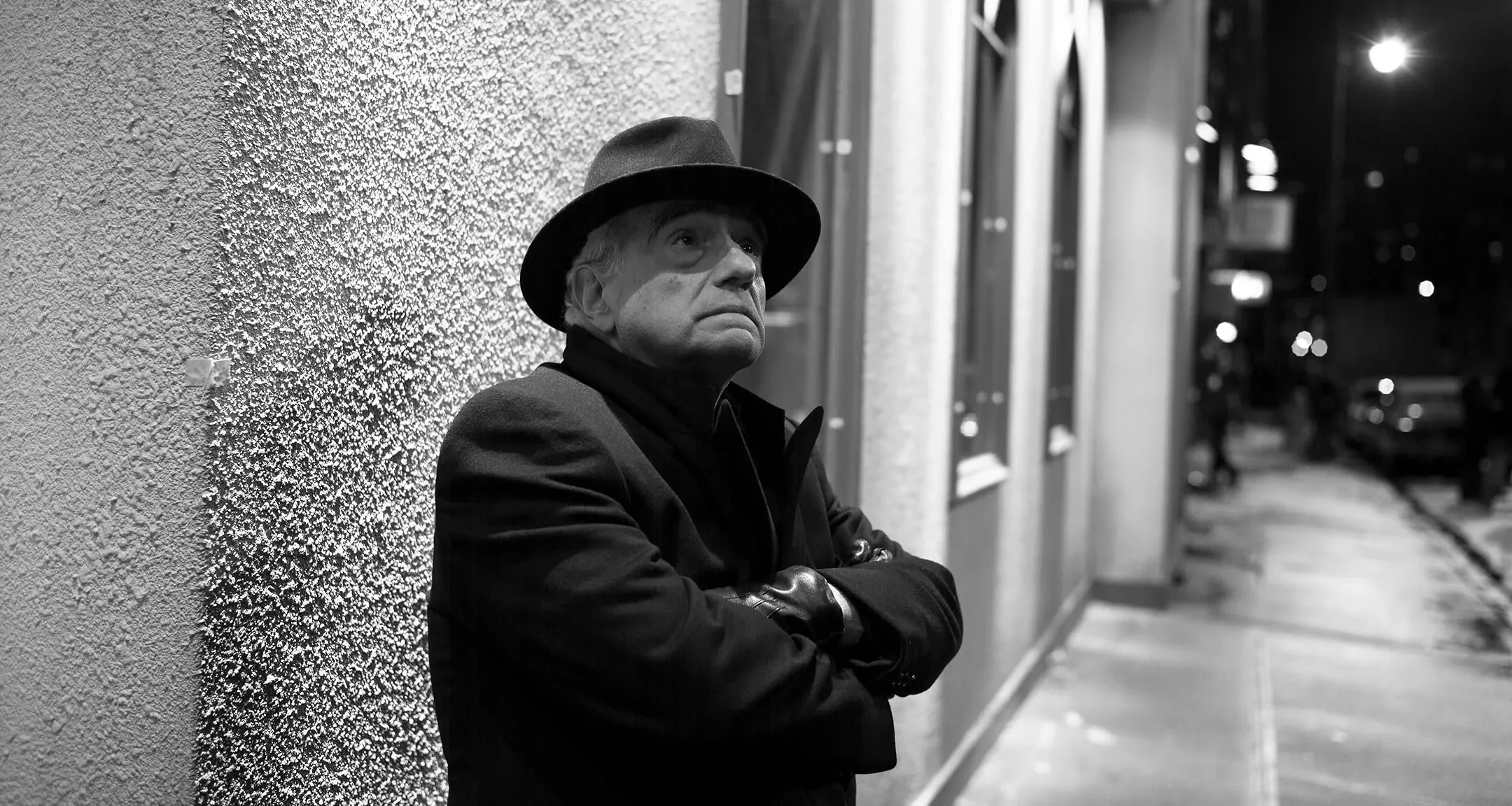

Martin Scorsese exists in the cultural imagination less as a filmmaker and more as an institution. His name signifies a certain kind of American cinema: ambitious, violent, morally thorny, and technically masterful. Crafting a documentary about such a figure in the 21st century presents a unique challenge. A simple hagiography would feel obsolete, while a revisionist takedown would seem disingenuous.
Rebecca Miller’s five-part series, Mr. Scorsese, positions itself as a “film portrait,” a title that wisely suggests a subjective interpretation rather than a definitive record. The project is a cultural artifact in its own right, a product of a streaming era hungry for long-form content that can both celebrate and scrutinize the legacies of our established titans.
It moves chronologically, but its real interest lies in the fissures of its subject’s identity. The series probes the space between the sacred and the profane, the gangster and the priest, framing this internal conflict not as a simple character trait, but as the generative engine for a six-decade career spent mapping the troubled soul of America.
An Education in Streets and Cinemas
The documentary’s early sections are its most potent, functioning as a powerful piece of cultural anthropology. Miller builds a compelling case for the idea that Scorsese’s entire cinematic language was forged in the crucible of his Little Italy upbringing. Using an evocative mix of weathered family photos, Scorsese’s own early student films, and richly detailed interviews with the director and his childhood friends, the series paints a vivid picture of a world governed by two competing, yet intertwined, power structures: the Catholic Church and the Mafia.
This was an environment of intense contradiction, where sacred rituals unfolded just blocks away from brutal street violence. The series excels in showing how this daily reality became the source code for his films’ thematic obsessions with guilt, redemption, and the spiritual cost of violence. The interviews with his friends are particularly revealing. There is a palpable sense of mythologizing at play, as these older men reminisce about a rough-and-tumble youth with a mix of candor and nostalgic romanticism.
In one memorable sequence, a friend calls up the real-life inspiration for Mean Streets’ Johnny Boy, a man named Sally Gaga, to see if he wants to appear on camera. The moment speaks volumes about the thin line between lived experience and cinematic legend that the documentary, and Scorsese’s work, constantly explores.
His physical frailty is presented as an equally formative influence. Afflicted with severe asthma, Scorsese was often a spectator to the life of his own neighborhood, watching the drama of the streets from the safe, elevated perch of his apartment window. The documentary makes a direct and persuasive link between this forced perspective and his career-long affinity for high-angle shots. The air-conditioned movie theater became his literal sanctuary, a sterile environment where he could breathe freely and immerse himself in another world.
As filmmaker Spike Lee humorously proclaims in an interview, “Thank God for asthma!” The statement, while glib, points to the almost mythological status of this origin story, where physical limitation becomes the catalyst for an expansive artistic vision. The series argues that this experience shaped his view of cinema as something essential to survival, a life-support system that offered a structured, framed alternative to the chaotic world outside.
The Price of a Singular Vision
As Scorsese enters the film industry, the documentary shifts its focus to the relentless conflict between his artistic impulses and the commercial realities of Hollywood. His story is situated within the broader context of the New Hollywood movement, a period when a generation of auteur directors challenged the staid conventions of the old studio system.

Insights from peers like Steven Spielberg and Brian De Palma help frame Scorsese’s personal battles as part of a larger cultural war over the future of American filmmaking. The production of Taxi Driver is presented as the defining struggle of this era. The studio’s panic went beyond just the film’s violence; they were deeply uncomfortable with its unflinching depiction of a decaying New York City and its abrasive language.
Scorsese’s recollection of the fight over the X-rating, and his threat to steal the physical print of the film to prevent the studio from butchering it, is a potent illustration of his fierce commitment to his vision. The series also astutely connects the film to its social context, acknowledging the difficult legacy of its protagonist and how the character of Travis Bickle continues to be a touchstone for alienated men.
This professional volatility was mirrored by an equally turbulent personal life. The documentary is unflinchingly candid about this period, drawing on frank testimony from collaborators and his ex-wife, Isabella Rossellini. Paul Schrader bluntly labels the era of New York, New York as “the cocaine years,” while Rossellini recalls Scorsese’s deep-seated anger, describing how he would channel his rages directly into the grueling work of a film shoot.
This self-destructive energy is explicitly linked to the thematic core of his work at the time. The series posits that the punishing physicality of Raging Bull and the cringeworthy desperation of The King of Comedy were not just artistic choices, but were profound acts of personal exorcism played out on a public stage.
In examining this period, the series engages with the complicated trope of the tortured male genius, presenting his suffering not as an excuse for his behavior, but as the raw, inseparable material of his art. It chronicles a man running on the fumes of talent, ambition, and narcotics, pushing himself to the brink of death for the sake of the images he needed to create.
The Man in the Director’s Chair
In its final two parts, the documentary’s structure undergoes a noticeable change. The deep, patient analysis of his early life gives way to a more accelerated, film-by-film survey of his career from the 1990s onward. As the series moves through Goodfellas, Casino, and his extensive collaboration with Leonardo DiCaprio, the pacing quickens, and the narrative risks becoming the kind of “laundry list” that often plagues biographical works about artists with long careers.

This structural shift reflects a central challenge of the prestige documentary format: how to service the expectations of devoted fans who want every film covered while still crafting a cohesive narrative for a broader audience. The curatorial decisions become stark. His significant work in television, like Boardwalk Empire, is ignored, as are most of his own insightful documentaries. The complete omission of Hugo is particularly glaring. This choice effectively sidelines a key part of his later career, suggesting a curatorial bias toward his adult-oriented, auteur-driven features.
The series frames his partnership with DiCaprio as a crucial career revitalization, the moment when a major movie star’s clout enabled an aging master to get his ambitious passion projects, like Gangs of New York, funded. This analysis also serves as a commentary on the shifting power dynamics of modern Hollywood, where even a director of Scorsese’s stature became reliant on A-list talent.
Yet, the documentary’s most significant oversight is its scant attention to Scorsese’s work as a film historian and preservationist. The Film Foundation and the World Cinema Project, initiatives that have saved countless films from oblivion, are relegated to a brief mention in the final minutes. This feels like a profound misreading of his legacy.
It prioritizes the image of Scorsese the creator over Scorsese the curator, a choice that feels disconnected from contemporary conversations about the importance of preserving our shared cultural heritage. The final portrait offered is of a settled elder statesman, a loving father whose contemporary image is partly defined by his daughter Francesca’s lighthearted social media posts. This endearing image of a living legend coexists with the complex, often dark, artistic legacy the series so thoroughly explores.
Mr. Scorsese is a five-part documentary event that provides an intimate and layered portrait of the life and work of filmmaker Martin Scorsese. Directed by Rebecca Miller, the series features extensive, unrestricted access to Scorsese’s private archives, as well as new interviews with the director, his family, and many of his closest creative collaborators. The series examines how Scorsese’s life experiences, from his childhood in New York to his student films and continuing through his present-day work, informed his artistic vision. The documentary is set to premiere on October 17, 2025, and will be available to watch exclusively on the streaming platform Apple TV+.
Full Credits
Director: Rebecca Miller
Writers: Rebecca Miller
Producers and Executive Producers: Ron Burkle, Rebecca Miller, Damon Cardasis, Cindy Tolan, Rick Yorn, Christopher Donnelly, Julie Yorn, Robert Fernandez, Patrick Walmsley
Cast: Martin Scorsese, Robert De Niro, Leonardo DiCaprio, Daniel Day-Lewis, Steven Spielberg, Cate Blanchett, Margot Robbie, Sharon Stone, Jodie Foster, Paul Schrader, Mick Jagger, Robbie Robertson, Thelma Schoonmaker, Helen Morris, Francesca Scorsese
The Review
Mr. Scorsese
Mr. Scorsese is a meticulously crafted and often fascinating portrait, essential for anyone interested in the filmmaker's life. Its early episodes masterfully connect the artist to his environment. However, the series eventually adopts a conventional, rushed structure, and its glaring omission of Scorsese's vital work in film preservation keeps it from being the definitive statement it could have been. It is an admirable, if incomplete, exploration of a cinematic titan.
PROS
- Features extensive, candid interviews with Scorsese, his family, and key collaborators like Robert De Niro and Thelma Schoonmaker.
- Powerfully connects Scorsese’s formative years in Little Italy—his asthma, his religion, his exposure to violence—to his unique cinematic vision.
- Masterfully integrates film clips, home movies, and archival footage to illustrate its points.
- Does not shy away from the director’s personal struggles, including addiction and his volatile temper.
CONS
- The later episodes feel rushed, devolving into a rapid survey of his filmography rather than maintaining the deep analysis of the beginning.
- Fails to meaningfully cover his crucial work in film preservation, his television projects, or certain key films like Hugo.
- Relies on a standard chronological structure that may feel familiar to those already well-versed in Scorsese’s life.







