
















The best heist stories are never really about the heist. The glittering prize, the intricate plan, the nail-biting execution, it’s all just elegant misdirection. The real story is always about the people, the messy histories they carry into the vault with them, and the fractures that threaten to shatter everything long before the alarms ever sound. Frauds understands this down to its bones.
It presents a spectacular theft, the audacious removal of a Salvador Dalí painting from a Madrid museum, but uses it as a canvas for something far more complex: the final, toxic reunion of two masterful con women. When Roberta “Bert” (Suranne Jones) is granted compassionate release from prison, her terminal cancer diagnosis acts as a ticking clock.
She lands on the doorstep of her former partner-in-crime, Sam (Jodie Whittaker), a woman living in self-imposed exile with a flock of chickens and a mountain of guilt. Bert arrives with a cough, a grudge, and one last grand design, setting the stage for a six-part series that is less a slick caper and more a sun-scorched emotional war.
A Bond Forged in Betrayal
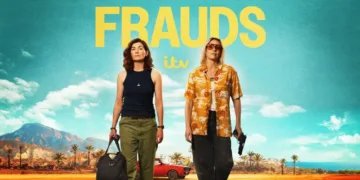
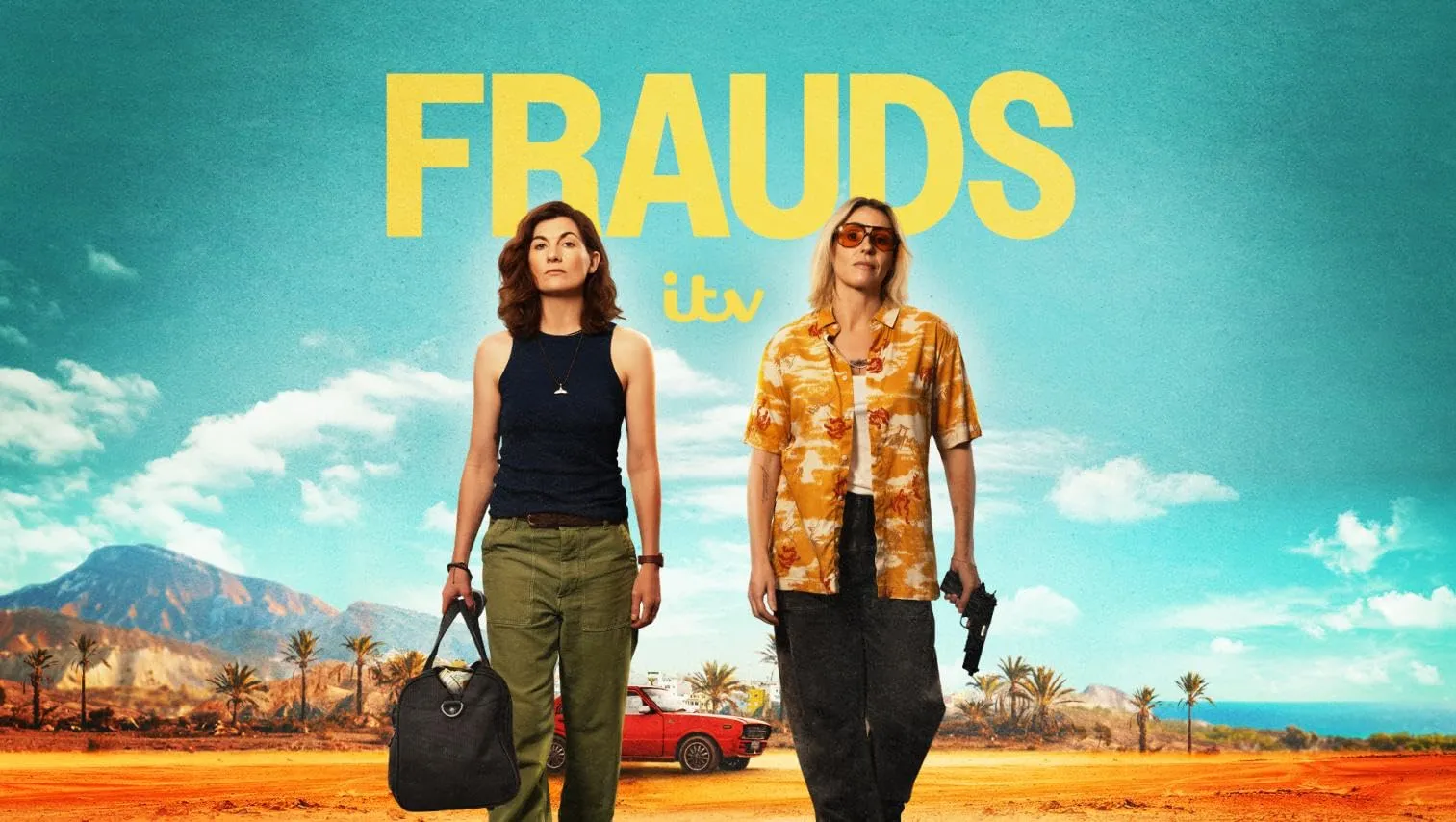
The volatile chemistry between its two leads is the entire show, a masterclass in push and pull that powers every scene. Bert is the agent of chaos, a human hurricane in loud shirts and statement sunglasses whose terminal diagnosis has given her a terrifying sense of freedom. She styles herself with a gonzo swagger, all bleached hair and manic energy, but it’s a brittle performance.
Her actions are fueled by a lifetime of resentment, and the illness has only sharpened her nihilistic edge. She is manipulative, selfish, and enjoys playing mind games, yet Suranne Jones gives her a magnetic, noirish charm that makes her compulsively watchable. It’s a blistering performance that builds on Jones’s gallery of complex women but takes her into wilder territory.
She expertly peels back the layers of a hardened burnout to reveal the deep emotional wounds that fuel her self-destruction. This isn’t just a final job for the money; it’s a desperate attempt to exert control over a life that is rapidly, and terminally, slipping from her grasp. Bert is the arsonist who wants to see the world burn one last time.
Standing opposite her is Sam, the reluctant firefighter. She has tried to build a new life in the Spanish countryside, a quiet existence tending to pigs and chickens, as if she could cultivate enough peace to bury the past. Jodie Whittaker portrays her as a woman simmering with a decade of unresolved anger, her stillness a potent counterpoint to Bert’s frantic energy.
Her motivations are tangled; she is shackled by guilt over the job that sent Bert to prison, but she is also furious at the disruption Bert represents. Whittaker makes Sam’s internal conflict palpable. You can see the war between a desire for normalcy and the pull of a powerful, codependent history in every guarded glance and weary sigh. She is drawn back into the game through a potent mix of pity, loyalty, and the unwelcome reawakening of her own dormant instincts.
Their friendship is the series’ true subject, a decades-long psychodrama of love, resentment, and an ambiguous romantic tension that crackles beneath the surface. Bert mockingly calls Sam her “husband,” a loaded term that hints at a history far more intertwined than a simple partnership. The heist is just the stage for their final, explosive act.
The Anatomy of a Heist
For a show so focused on character, the plot mechanics are surprisingly slick and inventive. The target is Salvador Dalí’s The Great Masturbator, a fittingly surreal prize for a surreal mission. The series smartly deploys a non-linear structure, often showing us a flashy set-piece in full swing before rewinding to explain the meticulous, or often clumsy, planning.
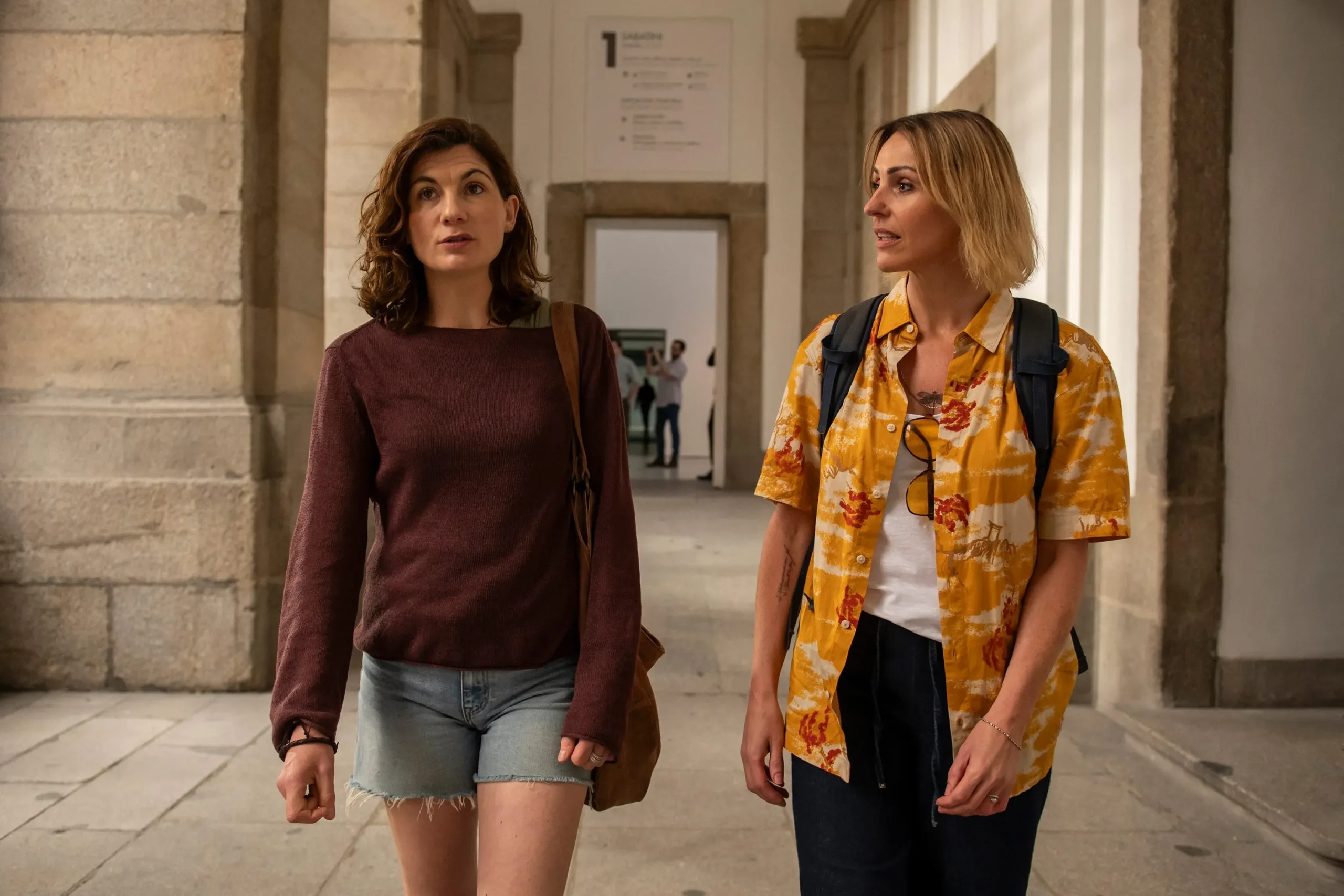
We see them expertly slipping watches off wrists at a funeral, bagging a golden crown of thorns just for the thrill, before the show reveals how they got there. This narrative trick keeps the pacing brisk and avoids the bog of pure exposition, trusting the audience to keep up as the puzzle pieces click into place. These smaller cons serve a dual purpose: they fund the larger operation while re-establishing the duo’s rusty but still effective dynamic.
And what a band of accomplices they assemble. The crew is a collection of wonderfully underestimated individuals who feel like they’ve stepped out of a different, grittier kind of caper. There’s Jackie Diamond (Elizabeth Berrington), a fifty-something magician’s assistant stuck in a demeaning relationship, who is cruelly dismissed as looking like a “2lb sausage in a 1lb skin.” She discovers that her perceived societal invisibility is actually a strategic asset, a superpower in a world that refuses to see her.
Karan Gill plays Bilal, a gifted forger whose artistic talent is matched only by his crippling anxiety and a dangerous gambling problem that makes him a constant liability. He’s not a cool safecracker; he’s a nervous wreck who eats cold beans from a can. Adding another layer of peril is Miss Take (Talisa Garcia), Bert and Sam’s former criminal mentor who runs a drag bingo bar. She is a modern Fagin-like figure who looms as a ghost from their past, representing the old world of control they tried to escape. Her reappearance threatens to expose every weakness and settle old scores, turning the heist into a fight for survival on multiple fronts.
A Stylishly Unconventional Caper
Frauds looks and feels different from the standard British crime drama, thanks in large part to its confident sense of place. The Spanish setting is essential, swapping grey skies for a relentless sun that makes the landscapes feel both beautiful and hostile. The direction avoids tourist traps, focusing instead on a Spain of dusty roads, charming but shuttered towns, and deserts that seem to stretch into infinity.
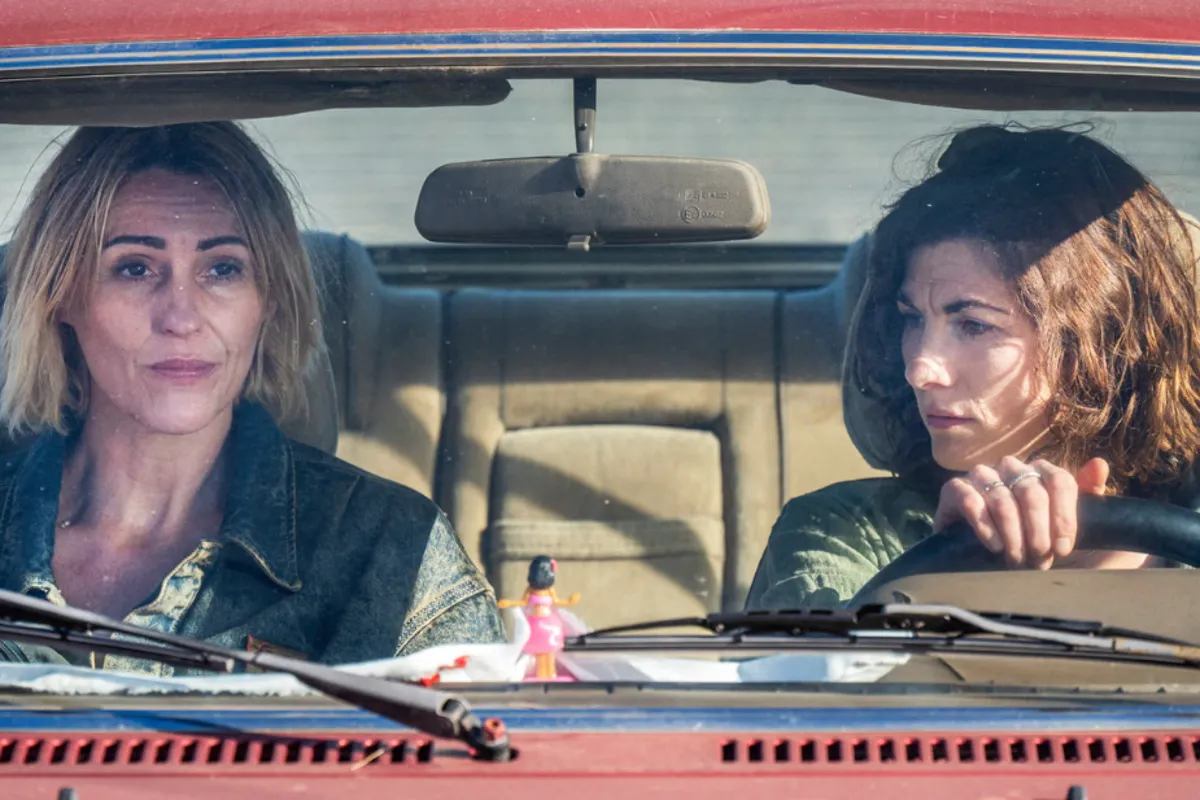
The cinematography favors wide, cinematic shots that give the action a sense of scale, with the blinding light and deep shadows creating an atmosphere that is both liberating and claustrophobic. The environment is not just a backdrop; it’s a reflection of the characters’ internal states.
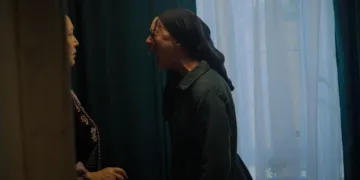
The show also executes a deft tonal balancing act, shifting with ease from high-stakes thriller to dark comedy, often in the same scene. One moment involves a tense standoff, the next finds Bert and Sam in absurd disguises as bawdy Irish nuns, channeling the chaotic energy of classic British comedy duos like French and Saunders.
The script is filled with sly, grounded humor, with arguments about “giant lady bras” feeling just as important as the logistics of the heist. This blend of grit and wit is the show’s defining feature. It is a caper that takes its emotional stakes seriously without ever taking itself too seriously, creating a rhythm that is enjoyably unpredictable.
Beyond the Score
Beneath the witty dialogue and clever cons, the series has a pronounced feminist streak. Co-created by Suranne Jones, this is a story driven almost exclusively by its female characters, who are messy, ambitious, and refuse to be defined by the men around them, who are mostly depicted as obstacles or afterthoughts.
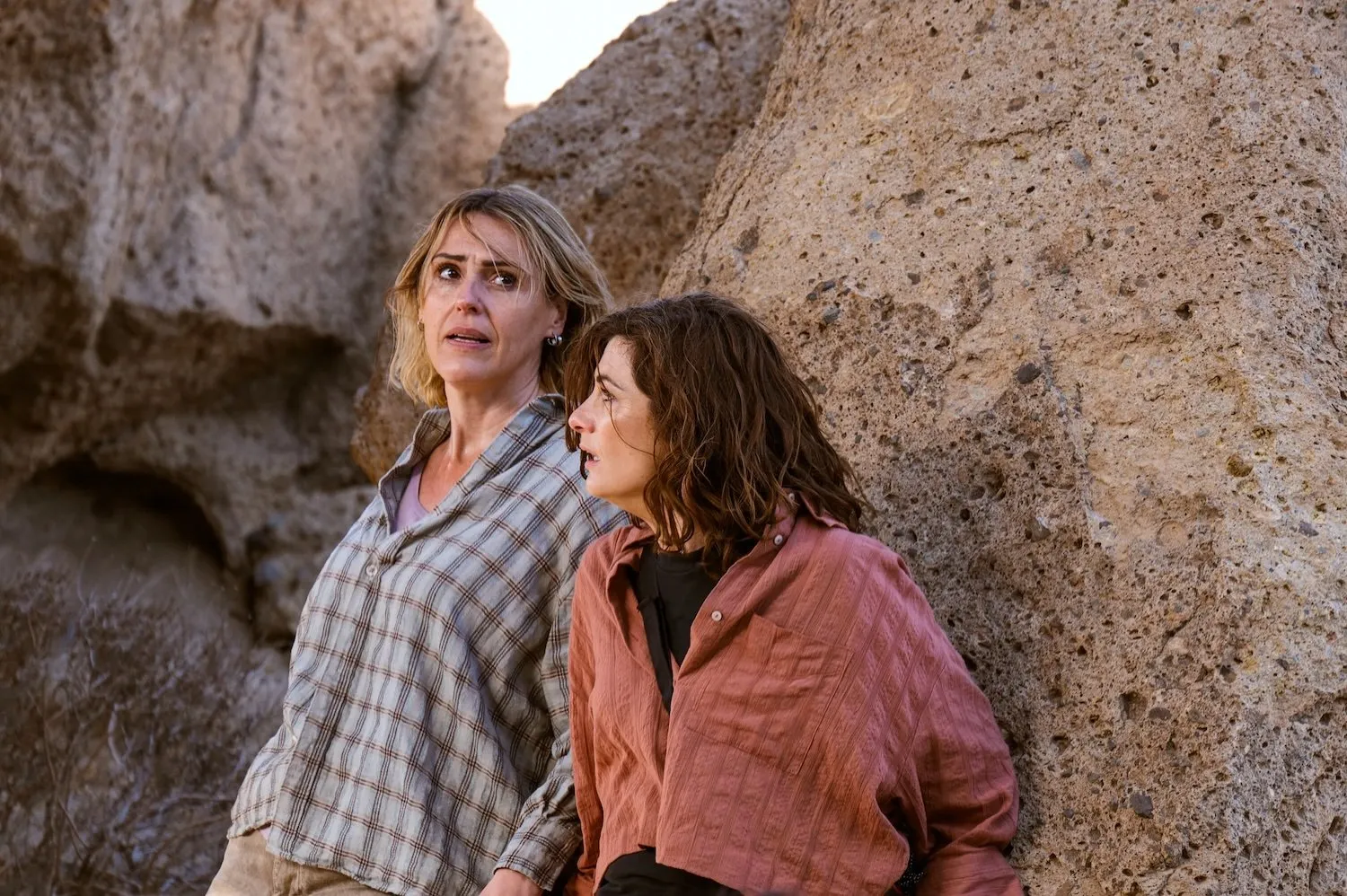
It actively reorients the traditionally male-dominated heist genre, shifting the focus from cool mechanics to complicated emotional truths. The concept of female agency is central, especially through Jackie’s arc, which smartly comments on how society’s tendency to overlook middle-aged women can become a formidable superpower. The show’s perspective is baked into its DNA, not worn as a slogan.
Bert’s cancer diagnosis is what truly gives the story its weight. The illness is not a simple plot device; it is the existential deadline that hangs over every decision, transforming the caper from a crime into a search for meaning. For Bert, the heist is a final, defiant act against an unfair fate, a way to write her own ending rather than quietly fading away.
It’s an attempt to impose her will on a universe that has dealt her a final, unbeatable hand, giving even her most selfish actions a tragic dimension. It raises sharp questions about what a life is worth at its end. The real prize isn’t the painting. It’s a chance for these women to finally face the ghosts they created together, and decide who they want to be in the little time they have left.
Frauds is a six-part British crime thriller television series that premiered on Sunday, October 5, 2025, on ITV1 in the UK. All episodes were made available for streaming on ITVX and STV Player on the same day. The series follows two skilled con artists, Bert (Suranne Jones) and Sam (Jodie Whittaker), whose intertwined past resurfaces after Bert is released from a decade-long prison sentence. Set against the backdrop of Southern Spain, the story centers on Bert attempting to lure a reluctant Sam into one final, multi-million-pound art heist, which forces the complex duo to navigate their toxic friendship, deception, and the threat of betrayal. The show was created by Suranne Jones and Anne-Marie O’Connor and is directed by Giulia Gandini and Brian O’Malley.
Full Credits
Director: Giulia Gandini, Brian O’Malley
Writers: Anne-Marie O’Connor, Suranne Jones
Producers and Executive Producers: Pat Tookey-Dickson, Anne-Marie O’Connor, Suranne Jones, Debra Hayward, Alison Carpenter, Jill Forbes, Alison Owen, Katie Kelly
Cast: Suranne Jones, Jodie Whittaker, Horacio Colomé, Talisa Garcia, Abdul Salis, Karan Gill, Elizabeth Berrington, Lee Boardman, Karise Yansen, Christian Cooke, Thais Martin, Kate Fleetwood, Javier Taboada, Nansi Nsue, Victor Solé
The Review
Frauds
Powered by two spectacular performances from Suranne Jones and Jodie Whittaker, Frauds is a triumph of character over convention. It uses a familiar heist framework as a pretext for a witty, stylish, and emotionally scorching examination of a deeply toxic friendship. While the caper itself is inventive, the real treasure is the show’s sharp script and the electric, often painful, chemistry between its leads. It’s a messy, sun-drenched thriller where the biggest score is settling old ones.
PROS
- Blistering lead performances from Suranne Jones and Jodie Whittaker.
- A sharp, character-driven script that prioritizes emotional depth.
- A successful blend of heist-thriller tension and dark, witty comedy.
- Stylish direction and cinematography that make the Spanish setting integral to the story.
- A strong, confident feminist perspective that feels woven into the narrative.
CONS
- The pacing in the initial episodes can feel slow as it establishes the central conflict.
- Focus on the two leads sometimes leaves the supporting crew feeling underdeveloped in the early stages.
- Certain plot elements of the heist may strain plausibility for some viewers.