







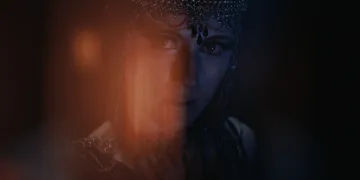

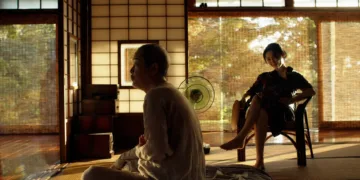


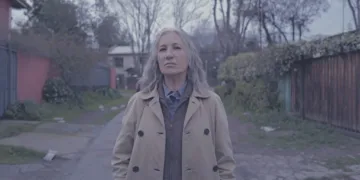














History enters Scarborn through a side door, carrying mud on its boots and blood on its sleeves. Paweł Maślona’s Polish drama could have approached Tadeusz “Kos” Kościuszko as a monument: the national hero returned from the American War of Independence, ready to ignite the 1794 uprising against Russian power. The film chooses a stranger, harsher path. It gives him a mission, then lets the world around him bruise the myth.
Kościuszko, played by Jacek Braciak, arrives with Domingo, a freed Black man and expert marksman played by Jason Mitchell. Together they want to recruit peasants for a revolt that cannot survive on noble rhetoric alone. Around them, Poland seems already half-buried: estates rotting from the inside, aristocrats protecting names with empty guns, Russian soldiers moving through the land like men who have already claimed it. This is not a battlefield epic. Its war is smaller, closer, harder to wash off.
The Inheritance of Humiliation
The film’s most wounded figure is not Kościuszko, but Ignac Sikora. Bartosz Bielenia plays him as a man born under a sentence he did not write. He is the bastard son of a dying nobleman, promised an inheritance that could lift him out of servitude, yet unable to read the will that may save him. His body carries the posture of someone long trained to expect insult before speech.
Ignac’s theft of the will is not a clever plot device. It is a desperate attempt to make law recognize flesh. When his half-brother Stanisław returns, Piotr Pacek gives the character a poisonous elegance: powdered entitlement, soft gestures, sudden cruelty. He does not need to shout to reveal the violence of class. He has inherited it, polished it, worn it like a coat.
Domingo’s presence sharpens this moral field. The film links his history of enslavement in America with the suffering of Polish peasants under serfdom, but it does not collapse one pain into another. The sympathy between Domingo and Ignac comes from recognition, not sameness. Both men know what it means for another person’s power to become visible on your skin. Kościuszko speaks of revolution. Ignac reminds the film what revolution costs before anyone calls it by that name.
A Room Full of Knives
Maślona’s strongest instinct is spatial. He understands that a cramped room can contain a whole country if enough fear is forced inside it. The long candlelit gathering at Maria Giżyńska’s home is the film’s great set-piece, a sequence where conversation becomes a weapon and manners begin to rot in real time.
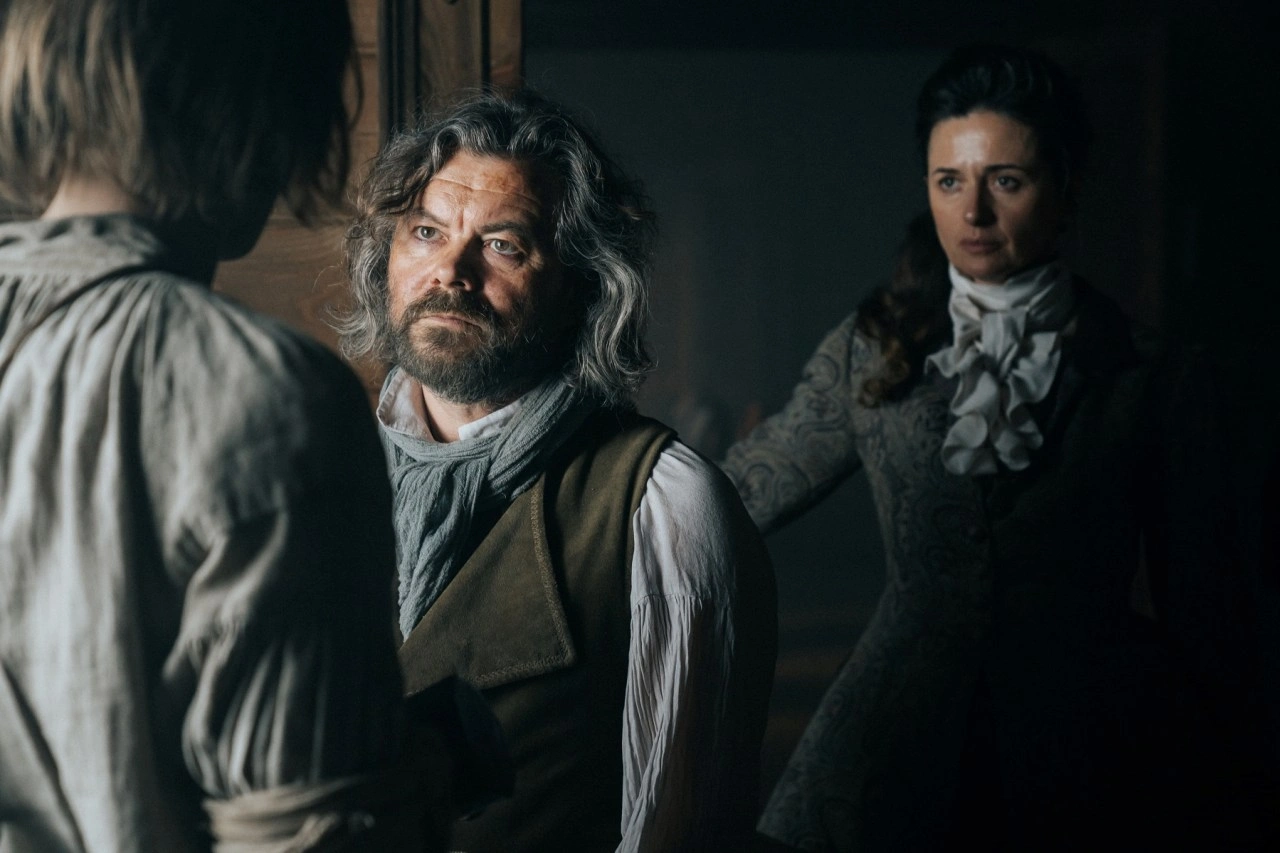
Rebels, opportunists, nobles, peasants, and Russian soldiers circle one another under low light. The card game, where weapons are gambled away, has the sick rhythm of a ritual performed by people pretending they are still civilized. Every flicker of candlelight seems to shorten the distance between politeness and slaughter. Piotr Sobociński Jr.’s cinematography turns faces into partial confessions: a cheekbone caught by flame, an eye sinking into shadow, a hand resting too near a blade.
This is where Scarborn earns its comparisons to the historical revenge thriller, yet Maślona is less intoxicated by his own cleverness than many films in that lineage. The suspense is not built from verbal fireworks alone. It comes from waiting. Waiting for Dunin to notice the wrong detail. Waiting for Ignac to reveal fear. Waiting for someone in the room to forget the performance of restraint.
Robert Więckiewicz gives Dunin the calm of a man who enjoys the delay before violence. His Russian cavalry captain is fictional, but he feels historically plausible in the way nightmares often do: exact in mood, if not in record. The early scene where he kills a Polish nobleman after a declaration of superiority tells us almost everything. Rank matters to him only when it helps him dominate the room.
The Shape of Revolt
When violence finally breaks open, Scarborn becomes rougher, darker, harder to read. Sabres slash through dimness. Blunderbusses turn bodies into noise. Men fall before the eye has fully understood who struck them. Sometimes the murk weakens the action, leaving movement without enough shape. Yet the confusion also suits the film’s idea of history as something lived from too close a distance. The dead do not get clean compositions.
The film’s limits come from the same intimacy that gives it force. Kościuszko can feel strangely displaced inside his own legend. Braciak gives him gravity, especially in the quieter exchanges with Domingo and Ignac, but the screenplay keeps finding stronger electricity in the figures around him. Ignac’s inheritance struggle, Dunin’s predatory composure, Stanisław’s class cruelty, Domingo’s steady moral alertness: these are the currents that keep pulling the film away from its official center.
For viewers expecting the full scope of the uprising, the ending may feel like a door closing just before the storm arrives. The larger national rupture remains mostly outside the frame. Yet Scarborn’s refusal of scale has its own bleak integrity. It locates revolt before banners, before history books, before noble speeches and patriotic paintings. It finds it in hunger, insult, debt, fear, and the almost unbearable moment when a man decides he has been kneeling long enough.
The critically acclaimed Polish historical action-drama Scarborn (originally titled Kos) is currently available for home viewing on Amazon Prime Video via the Viaplay channel addon, following an international streaming rollout on April 30, 2026. Set in the spring of 1794, the film follows General Tadeusz Kościuszko as he returns to Poland to mobilize a national uprising against occupying Russian forces, while an escaped peasant simultaneously flees assassins to prove his noble birthright.
Where to Watch Scarborn (2023) Online


Full Credits
Title: Scarborn
Distributor: TVP Dystrybucja Kinowa, K5 International, Viaplay
Release date: September 18, 2023 (Polish Film Festival), January 26, 2024 (Poland Theatrical Release), April 30, 2026 (Global Streaming Release)
Rating: 16+
Running time: 120 minutes
Director: Paweł Maślona
Writers: Michał A. Zieliński
Producers and Executive Producers: Daniel Baur, Leszek Bodzak, Aneta Cebula-Hickinbotham, Damian Drag, Malgorzata Jurczak, Carolina Pietyra, Camilla Rydbacken, Magdalena Ulejczyk
Cast: Bartosz Bielenia, Jacek Braciak, Jason Mitchell, Robert Więckiewicz, Agnieszka Grochowska, Piotr Pacek, Andrzej Seweryn, Łukasz Simlat
Director of Photography (Cinematographer): Piotr Sobociński Jr.
Editors: Piotr Kmiecik
Composer: Mikołaj Trzaska
The Review
Scarborn
Scarborn carries history like a blade hidden under formal clothes. Its finest passages are not the promised battles, but the rooms before bloodshed: candles shrinking, men lying politely, class hatred gathering at the table. Kościuszko’s myth sometimes loses force beside Ignac, Domingo, and Dunin, yet that imbalance gives the film a wounded human scale. Revolution here is not born in speeches. It starts with inheritance, hunger, humiliation, and a locked room full of weapons.
PROS
- Tense candlelit set-piece
- Strong class critique
- Brutal, tactile action
- Robert Więckiewicz’s sinister Dunin
- Bartosz Bielenia’s wounded Ignac
CONS
- Kościuszko can feel sidelined
- Dark action lacks clarity
- Limited historical scope
- Ending stops before the larger revolt