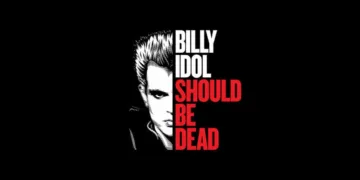


























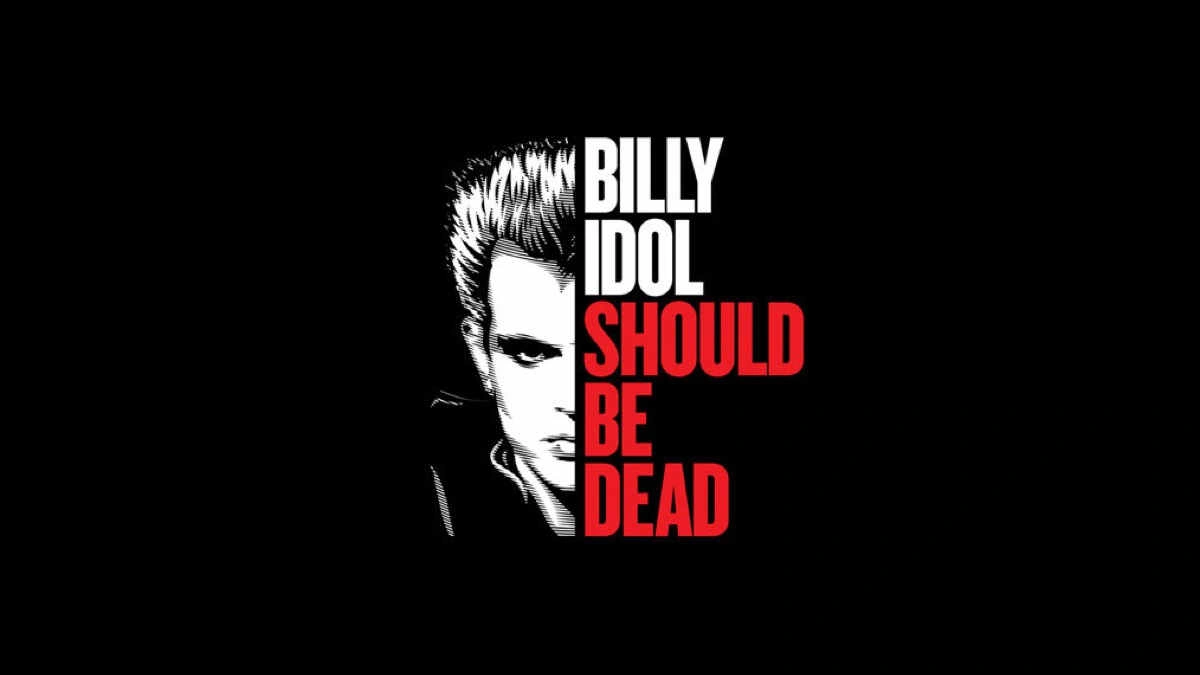

Billy Idol’s great trick was making danger look like a haircut. The sneer, the leather, the peroxide spikes, the half-lidded stare at the MTV camera: all of it turned William Broad into a pop-punk image that could sell rebellion in three-minute bursts. Jonas Åkerlund’s Billy Idol Should Be Dead understands the power of that image, then spends nearly two hours trying to find the person who had to keep wearing it.
The film traces Idol from late-1970s British punk into Generation X, then through the American solo run that made him one of MTV’s defining faces. “Dancing With Myself,” “White Wedding,” “Rebel Yell,” and “Eyes Without a Face” are treated here as career milestones, yet the documentary is less persuasive as a studio story than as a survival story. It has plenty of music history, archive clips, famous admirers, and glossy interviews. Its real charge comes from watching Idol describe the damage in his own voice.
From Punk Rooms to MTV Screens
Åkerlund gives Idol’s early years enough texture to show why the Billy Idol persona worked. He was a middle-class kid entering a punk scene that often prized working-class anger, and that mismatch matters. The film shows him absorbing punk’s “no future” fatalism while also bending it toward hooks, glamour, and visibility. Generation X did not treat pop appeal as a betrayal; the band put punk attitude into cleaner song shapes, which helped Idol later make the leap to American television.
The documentary is good on image formation. Gene October’s advice about contact lenses, bleached hair, and the sneer becomes a small origin story for one of rock’s most durable silhouettes. Pete Townshend’s memories of Generation X at the Roxy help place Idol inside a scene that was still figuring out its own rules. Then MTV arrives, and the film’s archive footage does what explanation cannot. Idol looked built for the channel. The camera loved the angles of his face, the curl of his lip, the way he could make a chorus feel like a dare.
The thinner material is musical. Longtime guitarist Steve Stevens appears, and his importance is obvious every time a song erupts into that serrated guitar sound, but the film rarely slows down to examine how the records were built. Keith Forsey also gets less room than the music warrants. “Rebel Yell” did not become huge through attitude alone. The documentary knows the hits matter, yet it often prefers the chaos around them.
The Man Telling the Wreckage
Idol is the film’s best storyteller, which is convenient, since he is also its main evidence. He speaks with the timing of someone who has told these stories for decades, complete with accents, quick impressions, and little bursts of theatrical sound. That could have turned the documentary into self-mythology. Instead, his candor gives the film a bruised emotional center.
Also Read






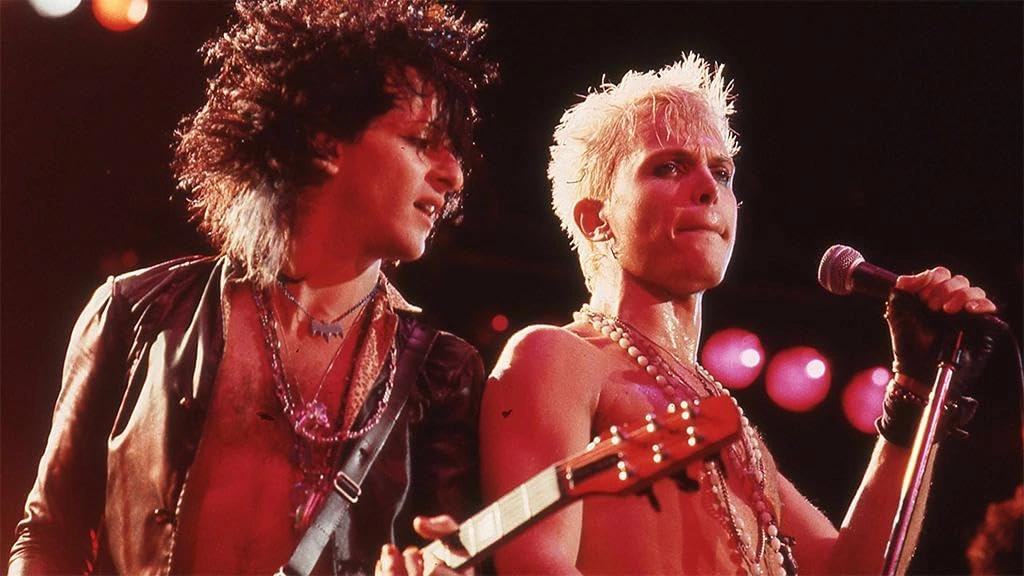
The overdose material is blunt. Idol recalls a 1984 heroin overdose where he turned blue and the people around him avoided medical help because scandal seemed too dangerous. The horror of that detail is not the overdose alone. It is the calculation around it, the way a career image could become something people protected before protecting the body inside it. Later, he describes trying to get off heroin and ending up smoking crack. The line lands with the awful logic addiction can create, where escape from one trap opens the door to another.
Perri Lister gives the film its most painful human counterweight. She remembers Idol as the love of her life, and she also describes the split between the man she loved and the “demon side” that emerged during drug binges. Their Los Angeles domestic chapter, with a house, a child, and some fragile attempt at stability, gives the documentary its clearest sense of what was being lost. When Idol says the job was to be Billy Idol, it sounds funny for half a second. Then the cost of the sentence catches up.
Style, Speed, and Family After the Fall
Åkerlund shoots the interviews in polished black and white, and the choice fits a subject who has always lived partly as iconography. Idol’s face is now lined, still recognizable, still carrying the old architecture of the sneer. The concert clips and music-video fragments give the film a jolt whenever the chronology begins to sag. The best archive moments do not explain charisma; they let it move.
The animated sequences are a trickier choice. Their fever-dream energy suits Åkerlund’s background in music videos and fits the cartoon scale of Idol’s rock persona. During the drug sections, though, the animation can make the material feel strangely cushioned. A stylized overdose risks turning panic into graphic design. The film does not lose its seriousness there, but it briefly feels unsure how close it wants to stand to the damage.
The pacing has the same problem in a different form. The documentary covers punk London, Generation X, MTV stardom, heroin, crack, a Thailand relapse, the 1990 motorcycle accident, lost film roles, Cyberpunk, later sobriety, and DNA-test family revelations. Some jumps have energy.
Others feel like doors opening and closing before the room can be felt. The T-1000 screen-test material and the reduced role in The Doors are fascinating because they show a different career Idol almost had. The Cyberpunk chapter, with its dreadlocked image and Internet-age ambition, needed a few extra minutes to make its failure feel like something deeper than a footnote.
The late family material works because it changes the film’s rhythm. Idol with his children and grandchildren is not presented as a clean redemption sticker slapped over the old wreckage. The discovery of his son Brant through DNA testing, alongside his relationships with Bonnie Blue and Willem, brings a different kind of consequence into view. The man who spent years performing invincibility now has to sit inside continuity: children, grandchildren, people who carry parts of his life he did not always know how to hold.
Billy Idol Should Be Dead is strongest when it lets that feeling sit beside the old footage of the sneer. The documentary may skim past too much of the songwriting, and its structure can lurch like a tour bus with bad brakes, but it understands the emotional mechanism of Idol’s story. The image survived because the man somehow did too.
The feature-length rock music documentary Billy Idol Should Be Dead premiered at the Tribeca Film Festival before launching globally on digital platforms on February 27, 2026. Directed by Grammy Award-winner Jonas Åkerlund and produced by Live Nation Productions, the film is available to stream on Hulu in the United States, Sky in the United Kingdom, and Prime Video internationally. The non-fiction narrative follows the turbulent life and enduring career of the iconic punk pioneer turned MTV-era pop superstar, combining fresh personal interviews with rare, unreleased archival footage to examine his battle with severe addiction and his ultimate creative survival.
Where to Watch Billy Idol Should Be Dead (2026) Online







Full Credits
Title: Billy Idol Should Be Dead
Distributor: Hulu, Prime Video, Sky
Release date: June 2025 (Tribeca Film Festival Premiere), February 27, 2026 (Digital Streaming Release)
Rating: TV-MA
Running time: 125 minutes
Director: Jonas Åkerlund
Writers: Mark Monroe
Producers and Executive Producers: Violaine Etienne, Jonas Åkerlund, Orian Williams, Mark Monroe, Ryan Kroft, Jessica James Batista, Laurence Freedman, China Chow, Michael Rapino, John Ramsay, Anna Keegan
Cast: Billy Idol, Billie Joe Armstrong, Miley Cyrus, Duff McKagan, Steve Jones, Pete Townshend, Steve Stevens, Patrick Stump, Perri Lister, Nile Rodgers
Director of Photography (Cinematographer): Eric Broms
Editors: Benjamin Wainwright-Pearce, Reg Wrench, Martin Craswell, Anthony Bairstow, Michael Pearce, James Leche, Dan Reed
Composer: Patrick Stump, Matthew Harter, J. Ralph
The Review
Billy Idol Should Be Dead
Billy Idol Should Be Dead works best when it lets Billy Idol narrate the wreckage himself. Jonas Åkerlund’s film has the shape of a familiar rock survival documentary, yet Idol’s humor, archive footage, and bruised honesty give it real charge. The weak spots are clear: hurried time jumps, thin songwriting analysis, and animated drug sequences that sometimes soften the horror. Still, the film turns a myth into a man without sanding off the sneer.
PROS
- Idol’s candid interviews
- Rich MTV-era archive footage
- Strong Perri Lister material
- Warm late-family scenes
CONS
- Hurried nonlinear jumps
- Thin songwriting analysis
- Underused Steve Stevens
- Animation jars at points