





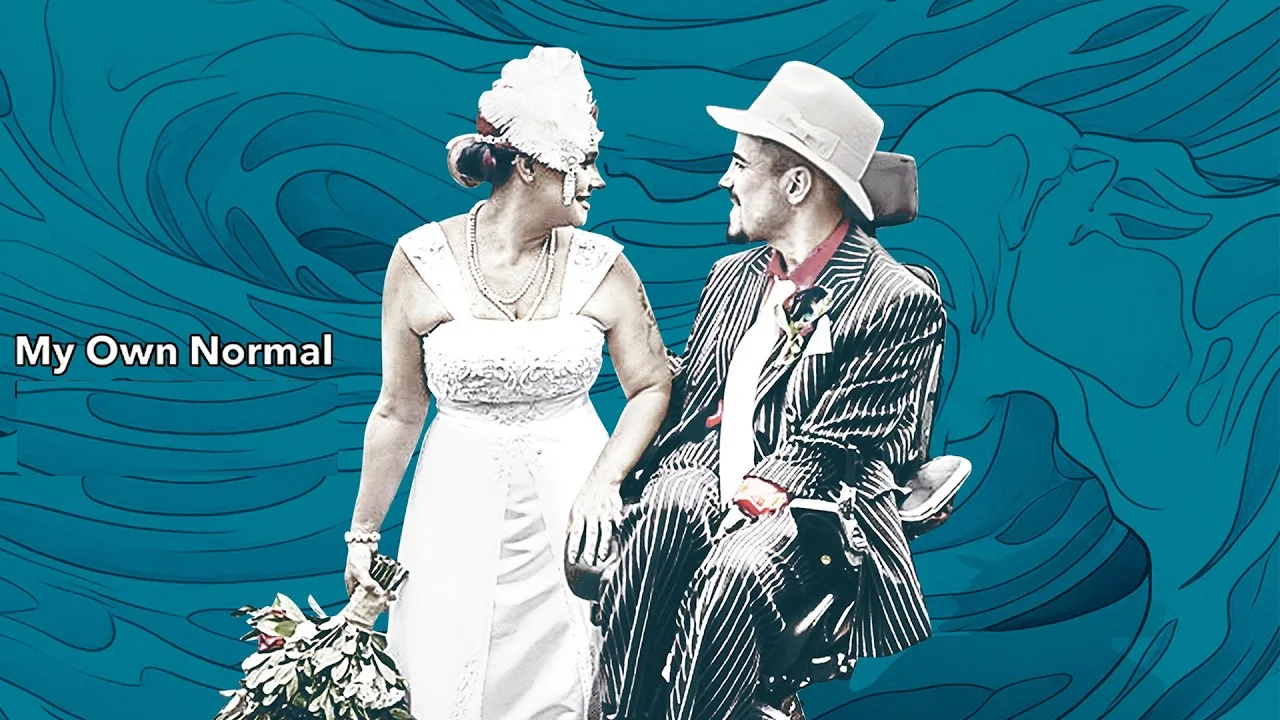

Speech once made Alexander Freeman feel as if he were trapped underwater. That image matters because My Own Normal is made by someone who has spent his life being interpreted by other people, sometimes kindly, sometimes fearfully, and often incompletely. Film gives him a cleaner tool. He directs, co-writes, produces, and places himself at the middle of the documentary, which means the movie’s first act of argument is formal before it is emotional: Freeman is not being studied. He is staging the terms of the conversation.
The documentary follows Freeman, a filmmaker with severe cerebral palsy, through the early years of building a family with Orina Umansky after she becomes pregnant near the start of their relationship. Their daughter, Maya, becomes the film’s quiet structural test. Every worry voiced by others, every practical question about care, every social assumption about disabled parenthood has to pass through the simple evidence of this family in motion.
Freeman speaks with visible effort, and the subtitles are there for clarity, not pity. That distinction is important. The film never treats communication as a miracle scene, which is the sort of thing lesser documentaries love to do while reaching for tissues with both hands. Instead, it lets communication be labor, habit, frustration, humor, and authority. Freeman has the camera. That changes the power balance.
Fatherhood as Daily Evidence
The strongest material in My Own Normal comes from the gap between what people fear Freeman cannot do and what the film shows him doing. He needs assistance with eating, bathing, dressing, and using the toilet. The documentary does not soften those realities, and it should not. Parenting includes a thousand physical tasks, and Freeman cannot perform many of them without help.
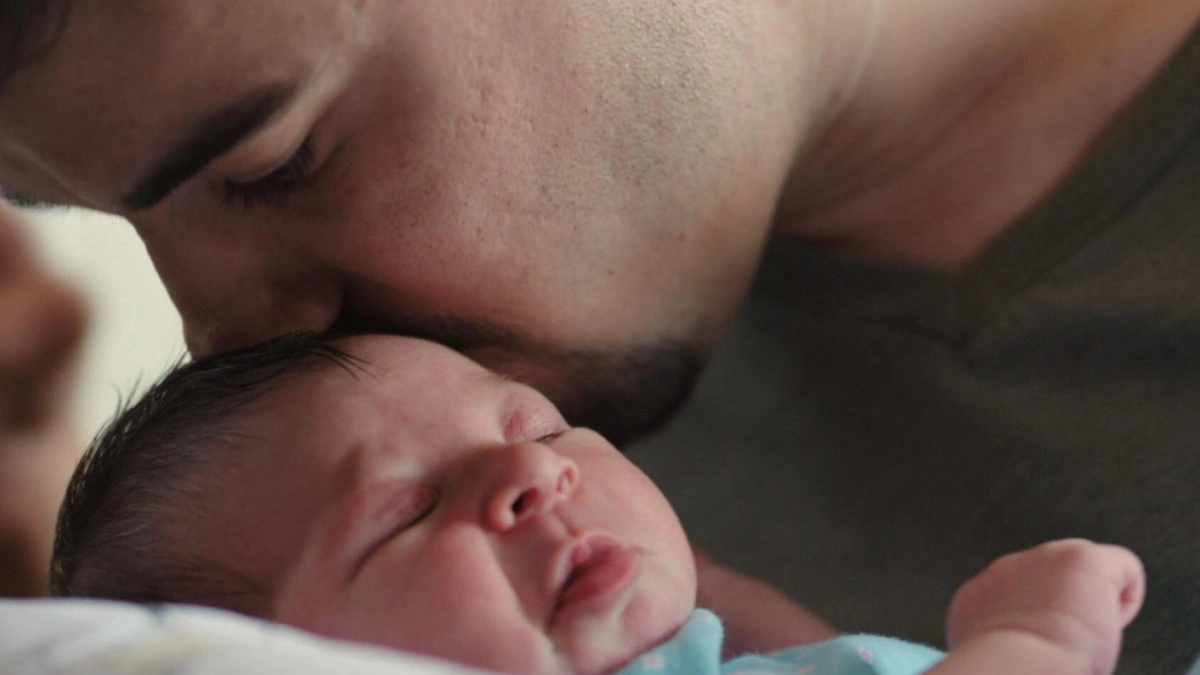
The film’s smarter move is refusing to let physical task completion become the full definition of fatherhood. Watch the scenes with Maya. He plays with her. He attends to her. He reacts to her with the concentration of a parent whose body may not move easily, yet whose attention is completely available. The movie does not need to overstate this because Maya does the work for it. Her comfort around him is cleaner evidence than any speech about acceptance.
Freeman’s own uncertainty gives the documentary its best emotional pressure. His admission that he does not know what kind of father he will be has the ring of every first-time parent, with a sharper edge. The question is ordinary and specific at once. That is where the film finds its most honest shape.
His parents supply the most difficult family material. Their early concern about Orina’s pregnancy, including the painful thought that termination might have been better, is not treated as cartoon cruelty. It comes from fear, from years of watching their son struggle, and from a limited idea of what his adult life could hold. Still, fear leaves marks. Their later affection for Orina does not erase what was said. The documentary is at its best when it allows that contradiction to sit there without cleaning it up for everyone’s comfort.
The recurring public misrecognition of Freeman as someone other than Maya’s father is another precise wound. Strangers can imagine him as a relative before they can imagine him as a parent. That is the film’s social critique in miniature: disability does not merely change how people see a body. It edits a person’s entire adult identity.
Love, Labor, and the Fine Print
Orina could easily have been flattened into the endlessly patient partner role, the sainted helper who exists to prove someone else’s worth. My Own Normal mostly avoids that trap. She comes across as warm, funny, tired, practical, and deeply present. She admits that she had little experience around disability before meeting Freeman, which gives their relationship room to feel learned rather than pre-approved by documentary destiny.
Their chemistry is not built from grand declarations. It shows up in logistics, glances, domestic rhythm, and the shared labor of making a life function. That may sound unromantic, but only if romance is defined by people who have never filled out a benefits form.
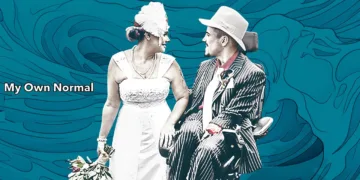
The commitment ceremony gives the film one of its cleanest dramatic beats. It carries emotional force because it is public, communal, and joyful, but it also exists under a legal shadow. Freeman and Orina cannot simply treat marriage as a private declaration. Benefits rules make legal marriage risky, exposing one of the many ways support systems can punish disabled people for forming families.
The documentary touches this policy terrain lightly, sometimes too lightly. Freeman has access to steady professional care, a level of support many people with similar needs do not receive. That fact matters, and the film knows it matters, but it rarely widens far enough to examine the system with the same care it gives the family. The narrower focus keeps the story intimate. It also leaves some of the larger machinery blurry.
Still, the film’s best storytelling choice is to let the system appear through decisions rather than lectures: cohabiting with Orina, raising Maya, coordinating care, choosing ceremony over legal marriage. Those choices make the stakes legible. A policy lecture might have said the same thing less effectively and with worse lighting.
Plain Form, Real Limits
Freeman’s direction is direct, intimate, and visually modest. The recurring water motif is the closest the film gets to a sustained image system, linking his childhood sense of being underwater with family activity and emotional release. It is a simple device, but it works because it belongs to him rather than to a producer’s idea of poetic disability cinema.
The childhood home footage deepens the portrait. His parents encouraged risk, play, and adventure before they fully understood how permanent his physical difficulties would be. Those images complicate the later conflict around Maya. These are loving parents who gave their son room to test the world, then struggled when he wanted to build a family inside it.
The film’s limitation is also clear. It spends so much time on disability, care, parenthood, and social assumption that Freeman’s wider personality sometimes gets crowded out. His career as a filmmaker, including the playful strangeness hinted at through his Poe adaptations, feels like a door the documentary opens, then closes too soon. The ceremony’s gothic touches suggest a sharper, weirder sense of humor waiting just outside the frame. More of that would have helped.
My Own Normal is plain in construction, and that plainness cuts both ways. It gives the documentary honesty and keeps the story from turning into a polished advocacy package. It also narrows the texture of the people on screen, especially when the film wants to argue that no person should be reduced to one visible condition. The strongest scenes survive that tension because they are specific: Maya playing with her father, Orina carrying the daily math of partnership, Freeman using cinema to claim an adult life others had already edited down.
The intimate biographical romantic documentary My Own Normal premiered at the Slamdance Film Festival in January 2025 before its official commercial distribution by Freestyle Digital Media on April 24, 2026. Audiences can rent or purchase the independent feature online across major North American digital video-on-demand networks, including Amazon Prime Video and Apple TV. Filmed over seven years, the story chronicles the personal life of filmmaker Alexander Freeman, who navigates the complexities of romantic relationships, marriage, and early parenthood while living with cerebral palsy.
Where to Watch Indomitable (2024) Online








Full Credits
Title: My Own Normal
Distributor: Freestyle Digital Media
Release date: January 2025 (Slamdance Film Festival Premiere), April 24, 2026 (North American Digital Release)
Rating: PG
Running time: 57 minutes
Director: Alexander Freeman
Writers: Alexander Freeman, Michaelle McGaraghan
Producers and Executive Producers: Brandon Golden, Alexander Freeman, Ladd Lavallee, Tammy Lavallee, Rory Read, Mary Savoy-Read, Claudia Bright, Kevin S. Bright, Chris Cooper, Marianne Leone
Cast: Alexander Freeman, Orina Umansky Freeman, Maya Freeman, Linda Freeman, John Freeman, Deanna Martinez Serrano
Director of Photography (Cinematographer): Mike Magilnick, Erik Fattrosso
Editors: Michaelle McGaraghan, Alexander Freeman
Composer: Chris Zabriskie
The Review
My Own Normal
My Own Normal is plain in form, sometimes too narrow in how much life it lets into the frame, but its storytelling spine is sound. Alexander Freeman’s documentary works because it treats fatherhood as a series of daily proofs rather than a speech. The scenes with Maya, Orina’s grounded presence, and the commitment ceremony give the film its cleanest emotional beats. It could use sharper texture around Freeman’s creative life, but its honesty carries the weaker stretches.
PROS
- Strong domestic intimacy
- Honest view of disabled parenthood
- Orina and Maya feel warmly present
- Clear care-system stakes
- Freeman’s authorship matters
CONS
- Plain visual approach
- Limited sense of life beyond disability
- Some familiar documentary beats
- Policy issues stay lightly sketched