



























Ricardo de Montreuil finds his strongest material whenever a plate of food carries history the dialogue has flattened. Mistura is set in 1965 Lima, where French-Peruvian socialite Norma Piet (Bárbara Mori) loses the life she was trained to perform after her husband Roberto leaves her for a younger Miss Peru and walks away from the mortgage too. That premise has the shape of a classic woman-rebuilding-herself drama, and the film knows how to make that shape inviting.
The opening crisis is blunt and effective. Norma leaves a New Year’s party in tears, snaps at her chauffeur Oscar Lara (César Ballumbrosio), then spends the next morning locked in her bedroom while the household staff trade worried gossip downstairs. Soon a bank representative arrives to explain that the mansion could be foreclosed on. The film understands how quickly status can turn into a trap once the money behind it disappears.
Mori is the main reason Norma’s arc works as often as it does. She does not rush to make Norma lovable. Watch the scene where Norma accuses Rosa (Hermelinda Luján) of stealing food after decades of service. Mori lets the cruelty sit there without softening it too quickly. Norma is frightened, humiliated, and still fully capable of punching downward. That makes her later attempts at change feel less automatic, because the film has shown the ugly reflex she has to fight.
Oscar and Rosa Deserve a Wider Frame
The tricky part is that Mistura keeps finding richer stories around Norma, then pulling them back into her orbit. Oscar is the clearest example. He suggests that Norma turn part of the Miraflores house into a restaurant, steadies her through the financial panic, and guides her toward the Peruvian culture she has treated like scenery in her own country. Ballumbrosio gives him an easy charisma, especially in the moments where Oscar plays music, jokes with staff, or absorbs Norma’s temper without surrendering his dignity. I kept wanting the camera to follow him home.
The film gives Oscar a son, a musical life, and a position that lets him move between elite rooms and working spaces, but those details arrive in fragments. He is interesting enough to carry the film, which becomes a problem because he is mainly written to carry Norma toward enlightenment. Rosa faces the same limitation. Her cooking knowledge gives the restaurant its soul, and Luján makes her refusal of Norma’s final paycheck sting. Yet Rosa’s inner life stays thinner than the moral lesson she provides.
This matters because Mistura wants to be about class, race, gender, and cultural mixture. It has the right instincts in scenes where the servants speak more freely away from Norma, or when Oscar gently reminds her that work has always been present in her home, just performed by other people. The film’s blind spot is perspective. Norma’s awakening takes up space that Oscar and Rosa’s lives could have filled.
Food Carries the Film’s Best Ideas
The restaurant gives Mistura its cleanest visual metaphor. Norma begins with L’Entrecote, a French bistro tied to her father, her imported sense of refinement, and the old class world that has stopped protecting her. The opening week draws customers curious about scandal and novelty, then business fades. The concept looks elegant, but it has no pulse.
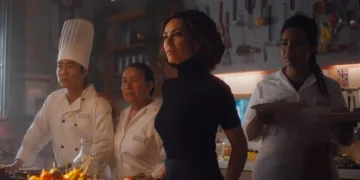
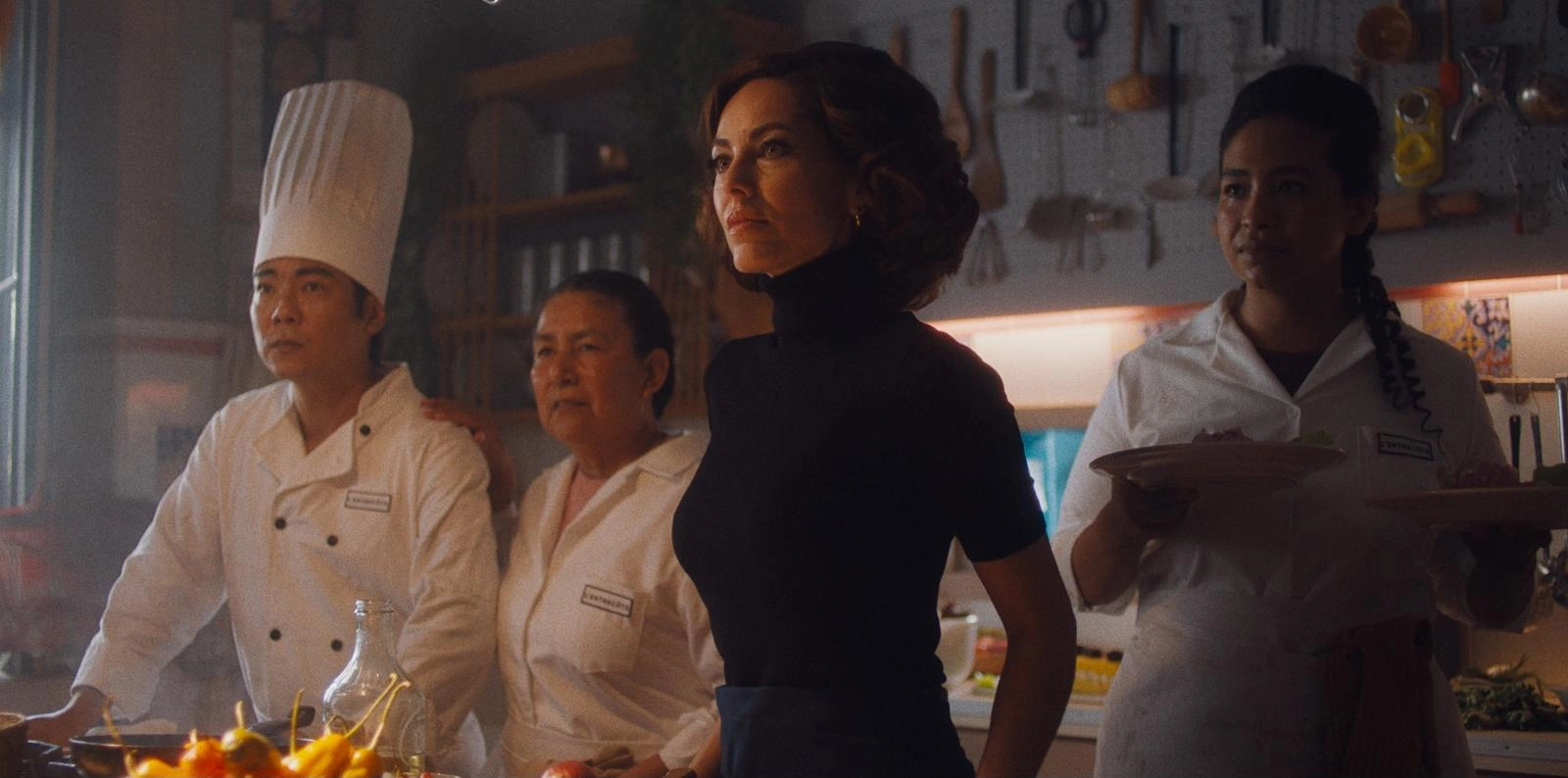
The movie comes alive when the kitchen shifts toward Peruvian ingredients and cross-cultural influence. Rosa’s traditional cooking and the Asian-Peruvian work of chef Raúl Miyakawa point Norma toward the city she has ignored. The scenes of preparation are the film’s most persuasive craft. De Montreuil’s camera lingers on food without turning it into decorative filler. A dish being sliced, seasoned, and plated becomes a lesson in migration, labor, and taste.
That is where the filmmaking explains itself better than the script does. The idea behind Mistura is visible in the kitchen before anyone says it aloud: Lima’s identity is built through contact, conflict, borrowing, and adaptation. The possible creation or naming of tiradito, or “estiradito,” gives the film a playful culinary spark, because it ties invention to a specific hand movement and a specific plate.
The business logic is harder to swallow. Norma has only months to save the mansion, spends that time preparing a restaurant inside it, then needs the restaurant to turn a profit fast enough to satisfy the bank. New restaurants are famous for eating money, not producing miracles. I can accept a heightened period drama, but the mortgage clock keeps making practical noise in the background.
A Handsome Film With a Softer Edge
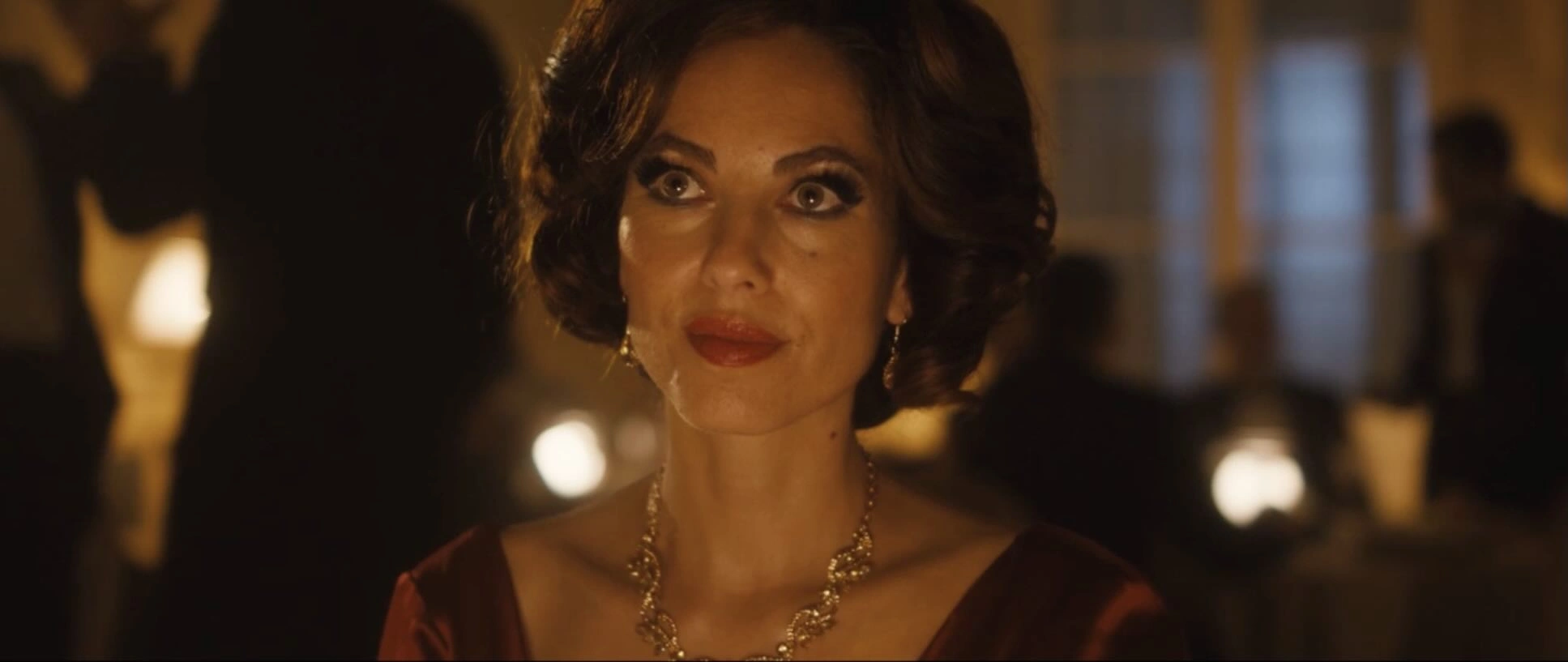
Nicolás Wong’s cinematography gives 1965 Lima a polished, golden texture. Casa Piet looks expensive in a way that also feels airless, and the Lima Country Club scenes make exclusion look polite before the door closes. The cars, costumes, and interiors do a lot of quiet world-building, especially when Norma’s perfect styling begins to feel like another form of confinement.
De Montreuil directs with confidence, but the writing tries to hold too many plates at once. Gerry’s life in Paris, Norma’s generational friction with him, Roberto’s scandal, the restaurant’s survival, Oscar’s background, Rosa’s knowledge, and a late romantic turn all compete for room. The romance is the weakest thread because it arrives after the film has built companionship and gratitude, not enough sensual charge. Predictable can work. Underprepared rarely does.
Still, Mistura has pleasures that are easy to recognize and worth taking seriously. Mori gives Norma a believable mix of pride and panic. Ballumbrosio brings warmth the movie needs. The food scenes give the drama a sensory language sharper than many of its speeches. What holds the film back is also what makes it interesting to argue with: it sees the beauty of cultural mixture, then keeps too much of that beauty inside a mansion. The camera keeps promising a fuller Peru than the script is ready to enter.
The Peruvian historical culinary drama Mistura celebrated its world premiere at the Mill Valley Film Festival on October 8, 2024, followed by international festival screenings and a commercial theatrical roll-out in Peru on August 21, 2025. Distributed by Outsider Pictures in North American markets and Palace Films internationally, the film is actively touring independent art cinemas, film festivals, and specialized Spanish-language cinematic showcases. Set against the social shifts of 1960s Lima, the story follows a glamorous French-Peruvian woman from elite society whose life shatters when her husband abandons her, forcing her to defy deep cultural prejudices and team up with marginalized community members to open an innovative restaurant celebrating Peru’s true multicultural heritage.
Where to Watch Mistura (2025) Online




Full Credits
Title: Mistura
Distributor: Outsider Pictures, Tondero Films, Palace Films
Release date: October 8, 2024 (Mill Valley Film Festival Premiere), August 21, 2025 (Peru Theatrical Release)
Running time: 101 minutes
Director: Ricardo de Montreuil
Writers: Ricardo de Montreuil
Producers and Executive Producers: Ivan Orlic
Cast: Bárbara Mori, Cesar Ballumbrosio, Christian Meier, Stefano Meier, Juan Pablo Olyslager, Hermelinda Luján, Vanessa Saba, Marco Zunino, Junior Béjar, Priscila Espinoza, Jesús Aranda, Amaranta Kun
Director of Photography (Cinematographer): Nicolás Wong
Editors: Luis Colina, Ricardo de Montreuil
Composer: Tim Williams
The Review
Mistura
Mistura has the look, cast, and sensory pull of a rich period drama, with Bárbara Mori and César Ballumbrosio giving it warmth where the script turns too tidy. The cooking scenes make Lima’s cultural mixture feel alive, and the production design gives 1965 Miraflores a polished, believable sheen. Still, the film’s class politics stay too soft, especially when Oscar and Rosa exist mainly to guide Norma’s awakening. A handsome, flavorful film with a sharper version hiding inside it.
PROS
- Bárbara Mori’s layered performance
- Strong food and kitchen scenes
- Handsome 1960s production design
- César Ballumbrosio’s warm presence
CONS
- Soft class perspective
- Rushed romantic turn
- Strained restaurant timeline
- Oscar and Rosa underwritten