




















Netflix has turned cancellation into a genre of its own, so a comedy reaching a planned final season now feels almost radical. Survival of the Thickest Season 3 finds Mavis Beaumont there.
Her career is rising, Luca is living with her, and a “Meet Cutes NYC” interview catches them describing a relationship that has become serious before Mavis seems ready to admit it.
Then she visits a fertility clinic. A doctor played by Wanda Sykes tells Mavis that freezing her eggs may no longer be sensible. Embryos enter the conversation. So does time.
Fertility Is Not a Slogan
Mavis takes Khalil to the fertility appointment instead of Luca, showing how her emotional habits lag behind her romance. When Luca finds Khalil helping with a hormone injection, his hurt comes from exclusion. A major decision about Mavis’ future went elsewhere first.
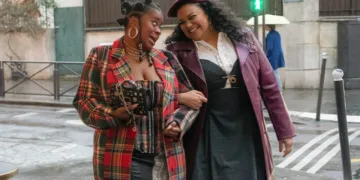
The Fashion Illuminati Dinner extends the conflict through logistics. Mavis arrives in her own dress, surrounded by Jenna Lyons and Ashley Graham, then realizes her medication is at home. Calling Luca forces their romance into practical care.
The later miscarriage asks heavier work of the series, making recovery physical and graceless. Mavis cannot motivational-quote her way through loss, while Luca suppresses his grief because he thinks support requires emotional disappearance.
Michelle Buteau has a difficult assignment. Her comic timing depends on Mavis filling a scene, yet the direction sometimes asks her to express sorrow at the same volume. A few moments feel indicated rather than lived. Marouane Zotti fares better in silence while Luca tends to Mavis. Television still loves turning reproductive grief into an awards clip. The season gets closer to honesty when it stops announcing the emotion.
The Marley-Shaped Hole
Tasha Smith’s absence as Marley damages the season’s social architecture. Earlier episodes moved from Mavis’ fashion problems to Marley’s later-life romance with a woman, Peppermint’s relationships, or Khalil’s therapy and art. Those parallel stories did political work through specificity. Nobody needed a manifesto because the characters were busy having actual lives.
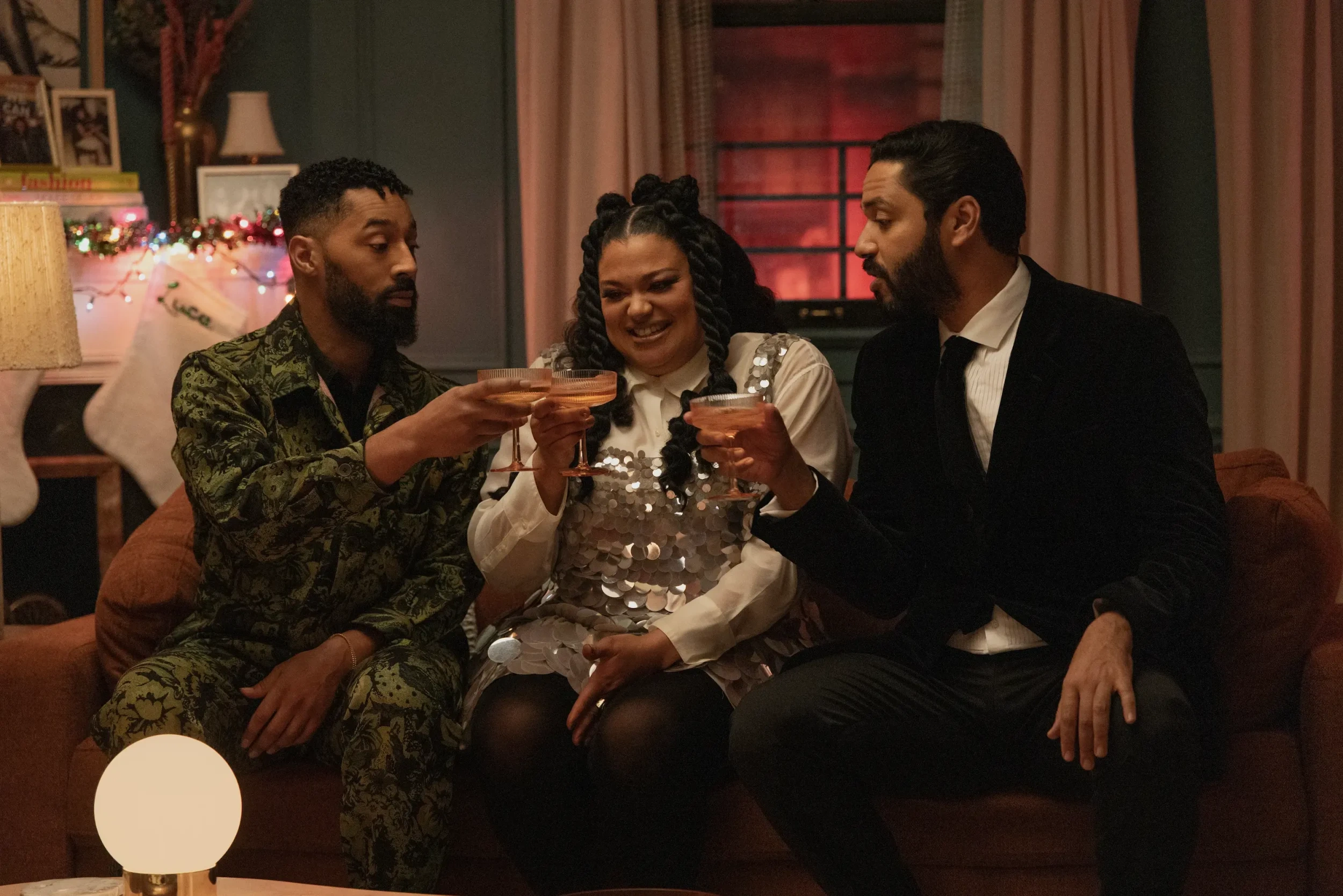
Season 3 narrows the field to Mavis, Luca, and Khalil. Luca receives richer material, yet Mavis loses a close Black female friendship that neither her boyfriend nor Khalil can replace.
The friction between Luca and Khalil works better. Their clashes expose how little independent relationship they have. Building one away from her gives the season a warm treatment of adult male intimacy. Progress, apparently, means two men can discuss feelings without pretending they are talking about basketball.
Khalil’s attempt to reconnect with his incarcerated father gives Tone Bell sharper material. Therapy has taught him to move past deflection, and recognizing similarities with his father makes that growth concrete. His romantic arc is less carefully handled. Season 2 positioned Simone as a meaningful change, then Season 3 largely moves on without giving the shift much weight.
Fashion Fits Better Than the Dialogue
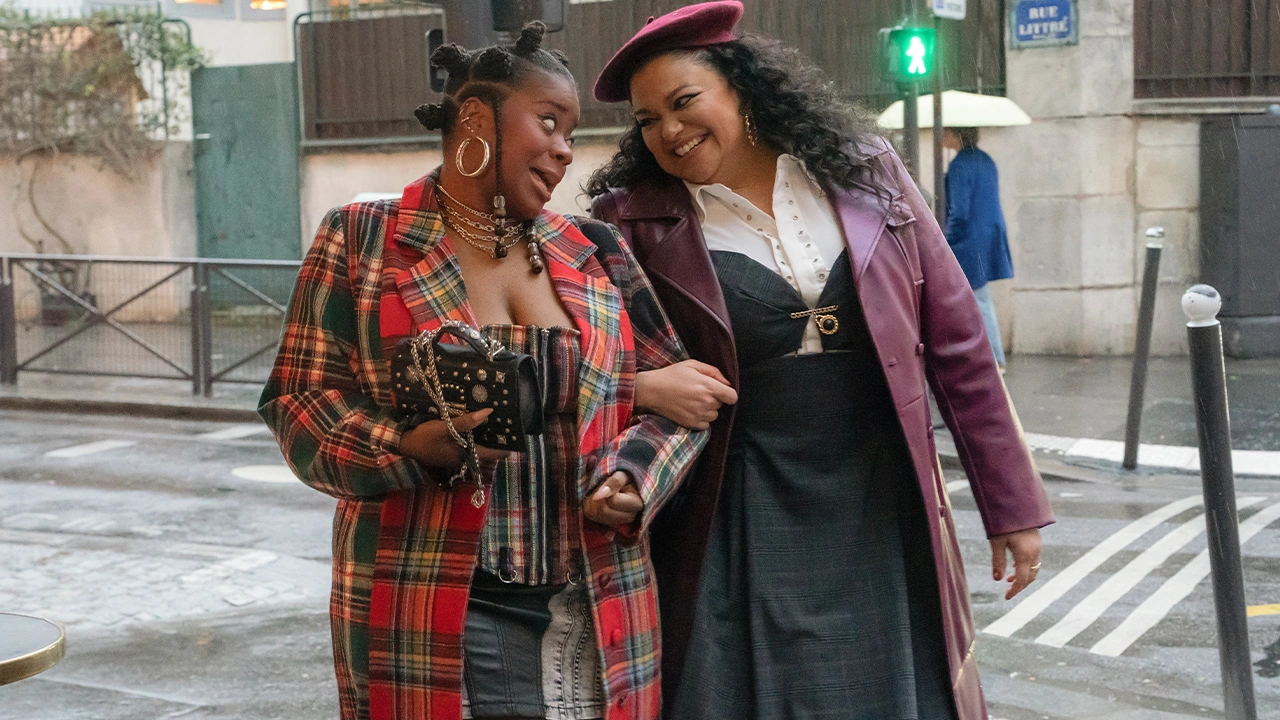
Keia Bounds’ costume work understands Mavis better than some scripts do. The Fashion Illuminati dress and her Brooklyn looks let fashion operate as character writing. Mavis dresses like a designer testing how far her visual language can travel through rooms built by people who once ignored her.
Charles Renee’s return gives that confidence an institutional adversary. His access to Mavis’ ideas has helped him stay relevant and profitable, an example of an industry that loves “fresh voices” once an established figure can invoice for them. Fashion’s appetite for inclusion becomes strangely enthusiastic after ownership has been reassigned.
The dialogue keeps underlining ideas the production has already expressed. Too many conversations arrive as one-liners, affirmations, or phrases engineered to survive a cropped social-media clip. Buteau can sell plenty through rhythm and facial reaction, especially when Mavis is blunt, awkward, or cheerfully gross. Eight episodes of polished declarations still become exhausting.
The series carries a representational burden Netflix is very happy to market. A plus-sized Black woman gets desire, ambition, bad judgment, fertility questions, grief, and ridiculous jokes. Queer and trans characters belong to the social world rather than arriving as educational modules. The show works best when it trusts those choices enough to stop writing like every scene needs to prove its values.
A Finish Line With Actual Shape
Three seasons give Mavis’ arc rare clarity for a streaming comedy. Season 1 caught her after professional and romantic collapse. Season 2 let her fashion career gain traction while Luca became a serious partner. Season 3 forces those gains into conflict with time, fertility, grief, and an industry eager to consume her work.
The Fashion Illuminati Dinner makes that progression visible. Mavis is finally inside the room she wanted, wearing her own design, then has to interrupt the fantasy because her body requires medication on a schedule. Career success and reproductive pressure occupy the same evening. The scene says plenty about “having it all” without a motivational speech.
The weaker dialogue frustrates because the show has built situations capable of carrying its politics. It does not need every character sounding like a panel moderator at a streaming diversity summit.
Mavis reaches the final season with the fertility clinic, the runway, the miscarriage, the bad decisions, and the punchlines all belonging to her. Television once reserved characters like her for supportive-friend duty. Netflix should study why giving her the whole frame mattered. It should also study the edit button.
Survival of the Thickest Season 3 premiered on July 2, 2026, and is available to stream exclusively on Netflix. This comedy series follows a single, plus-size stylist named Mavis Beaumont as she works to rebuild her life and fashion career in New York with the assistance of her close friends.
Where to Watch Survival of the Thickest Season 3 Online


Full Credits
Title: Survival of the Thickest Season 3
Distributor: Netflix
Release date: July 2, 2026
Rating: TV-MA
Running time: 24-30 minutes
Director: Kim Nguyen, Danielle Sanchez-Witzel, Michelle Buteau, Amy Aniobi
Writers: Michelle Buteau, Solomon Georgio, Cameron Johnson, Kindsey L. Young, Ian Edwards, Amy Aniobi, Sherean D. Jones, Mnelik Belilgne, Kemiyondo Coutinho
Producers and Executive Producers: Michelle Buteau, Danielle Sanchez-Witzel, Ravi Nandan, Alli Reich, Anne Hong
Cast: Michelle Buteau, Tone Bell, Tasha Smith, Marouane Zotti, Peppermint, Liza Treyger, Becca Blackwell, Anthony Michael Lopez, Alecsys Proctor-Turner, Garcelle Beauvais
Director of Photography (Cinematographer): Dagmar Weaver-Madsen, Ray Huang, Chris Wairegi
Editors: John Rafanelli, Craig Cobb
Composer: Transcenders
The Review
Survival of the Thickest Season 3
Survival of the Thickest Season 3 reaches its finish line with sincere ideas about body autonomy, reproductive grief, Black and queer community, and the awkward economics of creative ownership. Netflix, for once, lets a comedy end while its protagonist still has somewhere meaningful to arrive. The trouble is that meme-ready dialogue and a thinner ensemble sometimes turn lived experience into programming language for affirmation. Michelle Buteau carries the gap, especially through Mavis and Luca’s loss, while the costumes remain sharper than half the conversations.
PROS
- Ambitious fertility and grief storyline
- Stronger material for Luca
- Excellent costume design
- Clear three-season character arc
CONS
- Marley’s absence weakens the ensemble
- Dialogue leans on one-liners
- Khalil’s romantic arc feels neglected
- Some emotional scenes feel overstated