


























Soluchi stays too long on customer calls. Her boss sees a throughput problem; she hears a person having a bad day. This distinction is practically the entire moral philosophy of Call of My Life, a romantic comedy fascinated by the question of how much affection becomes socially inconvenient before somebody calls it immaturity.
Sol, played by Uzoamaka Power, loves without an internal volume control. She shops for boyfriend Kalu’s birthday while being wheeled through a store in a trolley by best friend Zimuzo, celebrates seven-month anniversaries, and regards availability as an expression of care. Kalu, a shipping businessman played by Zubby Michael, understands love through practical provision. His debit card speaks fluent romance, or so he assumes.
The problem is that Sol has mistaken incompatibility for insufficient effort. Kalu makes the same mistake from the opposite direction. Their playground date, with Sol delighted by the swings and Kalu looking like someone has sentenced him to recreational activity, says everything before their breakup does. Then he says it anyway. She loves too much. Cares too much. Is always there. Call it emotional inflation: the strange belief that generosity loses value when supplied without scarcity.
Soluchi and the Economics of Affection
Power, who also wrote the screenplay, makes Sol considerably smarter than her “whimsical woman in colourful tights” packaging suggests. Watch her face during Kalu’s rejection. The energy does not disappear instantly. Her eyes seem to negotiate with the information before her body accepts it. She has spent years treating emotional openness as a virtue and is suddenly informed that it may be a defect.
I initially thought Kalu was simply the necessary romcom obstacle, a handsome wrong answer waiting to be replaced by a handsomer correct one. The film complicates that reading. Zubby Michael gives him a wonderfully specific irritation, sliding between Igbo and English as Sol’s behaviour exceeds his patience.
He is often very funny, especially when attempting tenderness like an employee following newly issued corporate policy. His later return with balloons and influencer-approved romantic gestures exposes the real problem. Kalu can reproduce Sol’s language of affection. He cannot quite speak it.
Also Read






Sol’s parents, played by Patience Ozokwor and Nkem Owoh, offer a quieter counterargument. Their teasing conversations and stories about their own romantic past reveal a marriage where intimacy has survived religion, age, and the daughter’s amusing assumption that her parents arrived on Earth already respectable. These scenes explain Sol without diagnosing her. She comes from people who see affection as ordinary behaviour.
Zimuzo matters for a similar reason. Sol never deposits her friendship in storage once a man appears. For a genre that routinely treats female friendship as an emotional taxi service between dates, this should not feel refreshing. Yet here we are.
Romantic Premature Certainty
Eli enters through a network complaint. He is a Ghanaian news presenter struggling with connectivity, Sol answers the call, and the screenplay resists crushing us beneath the metaphor (thankfully, because the metaphor is wearing a fluorescent vest and waving).

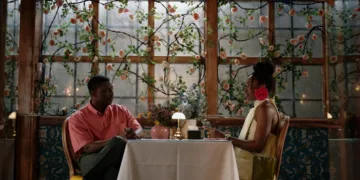
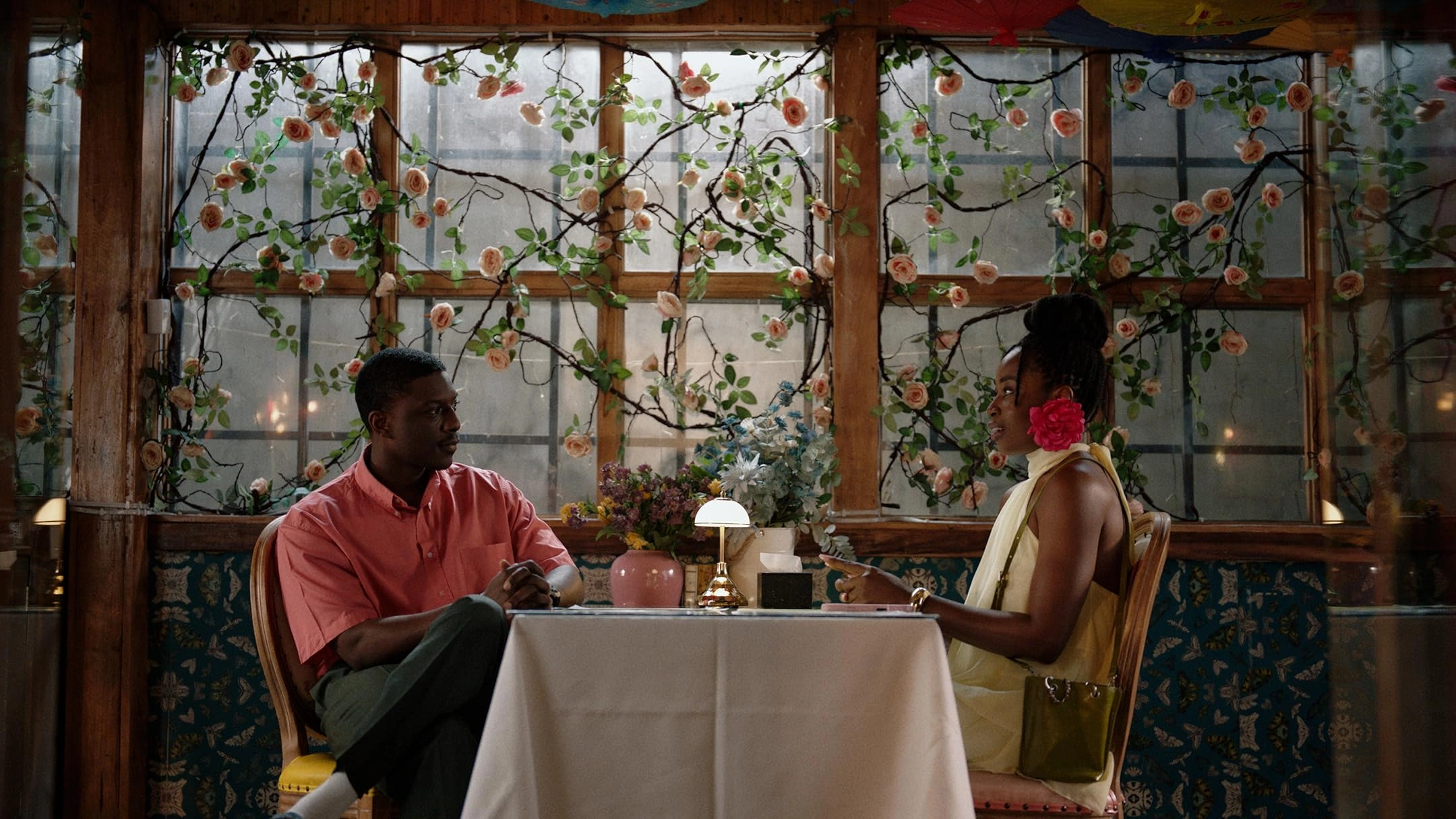
Andrew Yaw Bunting gives Eli a calmness that initially works beautifully against Sol’s nervous energy. Their voices create the first attraction. He calls her “Soul.” Their eventual restaurant encounter has a loose, slightly awkward charge, especially with Sol still wounded by Kalu and unsure how much of herself is safe to reveal. Then the film develops a condition I will call romcom premature certainty.
Sol and Eli begin speaking with the emotional vocabulary of people who have already survived something together. Their declarations are polished, poetic, and occasionally lovely. Yet the screenplay has skipped the ordinary connective tissue that would give those words weight.
What do they discuss after a bad day? How is Eli adjusting to Nigeria? What does his work as a news presenter demand from him? What irritates him when Sol is not being adorably excessive? We know the pre-marital sexual history of Sol’s parents before we understand much about Eli beyond his willingness to participate in Sol’s romantic wavelength. This is objectively funny.
The imbalance becomes sharper because Sol and Kalu possess visible history. The playground, Kalu’s business commitments, his financial gestures, and his painfully artificial comeback campaign create friction. Eli gets dates and declarations. The film tells us there is yearning where it needed to show us accumulation.
Sol’s insecurity after Kalu also circles itself for too long. Gifts might be too much. A one-month anniversary might be too much. Sol herself might be too much. Power sells the anxiety, yet the screenplay repeatedly returns to it without placing fresh pressure on the relationship.
The church scene rescues the idea through comedy. Sol kneels with her rosary and asks God for an absurdly specific, brightly coloured sign regarding her romantic choice. By the time she explains the requested sign, divine guidance seems almost unnecessary. She has made the decision and would simply appreciate official stationery.
Lagos in Soluchi’s Colours
Visually, the film believes Sol. Her tights, wigs, patterned clothes, Eli’s softer pastels, decorated interiors, pillow arrangements, and even the call centre interface belong to the same heightened emotional reality. Production designer Anita Ashiru creates spaces that appear filtered through Sol’s appetite for life. After Kalu breaks her confidence, colour remains in her clothes. Sadness has entered the frame. It has not acquired ownership.
Dammy Twitch often frames faces during attraction and embarrassment rather than chasing elaborate visual punctuation. The restraint suits a film where tiny changes in expression carry considerable work. Power’s eyes brighten, retreat, and cautiously reopen across Sol’s romantic shifts.
The sound is equally attentive. In the park, screams, chatter, and nearby activity continue around the characters, allowing Lagos to exist beyond the leads’ romantic crisis. Johnny Drille’s voice over Cobhams Asuquo’s piano leans confidently into sentiment. Subtlety has left the premises, but nobody filed a missing-person report.
Igbo language and family detail keep the familiar romcom machinery attached to a specific culture. Sol’s pre-shift tongue twister, her parents’ conversations, and Kalu’s businessman identity provide textures that the love triangle itself sometimes lacks. The film’s central courtship may rush toward emotional certainty, yet Sol’s world has been constructed with immense patience. There is an irony there. Possibly a romantic one.
The vibrant Nigerian romantic comedy Call of My Life debuted across cinemas nationwide on May 15, 2026, quickly achieving immense commercial success and smashing box office records. Viewers can check local theatrical listings for current showtimes or watch for its upcoming streaming rollout on regional digital services. The plot follows Soluchi, a brokenhearted call center agent healing from an abrupt breakup with her former lover, whose outlook on love completely changes when a routine customer call connects her with a charming news anchorman.
Full Credits
Title: Call of My Life
Distributor: FilmOne Entertainment, Bluhouse Studios
Release date: May 15, 2026
Running time: 110 minutes
Director: Dammy Twitch
Writers: Uzoamaka Aniunoh
Producers and Executive Producers: Blessing Uzzi, Timi Dakolo, Soso Soberekon
Cast: Uzoamaka Aniunoh, Andrew Yaw Bunting, Zubby Michael, Nkem Owoh, Patience Ozokwor, Justin UG, Beverly Osu, Broda Shaggi
Director of Photography (Cinematographer): Bluhouse Studios Camera Department
Editors: Bluhouse Studios Editorial Team
Composer: Johnny Drille, Cobhams Asuquo
The Review
Call of My Life
Call of My Life is funniest and warmest when Sol’s world exists beyond Eli. Her parents, Zimuzo, the playground disaster with Kalu, even the call centre’s tyranny of average handling time give her emotional excess somewhere concrete to land. The central romance keeps asking us to believe in a depth the screenplay has skipped past, a condition we might call romcom premature certainty. Still, Uzoamaka Power makes Sol impossible to dismiss, and Dammy Twitch builds a Lagos bright enough to accommodate her.
PROS
- Uzoamaka Power’s expressive lead performance
- Warm, funny family dynamics
- Rich colour and production design
- Zubby Michael’s grounded comic work
- Lively environmental sound
CONS
- Eli remains thinly written
- Romantic declarations feel unearned
- Repetitive emotional impasse
- Central courtship lacks tension