
























The sun hunts quietly in Cho Young-jun’s Midnight Sun. For Lee Mi-sol, played with hushed force by Jung Ji-so, morning means withdrawal into shadow. She lives with Xeroderma Pigmentosum, a rare condition that makes ultraviolet rays lethal to her body. Her world narrows to her bedroom window.
She watches the street below and fixes on Kim Min-jun, played by Cha Hak-yeon as a grounded fruit seller whose routine carries the neighborhood’s rhythm. Their bond begins under the cool cover of night, when Mi-sol gathers enough courage to step outside and buy apples.
The purchase is small, yet the film treats it as a major move, an interaction that opens a route from isolation toward daily life. She protects that route with a fragile lie, telling Min-jun that her heavy work schedule keeps her hidden during daylight.
The film sets first love against a terminal diagnosis. Human connection survives here through brief windows of time granted by cruel biology. The film gives priority to character feeling and emotional timing over medical explanation.
Restrained Chemistry and Grounded Support
Midnight Sun depends heavily on the chemistry between Jung Ji-so and Cha Hak-yeon. Their performances stay restrained, using small gestures, silence, and pauses to say what dialogue leaves unsaid. Jung Ji-so keeps Mi-sol away from a flat tragic mold.
She gives her agency, curiosity, and a bright awareness of the world beyond her room. Her optimism registers as an active decision. Cha Hak-yeon gives Min-jun a steady softness. His Min-jun watches carefully, waits patiently, and receives the truth about her illness quietly.
The romance develops through nightly meetings after his shifts. Those scenes carry the private charge of a hidden route, a sequence of limited chances where every choice carries emotional weight. Their world feels intimate and cut off from ordinary daylight.
One key moment arrives when Mi-sol falls asleep in his car. Dawn approaches, and the scene tightens into immediate dread. The sequence forces both characters to face the hard rules shaping their relationship. The danger is physical, yet its emotional pressure lingers.
The supporting cast broadens the life around the romance. Mi-sol’s parents show protective love that feels smothering and necessary at the same time. Her best friend brings loud energy that pushes against Mi-sol’s quieter presence. These characters make the stakes feel personal by suggesting a life with attachments beyond the central couple.
The film uses them to study care under pressure, where affection can comfort, limit, and protect all at once. Min-jun’s job as a fruit seller gives him a firm place in the street’s daily pattern. He belongs to the outside world Mi-sol studies from behind glass, which makes their meeting feel ordinary and precious.
Sonic Bridges and Digital Immortality
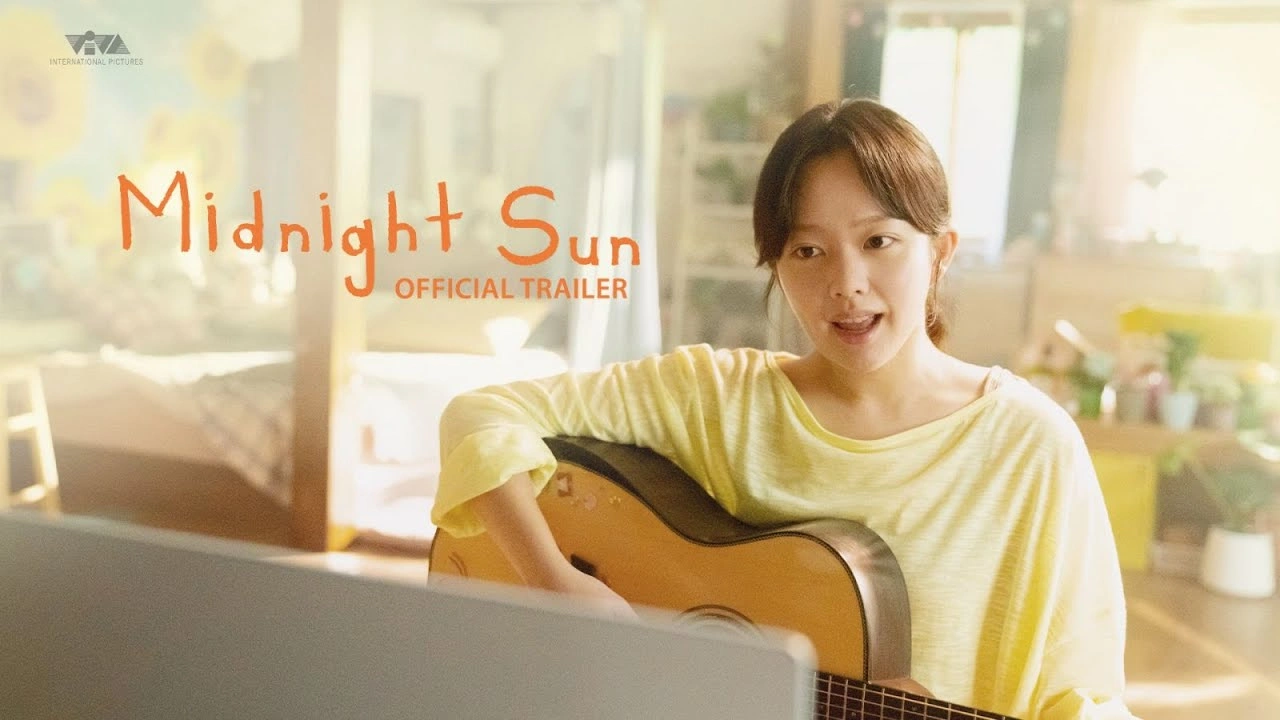
Music becomes the main link between Mi-sol and the society she can barely join. She is a singer who writes her own songs, and those tracks carry an acoustic indie style. Jung Ji-so performs them herself, giving the performance a lived-in texture. The lyrics feel plainspoken. They carry Mi-sol’s longing, her watchful nature, and the emotional data she gathers from a windowed life.
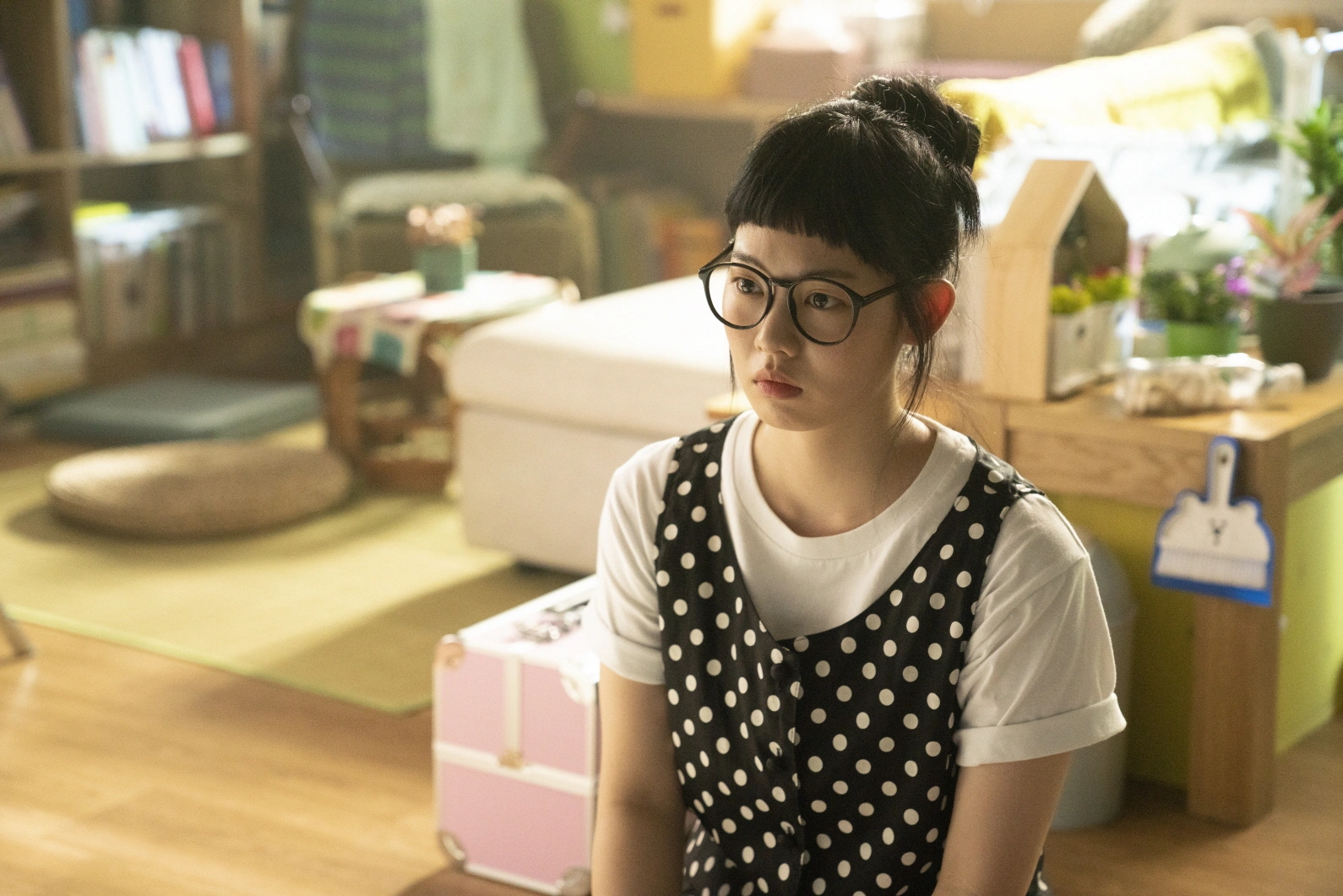
Her choice to create a YouTube channel expands the story’s scale. Through that digital platform, her voice reaches people across the globe. The channel becomes a tool for presence, a way to leave evidence of herself beyond the limits of her body.
The film treats her music as communication that crosses the physical restrictions placed on her life. It shapes a clear message about acting on desire before fear closes the door. Mi-sol shares her talent while time remains. She refuses to let her approaching end silence her creative life.
That creative drive gives Mi-sol purpose. The songs connect the emotional beats like a recurring theme, returning at key points with new weight each time. They maintain a consistent mood through the gentler scenes and the heavier passages. Her music represents the light she discovers in darkness.
It also becomes a record of existence. The story shows art as a form of afterlife, built from melody, memory, and the need to be heard. The main song’s melody remains after the credits, carrying the same ache as the film’s final images.
Vivid Shadows and Emotional Pacing
Cho Young-jun’s visual approach leans into feeling above realism. The cinematography uses saturated colors, high contrast, and bright backlighting. Night scenes gain a dreamy charge, making the world look vivid and almost surreal. This style supports the magical feeling of the romance, giving Mi-sol and Min-jun’s meetings the texture of memory as it is being made.
Interior scenes shift into muted, yellowish tones, grounding her isolation in a different emotional register. The visual choices create a specific aesthetic that matches the story’s structure: brief openings, controlled spaces, and heightened moments of contact.
The pacing is patient. The film allows viewers to sit with Mi-sol and Min-jun during quiet stretches, trusting pauses and small reactions to carry dramatic value. The final act turns sharply as the disease progresses. The shift emphasizes pathos and avoids sudden twists. The diagnosis carries inevitability from the beginning, so the film draws power from waiting, recognition, and the tightening limits around Mi-sol’s choices.
The final twenty minutes work because they concentrate on the pain of farewell. The final recording session stands out as a devastating expression of Mi-sol’s determination to finish her work. The sequence feels stripped down and direct. It is heartbreaking because the action is clear: she wants to complete the song, and the effort costs her. The earlier sweetness gives the ending its force, since the film has already built the couple’s bond through quiet repetition and small rituals.
The technical choices support this feeling. Each frame adds to the sense of a memory forming and slipping away. Sunflowers return as a visual motif, carrying Mi-sol’s love for the light she can never touch. Midnight Sun tells a story about beauty measured in brief access: a night walk, a song recorded in time, a face seen from a window, a love shaped by the hours it is given.
Midnight Sun is a South Korean coming-of-age drama that premiered in South Korea on May 28, 2025, and reached digital audiences in the United States on February 10, 2026. Viewers can currently watch the film on major streaming services such as Netflix and Amazon Video, with additional rental options available through Fandango at Home. The story serves as a reimagining of the classic Japanese narrative about a singer-songwriter with a life-threatening sun allergy. It focuses on her attempts to balance a burgeoning romance with the physical limitations imposed by her condition.
Where to Watch Midnight Sun (2025) Online
Full Credits
Title: Midnight Sun
Distributor: Lotte Entertainment, BY4M Studio, Capelight Pictures
Release date: May 28, 2025, February 10, 2026
Rating: PG-13, 12+
Running time: 108 minutes
Director: Cho Young-jun
Writers: Cho Young-jun, Kenji Bando
Producers and Executive Producers: Heo Seong-jin, Lee Beom-soo, Choi Jae-won
Cast: Jung Ji-so, Cha Hak-yeon, Jung Woong-in, Jin Kyung, Kim Sang-ho, Kwon Han-sol, Lee Jong-won
Director of Photography (Cinematographer): Kim Woo-hyung
Editors: Shin Min-kyung
Composer: Lee Chan-hyuk
The Review
Midnight Sun
Cho Young-jun delivers a poignant meditation on the value of a lived life within limited hours. The film avoids the traps of excessive sentimentality by centering the narrative on Mi-sol’s creative agency and the quiet devotion of her companion. Jung Ji-so’s performance grounds the tragedy in a relatable hope. While the visual style occasionally borders on the surreal, the emotional payoff in the final act feels earned. It is a sincere exploration of connection that thrives in the shadows.
PROS
- Strong vocal and physical performance by Jung Ji-so.
- Sincere chemistry between the lead actors.
- Effective narrative use of the original soundtrack.
- Avoids common melodrama tropes to focus on character growth.
CONS
- Saturated color palette may prove distracting for some viewers.
- Deliberate pacing requires significant patience.
- Supporting characters rely on familiar archetypes.