




















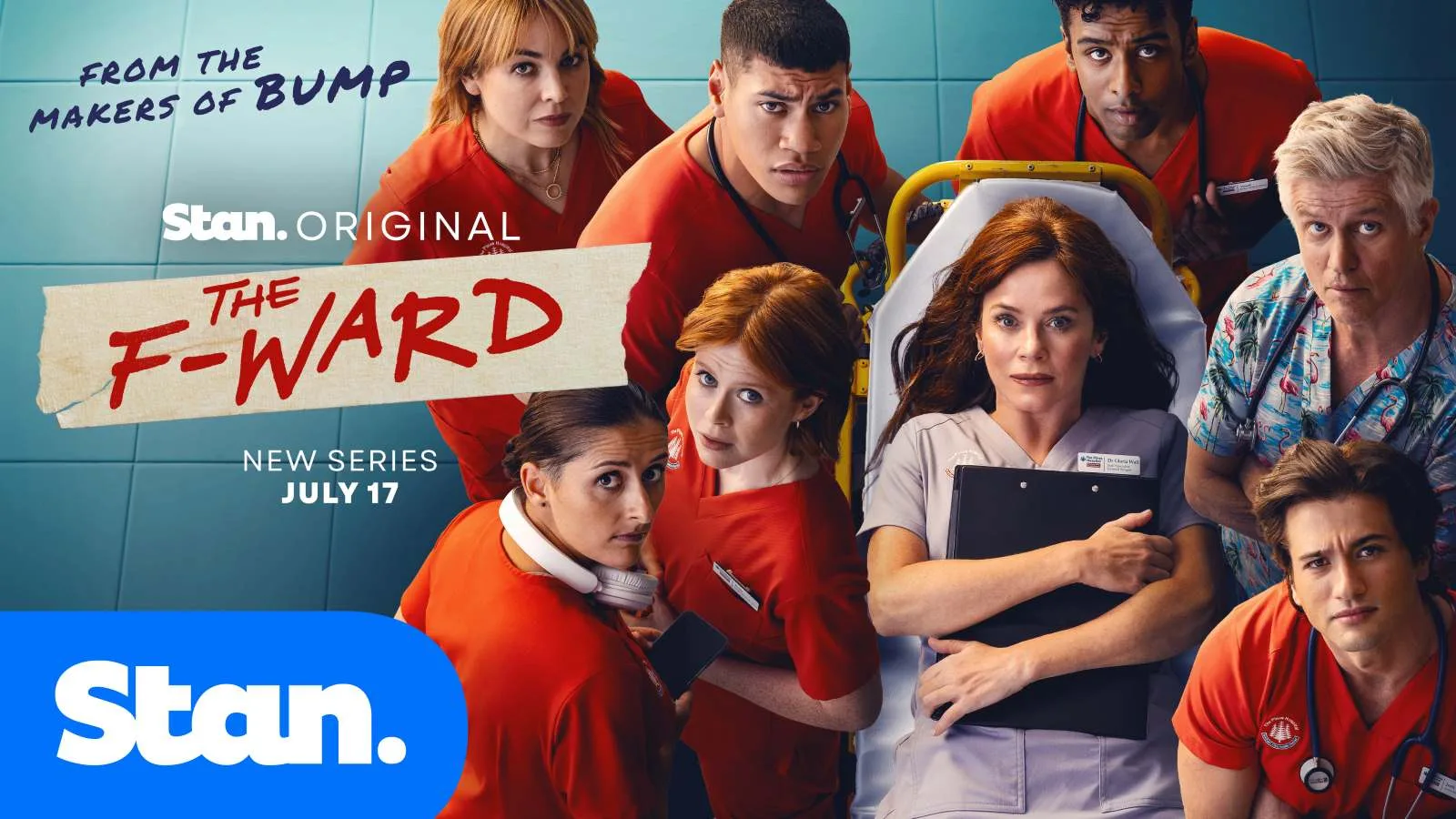

Gloria Wall tells her probationary interns that a quarter of them will be gone within six months. Pines Hospital responds by losing power during a storm, flooding its emergency department with patients, and welcoming back a culprit known as the “mystery shitter.” The sequence gives The F Ward its whole television problem in miniature. Professional ruin sits beside bodily farce, and the show must decide how lightly it can move without making failure feel weightless.
The six-episode Australian series has a sharp organizing idea. Jimmy, Ellie, Josh, Yosef, Lisa, and their fellow interns have already stumbled elsewhere. Pines offers one final path into medicine, with orange scrubs marking them as a separate class inside the hospital. Colleagues can identify the failures on sight. Every order carries a second question: can this person be trusted to follow it?
That setup lets the writers establish the group quickly. Jimmy ignores protocol whenever urgency flatters his instincts. Ellie treats procedure as a shield after a prescription error killed a patient. Yosef approaches stitches with the memory of nicking an artery and vomiting on the person he was meant to help. Josh brings privilege, appetite, and poor restraint into rooms that require discipline. Lisa has already worked as a nurse and now has to fit medical training around motherhood. Each flaw is easy to read, which is useful in a short season. It is also a trap. A character can become a recurring problem before becoming a person.
The show often escapes that trap through the opposing mentorship styles of Gloria and Curtis Parker. Gloria treats standards as a form of care. Her severity gives the program credibility because she refuses to pretend that kindness can erase a dangerous decision. Curtis bends rules, softens confrontations, and gives the interns room to recover. Dan Wyllie gives him warmth and comic looseness without turning Curtis into a cuddly exemption machine. Anna Friel supplies the counterweight with a stern, controlled presence. Gloria’s warnings carry weight because she refuses to cushion them.
Together, they create the show’s best rhythm. One mentor tightens a scene, the other releases it. The interns move between those pressures, and the writing finds humor in the gap between medical authority and workplace chaos. Yosef’s terror of stitching, the staff’s betting pool, and the mystery shitter land because the jokes emerge from people trying to keep a hospital functioning. Nobody pauses to announce the comedy. The ward simply has terrible timing.
The tone grows less secure when the series reaches for impact through the body itself. Surgical scenes offer incisions, exposed tissue, and organs handled in close view, giving Pines a tactile messiness that the bright production design might otherwise smooth away. Yet the camera sometimes lingers on a torso while withholding the patient’s face. The procedure gains texture as the person under the scalpel loses identity. Graphic detail cannot supply human consequence on its own.
Also Read




A third-episode reveal involving severely inflamed genitals pushes the same tension toward morbid comedy. The image arrives with enough insistence to demand a reaction, though the surrounding scene has not built the comic rhythm needed to earn it. Jimmy’s dizzy spells create another tonal strain. Distorted sound and heightened staging turn his hidden condition into a burst of medical horror. The device communicates disorientation, then keeps underlining it after the point is clear. Pines already contains enough danger. It does not need to sound haunted.
The lighter material works better when it reveals how these interns behave after the alarms stop. Friendship, attraction, partying, and family obligations give the ensemble continuity beyond individual cases. The trouble is one of allocation. Six episodes leave little room, and familiar workplace romance can absorb time that the final-chance premise needs for consequence. A mistake should alter the next shift, the next decision, or the way a supervisor watches an intern enter a room. Too often the series prefers a fresh complication.
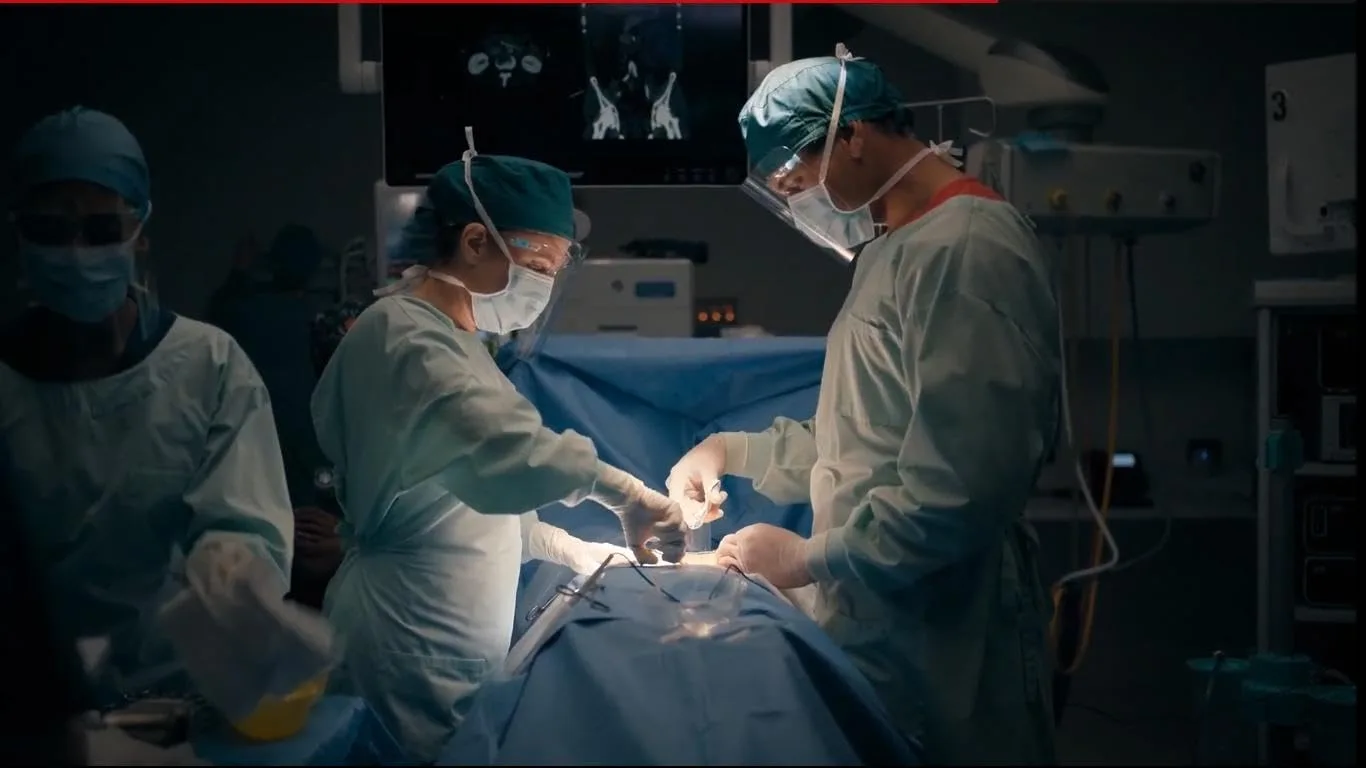
The beachside setting carries the same double effect. The hospital’s open light, colorful uniforms, sparse music, and nearby dunes give The F Ward an Australian ease that separates it from the sealed fluorescent misery associated with many medical dramas. The location also makes an underfunded institution look suspiciously pleasant. Staff members can finish a punishing shift and walk toward sand and water, a handsome release valve placed just outside emergency. The view has better working conditions than the interns.
Patient stories should provide the resistance that this easy rhythm needs. Luke’s brain bleed and Stefan’s encounter with Lisa and Josh supply brief changes in pace, but the series keeps its strongest investment in the recurring doctors. Patients drift through as tests, surprises, bodies, or opportunities for a lesson. That structure is common to medical television, yet it becomes especially risky here. The interns are being judged on their capacity to care for people, so the people cannot feel interchangeable.
The orange scrubs begin as a public mark of failure. They identify the interns before a word is spoken, turning each corridor into a probation hearing. Across six episodes, that mark gradually becomes comfortable, almost protective, because the ensemble’s warmth softens the danger attached to it. The F Ward has found a group worth following. The orange uniform still needs to feel like something they can lose.
The Australian medical drama series The F Ward premiered on July 17, 2026, and is available to stream exclusively on Stan. The story follows a group of flawed medical interns sent to an underfunded Sydney hospital for a high-stakes, final chance to save their careers.
Where to Watch The F Ward Online
Full Credits
Title: The F Ward
Distributor: Stan, CBS Studios
Release date: July 17, 2026
Rating: TV-MA / MA 15+
Running time: 45 minutes per episode
Director: Kelsey Munro, Natalie Bailey, Neil Sharma
Writers: Shanti Gudgeon, Jack Yabsley, Nick Coyle, Kelsey Munro, Dan Edwards, Jessica Tuckwell
Producers and Executive Producers: John Edwards, Kelsey Munro, Dan Edwards, Alicia Brow, Cailah Scobie
Cast: Anna Friel, Ioane Sa’ula, Lola Bond, Daniel Wyllie, Alex Fitzalan, Emily Barclay, Annie Boyle, Rishab Kern, Arka Das, Paula Arundell, Jeremy Sims, Susie Porter
Director of Photography (Cinematographer): Simon Ozolins
Editors: Maria Papoutsis
Composer: Trevor Brown
The Review
The F Ward
The F Ward has a strong ensemble premise, an appealing clash between Gloria’s discipline and Curtis’s flexibility, and a knack for workplace comedy that grows naturally from hospital disorder. Its breezy rhythm also keeps professional mistakes, patient suffering, and medical crises from leaving enough residue. Graphic procedures and distorted sound sometimes reach for intensity the character work has not earned. The interns are easy company, yet their orange scrubs gradually feel less like probation than a comfortable team uniform.
PROS
- Strong final-chance premise
- Lively mentor contrast
- Natural workplace humor
- Distinct coastal atmosphere
CONS
- Mistakes lack lasting weight
- Patients often feel anonymous
- Forced grotesque flourishes
- Romance crowds out the stakes