




























The promise of building a K-pop group suggests control: choose the trainees, define their personalities, shape their image, and watch the result arrive onstage. K-pop Idol Stories: Road to Debut offers only part of that fantasy. Its strongest ideas concern scheduling, money, exhaustion, and the compromises behind a polished debut. Its weakest choices restrict the group itself.
Developed by Wisangeni Studio, the game places the player inside WG Entertainment after their previous company closes and its idol group disbands. Project KIS offers a second chance. After selecting a management style, such as Marketer, Realist, or Risk-Taker, the player chooses a Cute, Glamour, or Fantasy concept and begins recruiting.
Compared with idol series such as The Idolm@ster, which often build their appeal around an established cast and lengthy character development, Road to Debut positions itself closer to a compact visual novel with management decisions. That distinction matters. The trainee pool is small, personalities are fixed, and the player cannot freely design the group they imagined before starting.
Seven Days at a Time
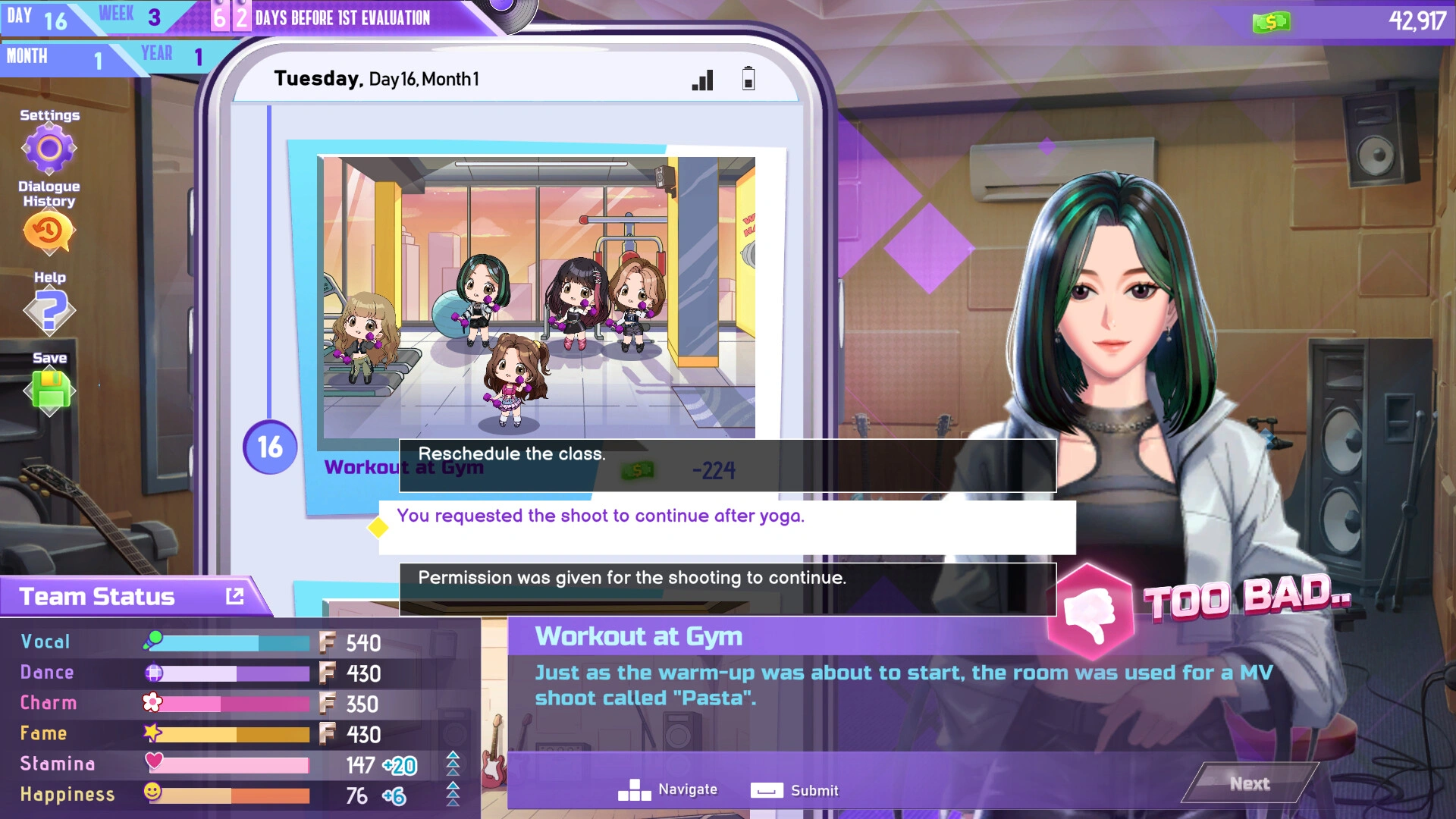
Each week provides seven calendar slots, and nearly every meaningful decision occupies one of them. Vocal lessons raise singing ability. Dance practice improves choreography. Backup work earns money and fame. Shopping, coffee breaks, spa visits, and days off restore stamina or happiness.
The basic loop is easy to understand, yet it creates useful pressure because every trainee brings a salary, dietary costs, and different strengths. A Cute group may need a different statistical balance from a Glamour unit, while adding a new recruit can lower the group’s immediate performance average until she catches up.
Expenses soon spread beyond training. Injuries require treatment. Insurance protects against medical costs. Drivers reduce the chance of missed appointments. Bodyguards can prevent incidents involving aggressive fans. Each safeguard consumes money that could have funded another lesson or promotional job.
This is where the game resembles a proper management sim. Preparing for three evaluations means deciding which weaknesses can remain and which demand immediate attention. Spending heavily on fame may leave the group physically drained. Resting everyone protects morale while sacrificing precious training days.
Random outcomes weaken that planning. A trainee can become distracted or tired during a lesson, reducing its benefit. Film, television, and fashion auditions may offer success rates between five and ten percent, making them feel closer to lottery tickets than strategic opportunities. A failed audition costs time that could have produced reliable progress elsewhere. The system asks the player to plan carefully, then frequently lets chance take the credit.
Stories Behind the Schedule
The visual novel elements give the trainees greater presence than their limited mechanical individuality initially suggests. Personal events cover school pressure, anxiety, injuries, dating restrictions, stalkers, obsessive fans, and the fear of aging out of the industry.
Yue’s storyline can lead toward an emotional personal goal and a closer relationship with the manager. Another trainee risks losing parental support after her grades begin to collapse. Dialogue choices during these scenes can alter moods, relationships, and statistics, connecting the narrative to the management layer.
The problem is access. Character arcs depend heavily on random triggers. One trainee may receive a substantial storyline while another completes the entire campaign with a single meaningful scene. The player cannot reliably focus on a specific recruit beyond excluding other candidates from the group.
Staff relationships face a similar limitation. Two weekly interaction points can be spent on conversations or outings that unlock jobs, training bonuses, activities, or cash. Repeated dialogue quickly exposes the system’s narrow range, and occasional pronoun errors make some exchanges feel unfinished.
A campaign lasts roughly four to six hours once the schedule becomes familiar. That length suits the limited core structure, yet the game presents random stories and New Game Plus as reasons to return. The promise is weak because subsequent runs repeat the same recruitment, training, evaluations, and debut path. A modest starting-money bonus cannot disguise how little the campaign changes.
Style Before the Stage
The presentation understands the surface language of K-pop well. Character portraits use a bright, manhwa-influenced style, while chibi models animate training sessions with simple charm. The interface places schedules, statistics, costs, and condition meters on screen without making them difficult to read.
Its soundtrack provides the most convincing connection to the genre. Background loops evoke second- and third-generation K-pop, and several original songs give evaluations and bonding scenes a clear identity. The absence of voice acting is noticeable, yet the music carries much of the intended atmosphere.
Small customisation features also show careful observation. Players can create a debut single cover and assemble a fan light stick from different components. These details recognize that an idol group is built through branding, merchandise, colour, and fan participation alongside music. The cover editor can be glitchy, with the Xbox version reportedly preventing assets from being moved at all. Then the group reaches its debut.
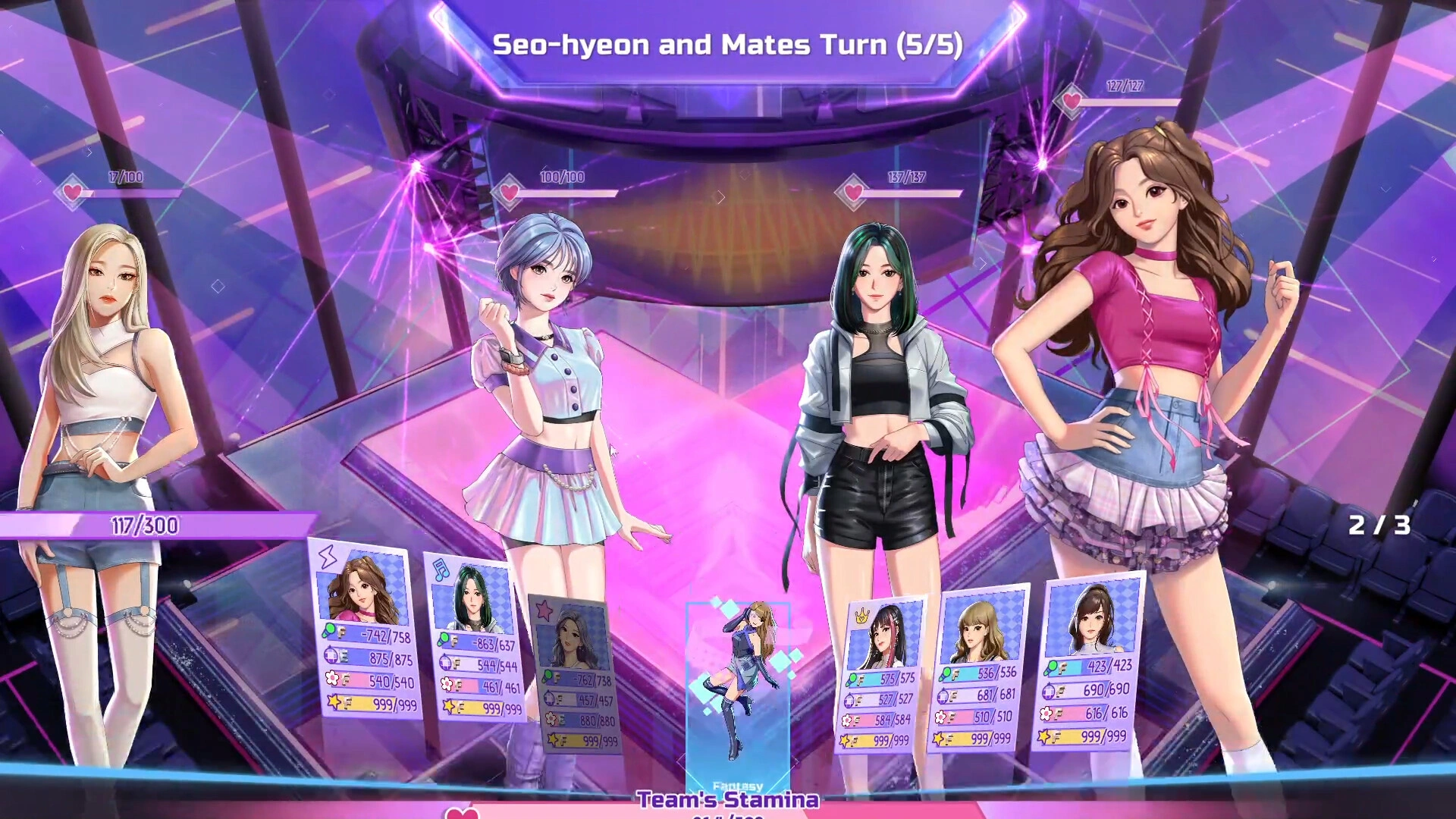
After hours spent balancing salaries, lessons, injuries, happiness, costumes, and publicity, the final concert relies on static Live2D figures, familiar poses, and a background video. The performers slide around the screen rather than delivering choreography that reflects their development. For a game devoted to the road toward one decisive performance, the destination receives less care than the calendar that led there.
The Review
K-pop Idol Stories: Road to Debut
K-pop Idol Stories: Road to Debut captures the routines surrounding idol creation with far greater confidence than it handles the management genre itself. Scheduling lessons, protecting trainee morale, balancing expenses, and preparing for evaluations form an accessible loop, while personal storylines reveal the pressures behind the polished stage image. Yet random event triggers, limited recruitment choices, repeated conversations, and a weak debut performance prevent the campaign from rewarding the attachment it builds. K-pop fans will recognize the culture immediately. Management veterans may find its systems too restrictive.
PROS
- Strong understanding of K-pop culture
- Colourful manhwa-inspired artwork
- Enjoyable soundtrack and original songs
- Accessible scheduling and budgeting loop
- Thoughtful trainee storylines
CONS
- Excessive dependence on random events
- Limited trainee and group authorship
- Repetitive interactions and training
- Weak New Game Plus incentives
- Underwhelming debut performance