



























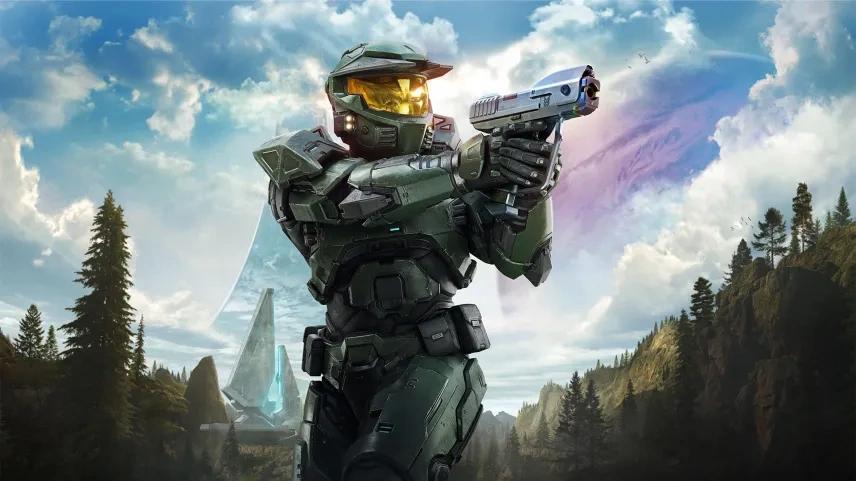

Halo’s two-weapon limit still does more work than many modern progression systems. Pick up a plasma rifle to strip an Elite’s shield and you may have to abandon the pistol that can finish it with one clean headshot. Keep the rocket launcher for a vehicle encounter and you risk entering the next corridor without enough ammunition for the Flood. Halo: Campaign Evolved preserves that decision loop, then surrounds it with sprinting, universal aim-down-sights, stored equipment, forgiving vehicles, and constant objective guidance.
Halo Studios has rebuilt Bungie’s 2001 campaign in Unreal Engine 5, bringing Master Chief’s first battle on the ring to Xbox, PC, and PlayStation 5. The package includes four-player online co-op, three prequel missions starring Chief and Sergeant Johnson, new skulls, and Campaign Remix. It arrives while Halo: Combat Evolved remains easy to play through The Master Chief Collection, placing every mechanical change in direct comparison. Campaign Evolved feels excellent in the hands, yet its systems often miss why the old friction mattered.
Back to the Ring
The campaign’s encounter structure remains remarkably durable. The Pillar of Autumn teaches the Covenant hierarchy inside cramped halls: plasma breaks shields, bullets finish exposed targets, Grunts scatter once an Elite drops. The next mission releases that logic into valleys where dropships reinforce squads and Warthogs let players choose an angle of attack. The Silent Cartographer expands it through beach landings, Hunters, interior passages, and vehicle routes that reconnect around the island.
Enemy roles keep each arena readable. Jackal shields reward flanking or a charged plasma shot. Hunters punish panic and expose weak points after a committed swing. Cloaked Elites turn sound and muzzle flashes into warning systems. The Flood changes the resource equation by filling rooms with bodies, dropped weapons, and attackers that can return if a combat form survives nearby.
Campaign Evolved adjusts old problem areas without replacing their shape. Truth and Reconciliation still leans on repeated Covenant corridors. The Library still stretches Flood combat across similar platforms. Two Betrayals still sends Chief back through familiar spaces. Revised layouts and guidance reduce confusion, though repetition remains part of the architecture. Grenades, shield timing, and weapon swaps carry those stretches.
The story receives retroactive links to later games. Captain Keyes mentions Miranda. Brutes appear before Halo 2. Flood growth resembles its later biological design, spreading from tendrils into pulsing tissue wrapped around Forerunner walls. These details clean up the timeline, yet expanded cinematics interrupt the original’s speed. The Silent Cartographer now frames the Pelican arrival from outside; the 2001 first-person approach moved directly from transport to beach assault. One version displays the battle. The other places the player inside it.
The Cost of Moving Faster
Halo Studios has solved the key technical problem: movement, grenades, recoil, and vehicles still resemble Halo rather than a generic Unreal shooter. Chief retains his floaty jump. Plasma grenades arc with familiar weight. The assault rifle handles nearby groups, while the pistol rewards careful timing. That continuity keeps the remake functional before any added feature enters the equation.
Later weapons fit with mixed results. The Energy Sword turns cloaked Elite encounters into lunge-driven duels. The Sentinel Beam cuts through Flood clusters. The Fuel Rod Gun supplies explosive area control. The Needle Rifle is so effective against Brutes and exposed heads that it can flatten the weapon-choice problem. A new gun earns its place when it creates another decision. It weakens the sandbox when it answers every room.
Sprint causes the largest structural shift. It trims dead time in repeated halls and helps across outdoor terrain. It also lets Chief escape Flood pressure, bypass enemies, and cover distances that once made vehicles valuable. The original movement speed gave positioning a price. Leaving cover meant accepting incoming fire until another safe point was reached. Sprint shortens that exposure inside encounters built around it.
Stored Overshield and Active Camouflage offer a cleaner tactical benefit. Saving an Overshield for two Hunters gives players control over preparation, turning spatial pickups into inventory decisions. Universal aim-down-sights improves precision while narrowing the old contrast between hip-fire weapons and dedicated scopes.
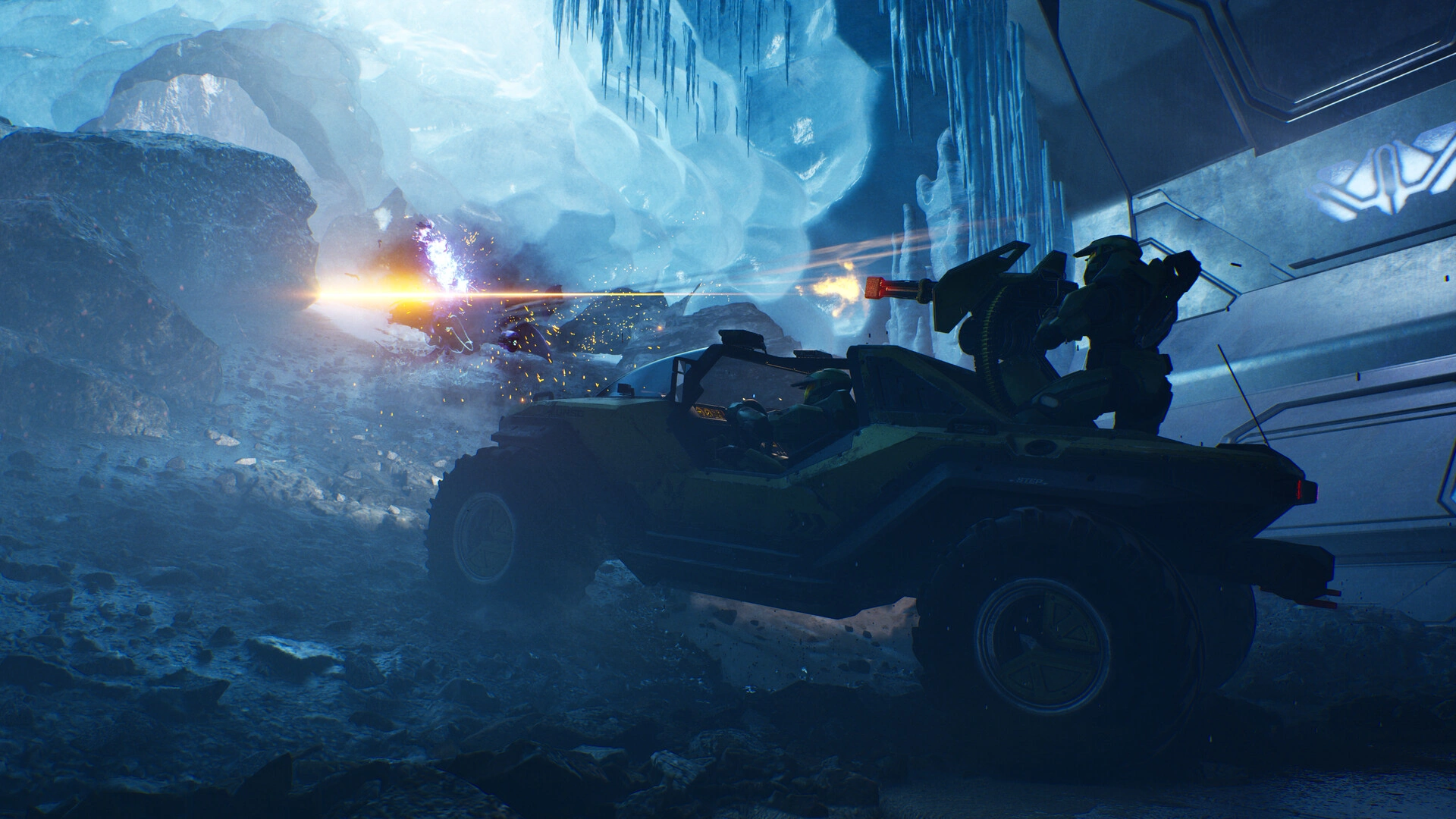
Vehicle hijacking works because it creates risk: approach under fire, board the vehicle, and convert a threat into a tool. The Warthog receives the opposite treatment. Smoother steering and resistance to flipping remove the learning curve behind its weight. During The Maw, dangerous collisions become minor corrections, making the escape easier to control and less tense.
Objective markers create the clearest conflict. Waypoints solve repeated interiors, yet markers can identify remaining enemies and expose cloaked targets. A cloaked Elite is designed around incomplete information. Placing an icon above it cancels the mechanic before the player responds to shimmer, sound, or plasma fire. The interface sometimes plays the encounter for you.
A Shinier, Darker Halo
Unreal Engine 5 gives the ring dense forests, reflective metal, deforming snow, reactive water, and plasma light spilling across cavern walls. The strongest revisions support mood. In The Maw, sunset cuts through the damaged Pillar of Autumn, while colored weapon fire briefly maps crowded underground battles.

The Flood benefits most from the added detail. Early contamination appears as scattered tendrils and wet growth. Later rooms look consumed, with flesh crossing walls and Forerunner machinery. The environment records how far the outbreak has spread.
Other changes trade atmosphere for surface detail. The original ring used broad colors, mist, and sparse geometry to make familiar landscapes feel constructed and alien. Campaign Evolved fills them with recognizable mountains, trees, water, and photoreal lighting. Alpha Halo can resemble a polished wilderness resort from certain angles.
Forerunner interiors suffer a related issue. Reflective steel and active lighting create busy frames once plasma bolts, shields, particles, and weapon effects occupy the same hallway. The original’s baked lighting placed brightness where combat readability needed it. Some rooms in The Silent Cartographer leave geometry, enemies, and effects competing for attention.
Audio changes affect play. Plasma grenades have quieter hissing and weaker gaseous cues, so a lethal sticky can sit nearby without announcing itself. Revised rifle sounds lose some of the identity that once separated each weapon before it entered view. Sound is part of Halo’s information layer, and softer cues reduce reaction time. DLSS can blur bright effects, while native rendering carries a heavier performance cost. Mid-range systems face a tougher trade for a campaign many players already own.
Three Missions Forward
The new prequel chapter places Chief and Johnson aboard a Covenant ship one year before the ring operation. They search for intelligence, rescue Marines, cross polished purple corridors, enter an outdoor hunting preserve, and briefly pilot a Seraph in space. The missions reveal how Halo Studios designs combat without preserving a 2001 layout.

The best encounter idea belongs to the new Brutes. Each carries a glowing control chip that can be shot, sending the creature into a frenzy against nearby units. Shoot the chip, trigger the berserk state, then reposition while Covenant ranks attack each other. Enemy behavior becomes a resource.
Battle Rifles and Needle Rifles support precision lanes, while Brute weapons and Energy Swords encourage aggressive pushes. One arena resembles an indoor Ghost skate park, using ramps and crossing lanes to make vehicle movement the fight’s main puzzle.
Pacing is less disciplined. Enemies often arrive through obvious doors in long waves, exposing the trigger structure. On Heroic, durable Brutes, limited cover, and scarce ammunition can turn tactical fights into attrition. Dropping to Normal restores a challenge closer to the base campaign, suggesting the numbers need adjustment rather than the player needing a better plan.
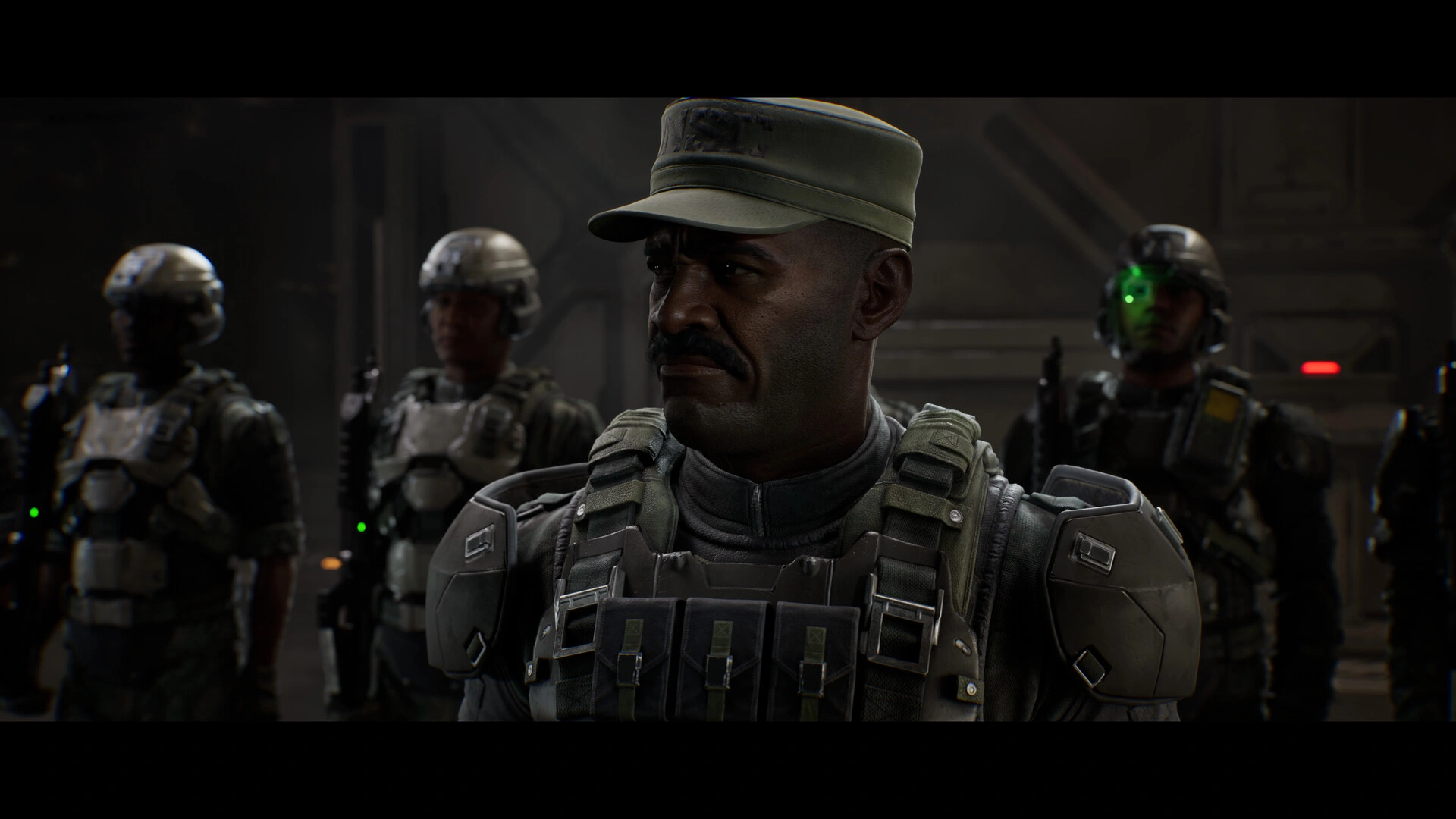
Chief and Johnson’s banter gives the Spartan humor and loyalty toward trapped Marines. A commander who distrusts Spartans raises questions about the UNSC’s treatment of its soldiers, then the script moves to the next firefight. The new Prophet and Marine leader remain archetypes, while the Seraph battle ends soon after its controls begin to matter.
An Expensive Sandbox
Four-player co-op is the package’s strongest structural addition because Halo’s systems multiply cleanly with extra players. One player strips Elite shields with plasma while another holds a precision weapon; two others can draw Hunter attacks and fire at exposed armor. Cooperation emerges from pickups and positioning rather than fixed classes.
Campaign Remix extends that flexibility with randomized enemies, weapons, vehicles, and skull effects. Grunt Birthday Party turns headshots into comic punctuation. Melee-based shield recovery forces close-range play. Randomized equipment can make a familiar room demand a new route because the expected pistol or rocket launcher never appears.
Access is unnecessarily gated by skull hunting. Players must search the campaign before many remix options become available, then replay missions to use the systems built for repeat play.
The missing competitive suite leaves the remake exposed. There is no Blood Gulch, standard PvP rotation, or Firefight alternative once the campaigns and collectible runs are finished. Four-player co-op supports several strong playthroughs. Remix can generate surprises. Neither replaces the multiplayer culture that helped Halo remain installed for years.
Campaign Evolved proves Halo Studios can reproduce the series’ physical rules inside Unreal Engine 5. The harder design test is deciding which inconveniences were flaws and which ones held the sandbox together. Sprint, markers, and safer vehicles remove pressure faster than new weapons and equipment replace it. The next Halo needs encounters built for those tools from the first blockout, rather than tools laid across spaces designed twenty-five years earlier.
The Review
Halo: Campaign Evolved
Halo: Campaign Evolved proves Halo Studios can rebuild Bungie’s combat physics inside Unreal Engine 5 without losing the satisfying rhythm of shields, grenades, vehicles, and two-weapon decisions. Sprint, forgiving Warthog controls, and aggressive objective markers interfere with that rhythm by removing pressures the original designed its encounters around. The three prequel missions offer fresh weapons and a clever Brute-control mechanic, yet uneven waves and thin characterization limit their impact. Four-player co-op and Remix mode help, though the missing PvP suite leaves a costly package with little staying power.
PROS
- Faithful combat physics
- Excellent weapon handling
- Strong four-player co-op
- Creative Remix modifiers
- Impressive environmental detail
CONS
- Sprint weakens encounter pressure
- Intrusive objective markers
- Uneven prequel mission balance
- Reduced visual readability
- No competitive multiplayer