
























Forty days is enough time to build routines, trust a diver, and convince yourself the settlement might survive. It is also enough time for one frightened swimmer to hyperventilate, burn through an oxygen tank, and leave a body drifting beneath a corridor you thought was safe.
DIVE or DIE: Children of Rain understands that attachment can grow from repetition. Drop Rate Studio places the player on a mountaintop after years of black rain have drowned cities and twisted anyone caught beneath it. The last survivors live above the waterline while the Rainmaker prepares another flood. Eight idols hidden in the Abyssal Pool may delay extinction, yet every expedition consumes a full day.
Old Jack supplies cryptic instructions, but the game rarely gives its world away through speech. Sunken houses, floating corpses, abandoned public spaces, and journal fragments turn the ocean into a record of panic. The premise draws from familiar cosmic horror, yet the emotional hook comes from the people waiting at camp. They need food, morale, medicine, and someone willing to swim back into the dark.
Oxygen Is a Feeling
Each dive begins as a practical errand. You need iron for the workshop, food for the settlement, or a manual that unlocks better gear. Then the backpack fills, the route home becomes less certain, and a distant shriek changes the arithmetic.
Health matters, but oxygen and sanity shape the fear. A survivor whose mind begins to collapse consumes air faster, turning panic into a mechanical threat. The meter does not represent breath alone. It measures how long you can tolerate the unknown before caution becomes desperation.
The fixed map makes knowledge valuable. Seaweed, wooden barriers, resource deposits, and creature paths return in recognizable places, so failure teaches routes that a later diver can use. There is comfort in that familiarity. There is guilt too. A new swimmer may reach a lost body and recover its supplies, converting someone’s death into a cleaner second attempt.
Combat resists quick confidence. Guns aim slowly underwater, while hostile creatures close distance with ugly speed. The stiffness supports the sense that a human body is poorly equipped for this environment, though some encounters cross into irritation. A missed shot against a charging fish can feel like a control problem wearing a horror mask.
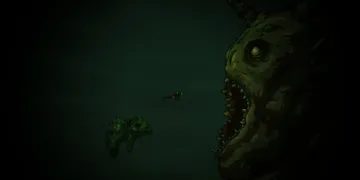
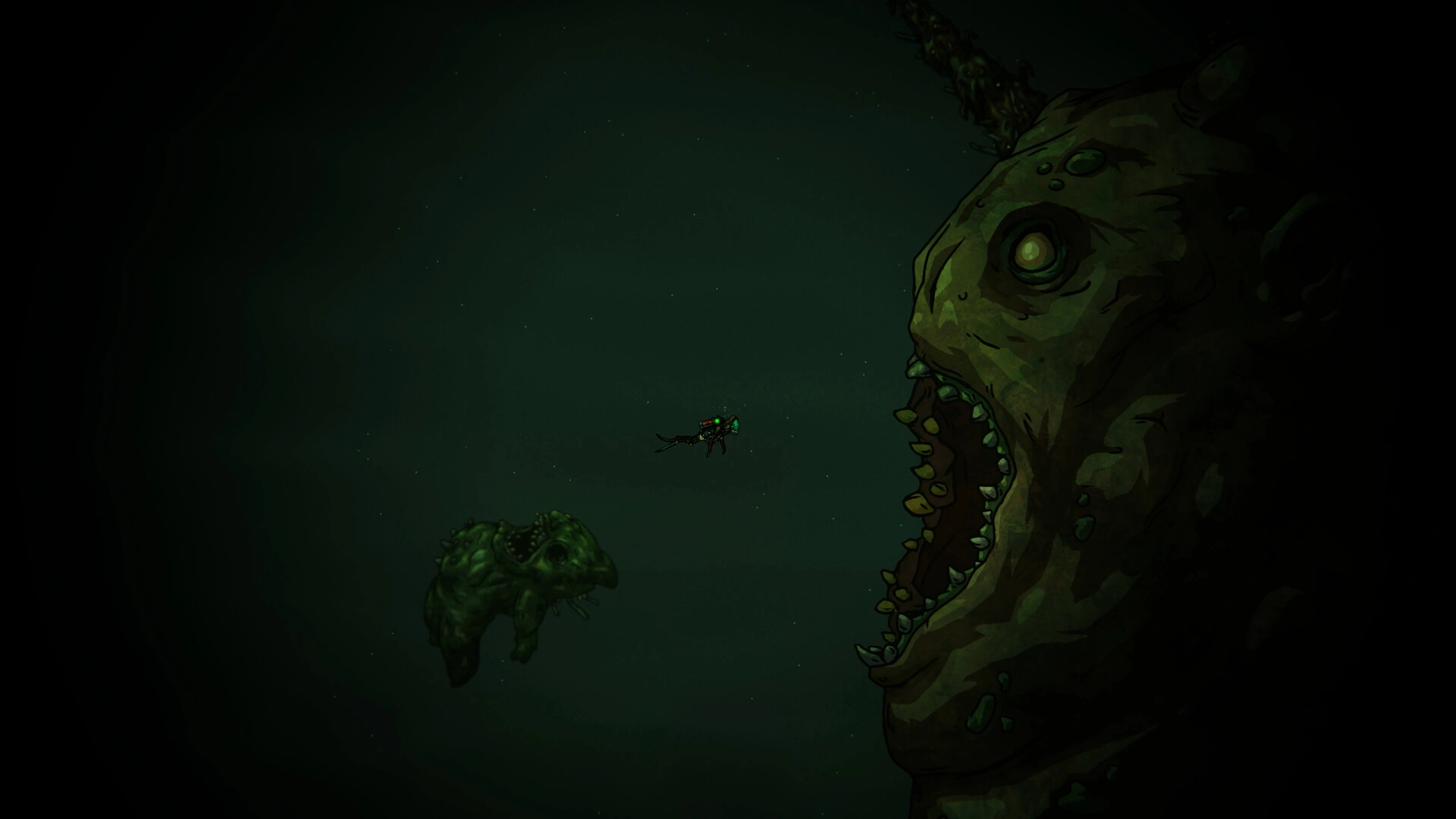
The strongest scares arrive before contact. In the Eastern Farmlands, the spider-like It That Crawls announces itself through shrieks and impacts against the coral. Limited visibility leaves the imagination to complete the movement. By the time its shape enters view, the sound has already done the damage.
People Become Infrastructure
The settlement screen looks calmer than the Abyssal Pool, yet it carries a slower form of pressure. Survivors can fish, craft equipment, manage expeditions, staff the library, or prepare for dives. Each job grants experience and traits, encouraging specialization. One resident becomes dependable at the Fishing Hut. Another gains oxygen capacity, carrying strength, and faster swimming until every serious dive seems to belong to them.
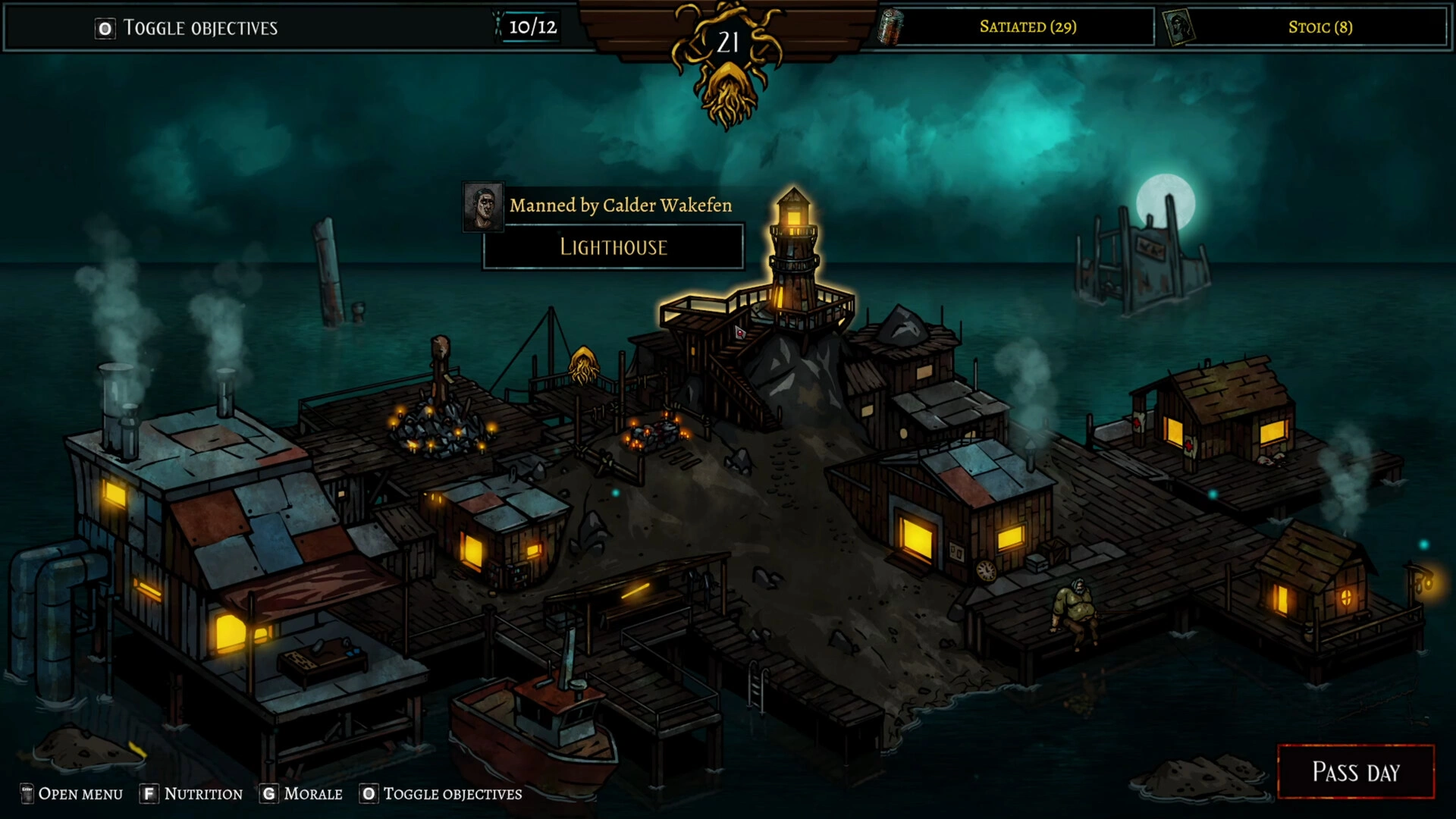
That dependence is dangerous. Permanent death removes a person and the work built around them. Losing an experienced diver does not erase a combat unit from a roster. It leaves the workshop short of materials, delays an idol search, and forces an undertrained replacement into water that already killed someone better prepared.
Food and morale create their own emergencies. Depressed residents may stop working. Insanity can spread disorder through the camp. Injuries keep valuable people away from their stations. Building upgrades help, but each one competes with wetsuits, ammunition, medical supplies, and the resources needed to reach deeper areas.
The Altar makes this economy crueler. Offerings can earn Worship Points, influence events, or buy extra time before the Rainmaker arrives. Sometimes the price is food. Sometimes it is morale. Sometimes the game asks for a survivor. Blessed materials create a similar choice: wait for a Gazing Moon and risk deadly beams, or sacrifice a person to bless an area permanently.
The interface presents these acts as resource decisions. The empty job slot afterward tells a different story.
What the Ocean Remembers
The 2D art gives each biome a distinct emotional temperature. Shallow regions feel sparse and exposed. Deeper caverns tighten around the diver, placing ruined architecture beside organic growths and creatures that no longer resemble ordinary marine life. The Western Stalker Well and Eastern Farmlands feel hostile before combat begins because their silhouettes and narrow routes restrict what the player can read.
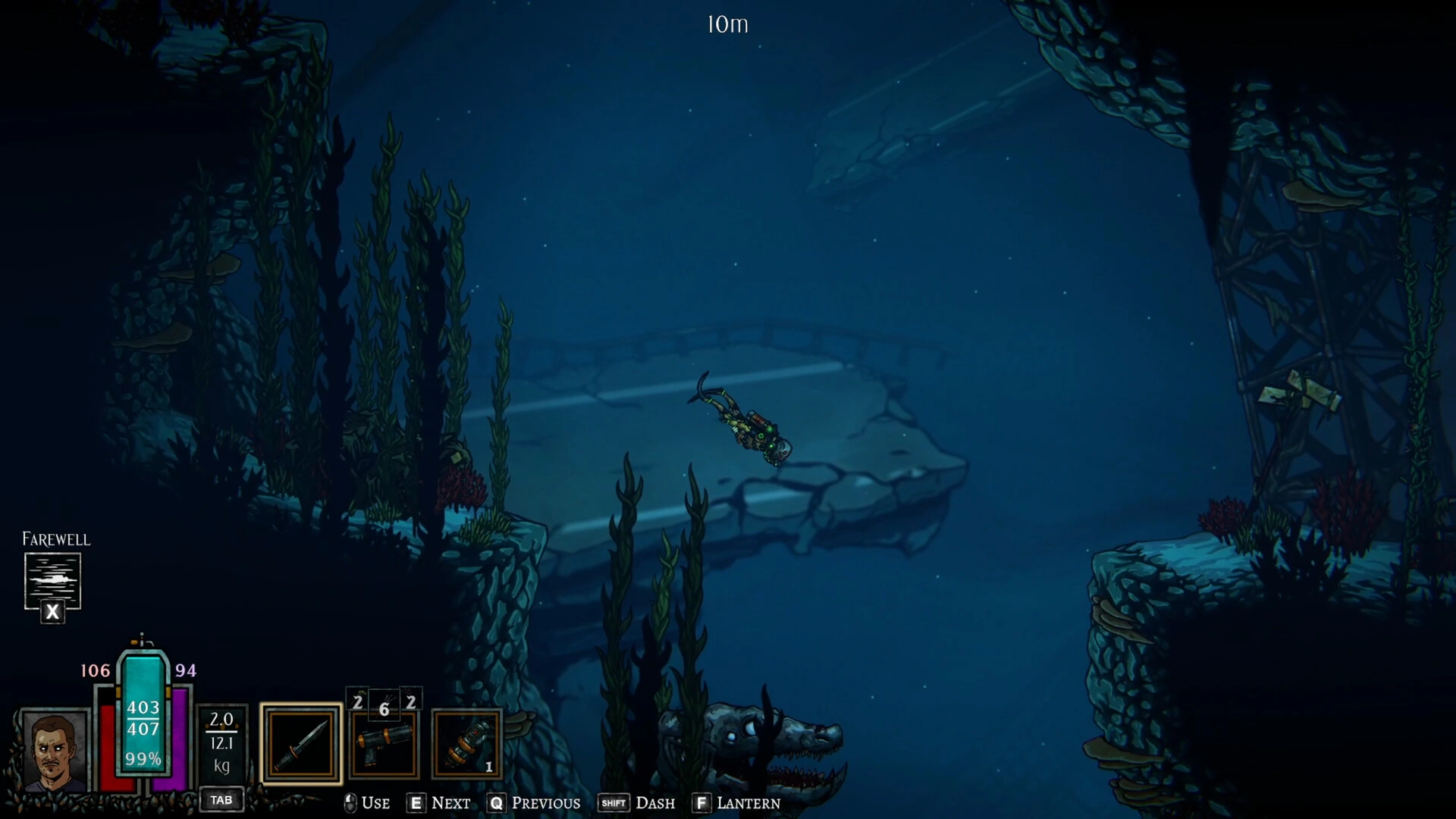
Sound carries much of that tension. Low thumps suggest mass outside the visible frame. Screeches arrive from creatures the player cannot yet identify. Music stays restrained enough for oxygen bubbles, movement, and distant impacts to remain legible. Silence becomes information, then a trap when it breaks.
Repeated runs weaken some of this fear. Resource locations, safe corridors, and creature behavior become easier to predict. Random settlement events also recur often enough to feel procedural rather than alarming. Once a player knows which materials matter and where manuals are hidden, efficient routing begins to replace exploration.
That shift fits the roguelite structure, but it exposes the game’s limited long-term variation. New difficulty settings and alternate starting limits change pressure without reshaping the drowned world. The first run remains the most affecting because every tunnel carries uncertainty, every upgrade feels earned, and every name on the survivor list still looks temporary.
The Review
DIVE or DIE: Children of Rain
DIVE or DIE: Children of Rain turns every descent into a small emotional crisis. Oxygen, sanity, inventory space, and the ticking flood clock work together so that fear comes from decisions rather than scripted shocks. Losing a trained diver hurts because the game lets routines become attachments before tearing them apart. Familiar routes and repeated events weaken later runs, while awkward aiming sometimes creates frustration where panic should live. Still, the first struggle through its drowned ruins carries a dread few survival games sustain so confidently.
PROS
- Terrifying underwater atmosphere
- Meaningful permanent death
- Strong camp-diving loop
- Memorable creature design
- Smart pressure from the day limit
CONS
- Repetitive random events
- Clumsy underwater aiming
- Familiar maps reduce fear
- Limited long-term replay value