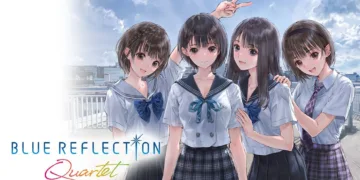


























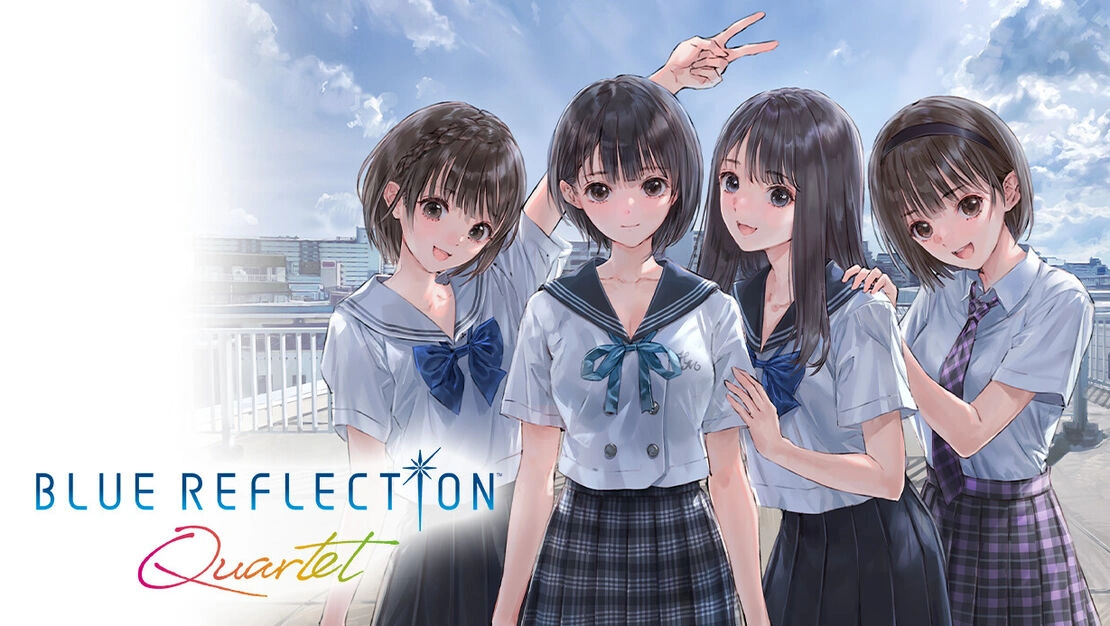

Blue Reflection Quartet treats preservation as a design problem. Gust could have bundled two existing RPGs with a few extras and called the archive complete. Instead, it rebuilds a discontinued mobile game’s story, converts an anime into an explorable experience, updates both mainline releases, and links all four through shared lore records. The results vary wildly in depth, yet the collection succeeds at giving the entire Blue Reflection saga a playable home.
The package contains the remastered original Blue Reflection, the exploration-focused Blue Reflection Ray, the reconstructed Blue Reflection Sun, and an expanded version of Blue Reflection: Second Light. Taken together, they chart how the series moved from traditional turn-based combat toward faster systems built around momentum, party relationships, and emotional pressure.
Four Reflections
The first Blue Reflection remains the foundation. Hinako, a former ballet dancer attending an all-girls school, receives a ring that allows her to become a Reflector. She enters the Common, a world shaped by the subconscious, to confront emotional disturbances affecting her classmates.
Its combat follows a familiar timeline system. Each action moves characters through a visible turn order, while certain attacks push enemies backward and delay their next move. Elemental weaknesses and MP costs add light tactical decisions, yet the low difficulty rarely forces careful party construction. Most encounters can be handled by repeating strong skills and healing when necessary.
Progression works differently from a standard grind-heavy RPG. Hinako gains development points through story events and side quests, then assigns them to individual stats. Battles supply crafting materials rather than conventional experience. This keeps attention on her classmates and their problems, though it leaves combat feeling secondary to the social structure.
The remaster improves the friction around that loop. Faster movement makes school corridors less tedious, early fast travel reduces repeated walks, and autosave removes a needless source of anxiety. Updated textures and character models improve presentation without hiding the stiff animations or sparse spaces inherited from the original release.
Blue Reflection Ray is far smaller. Players control Hiori and Ruka while collecting fragments inside the Common. Each fragment unlocks a static, voiced sequence adapted from the anime. There are no battles, progression systems, or meaningful decisions. Its main interaction is discovery.
That simplicity makes Ray feel closer to an interactive lore archive than a full game. Optional fragments create a little replay incentive, while the collection’s database explains names and concepts that the condensed scenes mention too casually. Ray works because it knows its purpose. It preserves the anime’s place in the timeline without pretending that walking between memory points forms a deep mechanical loop.
Rebuilding a Lost Game
Blue Reflection Sun is the collection’s strangest achievement. The original mobile game was shut down, which placed its characters and story at risk of disappearing with the service. Gust has reconstructed its campaign inside Second Light’s engine, condensing the narrative into 24 events and retaining many voiced character sequences.
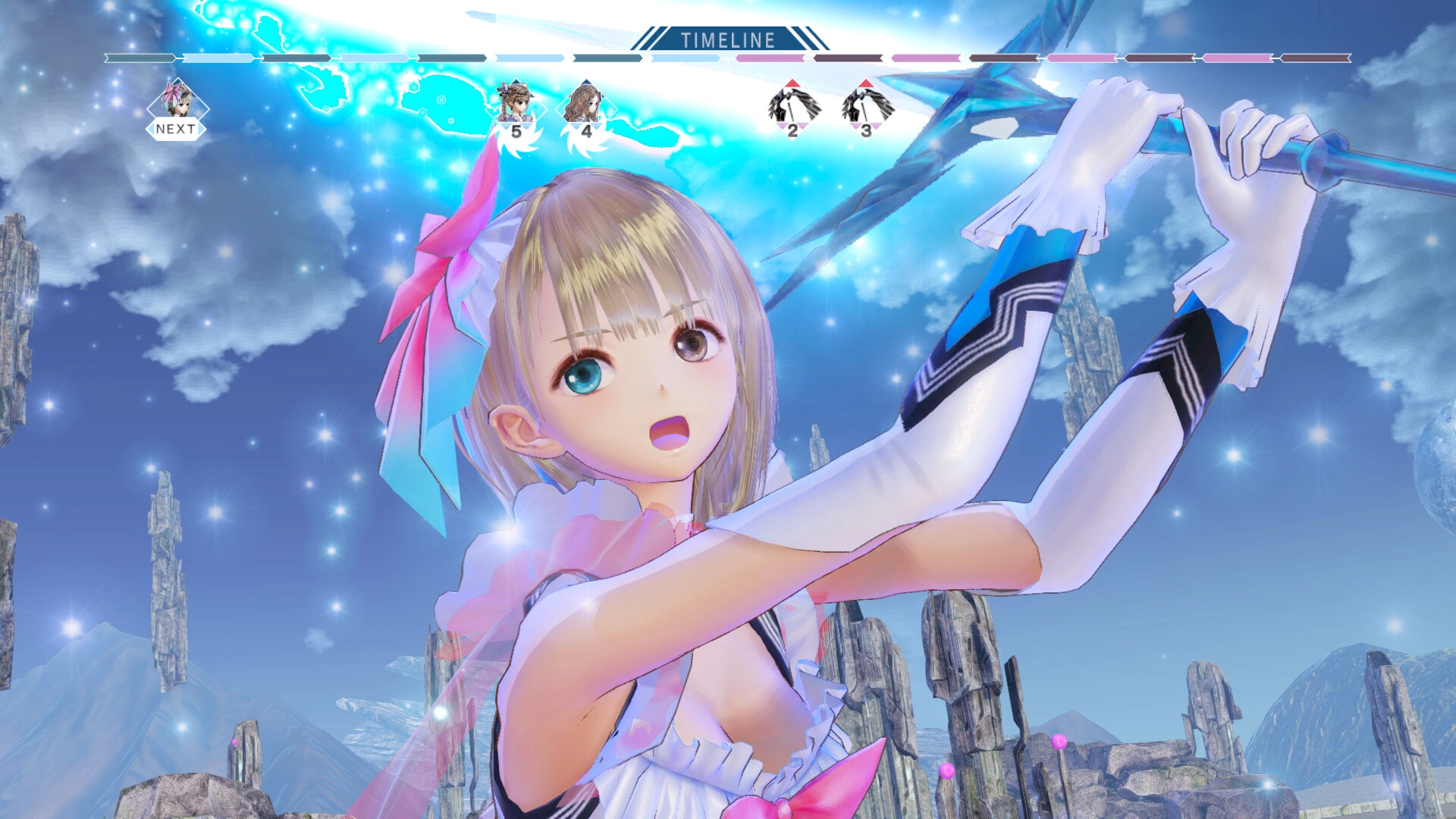
The combat uses Second Light’s real-time timeline system. Characters move toward available actions, spend Ether on abilities, and gain stronger options as their momentum rises. Waiting creates access to better skills, while acting early keeps pressure on weaker enemies. The system produces a clearer relationship between time and power than the original game’s rigid turns.
Sun assumes too much familiarity with that system. Its tutorial offers less useful guidance than Second Light, despite the suggested order placing Sun first. Players can enter boss fights without fully understanding Ether generation, action timing, or role synergy. A preserved game should teach its reconstructed mechanics with special care. Sun often hands over the controls and hopes muscle memory survived from a title the player may not have touched.
Its narrative framing creates a sharper problem. A male unit leader commands a group of school-age girls, with dialogue about helping them “bloom” placed beside fetishized costumes and harem conventions. The relationship systems do not translate emotional trust into meaningful player choices. They position the protagonist as the fixed center of every girl’s development.
This weakens the series’ recurring idea that emotion is something characters learn to recognize within themselves and each other. The surrounding games build bonds through shared vulnerability. Sun repeatedly filters those bonds through approval from its male lead. Preservation matters, but preservation also exposes what was built into the original design.
Second Light Finds the Rhythm
Blue Reflection: Second Light remains the strongest part of the collection because its systems understand what the series wants to express. Ao awakens in a mysterious school surrounded by water, where several girls live without clear memories of their pasts. Each new Heartscape manifests from one character’s emotions, turning personal history into explorable dungeon design.
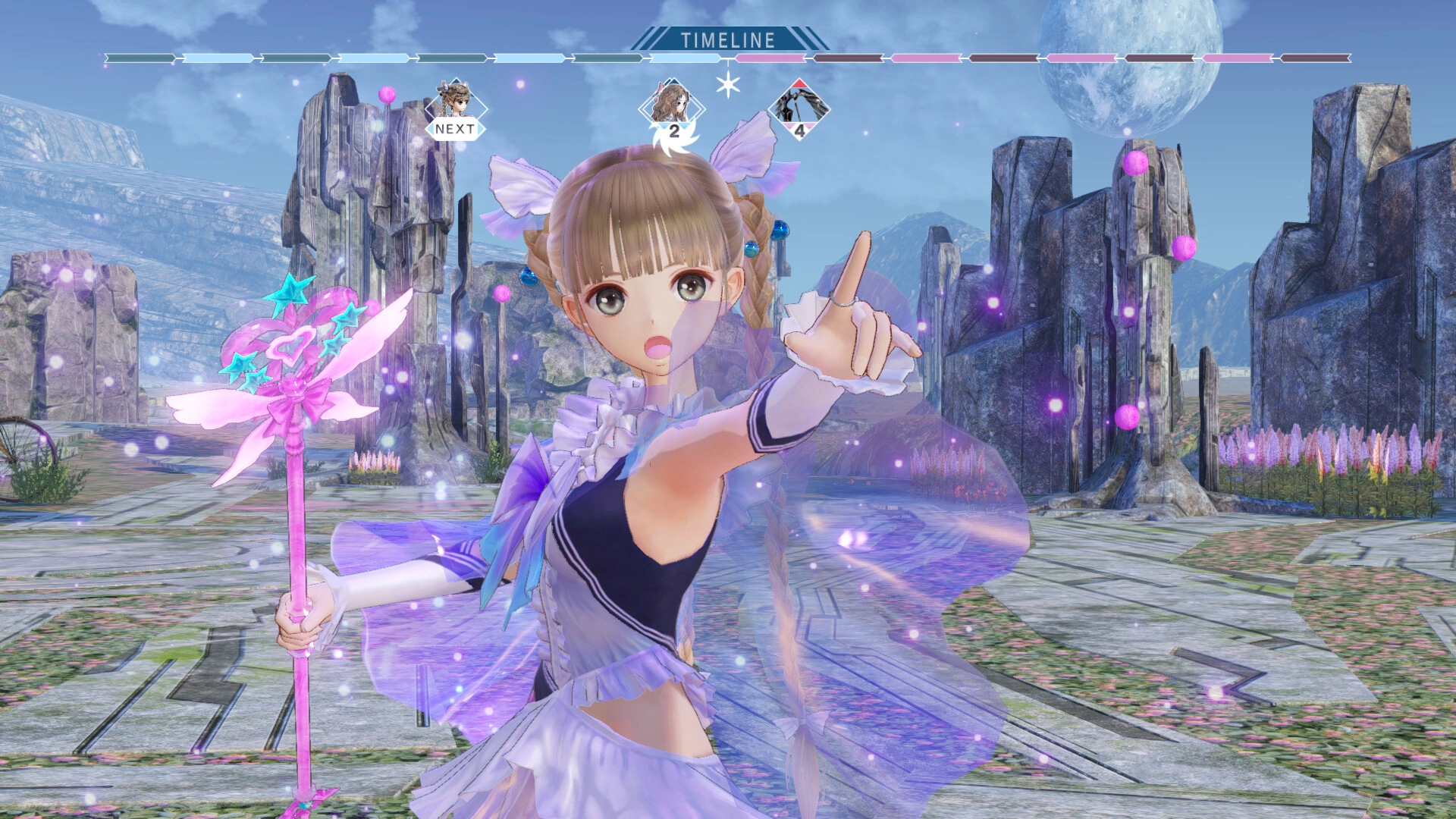
Combat rewards sustained coordination. Actions build Ether, higher Ether levels unlock stronger skills, and well-timed attacks can accelerate allies or interrupt enemies. Party roles become readable through play: Alessia can stabilize a struggling team with healing, while aggressive characters benefit from maintaining attack chains rather than pausing after every turn.
This is where mechanics and narrative finally speak the same language. Characters become stronger through relationships, dates, crafted facilities, and reconstructed memories. A conversation does not merely add affection points to an invisible meter. It can unlock a new ability, improve a facility, or change how a party member functions during battle.
Quartet expands that structure with eight additional characters drawn from Ray and Sun. Clear data from those games unlocks returning characters through the Chest of Memories, giving the earlier entries a direct mechanical consequence inside Second Light. The collection remembers what the player completed and converts that history into party options.
Faster event playback and increased movement speed make repeat runs far easier, especially for players pursuing the true ending. Ao now moves so quickly during dates that her companion occasionally has to jog behind her, an unintended visual gag produced by a very welcome upgrade.
The soft blue palette, pencil-like shading, and ambient music still give Second Light its distinct atmosphere. Heartscapes shift from familiar school spaces into dreamlike structures shaped by fear, guilt, and longing. Those locations provide the visual variety missing from the first game’s flatter version of the Common.
Blue Reflection Quartet contains two substantial RPGs, one reconstructed mobile campaign, and one compact interactive adaptation. Their mechanics are uneven, their fanservice can clash with their emotional writing, and Sun remains difficult to defend as anything beyond a valuable preservation project.
Yet the expanded Second Light, shared database, restored stories, and practical quality-of-life changes give the collection a purpose few compilations attempt. It does not merely store the series. It makes its scattered parts playable together.
The Review
Blue Reflection Quartet
Blue Reflection Quartet succeeds because it treats preservation as part of game design rather than a marketing bullet point. The remastered originals receive meaningful quality-of-life improvements, while the anime and discontinued mobile game are rebuilt into playable experiences that complete the series' narrative. The uneven quality of Blue Reflection Sun and recurring fanservice occasionally undermine the emotional storytelling, yet the package remains one of the strongest values available for JRPG fans seeking a character-driven adventure. For newcomers and returning players alike, this is the definitive way to experience the franchise.
PROS
- Complete preservation of the entire Blue Reflection saga
- Excellent quality-of-life upgrades across both main games
- Emotional character-driven storytelling
- Expanded Second Light with new playable characters
- Outstanding value with four interconnected experiences
CONS
- Blue Reflection Sun is noticeably weaker than the other entries
- Combat systems remain fairly easy and familiar
- Fanservice occasionally clashes with the narrative tone
- Original game's dated foundations are still visible