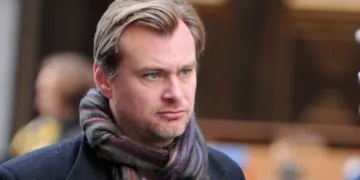
















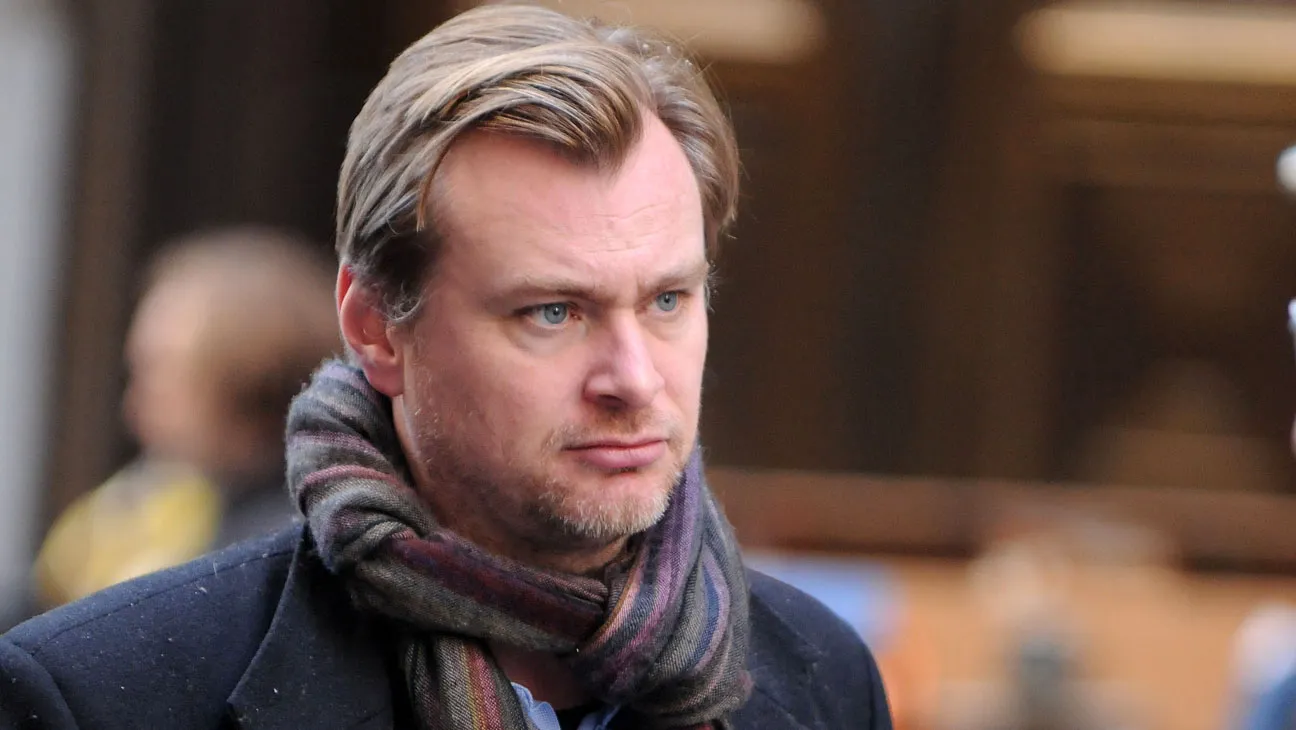

Christopher Nolan used a promotional stop for “The Odyssey” to take aim at what he described as a recurring flaw in modern film criticism, arguing that viewers increasingly dismiss storytelling techniques simply because they can name them. The director made the remarks in an interview with podcast host Zhong Shu, posted Friday on the Chinese platform Bilibili, during one of the final stops on his global tour for the film.
Nolan said a common critique leveled at movies, that characters are shaped or softened to earn audience sympathy, misreads how storytelling actually functions. “That’s a fundamental flaw of film criticism in a way, or storytelling criticism,” he said, arguing that spotting a narrative device does not undercut its effectiveness. “People have this idea that, ‘Because I can understand why the story affects me the way it is, therefore, it didn’t work.’ That’s not how storytelling works.”
He drew a distinction between professional critique and what he called amateur criticism, saying viewers who identify a technique often assume that recognition alone proves the technique failed. Nolan framed mainstream film convention as a kind of shared language built by Hollywood over the past century, one flexible enough to bend or break but still requiring filmmakers to work within its basic grammar. He noted that once a device grows too familiar to audiences, it eventually needs to evolve, but said storytellers still rely on that common vocabulary to communicate.
The comments came as Nolan fielded questions about how “The Odyssey” reinterprets its central figure. His adaptation portrays Odysseus, played by Matt Damon, as a man forced to reckon with and atone for his own military ruthlessness, a reading Zhong noted diverges from how ancient Greek sources typically frame the character. Nolan said he built the film to stay in dialogue with contemporary audience expectations rather than adhering strictly to historical interpretation.
“The Odyssey” has approached the $1 billion mark globally since its release, continuing a string of commercial and critical successes for Nolan following “Oppenheimer.” The film opens in China on August 14, with early promotional screenings already underway, making Nolan’s Beijing stop part of the rollout ahead of that release.