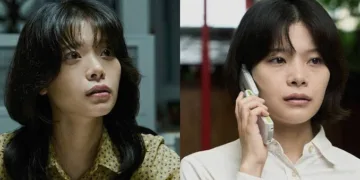





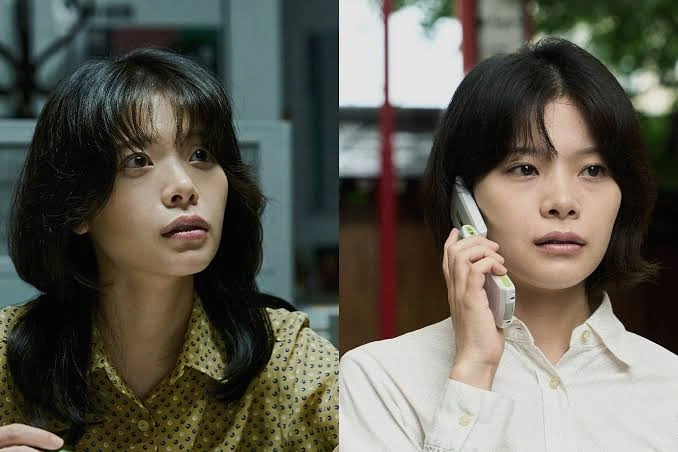

Japanese broadcaster WOWOW has cast Yukino Kishii, an actress who broke through internationally at Cannes, to lead its television adaptation of Riku Onda’s bestselling crime novel “The Aosawa Murders.” The six-episode series premieres November 8 and will air and stream weekly.
The production draws from Onda’s 2005 novel, originally published in Japan as “Eugenia,” a book that sold 380,000 copies domestically and won the Mystery Writers of Japan Award for Best Novel. Alison Watts translated the story into English in 2020, a version that landed on the New York Times’ list of notable books that year and earned a spot among The Guardian’s top crime picks. Publishers have since released editions in German, French, Spanish, Italian and Korean.
The plot centers on a mass poisoning at the home of a wealthy family in a coastal Japanese city, an event that kills seventeen people gathered for a joint birthday celebration. A blind girl survives as the family’s only member left alive, and the story tracks three intersecting lives: a novelist who arrived at the crime scene as a child and later built a career writing about it, that same survivor, and a writer determined to unravel what really happened decades later. Onda structures the narrative through interview transcripts and shifting first-person accounts, a technique critics have compared to Akutagawa’s “In a Bamboo Grove,” the source material behind Kurosawa’s “Rashomon.”
Naoko Adachi, known for writing “What Did You Eat Yesterday?,” penned the scripts. Go Furukawa directs as lead, joined by Hayato Kawai, who previously worked on the Disney+ series “Gannibal.”
Kishii called the role both exciting and intimidating, telling reporters she has followed Onda’s work since junior high school. She said Adachi’s reputation for rendering stories from multiple angles convinced her she could find a way into the material.
This marks the second major screen adaptation announced for the novel. Los Angeles-based Upgrade Productions, run by Jonathan Kier and Matt Brodlie alongside Kadokawa’s Takeo Kodera, unveiled a separate English-language limited series in 2024, also drawn from the same source material and pitched to international buyers at a market in Rome.
Also Read


Reviewers have long noted the novel’s ambiguous ending, which withholds a definitive resolution to the poisoning and leaves the blind survivor’s culpability unresolved. That structure, built around competing testimonies rather than a single detective’s deduction, places Onda within Japan’s shin honkaku tradition of mystery writing, one that prioritizes psychological depth over tidy solutions.