




























Pregame introductions do a surprising amount of work in Madden NFL 27. Seattle’s crowd presses down on a visiting offense, Denver gets its own stadium personality, and player models finally show convincing differences in build rather than looking like the same athlete scaled up or down. Puka Nacua does not resemble an offensive lineman with his proportions reduced. That sounds basic. For this series, it matters.
The presentation package is one of the clearest improvements over Madden NFL 26. Tunnel entrances, pyrotechnics, mascots, sideline staff, crowd noise, and team-specific rituals create a stronger sense of place. Mike Tirico and Greg Olsen help considerably. Their commentary often reacts naturally to game situations and season developments instead of sounding assembled from disconnected clips.
Some cracks remain. Celebration cameras can clip through players or scenery, certain stadium traditions are missing, and menu delays regularly puncture the illusion. The football presentation has moved forward faster than the interface carrying you between games.
Catching With Consequences
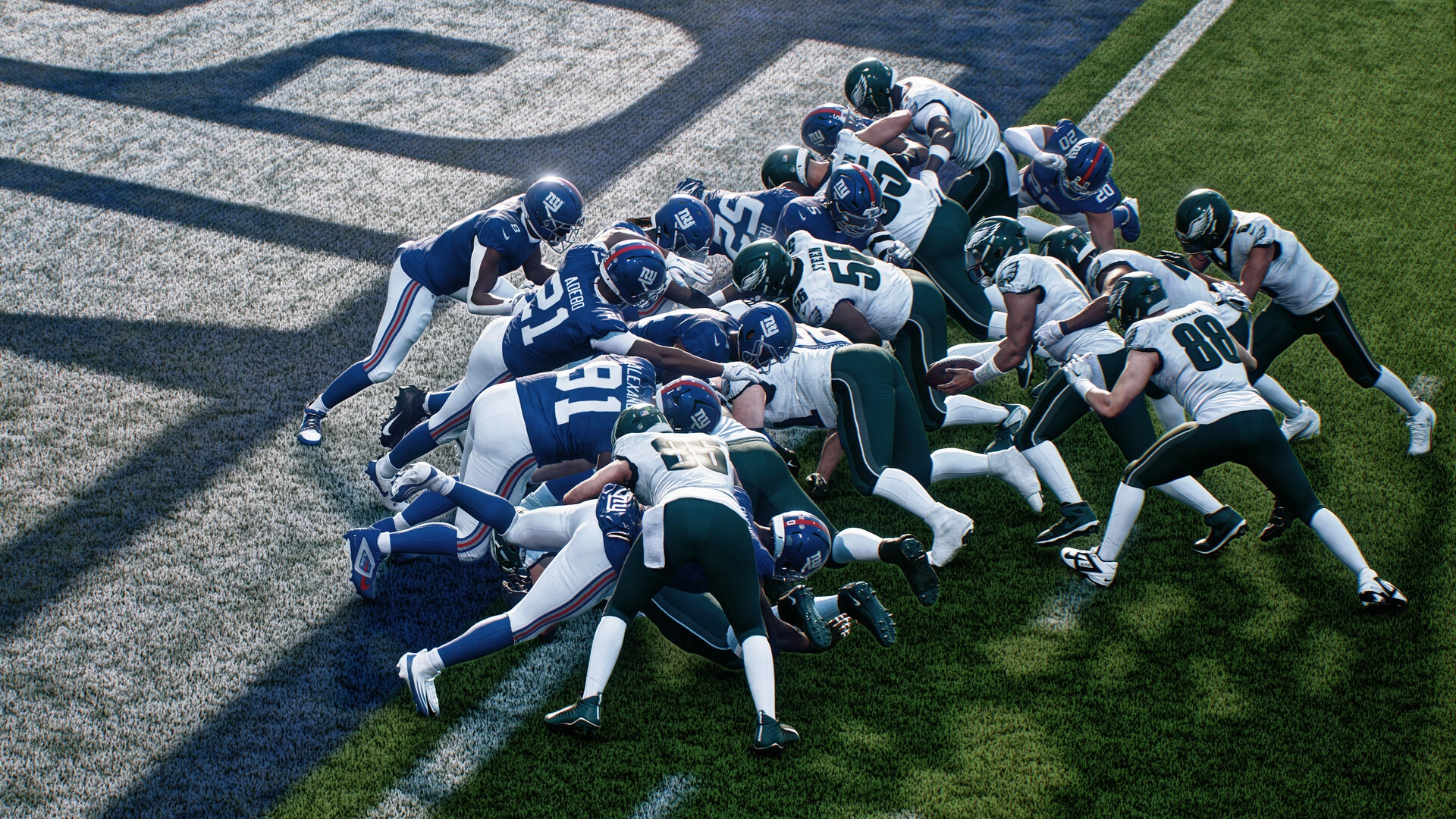
Timing-based catching is the most important change once the ball is snapped. Holding a catch input brings up a meter, and releasing inside its green zone improves the receiver’s chance of securing the pass. Different inputs still govern possession, yards-after-catch, and aggressive attempts, so a throw now asks for two connected decisions: where the quarterback puts it and how the receiver attacks it.
The system works because successful catches feel authored by the player. Green a difficult contested reception and there is a clear mechanical link between input and result. Bullet passes complicate that equation because the window becomes extremely small, and controlling the throw followed immediately by the catch can make a simple play demand an unusual amount of finger choreography.
The larger issue appears after a correct input. Receivers can still lose the ball from light contact after a well-timed catch, while CPU players sometimes secure far less reasonable throws. That weakens the feedback loop. A timing mechanic should make failure easier to understand, yet here a good release can still produce an outcome that feels disconnected from the input.
Also Read
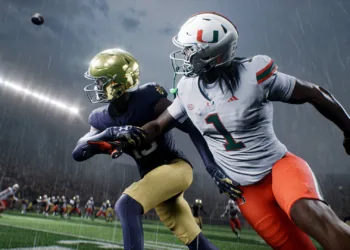





Skills Trainer helps players learn the meter alongside new tackling and pass-rush options, while coaching adjustments add useful pre-snap control. Shifting coverage or redirecting a run toward a lighter box creates meaningful tactical choices. Running remains so effective that some offensive adjustments border on automatic answers, which leaves the passing game carrying most of the execution risk.
Franchise Gets a Personality
Franchise contains the smartest system in Madden NFL 27: the Persona Engine. Players now carry motivations that shape contract talks, satisfaction, trade pressure, and their willingness to remain with a team. Re-signing someone becomes a negotiation rather than an exercise in nudging salary numbers until the CPU accepts.
The difference appears in individual cases. Zack Baun and Jalen Carter can push for new deals. Christian Gonzalez may be relatively straightforward to extend, while Kayshoun Boutte can require several rounds of negotiation. Tony Pollard can reject a shorter agreement until greater financial security changes the discussion. Interest and patience meters make those exchanges readable, and distinct priorities force the player to consider cap management alongside personality.
This is where the system reaches beyond presentation and changes decision-making. A star chasing a championship asks you to think about team trajectory. A player prioritizing guarantees creates a different cap problem. Franchise has spent years simulating the transactions of football without making many of them feel like conversations. Persona finally gives those transactions friction.
The simulation can still sabotage itself. An AI recommendation to cut Romeo Doubs after a four-year, $68 million signing, creating roughly $35 million in dead cap, is exactly the kind of suggestion that makes the management layer look less intelligent than the systems surrounding it. Training minigames are similarly uneven. Dodging defenders around a rotating obstacle can be playful and useful, while zone-catching drills can turn into battles against defenders who seem glued to the route.
Superstar Meets the Business Model
Superstar gains Tight End, Edge Rusher, and Free Safety, giving career mode a wider range of roles. Combine performance affects draft position and early opportunities, while the GOAT tracker records Skill, Legacy, and Popularity across a career. Cap Breakers let players move beyond normal archetype limits, giving progression some room for long-term specialization.
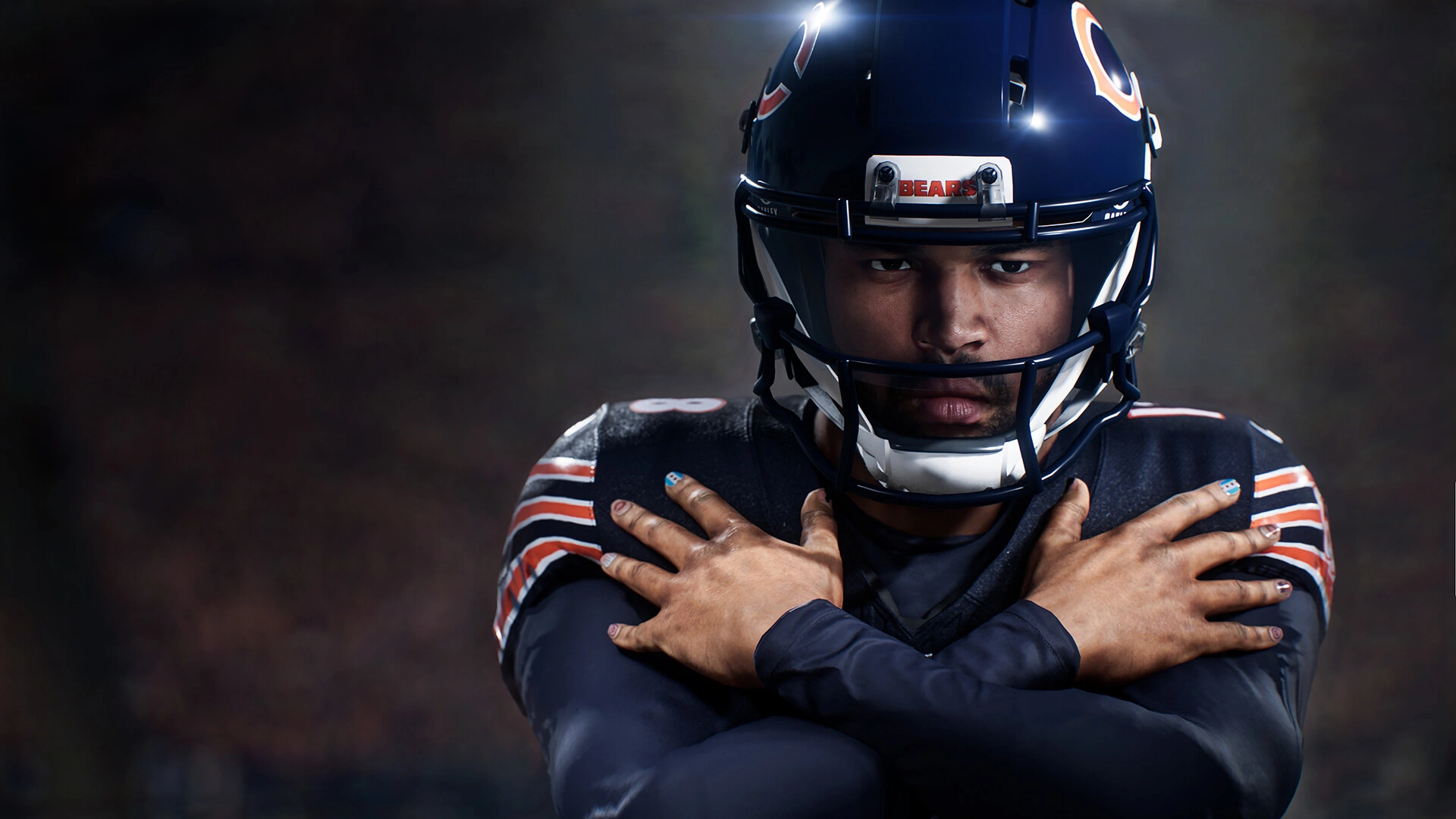
Its performance grading system is less dependable. A tight end can lose points for disengaging from a block after the runner has already cleared the play, and Combine drills can punish a receiver when the quarterback misses the designated zone.
Those moments expose a familiar systems problem: the game measures an outcome without correctly identifying who caused it. The muted press conferences and sponsorship scenes do little to repair that disconnect. Their stiff animation looks especially dated beside the polished stadium presentation.
Then there is the Superstar Pass. Tying a free and paid progression track to a largely single-player career mode changes the relationship between development and monetization in an uncomfortable way. Ultimate Team already builds its loop around cards, packs, challenges, and competitive roster construction. Bringing similar pressure into Superstar makes character progression feel less like a football system and closer to a storefront with cleats.
That leaves Madden NFL 27 in an interesting place mechanically. Franchise gives player management sharper consequences, timing-based catching asks for greater skill, and Superstar expands its career structure. Yet each strong system carries some form of interference, from inconsistent collision logic to bad AI advice and monetized progression. The design is moving in a smarter direction. It still has trouble getting out of its own way.
The Review
Madden NFL 27
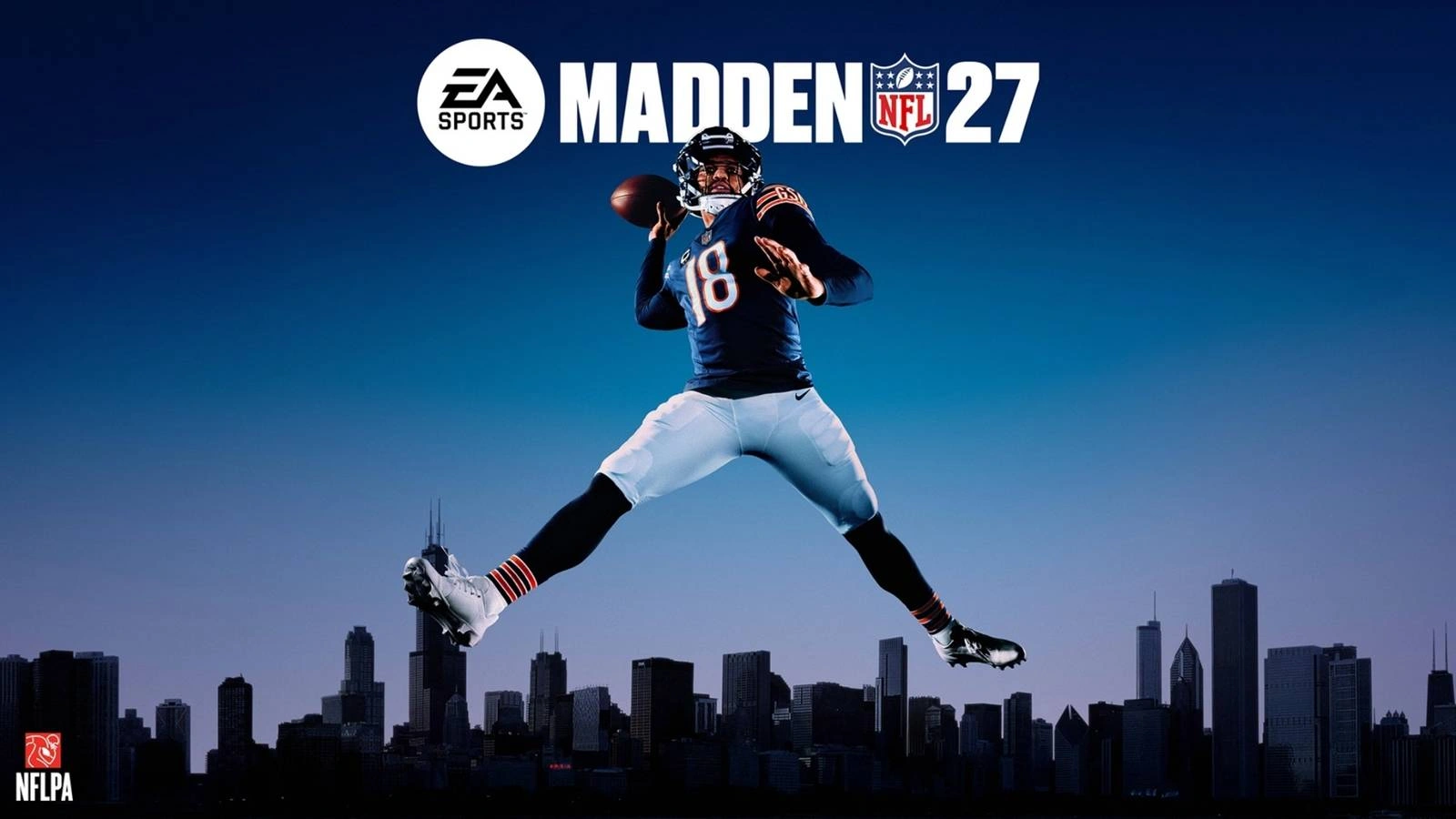
Madden NFL 27 makes its best case through systems that give player decisions clearer consequences. Franchise’s Persona Engine turns contracts and roster management into meaningful negotiations, while timing-based catching gives receptions a welcome layer of player control. The problem is consistency: light contact can erase a perfectly timed catch, roster AI can recommend financially absurd moves, and Superstar pushes paid progression into a solo career structure. EA has built a stronger football game than last year, but several systems still undermine the agency they are designed to create.
PROS
- Excellent Persona Engine
- Deeper contract negotiations
- Strong NFL presentation
- Skill-based catching system
- Expanded Superstar positions
CONS
- Inconsistent catch outcomes
- Questionable Franchise AI
- Slow, cumbersome menus
- Superstar Pass monetization
- Familiar Ultimate Team grind