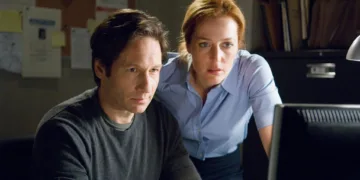
















Chris Carter has returned to I Want to Believe with the confidence of a surgeon reopening an old wound, except the diagnosis appears to have changed somewhere between consultation and operating table. The 2008 film was accused of being too small, too procedural, too distant from the alien mythology that had once made The X-Files feel cosmically important. Vrach Frankenshteyn answers by becoming shorter, slightly bloodier, and less romantic. Call this revision displacement: fixing the parts of a work that are easiest to alter rather than the parts responsible for its reputation.
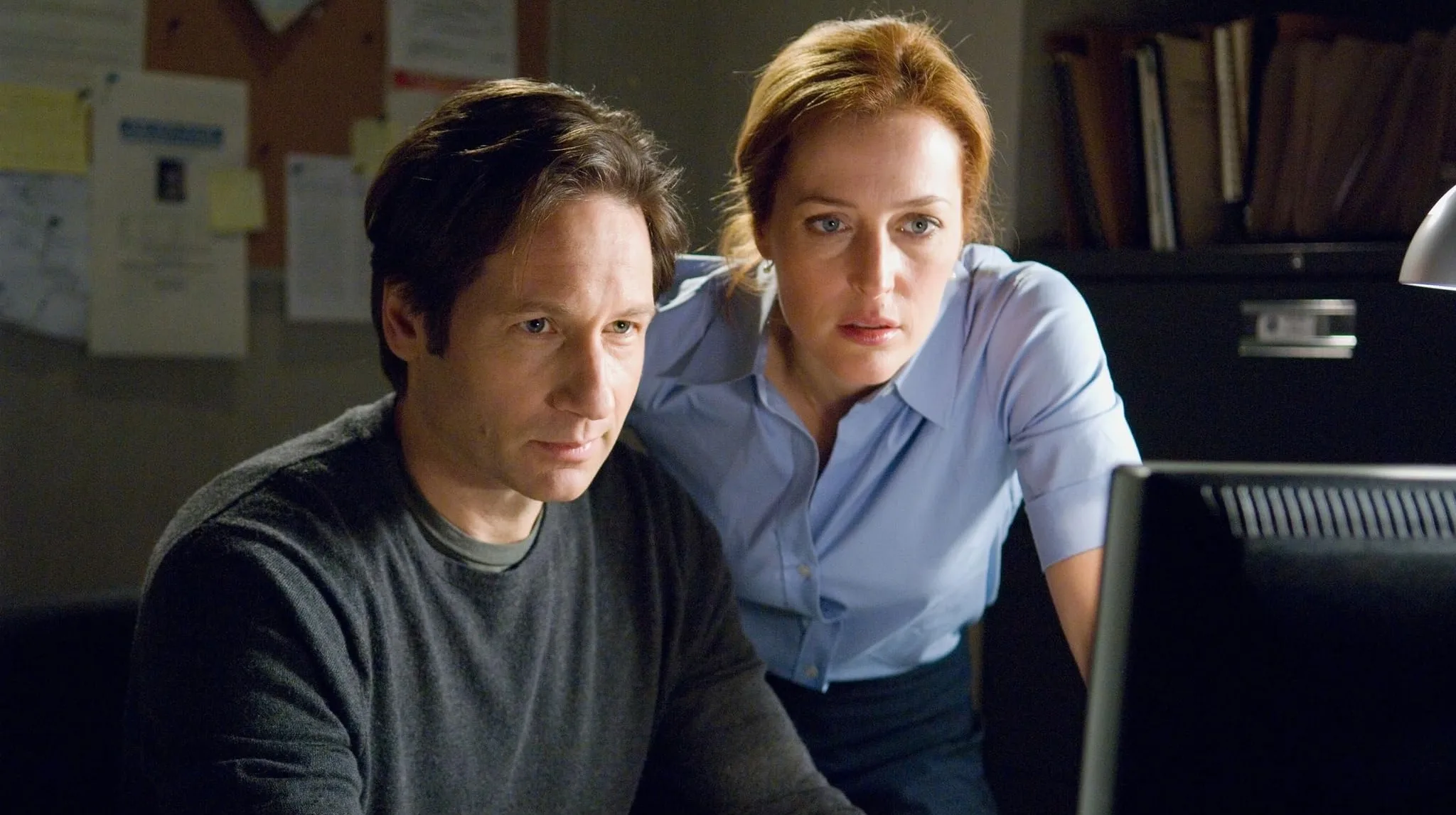
The basic architecture survives untouched. Fox Mulder (David Duchovny), now living in seclusion after his break with the FBI, is contacted through Dana Scully (Gillian Anderson) when federal agents Dakota Whitney (Amanda Peet) and Mosley Drummy (Alvin “Xzibit” Joiner) need help finding a missing colleague. Their guide is Father Joe Crissman (Billy Connolly), a defrocked priest and convicted child abuser who claims psychic visions are leading him toward kidnapped women.
It remains a sensible premise for The X-Files. The series built some of its greatest hours around isolated cases rather than alien mythology. Carter’s mistake was never choosing a monster-of-the-week structure for the cinema. It was giving that structure a mystery too ordinary to support feature-film expectations. The new cut makes that mismatch clearer.
Believers Switching Places
Mulder accepts Father Joe’s visions with almost embarrassing speed. Of course he does. Duchovny plays these moments without surprise because Mulder has passed beyond curiosity into reflex. Give this man one inexplicable severed arm in a snowfield and the paranormal paperwork practically fills itself out.
That makes Mulder dramatically static. His decision to return to investigative life carries theoretical danger, particularly after everything his obsession cost him, yet the case keeps rewarding the same instincts he has possessed for years. He believes. He pursues. He is proven largely correct.
Scully has the harder assignment. Working as a doctor, she is treating a seriously ill boy whose prognosis has pushed hospital administrators toward acceptance rather than intervention. Scully begins researching an experimental stem-cell procedure, refusing to accept that medicine has reached the end of its usefulness simply because the institution around her has decided it has.
The film quietly reverses its famous binary. Mulder places faith in the supernatural. Nothing unusual there. Scully places faith in scientific possibility against a religious institution urging surrender. The skeptic has become the person unwilling to accept the visible limits of the world.
That parallel gives I Want to Believe its richest idea. Father Joe claims knowledge that science cannot verify. Scully pursues treatment whose success medicine cannot promise. Both storylines concern people acting before certainty arrives.
Carter sometimes distrusts the audience enough to spell this out. Mulder asking Scully some variation of what happens if she is wrong belongs to that unfortunate category of dialogue in which characters begin sounding like impersonators of themselves. The performances rescue much of it. Anderson can turn a pause after Father Joe speaks into an ethical argument the screenplay would require half a page to explain.
Her disgust toward Joe matters because the film refuses her an easy philosophical position. If his visions are real, his crimes remain real too. Spiritual usefulness cannot erase human damage. Or at least that seems to be what Carter is asking. I am less convinced he knows what answer he wants.
Frankenstein in the Editing Room
The subtitle promises a stronger Frankenstein lineage, and the criminal operation does provide one. The missing women are tied to grotesque experiments involving harvested organs, surgical procedures, and bodies treated like collections of replaceable components. Callum Keith Rennie’s presence around this material brings a useful clinical menace, especially once the investigation reaches the rooms where these procedures occur.
Vrach Frankenshteyn lets some of that imagery breathe differently. Shots connected to the surgeries are rearranged or permitted greater visual severity, loosening the restrictions that shaped the PG-13 theatrical release. The strange thing is how little difference this makes.
The X-Files routinely found uglier nightmares on television. A few additional glimpses of surgical violence cannot give these villains personality, and personality is what the film lacks. Frankenstein endures because creation, responsibility, identity, abandonment, and mortality collide inside the same story. Here, Frankenstein primarily means unpleasant medicine performed by frightening people. The metaphor has bones. It lacks a nervous system.
Carter’s editing choices become stranger when they move away from horror. The old joke involving George W. Bush’s portrait and the X-Files theme has disappeared, a reasonable excision from a movie being reconsidered many years after its original political moment.
Harder to justify is the reduction of romantic material between Mulder and Scully. Their bedroom conversation remains, yet some cuddling and flirtation are removed. The result creates emotional static. They share a home and an intimacy forged across years, yet this version occasionally seems hesitant to acknowledge what their relationship has become. That is an odd sacrifice because Duchovny and Anderson possess something the mystery desperately needs: history.
Watch their smaller exchanges. Scully bringing Mulder news of the case carries traces of an old argument neither needs to restart from zero. His enthusiasm worries her before he has fully expressed it. Her resistance irritates him because he already knows every step of it. These actors can imply ten seasons with a glance. Removing even a little of that texture to tighten the film feels like throwing away the expensive part.
Father Joe and the Price of Grace
Billy Connolly gives the movie its most difficult human presence. Father Joe could have become a grotesque narrative device, a guilty priest granted convenient supernatural powers so Mulder has something strange to believe in. Connolly plays him far smaller.
His subdued delivery keeps Joe from becoming theatrical. He speaks about his visions with conviction, then seems to collapse inward whenever Scully forces his past back into the room. The tension is visible in the difference between those modes. Psychic Joe stands upright. Guilty Joe seems to shrink.
Carter is trying to ask an ugly question about redemption. Can a person responsible for unforgivable acts perform something morally useful? Can grace exist without absolution? Can supernatural truth come through a morally corrupted messenger? The film gets itself into serious territory and then becomes nervous about staying there.
Joe’s usefulness to the investigation creates a risk the screenplay never fully confronts. If his visions are presented as evidence of spiritual significance, the story may accidentally make divine attention look like moral rehabilitation. Scully’s hostility protects the film from that reading for a while. Her refusal to convert usefulness into forgiveness is among the script’s strongest moral instincts.
The Catholic hospital subplot makes the picture stranger and better. Scully confronts religious authorities prepared to accept the child’s death while she pushes experimental science toward another possibility. Meanwhile, Mulder relies upon a disgraced priest whose inexplicable visions may be saving lives. Faith keeps changing uniforms.
Mark Snow’s score understands this ambiguity better than much of the dialogue. Familiar tonal signatures connect the film to the series, yet Snow does not turn every return into nostalgic applause. The music sits beneath the snowy landscapes and dim interiors like an old anxiety that never actually left. Mitch Pileggi’s eventual appearance as Skinner works for a similar reason. He enters because Mulder needs someone, not because the movie has stopped for franchise attendance.
A Television Case Wearing Movie Clothes
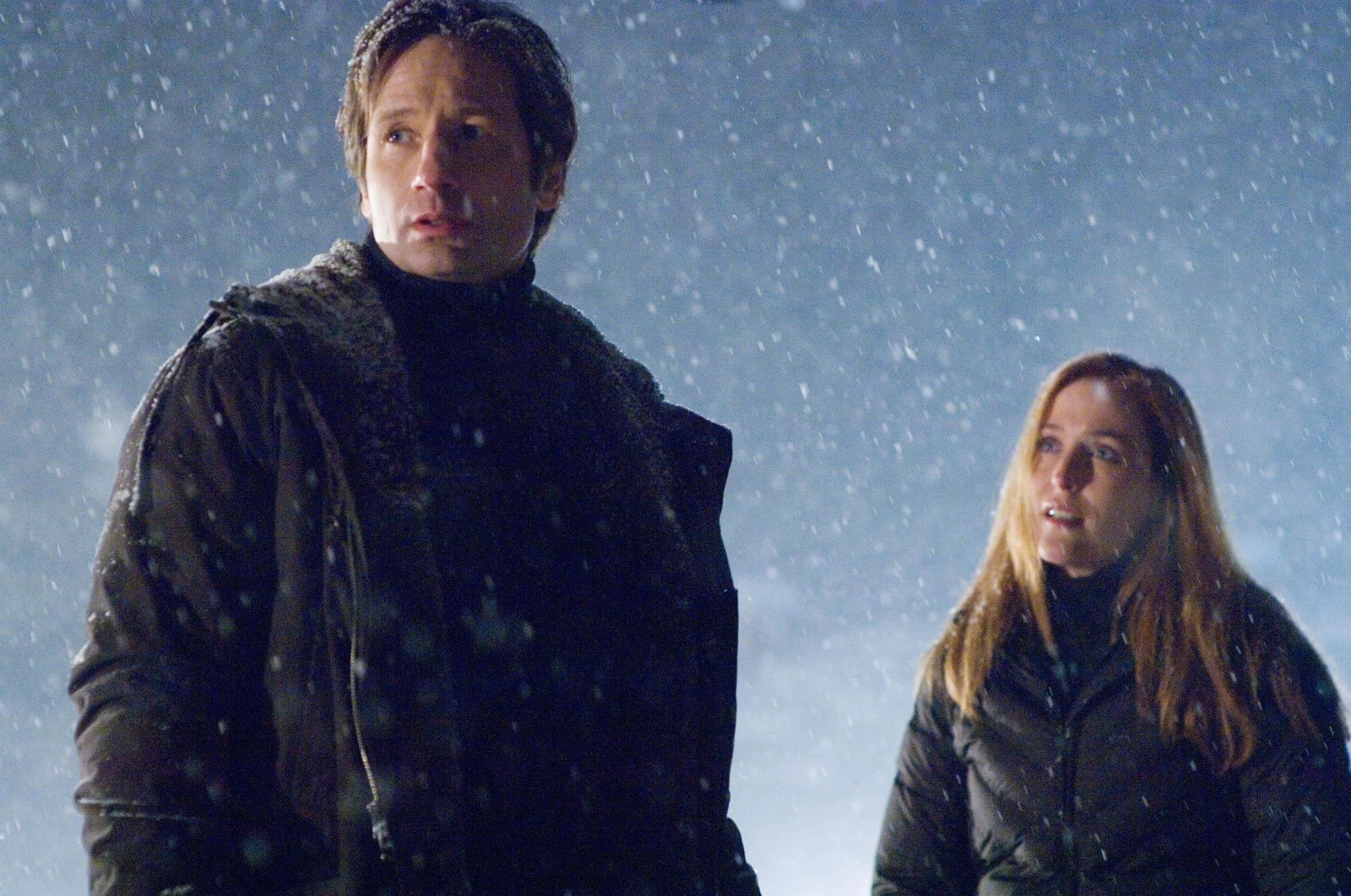
The snow remains the film’s finest production choice.Search parties moving across enormous white fields, cars travelling through isolated roads, bodies and evidence emerging from frozen ground: Carter repeatedly frames the case against landscapes that make human beings look exposed and temporary. The whiteness should suggest purity. Instead it becomes concealment. Horrible things can disappear beneath something visually clean. This is where Carter the director is stronger than Carter the dramatist.
The shorter cut moves efficiently through searches, interrogations, medical scenes, and the eventual discovery of the surgical operation. There is physical pleasure in watching investigators follow clues through actual locations rather than digital spectacle. Doors have weight. Roads take time. Snow makes movement difficult. Evidence has to be found. Then the screenplay reaches its third act and begins asking coincidence to do investigative work.
Connections arrive quickly because the plot needs Mulder at the final location. The villains remain functional rather than psychologically memorable. The Frankenstein material gains ugliness without gaining enough dramatic complexity. A feature film that has spent much of its running time constructing questions about faith ends up solving its crime through machinery familiar from countless serial-killer thrillers.
And yet I found myself resisting the easy dismissal that I Want to Believe is simply an overgrown television episode. There are worse things to resemble than an episode of The X-Files. The real issue is which episode.
The greatest standalone stories from the series took one abnormal premise and followed it until the characters discovered something disturbing about themselves. This case keeps turning back toward Mulder and Scully, then repeatedly leaves their relationship before the pressure can fully change them.
Vrach Frankenshteyn sharpens the scissors, rearranges the organs, removes a few pieces and exposes a little extra blood. The patient wakes up looking remarkably familiar. Perhaps that is Carter’s most accidental Frankenstein joke.
The X-Files: I Want to Believe was released in theaters on July 25, 2008, and is currently available on various digital rental platforms and streaming services. Years after the closure of their department, former FBI agents Fox Mulder and Dana Scully are pulled back into a case involving a series of disappearances and a mysterious psychic.
Where to Watch The X-Files: I Want to Believe – Vrach Frankenshteyn (2008) Online


Full Credits
Title: The X-Files: I Want to Believe
Distributor: 20th Century Fox
Release date: July 25, 2008
Rating: PG-13
Running time: 104 minutes
Director: Chris Carter
Writers: Chris Carter, Frank Spotnitz
Producers and Executive Producers: Chris Carter, Frank Spotnitz, Brent Morris, Mark Gordon
Cast: David Duchovny, Gillian Anderson, Amanda Peet, Billy Connolly, Xzibit, Mitch Pileggi, Callum Keith Rennie, Adam Godley
Director of Photography (Cinematographer): Bill Roe
Editors: Richard A. Harris
Composer: Mark Snow
The Review
The X-Files: I Want to Believe - Vrach Frankenshteyn
Vrach Frankenshteyn performs surgery on a film whose illness was never its runtime. The harsher medical imagery sharpens Carter's Frankenstein idea, yet trimming Mulder and Scully's intimacy removes tissue the movie actually needed. Gillian Anderson gives Scully's crisis of faith genuine weight, Billy Connolly makes Father Joe disturbingly human, and the frozen landscapes still carry an eerie beauty. The mystery itself remains thin, with convenient plotting and villains who barely survive their own metaphor. A director's cut should reveal the movie hiding underneath. This one mostly reveals the same movie wearing fresh stitches.
PROS
- Anderson's layered Scully performance
- Duchovny and Anderson's enduring chemistry
- Connolly's unsettling Father Joe
- Strong wintry atmosphere
- Sharper body-horror imagery
CONS
- Minor recut with little transformation
- Thinly developed villains
- Relationship material unnecessarily trimmed
- Convenient third-act plotting
- Uneven handling of redemption