

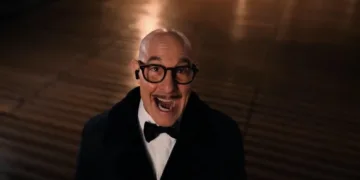

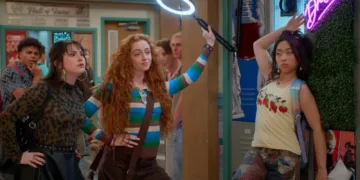
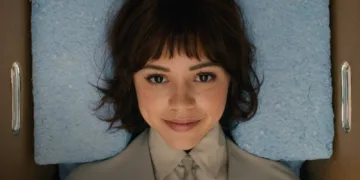


Irish folklore has supplied horror cinema with creatures whose identities do not fit comfortably inside the categories popular culture prefers. Feed benefits from that discomfort. Writer-director Marco van Belle takes the Dearg-Due, a female blood-drinking figure from Irish legend, and reshapes her into something closer to an invading consciousness. She seduces through control rather than romance, reaches into damaged minds, and treats the human body as temporary housing.
That interpretation gives this compact 83-minute film its strongest idea. Five friends travel to an isolated house in rural Ireland for a weekend centered on Orla Ryan (Grace Collender), who has retreated from her former social-media life after devastating personal loss.
Her boyfriend Lorcan (Clinton Liberty) watches her carefully, while best friend Nessa (Daisy Jelley) arrives with boyfriend Austin (Rhys Mannion), cameras, beauty products, and the instincts of someone who still measures attention as currency. Seanie (Oskar Smith), quietly orbiting Nessa, completes the group.
Before them, van Belle gives us 1897: blindfolded men bury a bound woman upside down in the night, followed by blood, screaming, and one man smashing his head against stone. Ireland’s landscape looks peaceful when the film returns to the present. The ground remembers otherwise.
The Vampire Behind the Algorithm
The film becomes considerably sharper once Orla wanders into the woods. She hears voices, approaches the Dearg-Due’s burial place, and pricks her finger on a thorn. Blood supplies the invitation. From there, Orla begins seeing and hearing things that may have no physical existence, while the creature gradually extends its reach across the group.
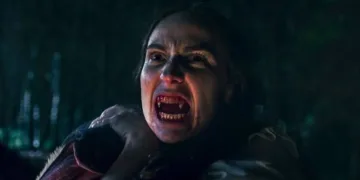
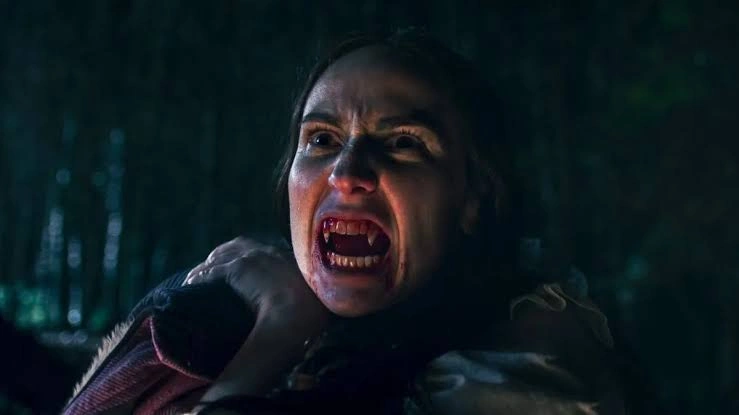
Van Belle’s version of vampirism is interesting because feeding is almost secondary to influence. Niamh Hogan’s Dearg-Due scans nearby minds with eyes that flick rapidly before fixing on a target. Victims are shown false realities, driven toward despair, or manipulated into harming themselves. Later, a black, viscous substance enters prospective hosts, turning possession into something disturbingly physical.
That makes the social-media angle feel like an obvious partner for the mythology. Nessa is trying to revive interest in her beauty line. Austin keeps recording. Followers, visibility, sales, and personal branding sit quietly around the weekend before an older form of influence arrives and demonstrates how meaningless those measurements are beside actual control.
The idea is stronger than its treatment. Nessa discusses her products and Austin’s rising profile, yet their digital lives rarely shape the mechanics of the horror. Imagine the Dearg-Due using recorded images, feeds, or the group’s dependence on mediated reality as part of her attack. Feed mostly leaves that possibility untouched.
There is still something culturally productive in van Belle’s decision to change the legend. Traditional accounts of the Dearg-Due center on a woman transformed after an abusive marriage, with revenge and male victims playing a major role. This film exchanges much of that specificity for possession, fallen-angel imagery, and psychic domination. The creature travels toward international supernatural-horror language in the process. Something Irish survives, though some of its sharper local character gets sanded away.
The Humans Need Feeding Too
Orla should provide the emotional counterweight. Collender gives her a convincing physical withdrawal, particularly in the way she stares toward the woods as if part of her has already left the house. An early photograph, where everyone appears normally while Orla registers as strangely blurred, turns her grief into a supernatural warning with impressive economy.
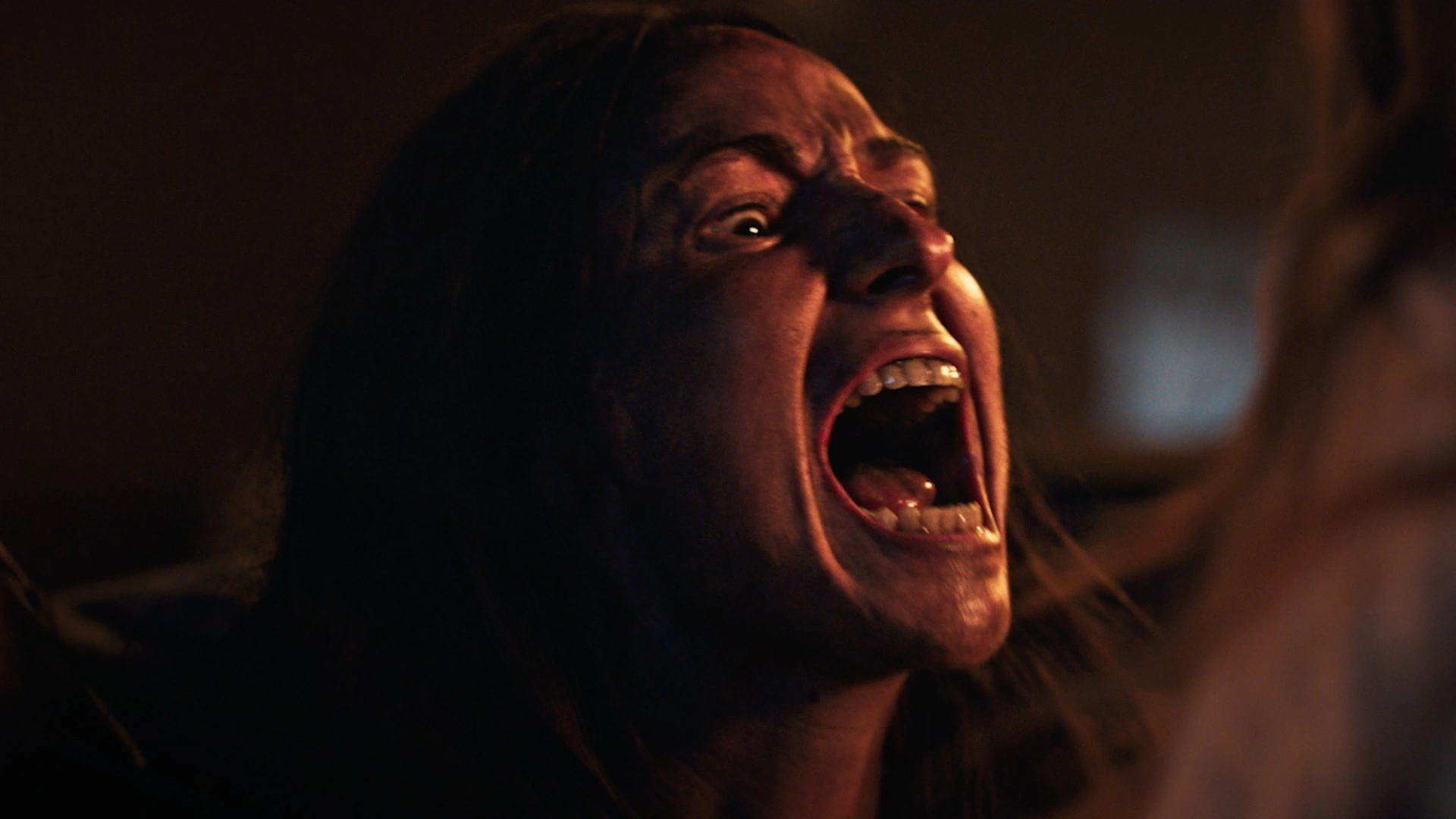
The screenplay gives Collender much less to work with between those moments. We learn about Orla’s former online presence and the tragedy that changed her, yet there is little sense of the woman who existed before. Her grief defines nearly every interaction. That becomes problematic once the Dearg-Due offers reunion with her dead family in exchange for becoming its next host. The choice has enormous emotional potential, but Orla has been written so close to absence that the temptation feels conceptual rather than intimate.
Lorcan fares slightly better because his protectiveness is expressed through behavior. He positions himself between Orla and insensitive remarks from the group and treats her distress seriously long before everyone understands the danger. Clinton Liberty gives that concern a grounded physicality, though Lorcan’s later choices suggest that affection and survival instinct have entered an unfortunate custody dispute.
Nessa is the greater missed opportunity. Jelley gives her flashes of genuine ferocity when Orla is threatened, complicating the earlier impression of a friend absorbed by products and followers. That friction could have sustained the friendship. The film moves past it too quickly.
Austin works mostly as the newcomer who lacks the group’s shared history, while Seanie’s devotion to Nessa creates another relationship that never receives enough pressure before the supernatural violence takes over. When the Dearg-Due begins turning friends against each other, the mechanism is frightening. The betrayals would hurt more if these friendships had lived longer on screen.
A Creature Worth Keeping in the Dark
Van Belle handles physical horror with greater confidence. The remote house and dense surrounding woods keep the geography simple, letting isolation do much of the work. Practical gore gives attacks weight, while the Dearg-Due’s liquid form pushes her away from the polished sensuality associated with many screen vampires.
Hogan embraces that distinction. There is no flirtatious invitation in her performance. Her presence is severe, almost ceremonial. When she speaks of power, she seems less interested in seducing humans than observing how easily they volunteer themselves to it.
Some action choices weaken that menace. Victims occasionally flee in slow motion while the Dearg-Due attacks at normal or heightened speed, producing an artificial rhythm where panic should dominate. Repeated dialogue insisting that the creature cannot be killed also turns mystery into instruction.
The short runtime helps. Once hallucination gives way to pursuit, self-destruction, possession, and bloodshed, van Belle keeps events moving. The film’s richest material remains buried in the collision between a specifically Irish supernatural figure and a generation trained to think of influence as something counted on a screen. Every time the Dearg-Due takes control of a mind, Feed briefly finds the horror film hiding inside that cultural collision.
Feed was released on Digital and On Demand platforms on August 14, 2026. The horror thriller depicts a group of friends gathering at a remote Irish house for an intervention, where they inadvertently awaken an ancient vampire known as the Dearg-Due.
Where to Watch Feed (2026) Online
Full Credits
Title: Feed
Distributor: Saban Films
Release date: August 14, 2026
Running time: 97 minutes
Director: Marco van Belle
Writers: Marco van Belle
Producers and Executive Producers: Marco van Belle, Jonathan Ford
Cast: Grace Collender, Clinton Liberty, Daisy Jelley, Niamh Hogan, Rhys Mannion, Oskar Smith
The Review
Feed
Feed finds its sharpest identity where Irish folklore collides with contemporary ideas of influence. Marco van Belle’s Dearg-Due feels ancient, predatory, and refreshingly detached from the seductive vampire tradition that international cinema has recycled for decades. The remote Irish setting, practical gore, and Niamh Hogan’s severe physical presence give the horror real texture. The human side is thinner. Orla’s grief rarely develops into a fully dimensional character arc, while the influencer material gestures toward a richer clash between digital power and supernatural control than the screenplay actually stages.
PROS
- Distinctive Irish folklore foundation
- Strong Dearg-Due presence
- Effective practical horror effects
- Tight 83-minute pacing
- Atmospheric rural setting
CONS
- Underwritten central characters
- Thin friendship dynamics
- Influencer theme lacks development
- Repetitive supernatural exposition