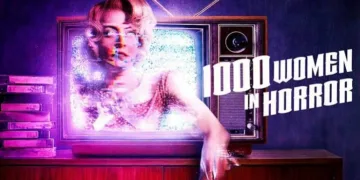










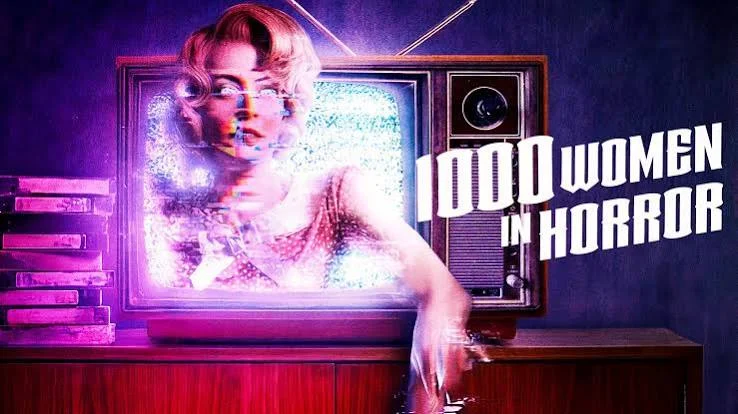

Horror has spent decades turning women into bodies to be chased, possessed, cut open, resurrected, avenged, sexualized, feared, and occasionally allowed to survive until the credits. Donna Davies’ 1000 Women in Horror asks a deceptively simple question: who has been deciding what those bodies mean?
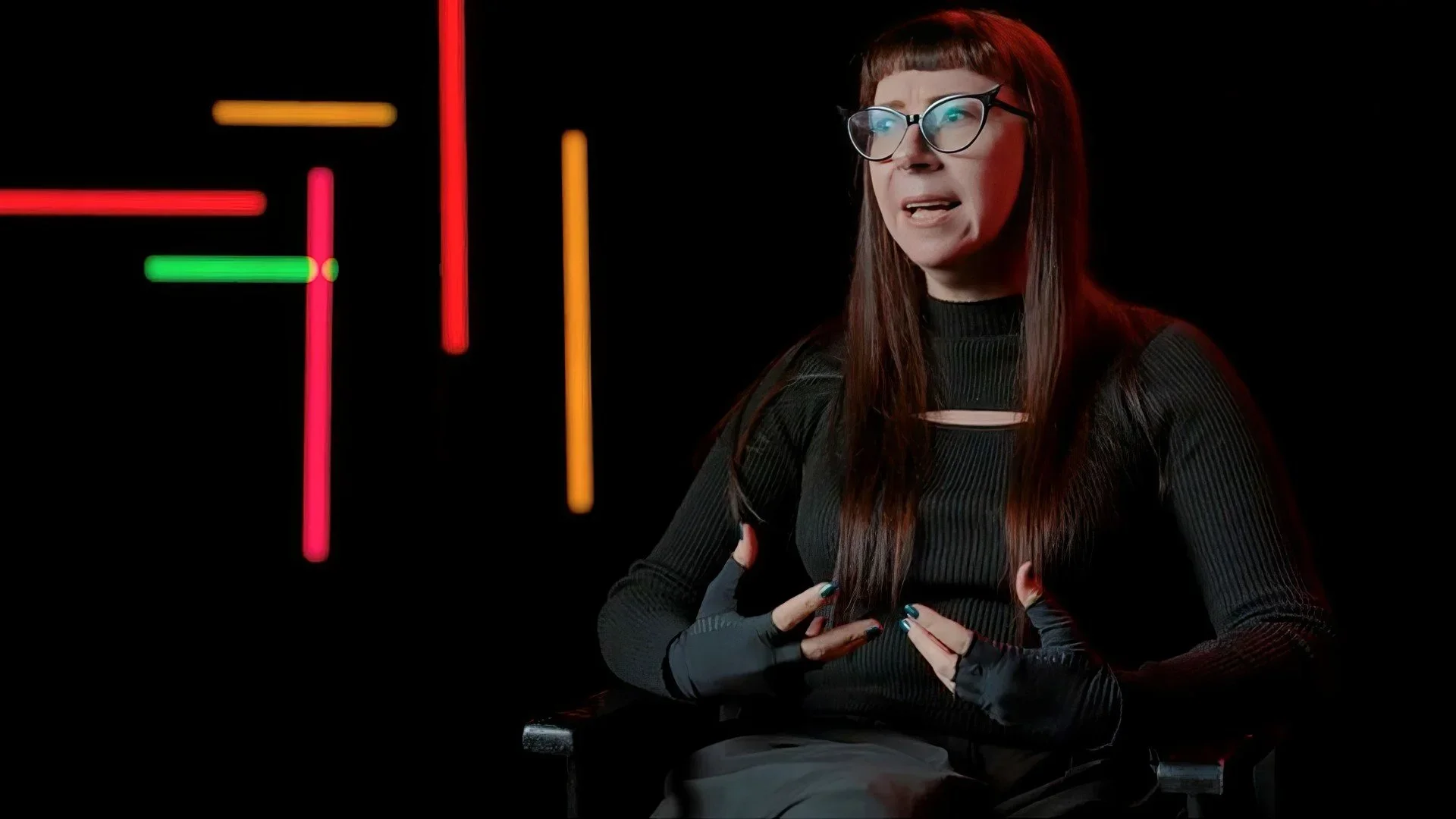
Adapted from Alexandra Heller-Nicholas’ 2020 book 1000 Women in Horror, 1895–2018, the documentary approaches genre history through the women who made it, performed in it, wrote about it, and watched it. Heller-Nicholas also writes the film and appears among an entirely female group of interview subjects that includes Akela Cooper, Brea Grant, Mary Harron, Nikyatu Jusu, Kate Siegel, Lin Shaye, Kier-La Janisse, Toby Poser, and Gigi Saul Guerrero.
Davies avoids the obvious chronological march from silent cinema to streaming. Instead, chapters correspond loosely to stages of a woman’s life, moving through girlhood, adolescence, pregnancy, motherhood, and aging. The structure proposes that horror history might be organized around experience rather than release dates. That choice gives the film its most interesting intellectual problem: genre history changes depending on who is allowed to arrange the shelf.
Dolls, Girls, and Survivors
The girlhood material makes that organizing principle immediately useful. Cooper remembers the relationship between the My Buddy doll and Child’s Play, while Grant recalls throwing her own doll down the stairs. Neither anecdote is especially grand, which is precisely why they work. A cursed doll becomes less a stock horror device and closer to an object onto which adults project ideas about innocence, obedience, femininity, and childhood.
From there, the documentary moves through familiar female horror identities: victim, predator, final girl, monstrous woman, mother, protector. Carrie, Suspiria, The Exorcist, Rosemary’s Baby, and Bob Clark’s Black Christmas sit beside newer films such as Jennifer’s Body, Midsommar, Relic, Nanny, Sophia Takal’s Black Christmas, and 12 Hour Shift.
That range matters because canon formation is partly repetition. Show the same ten movies often enough and they begin to look like the natural history of cinema rather than somebody’s selection. Davies counters that habit by placing independent and contemporary films beside established landmarks without treating the former as supplementary material.
Also Read





The documentary is less convincing when some familiar ideas arrive already settled. Its treatment of the final girl, for instance, gives relatively little attention to the contradiction between female survival and the camera’s long habit of sexualizing the survivor while she fights back. Escaping the killer does not automatically mean escaping the gaze.
When Theory Meets Flesh
The film becomes sharper when its critical vocabulary collides with something painfully physical. Kate Siegel’s account of pregnancy and Caesarean birth is paired with the sequence from Prometheus in which Elizabeth Shaw uses an automated surgical unit to remove the organism growing inside her. Davies’ editing changes the scene without altering a frame of Ridley Scott’s film. What once plays as extreme science-fiction body horror suddenly sits beside an actual medical experience described by someone who has lived through its bodily violence.
This is where 1000 Women in Horror finds an argument stronger than simple representation. Horror has always been fascinated by female biology, yet the meaning of that fascination changes when women describe the experiences that cinema has transformed into spectacle.
The same shift occurs when the documentary looks behind the camera. Grant recounts having a directing decision questioned by a crew member, while other contributors discuss harassment and sexist treatment within production. Such testimony creates an uncomfortable echo between the genre and the industry producing it.
Cinema can celebrate women fighting monsters while workplaces still challenge a woman for calling the shot. There is a grim little philosophical joke hiding there. Horror spent a century inventing elaborate mechanisms for controlling women’s bodies. The film industry sometimes required far less imagination.
Who Gets Into the Canon?
A 96-minute documentary called 1000 Women in Horror carries an impossible title. No film of this length could account for that history with anything approaching completeness, and Davies occasionally pays for the ambition. The life-stage format can produce abrupt movements between periods, filmmakers, countries, and subgenres. One discussion sometimes ends because the next clip has arrived rather than because the thought has reached its natural endpoint.
Some omissions also expose the unavoidable politics of selection. Dracula’s Daughter would seem particularly relevant to a film concerned with gender and queer horror history. Discussion of Bride of Frankenstein could likewise acknowledge James Whale’s sexuality when considering the queer lineage surrounding the film. Readings of Rosemary’s Baby and The Exorcist sometimes flatten works that invite messier interpretations.
Yet those gaps reveal the documentary’s strongest idea. A canon is neither neutral nor finished. It is a record of what critics, programmers, historians, audiences, and institutions repeatedly decide deserves preservation.
Davies and Heller-Nicholas are making their own intervention in that process. Giving Relic, Nanny, 12 Hour Shift, and Sophia Takal’s Black Christmas serious space beside Carrie and Suspiria does not erase the established canon. It makes visible the machinery that built it. And once you notice the machinery, the old shelf arrangement starts looking suspiciously deliberate.
1000 Women in Horror premiered on Shudder on March 20, 2026. The documentary explores how women pioneers have shaped and revolutionized horror cinema since 1895 as directors, actors, and creators.
Where to Watch 1000 Women in Horror (2025) Online










Full Credits
Title: 1000 Women in Horror
Distributor: Shudder
Release date: March 20, 2026
Running time: 1 hour 36 minutes
Director: Donna Davies
Writers: Alexandra Heller-Nicholas
Producers and Executive Producers: Donna Davies, Nicola Goelzhaeuser, Giles Edwards
Cast: Roxanne Benjamin, Akela Cooper, Mattie Do, Brea Grant, Gigi Saul Guerrero, Mary Harron, Alexandra Heller-Nicholas, Cerise Howard, Kier-La Janisse, Nikyatu Jusu, Natasha Kermani, Roseanne Liang, Annalise Lockhart, Toby Poser, Sara Risher, Lin Shaye, Kate Siegel
The Review
1000 Women in Horror
1000 Women in Horror works best when scholarship gives way to lived experience. Kate Siegel’s C-section account paired with Prometheus, or Brea Grant recalling her authority being questioned on set, exposes the distance between horror’s fascination with women’s bodies and the industry’s treatment of women creating those images. Donna Davies’ life-stage structure is occasionally jumpy, and several canonical readings feel too settled, yet the documentary keeps expanding the genre’s historical memory in useful directions. Its real subject is who gets remembered as part of horror history.
PROS
- Strong life-stage structure
- Excellent personal testimony
- Sharp motherhood section
- Wide-ranging film selection
- Valuable canon revision
CONS
- Abrupt thematic jumps
- Some familiar observations
- Several notable omissions
- Certain readings feel too broad