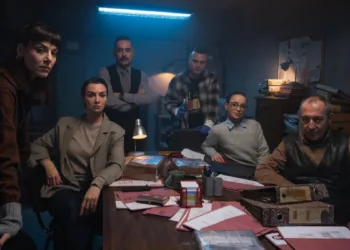












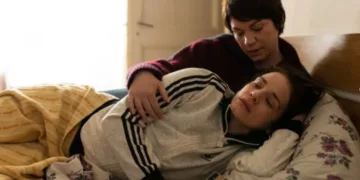






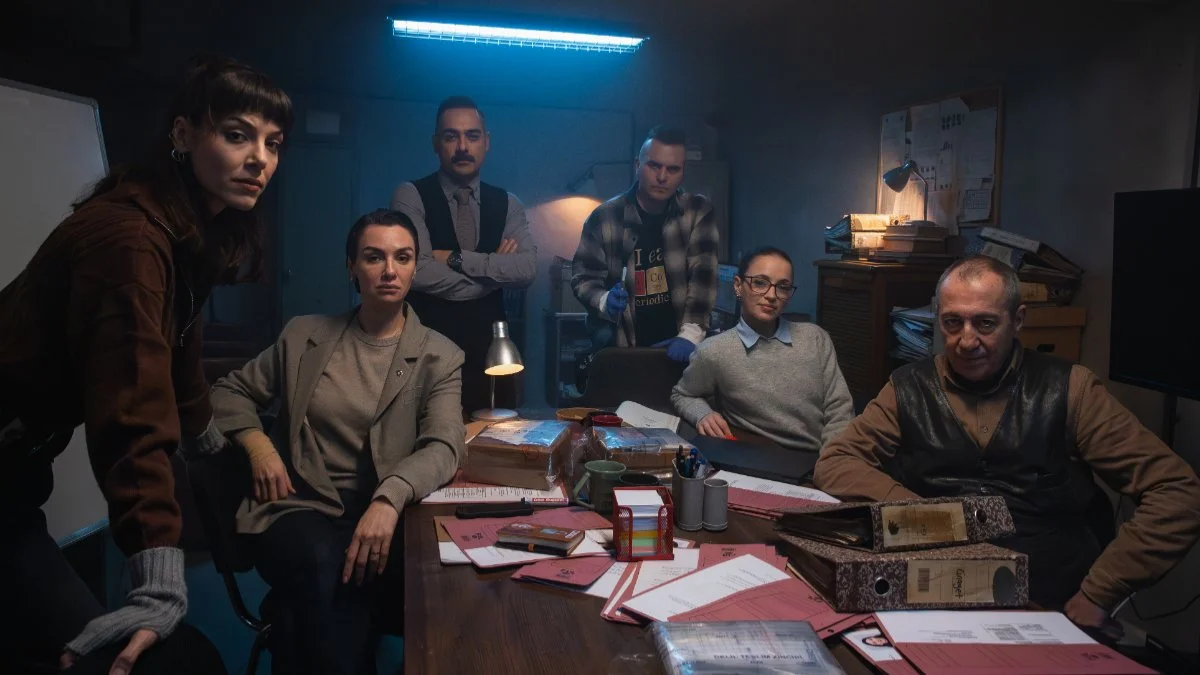

Önem Özülkü is baking with her daughter when police work comes looking for her again, which is about as close to peace as Graveyard lets anyone get. The Special Crimes unit has fractured after Mert killed Seher’s murderer. Hasan has withdrawn under the weight of what his son did, Önem has traded case files for time with Sude, and Serdar is left trying to persuade everyone that the Graveyard still has a pulse.
Then women across the city start receiving boxes containing objects stolen from their homes. It is a neat premise because the packages are frightening before anyone knows exactly what they mean. Transparent numbering suggests there are missing boxes and therefore missing recipients.
Personal belongings prove someone has crossed the boundary between watching these women and entering their lives. Serdar uses rookie Gökçe Ilgaz to bring the case to Önem, knowing she is unlikely to ignore a coordinated threat against women simply because she is technically on leave.
The eight-episode third season, directed by Abdullah Oğuz and Ömer Baykul, uses those boxes as connective tissue while the unit handles separate investigations. That format gives the show room to wander into different forms of misogyny, obsession and exploitation without losing sight of the person quietly arranging the pieces. Peace lasted about one cake.
From Screens to the Streets
The first investigation revolves around Melike Erensoy, a baking influencer whose online appearance bears little resemblance to the woman found murdered in her home. Melike had gained weight after her grandmother’s death, and her audience had already demonstrated what it thought of that possibility. Followers mocked her, sponsors disappeared, and maintaining her career meant having her appearance digitally altered while she effectively hid from public view.
There is a good crime story buried inside that setup. A wine cork carved with a “C,” anti-slip stage resin outside the apartment and a theatre ticket gradually push Selin and Berk toward Melike’s personal connections. CCTV footage reveals Simge Aydemir confronting a disguised Melike. Simge then exposes Melike’s digital relationship with Cem, an actor whose fixation on appearances immediately places him inside the investigation’s rather crowded suspect queue.
Also Read






The episode is less elegant when characters explain the point after the evidence has already made it. Melike living as a prisoner inside the image that made her successful says plenty about online beauty culture. Önem does not need to translate every implication for us. Thankfully, the season gets nastier and structurally sharper from there.
Later cases widen the lens from cyberbullying into stalking, coercive relationships, human trafficking and a surrogacy operation. Arzu and Tülin’s story folds identity, obsession and trauma together, while the Ceyda investigation exposes a criminal network far larger than the intimate violence of Melike’s death. Oktay’s connection to incel spaces pushes the season toward a particularly ugly form of entitlement, one where a man can convince himself that controlling a woman counts as protecting her.
The escalation works because the boxes are growing more dangerous at the same time. What begins as intrusion becomes organized intimidation and then something capable of killing. The Graveyard keeps discovering bigger crimes. Humanity, very generously, keeps supplying them.
Who Gets to Decide?
Season 3 is obsessed with control, particularly the ingenious excuses people create for exercising it over women. Melike’s life is the clearest early example. Sponsors require a sellable body. Followers treat that body as public property. Romantic attention comes tied to expectations about appearance. The resulting deception traps Melike inside her home, where technology lets the desirable version of her keep performing after the real woman has disappeared from sight.
Oktay represents a harsher extension of the same mentality. His involvement with incel communities gives the season a route from online resentment to physical violence. The show is strongest when it treats those spaces as accelerants for ideas already visible elsewhere: ownership disguised as affection, humiliation repackaged as honesty, coercion excused as concern.
Then the same logic reaches Önem’s home. Sude and her friends are bullied by boys at school badly enough that Sude wants to leave. Önem can investigate murdered women all day, but watching her daughter encounter the attitudes beneath those crimes strips away the emotional distance that police procedure usually provides. Once the numbered boxes reach her family, professional anxiety becomes parental fear.
Birce Akalay plays these moments with impressive restraint. Önem can deliver anger, certainly, yet Akalay is better when the character is forced to absorb information she cannot immediately fix. A look at Sude, a pause after another ugly revelation, or the exhaustion underneath an interrogation gives the character a vulnerability the screenplay sometimes tries to replace with speeches.
That habit is Season 3’s recurring writing problem. Misogyny, cyberbullying, trafficking, incel ideology, stalking and reproductive exploitation are already doing plenty of thematic work through the cases themselves. Dialogue occasionally arrives afterward carrying a highlighter. The evidence rarely needs one.
Putting the Team Back Together
Serdar spends much of the early season behaving like the one employee who noticed the department was accidentally dissolved. His decision to involve Gökçe in the box case is partly investigative strategy and partly an elaborate scheme to get Önem back behind a desk. It works because Serdar understands something his father Haluk seems less comfortable accepting: Önem leading the unit does not diminish him. Their partnership functions precisely because the series resists turning it into a contest for authority.
Hasan’s return is handled with similar care. His departure grows directly from Mert’s killing of Seher’s murderer, so his absence carries genuine guilt rather than feeling like a temporary excuse to reshuffle the cast. The pursuit triggered when Melike’s phone comes back online gives Hasan a physical route into the story again. He catches Cem, and the act marks his return without requiring a grand speech announcing it.
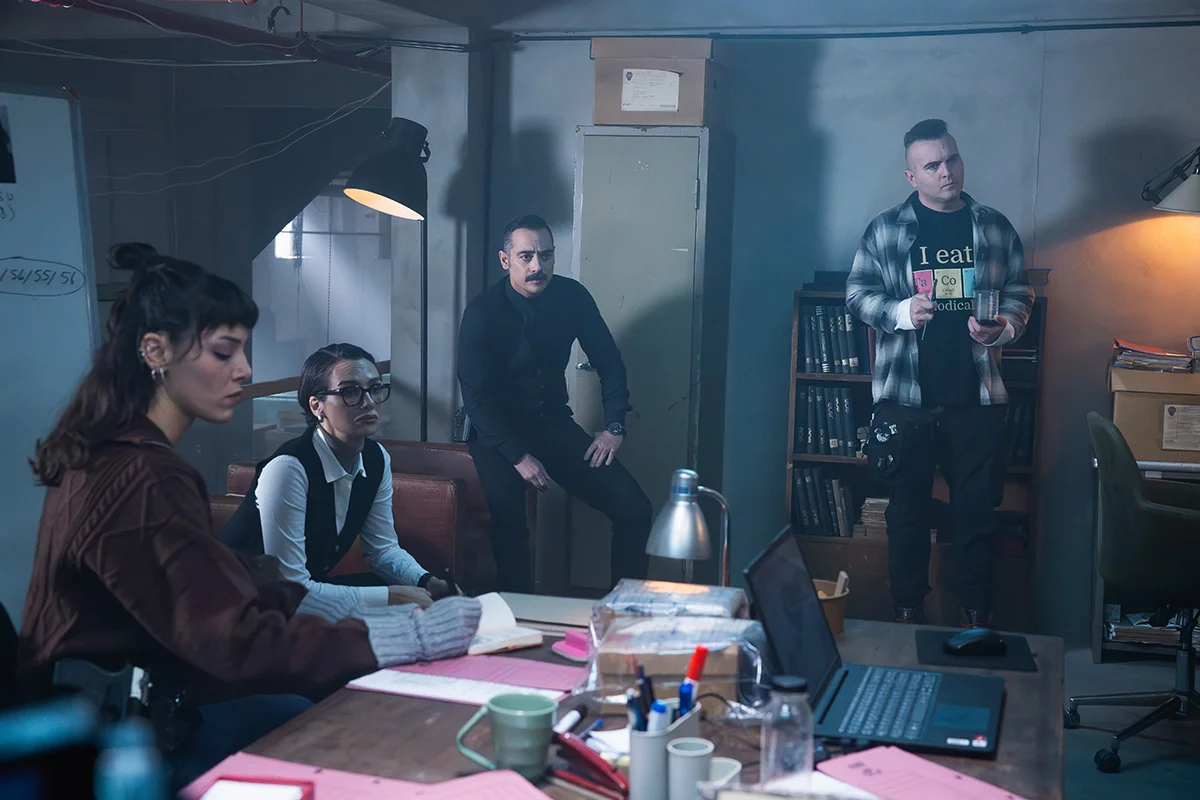
The wider ensemble receives useful investigative beats too. Berk identifies the stage resin that redirects Melike’s case toward the theatre. Selin follows the social connections surrounding the victim. Gökçe arrives as a rookie yet is allowed to contribute instead of spending eight episodes asking questions solely for the audience’s convenience.
The cost of the season-long conspiracy is that some of these characters fade whenever Önem’s personal danger takes priority. With only eight episodes carrying four substantial cases and the mystery-box plot, screen time becomes its own crime scene. Nobody has yet been arrested for stealing Berk’s minutes.
A Style Fighting With Itself
Visually, Graveyard still knows how to make Istanbul feel like the sun has personally declined the assignment. Low-key lighting, desaturated interiors and heavy shadow maintain the series’ noir sensibility. Önem’s severe styling fits that controlled aesthetic, while sombre music and eerie lullaby variations often signal danger before the investigation catches up. Crime scenes feel cold rather than sensational, which suits a series interested in the consequences of violence rather than the spectacle of corpses. Then somebody discovers the zoom button.
Speed ramps, jump cuts, moving close-ups and aggressive trolley shots appear throughout the season, sometimes colliding with scenes that already have enough tension. A quiet interrogation can suddenly behave as though it has been informed that the trailer editor is visiting. The technique is not inherently wrong for pulpier crime television, yet it clashes with the clinical visual language Graveyard has spent years establishing.
Some heightened supporting performances in the Melike investigation make that friction even clearer, and Olgun Toker gets pushed toward broader territory near the penultimate episode. The series works better when actors are allowed to sit inside discomfort rather than announce it.
Pacing creates a related problem. Episodes running around 45 to 50 minutes sometimes repeat investigative or emotional information after the necessary beat has landed. Certain revelations could arrive earlier, particularly when the box mystery has already generated enough suspense to carry the hour.
The later episodes tighten considerably once the numbered packages, threatening calls and danger surrounding Önem’s family begin intersecting with the individual cases. At that point, every new clue carries two questions: what happened to this victim, and how close is the same machinery getting to Önem? That is when Graveyard stops chasing its own camera and remembers how frightening stillness can be.
Graveyard season 3 premiered on Netflix on August 28, 2026. Commissioner Önem and her specialized unit return to investigate a deeply unsettling new case from their secluded basement office.
Where to Watch Graveyard Season 3 Online


Full Credits
Title: Graveyard Season 3
Distributor: Netflix
Release date: August 28, 2026
Rating: TV-MA
Running time: 50 minutes
Director: Abdullah Oğuz, Ömer Baykul
Writers: Fulya Turhan, Evren Oğuz, Ahmet Saatçioğlu
Producers and Executive Producers: Abdullah Oğuz, Evren Oğuz
Cast: Birce Akalay, Olgun Toker, Şehsuvar Aktaş, Hakan Meriçliler, Sezgin Uzunbekiroğlu, Elif Sevinç, Cem Sürgit
Director of Photography (Cinematographer): Ferhat Uzundag
Composer: Tevfik Akbasli
The Review
Graveyard Season 3
Graveyard Season 3 makes its strongest case when Önem’s investigations stop feeling safely procedural. Sude’s bullying, the numbered boxes, and the eventual threat against Önem turn the season’s misogyny from subject matter into pressure applied directly to its lead. Birce Akalay carries that weight beautifully, while the expanding investigations keep finding ugly new forms of entitlement. The episodes occasionally over-explain their politics, run longer than their tension can sustain, and throw flashy camera tricks at scenes that were doing fine without assistance. The Graveyard remains worth reopening.
PROS
- Birce Akalay’s controlled, weary performance
- Strong Önem and Serdar partnership
- Escalating mystery-box storyline
- Sharp examination of misogynistic entitlement
- Haunting noir atmosphere
CONS
- Overwritten thematic dialogue
- Uneven pacing across long episodes
- Distracting speed ramps and zooms
- Some overly broad performances