


























Andy has been given two impossible appointments on the same day: a marathon he has barely learned to run and a Battle of the Bands that may determine the fate of his family’s church. Beyond Belief piles both onto a teenager already carrying the death of his father. The arrangement gives director Johnny Meier’s film immediate momentum, yet it also reveals the screenplay’s defining problem. Every time one conflict gains weight, another elbows into the shot.
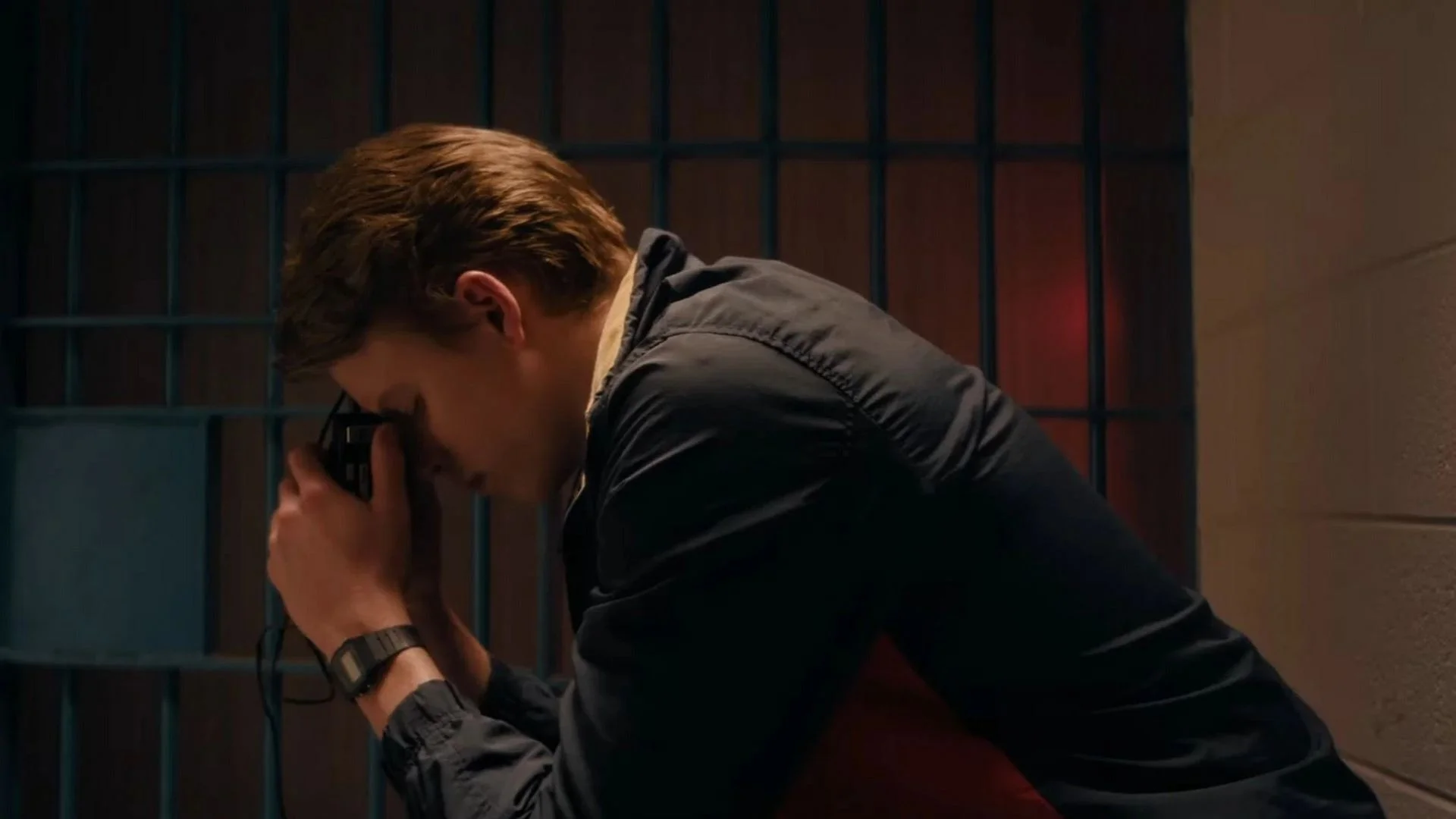
Carson Lueders plays Andy as a young man whose grief keeps turning into motion. He steals a guitar, snaps at his mother Sarah, clashes with his grandfather Jake, and eventually lashes out physically during a confrontation that ends with damaged musical equipment. Those incidents work because anger becomes something Andy does rather than something the screenplay merely announces.
Then the mysterious messages arrive. A voice tells Andy to run. The word appears again in written form. Andy interprets the command as God speaking directly to him, and Jake begins preparing him for a marathon. There is a clean dramatic line hiding here: grief produces anger, faith redirects that anger, running gives the change physical form. The film keeps interrupting it.
The Screenplay Keeps Adding Rooms
Johnny Meier, Darren Scott Jacobs, and Joe Sanders surround Andy with enough material for several separate dramas. Sarah cannot afford to maintain the church. Uncle Leo wants the property and becomes the family’s principal antagonist. Jerico needs to win its competition. Andy needs to train. His father’s sermons keep resurfacing. Alcoholism runs through another strand of the family conflict. Rivalries around the band escalate into sabotage and violence.
The church dispute provides some of the strongest pressure because it gives grief an architectural presence. Andy has lost his father, and now the building associated with that father’s ministry may disappear too. Leo’s proposed real-estate takeover could have turned that conflict into something morally uncomfortable: one man’s practical ambition colliding with another family’s emotional inheritance.
Instead, Leo is pushed toward villainy with limited shading. His anger, greed, and desire for control are clear, yet scenes rarely linger long enough to reveal how he reached them. The screenplay needs him to threaten the church, so he threatens the church.
Also Read






The divine-message subplot has a similar mechanical quality. The voice appears when Andy requires another push toward the marathon, making revelation feel oddly scheduled. Faith becomes stronger elsewhere, especially when Andy returns to his father’s sermons or shares quiet training scenes with Jake. Those moments leave room for interpretation. The supernatural prompts tend to underline what has already been written in thick marker.
Petra in the Spotlight
The surest rhythm comes from Petra. Jerico’s rehearsals and competition material give Lueders a setting where his performance loosens. He looks comfortable playing a teenager drawn toward the stage, and the Petra songs supply an energy that dialogue scenes sometimes struggle to maintain. The title track and the other Petra selections do useful narrative work because Andy’s rock-star ambitions are tied directly to his changing ideas about purpose and recognition.
Bob Hartman and John Schlitt appear in cameos, while the band’s music becomes a recurring presence rather than decorative period dressing. That choice gives the film’s 1980s setting a specific musical identity.
The visual design follows the same approach. Costumes, church interiors, performance spaces, and the warm, sun-faded palette establish the period without turning every frame into an elbow to the ribs about neon nostalgia. Meier often frames family conversations plainly, allowing James C. Burns to become especially effective as Jake. During the marathon training passages, Burns keeps Jake’s guidance measured, which helps scenes that might otherwise drift toward sermonizing.
The score is less disciplined. Emotional passages are frequently accompanied by music that announces the required feeling before the actors have finished creating it. Sarah’s financial stress and Andy’s quieter grief already provide sufficient pressure. The extra swell occasionally feels like someone adjusting the dimmer switch while the audience is still looking at the lamp.
Faith Under Pressure
The film’s Christian worldview is explicit enough that ambiguity is never the goal. Characters pray, crosses and churches recur throughout the imagery, Andy repeatedly encounters his late father’s sermons, and the plot treats God’s call as something capable of rearranging a person’s plans.
The sharper scenes connect those beliefs to behavior. Jake keeps Andy running when grief tempts him toward withdrawal. Sarah tries to protect both her son and the church while bills accumulate. Andy must face the consequences of acting from anger after theft, fighting, and rebellion place strain on the people trying to help him.
That is where the film’s moral grammar becomes visible. The church represents inheritance, Leo treats it as property, and Andy has to decide what his father’s legacy means once the man himself is gone. The conflict is strongest when it remains attached to these material things: a building, a guitar, a race route, a recorded sermon.
The final stretch moves through its resolutions too quickly. Character turns arrive before earlier hostility has fully settled, and the simultaneous marathon and music competition force several emotional beats into a narrow span. The editing keeps the machinery moving, yet some scenes end at exactly the moment another few seconds might have exposed something messier.
Beyond Belief repeatedly reaches for uplift before its characters have finished earning it. Its best moments resist that hurry: Andy listening to his father’s words, Jake beside him during training, and Petra’s music filling the performance space while a grieving teenager tries to work out which voice he actually wants to follow.
Beyond Belief landed in theaters nationwide on August 28, 2026, distributed by Iconic Events Releasing. Set in the 1980s, the faith-driven drama follows a grieving teenage rocker who embarks on a transformative journey guided by a mysterious calling and the iconic music of Petra.
Where to Watch Beyond Belief (2026) Online
Full Credits
Title: Beyond Belief
Distributor: Iconic Events Releasing
Release date: August 28, 2026
Rating: PG
Running time: 1 hour 56 minutes
Director: Johnny Meier
Writers: Darren Scott Jacobs, Johnny Meier, Joe Sanders
Producers and Executive Producers: David Stone, Sharon Oliphant, Joe Sanders, Erik Enberg
Cast: Carson Lueders, James C. Burns, Debby Gerber, Ryan Barnes, Libby Smallbone
Director of Photography (Cinematographer): J.J. Bukowski
Editors: David Aaron Stone
Composer: Brian Whitman
The Review
Beyond Belief
Beyond Belief has the bones of a sturdy faith drama, but its screenplay keeps crowding the frame with competing obligations: grief, a marathon, a Battle of the Bands, church finances, divine messages, family resentment, and alcoholism. Carson Lueders is strongest when Andy's anger is allowed to sit quietly, while James C. Burns gives the grandfather scenes welcome gravity. Petra's music supplies the film's surest pulse. The spiritual argument lands best through action, especially Andy's training and his father's sermons, while the rushed final act strains to convert sincerity into earned catharsis.
PROS
- Strong Petra soundtrack
- Effective grandfather-grandson scenes
- Credible musical performances
- Convincing 1980s production design
CONS
- Overloaded screenplay
- Underdeveloped antagonist
- Heavy-handed scoring
- Rushed emotional resolutions
- Divine-message subplot feels contrived