




















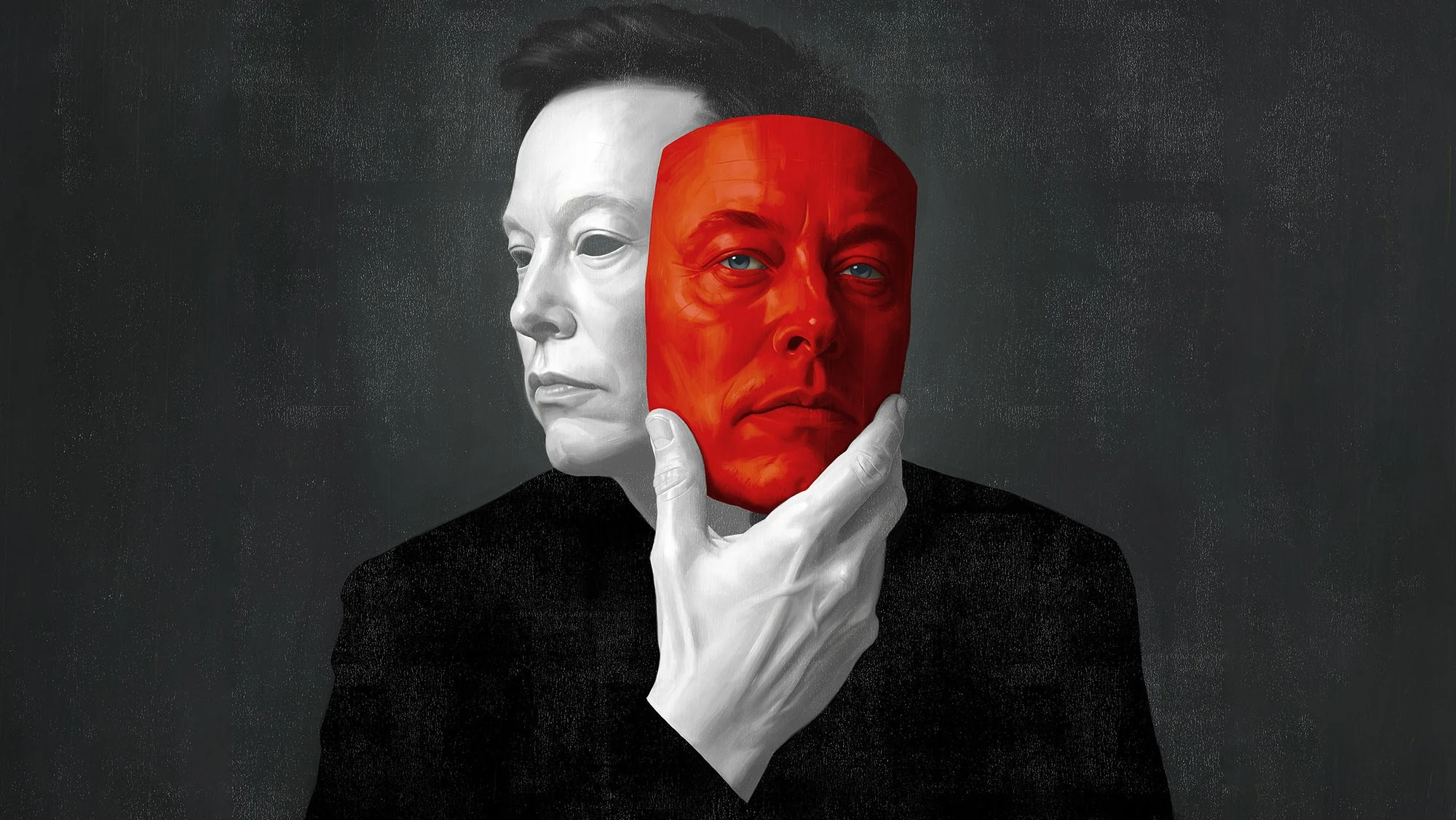

Alex Gibney has almost four hours to explain how Elon Musk moved from 1990s tech entrepreneur to a billionaire capable of influencing transportation, communications, space infrastructure, and government policy. The length sounds excessive until the pattern becomes clear. Each new company expands Musk’s reach, while each success gives him greater control over the story told about that success.
Musk begins that chronology with Zip2, follows Musk through PayPal, Tesla, and SpaceX, then carries the same behavioral pattern into Twitter, Starlink, and DOGE. Musk declined to sit for Gibney, so the documentary builds its case through archival footage and interviews with former colleagues, journalists, his father Errol Musk, first wife Justine Musk, and Ashley St. Clair.
The documentary’s smartest structural choice is refusing to treat Musk as a simple charlatan. SpaceX really did survive three failed launches before a fourth helped rescue the company. Reusable rockets represent a genuine engineering accomplishment. Tesla helped make electric cars culturally desirable. Those facts matter because Gibney’s argument becomes sharper once achievement and mythology start feeding each other.
Selling the Visionary
Tesla provides the clearest example of how the documentary says Musk learned to convert technical ambition into personal legend. The company had already been created by Martin Eberhard and Marc Tarpenning before Musk became its defining public face, yet Musk tracks how its history gradually came to revolve around him. Gibney links that rewriting of corporate memory to a broader habit: Musk sells the future in the present tense, then expects reality to catch up.
The battery-swap demonstration becomes a small example of that tendency. Tesla promoted the idea of easily replacing its enormous battery pack as though the process were nearly effortless. The Autopilot material carries far heavier consequences. Gibney traces Tesla’s 2015 driver-assistance rollout and the later Full Self-Driving Beta program while documenting crashes and fatalities connected to drivers who trusted systems marketed with language that exceeded their capabilities.
Here the film’s chronology does better work than any isolated accusation could. Musk’s Iron Man 2 cameo, Mars promises, podcast appearances, and carefully cultivated engineer-genius persona stop looking like unrelated celebrity moments. They form a business strategy. The product being marketed is frequently Musk himself.
Owning the Platform
Twitter changes the scale of that strategy. JP Doherty’s account of Musk’s takeover describes mass layoffs and the dismantling of safeguards under the banner of free speech. Gibney keeps returning to the gap between the principle Musk publicly invokes and the control he personally exercises. Once Musk owns the platform, freedom of expression increasingly runs through a system shaped by one man’s politics, temperament, and audience.
The documentary’s Starlink section pushes the same problem into geopolitical territory. Musk’s satellite network becomes important to Ukrainian communications during wartime, placing a piece of military infrastructure partly under private control. Gibney does not need a grand speech here. The structure supplies the warning. A billionaire who controls cars, rockets, satellites, and a major social network can influence public life before holding any formal office.
Then formal politics arrives anyway. Musk’s alliance with Donald Trump and his 2025 role in DOGE turn the corporate management style shown earlier into a model for government. Gibney connects sweeping federal layoffs to the same slash-first approach seen at Twitter, then follows the effects into agencies and programs such as USAID. One section details humanitarian disruption after funding cuts, giving the bureaucratic numbers actual human stakes.
The film also raises the uncomfortable conflict created when a businessman whose companies face federal scrutiny gains influence over the machinery doing that scrutinizing. By this point, the documentary’s shape is almost brutally tidy.
Family, Ego, and Gibney’s Own Excesses
The personal material is strongest when Gibney stops trying to make Musk visually interesting. Justine Musk’s interview carries particular weight. She recounts the death of their infant son and disputes Musk’s later public claim about holding the child as he died. Her testimony turns a private tragedy into another example of narrative ownership, this time inside a marriage rather than a company.
The sections concerning Musk’s trans daughter Vivian and his comments about the “woke mind virus” deepen the portrait of emotional estrangement. Ashley St. Clair’s testimony and the documentary’s discussion of Musk’s pronatalist beliefs move that same pattern into his obsession with reproduction, population decline, and fathering numerous children. Errol Musk’s interview supplies family history without pretending childhood explanation excuses adult behavior.
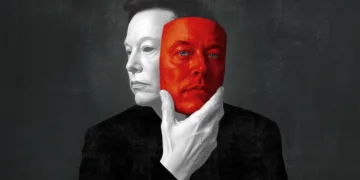
Gibney occasionally weakens his own material by decorating it. His synthetic Musk avatar, built from public statements and rendered with a deliberately uncanny digital look, fits a subject fascinated by AI and simulation theory. The first-person-shooter sequences depicting Musk firing workers at Twitter and inside government are harder to defend. The metaphor is clear after several seconds. The film keeps firing.
That tendency toward visual overstatement is the documentary’s recurring weakness. Its evidence rarely needs help. The strongest passages come when editing alone connects Tesla’s promises, Twitter’s collapse, Starlink’s geopolitical reach, DOGE’s cuts, and the testimony of people who lived close to Musk. Gibney has assembled a frightening amount of material. Sometimes the best thing he can do is stop pressing buttons and let it sit there.
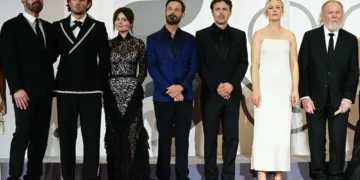
Musk had its world premiere out of competition at the 83rd Venice International Film Festival on September 8, 2026, ahead of its theatrical release by Bleecker Street. The documentary offers a comprehensive examination of billionaire entrepreneur Elon Musk, tracing his trajectory across global business, technology, and contemporary politics.
Where to Watch Musk (2026) Online
Full Credits
Title: Musk
Distributor: Bleecker Street, Universal Pictures
Release date: September 8, 2026 (Venice International Film Festival) / October 16, 2026 (United States)
Running time: 3 hours 45 minutes (225 minutes)
Director: Alex Gibney
Writers: Alex Gibney
Producers and Executive Producers: Alex Gibney, Jessie Deeter, Dana O’Keefe, Joey Marra, Zhang Xin, Nick Shumaker, Jessica Grimshaw
Cast: Elon Musk, Justine Musk, Ashley St. Clair, Martin Eberhard, Kara Swisher, Zoë Schiffer, Geoffrey Hinton, Sam Harris
Composer: Daniel Pemberton
The Review
Musk
Alex Gibney’s Musk works best when it stops decorating its subject and simply lets the chronology do the damage. Tesla’s exaggerated promises, the Twitter layoffs, Starlink’s geopolitical leverage, DOGE, and the testimony of Justine Musk gradually reveal the same narrative instinct: control the story before anyone else can. The CG avatar and shooter-style interludes occasionally turn a sharp documentary into an overproduced one, while nearly four hours leaves familiar material little room to surprise. Still, Gibney constructs a clear, disturbing account of private power steadily swallowing public consequence.
PROS
- Strong chronological structure
- Detailed Tesla and Twitter sections
- Effective firsthand testimony
- Clear examination of political power
- Fair recognition of real achievements
CONS
- Overworked visual gimmicks
- Few major revelations
- Demanding four-hour runtime