



















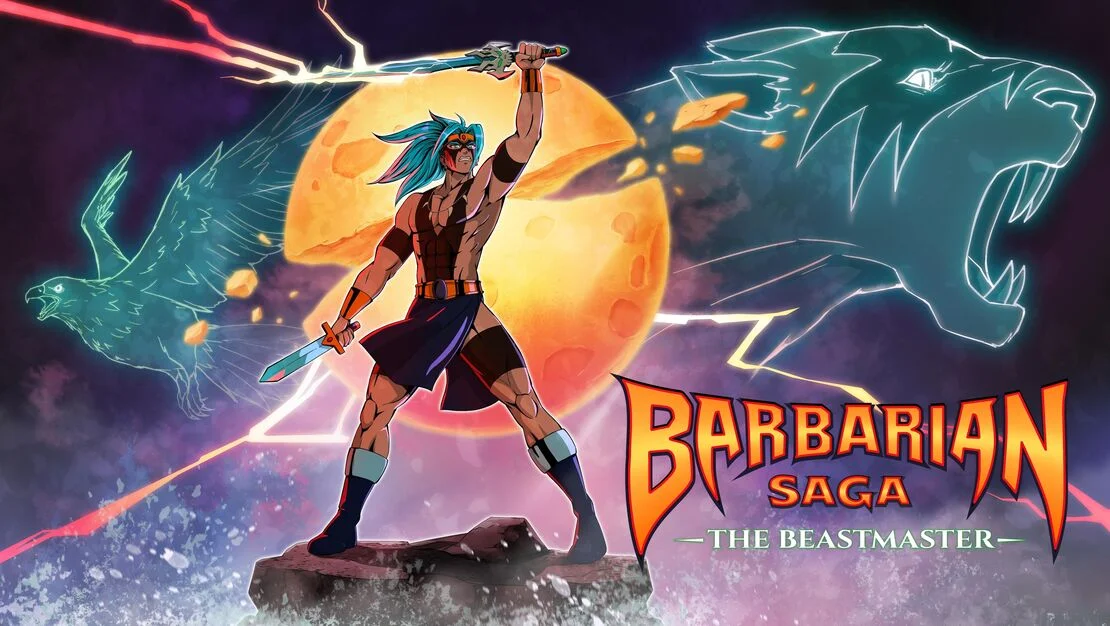

Ren’s strongest ability is also the clearest statement of what Barbarian Saga: The Beastmaster wants to be. Defeat the right creature, absorb its power, and the world changes with you. Walls become climbable, narrow passages become entrances, fortified barriers become temporary inconveniences. Dormidin Studio understands the pleasure that drives a good Metroidvania: remembering a blocked path and later returning with the exact tool needed to crack it open.
The setting surrounding that loop is pure sword-and-sorcery pulp. Arborea still bears the damage left by the Portal Wars when Imperia’s new king, supported by the Holy Kingdom and the archmage Trece XIII, turns against non-human races. Ren, one of the last Beastmasters, carries Heart-Eater, a talking sword with a taste for hearts, and finds himself tied to a prophecy about restoring balance between humans and beasts.
The framework is serviceable rather than absorbing. Chosen heroes, magical destinies, persecuted races, and warring factions arrive in familiar forms, while weak dialogue and occasional grammatical errors drain personality from characters who already struggle to stand apart. Conversations with non-human tribes, side quests, and multiple endings give the world some reactive structure, but the story rarely becomes the reason to keep exploring it.
Becoming the Beast
Transformation abilities are where the game starts distinguishing itself from its Metroidvania relatives. Ren begins with little beyond sword attacks, jumping, potions, and defensive moves. Bosses and major encounters gradually expand that vocabulary through animal-derived powers, including wall traversal, rapid movement, transformations, and abilities capable of breaking through previously sealed routes.
The basic structure recalls Prince of Persia: The Lost Crown, especially in how Ren occupies the screen and how traversal abilities reshape familiar spaces. Spirit Trees also function much like recognizable genre checkpoints, serving as places to recover, save progress, and eventually fast travel. The resemblance can become conspicuous, but the animal-form system gives The Beastmaster its own mechanical language.
Progression extends into Heart-Eater upgrades, repaired weapons, elemental attacks, spells, rings, potions, curses, and equipment pieces that modify statistics or combat behavior. None of these systems becomes excessively complicated. Equipping several rings or adjusting bonuses provides enough room to alter Ren’s strengths without forcing players to spend half their evening comparing tiny percentages.
The trouble arrives in the opening hours. Useful movement options take too long to appear, and Arborea gives limited guidance about what Ren can reach now versus what requires an ability found much later. Freedom works best when the player can make informed guesses. Here, exploration can become a catalogue of locked doors with no clue which key is coming next.
Swordplay and Survival
Regular combat is functional, then occasionally much better than that description suggests. Ren can slash, dodge, parry, cast spells, and fold transformation abilities into encounters. His attacks have decent physical weight, and stronger techniques expand the rhythm once the game finally hands them over.
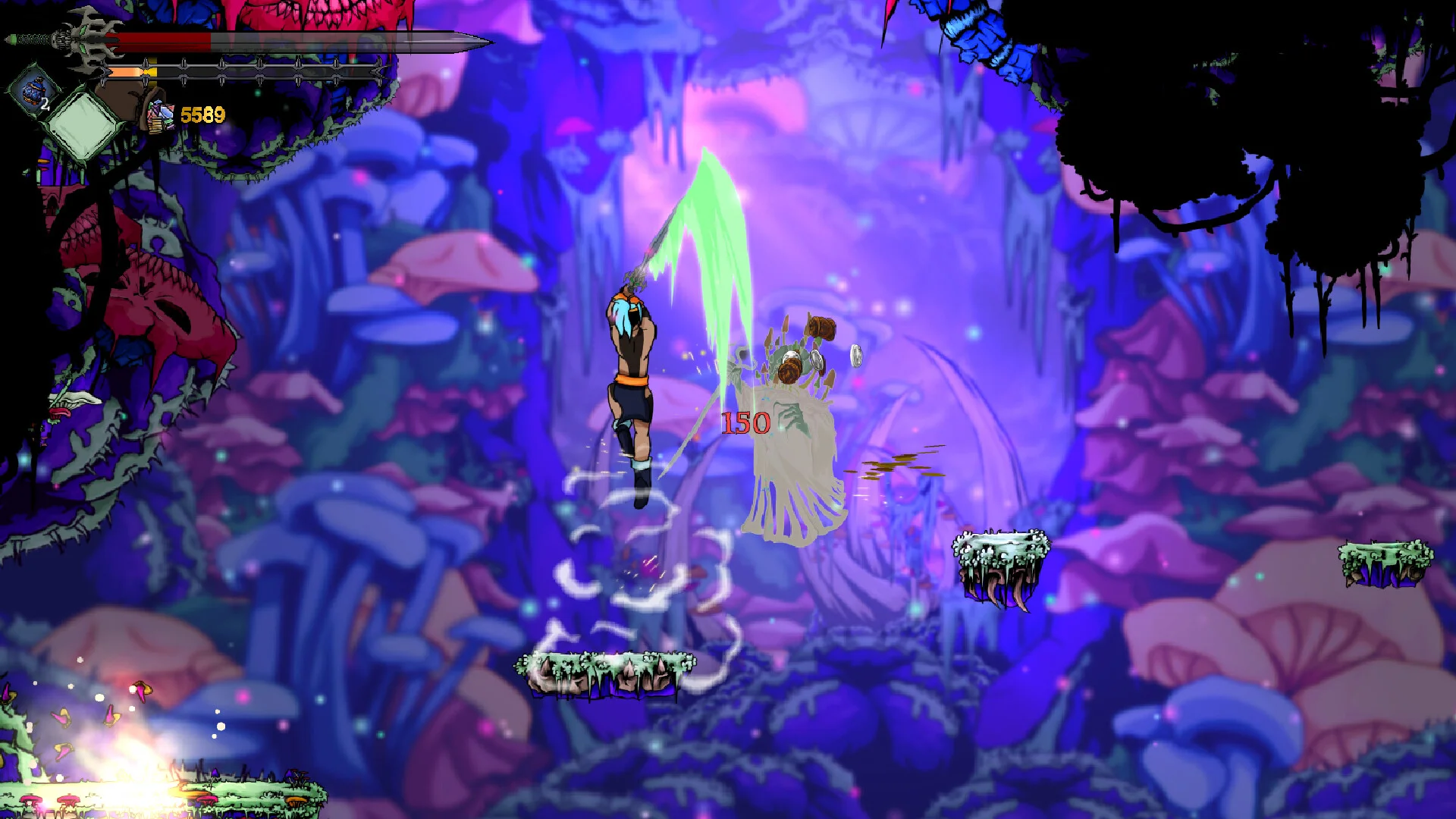
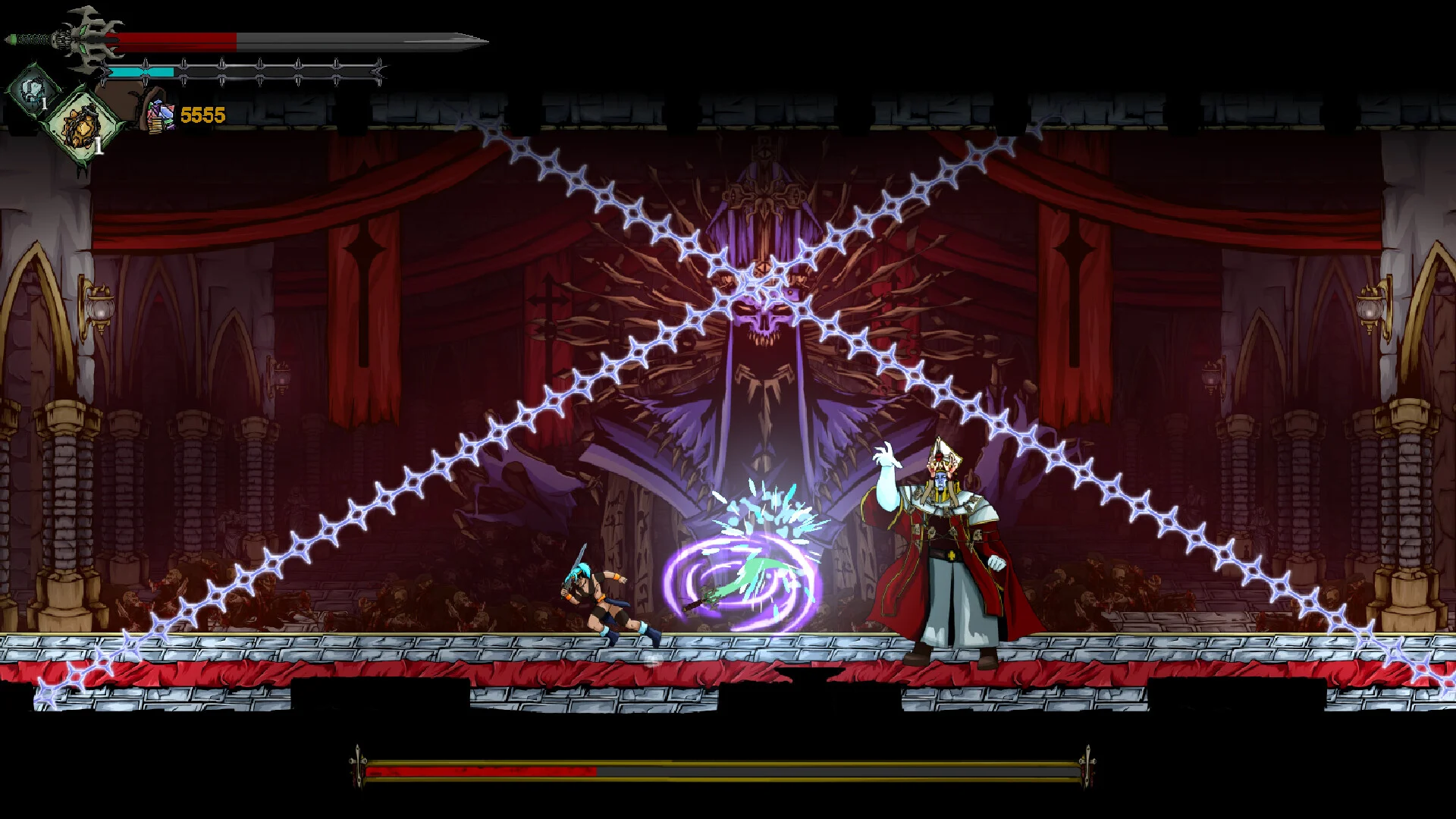
The dedicated duel arenas reveal what this combat system can do under tighter conditions. The camera pulls closer, individual health bars take prominence, and spacing becomes critical. Parrying at the correct moment or baiting an attack creates cleaner exchanges than the standard rooms filled with ordinary enemies. These fights feel closer to a restrained fighting game, and they make Ren’s defensive tools matter in ways routine encounters often fail to encourage.
Enemy variety is weaker. Repeated behaviors, projectile attackers placed around platforming hazards, concealed threats, and poison effects create irritation faster than tactical pressure. Some bosses suffer from the same problem, cycling through patterns that are either straightforward or awkward rather than demanding careful adaptation.
Healing makes these shortcomings harder to ignore. Potions are finite pickups or merchant purchases, enemy health drops restore very little, and difficult stretches can push the player toward farming currency simply to afford another stock of recovery items. A resource economy should make survival decisions interesting. When the reliable answer becomes killing respawning enemies until the potion budget looks healthier, the system has stopped creating strategy and started creating errands.
Hit detection complicates matters further. Inconsistent collisions and stiff animations occasionally make a failed dodge or exchanged blow feel disconnected from what happened on screen. That distinction matters in a game asking players to learn timing through repeated deaths. A demanding encounter can teach. An uncertain hitbox teaches suspicion.
A Beautiful World With Friction
Arborea frequently earns another detour through visual design alone. Forests, ruins, castles, caves, animated backgrounds, grotesque enemies, and chunky fantasy architecture commit fully to the game’s 1980s barbarian influences. Some character art and animation look rougher, but the environments give each new region enough visual identity to make exploration appealing.
The map offers shortcuts, hidden passages, optional routes, custom markers, and plenty of opportunities to wander away from the obvious path. Once Ren has several mobility abilities and Spirit Trees available for fast travel, revisiting older regions becomes considerably smoother.
Before that point, the game asks for patience it has not fully earned. Sparse direction can send Ren repeatedly into sealed paths, long returns after death slow experimentation, and stiff movement occasionally turns basic traversal into extra resistance. The forgiving death system helps by returning Ren to the latest Spirit Tree without stripping away collected items, yet convenience after failure cannot repair every awkward step leading to it.
Smaller presentation issues keep surfacing too. Some sound effects feel inexpensive, enemy cries can sound detached from the creatures producing them, text errors remain visible, and the lack of a permanent control reference or button remapping feels especially strange in an action game dependent on timing. The animal powers give Barbarian Saga: The Beastmaster a strong mechanical idea. Its rough systems keep asking that idea to carry extra weight.
The Review
Barbarian Saga: The Beastmaster
Barbarian Saga: The Beastmaster has a smart mechanical spine: defeating creatures expands Ren’s animal abilities, and those powers feed directly into combat and exploration. The problem is everything competing with that loop. Expensive healing, uneven checkpoints, vague navigation, repetitive enemies, and inconsistent hit detection turn too many setbacks into chores rather than lessons. The duel arenas show how sharp the combat can become when spacing and timing take priority, while Arborea’s striking fantasy art gives the wandering some appeal. There is a good Metroidvania trapped inside a noticeably rough one.
PROS
- Useful animal transformations
- Strong environmental art
- Rewarding duel arenas
- Flexible equipment options
- Forgiving death penalties
CONS
- Frustrating healing economy
- Vague progression guidance
- Repetitive enemy design
- Inconsistent hit detection
- Stiff movement and animations