

















Sylvester Stallone turns down increasingly absurd sums of money for a screenplay while broke, unknown, and working jobs that barely keep him afloat. The sensible response is to call this financial self-harm. I Play Rocky prefers another interpretation: faith.
Peter Farrelly’s biographical drama depends on the audience accepting that interpretation, because the film turns Stallone’s battle to star in Rocky into a second version of Rocky. The boxer and his creator become reflections of each other: dismissed men with strange voices, battered pride, stubborn bodies, and an almost embarrassing belief that one chance might rearrange an entire life. It is a clever structure, maybe too clever. Once the parallel becomes visible, the movie keeps polishing it until Stallone’s life starts looking suspiciously like a screenplay Stallone himself might have written.
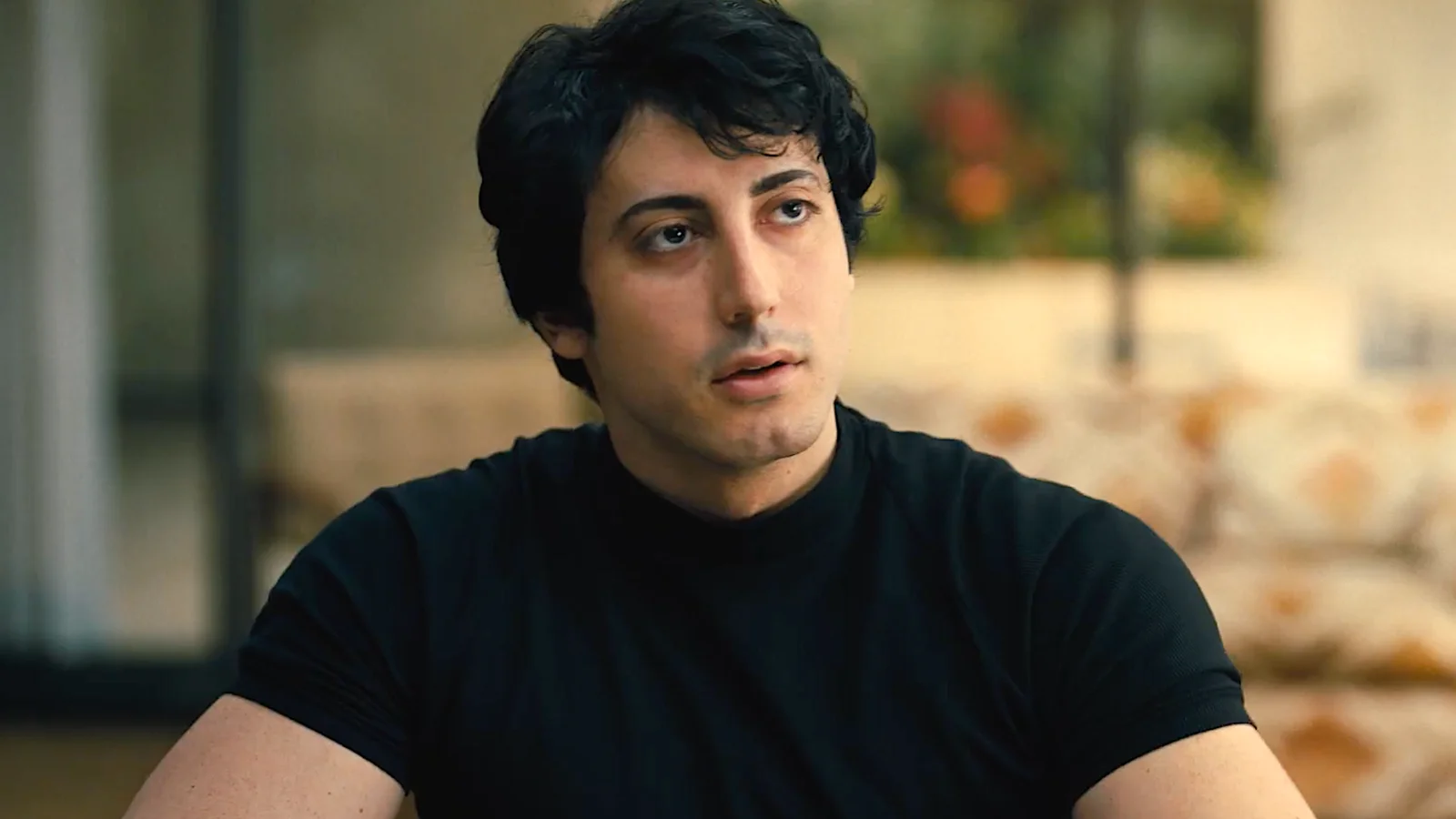
Anthony Ippolito makes that polishing easier to forgive. His Stallone initially seems perilously close to an impersonation, all low growl, heavy eyelids, crooked mouth, and physical bulk. Then something shifts. During the early auditions, when “Mike” Stallone is being considered for disposable roles like Thug #2, Ippolito finds the insecurity underneath the mannerisms.
Stallone understands how other people see him. The mumbling voice is funny to casting directors. His appearance suggests thug before leading man. His confidence therefore has an odd defensive quality, like a man announcing the verdict before anybody else can deliver one.
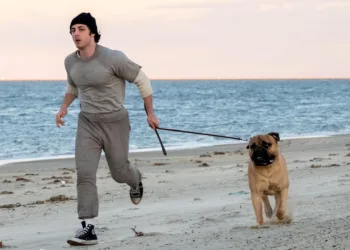
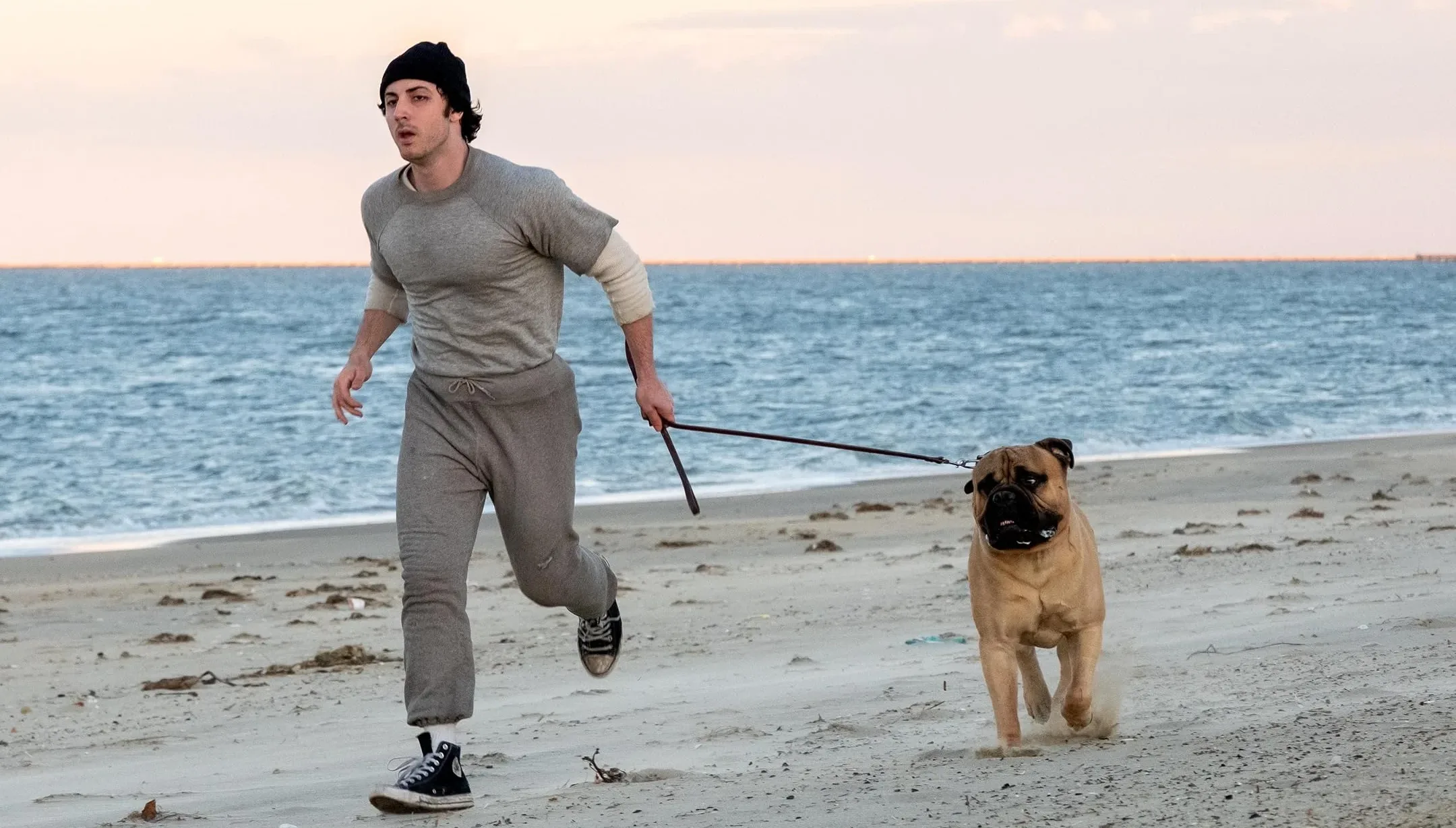
Farrelly and screenwriter Peter Gamble build the first half around that contradiction. Stallone is homeless for a period, takes whatever work he can find, adopts Butkus, and meets Sasha Czack while working at a movie theater. AnnaSophia Robb gives Sasha enough edge to keep her from becoming a ceremonial supportive partner. She types Stallone’s handwritten scripts, encourages his ambitions, and pushes him toward reclaiming Sylvester instead of hiding behind Mike.
The film clearly wants us to see Rocky Balboa forming before Stallone has invented him. There is the bruised masculinity, the tenderness toward animals, the social awkwardness, the working-class humiliation, the refusal to accept the category assigned to him. I initially resisted how neatly this machinery operates. Real lives rarely arrange their symbolism this politely. Then the negotiations begin, and neatness becomes the joke.
After producers Robert Chartoff and Irwin Winkler respond to Stallone’s writing, Rocky reaches the table. Everyone can see commercial possibility in the script. Nobody sensible wants its unknown writer in the lead. P.J. Byrne and Toby Kebbell play the producers as men discovering that enthusiasm has somehow become a hostage situation. Tracy Letts, as composite studio executive Sandy Maddox, gives institutional disbelief a human face and a much louder voice. The offers rise. Stallone keeps refusing.
This is where the movie’s central idea lands hardest. Stallone does not merely believe he can play Rocky. He behaves as though allowing somebody else to do it would falsify the entire project. The screenplay belongs to him because the character belongs to his experience. Selling one without the other becomes, in his mind, a kind of artistic amputation.
Call it biographical symmetry: the habit of arranging a famous person’s past so every hardship appears to have been secretly preparing the future. I Play Rocky indulges that habit constantly, yet the negotiations give it dramatic force because Stallone’s conviction has a price. He is not betting abstractly on himself. He is declining money he desperately needs. Once the production of Rocky begins, however, biographical symmetry starts turning into commemorative tourism.
John G. Avildsen arrives in the form of an energetic Jay Duplass. Stephan James gets an amusing entrance as Carl Weathers. The tiny budget, punishing schedule, boxing preparation, Philadelphia locations, frozen meat, ice rink, and emerging Steadicam technology offer Farrelly a rich collection of filmmaking stories. Some reveal how limitation shaped the finished movie. The Steadicam material, for example, connects technical necessity directly to an image that would become inseparable from Rocky. Others feel closer to watching a very expensive trivia night.
That distinction matters. Showing how a famous scene became possible can change our understanding of the scene. Recreating it because everybody recognizes it merely activates memory. Farrelly gradually relies on the latter. The closer I Play Rocky gets to the movie everyone came to celebrate, the less curious it becomes about Stallone himself.
One sequence resists that drift. During the filming of Rocky’s confrontation with Mickey, Avildsen feels the scene is failing. Stallone steps away, reworks the material, and returns with something fueled by personal anger. His difficult relationship with his father, played by Matt Dillon, suddenly stops functioning as biographical explanation and becomes creative process. Pain is converted into performance before us. For a moment, the film stops telling us Stallone poured himself into Rocky and actually shows what that might mean. It makes the surrounding simplifications harder to ignore.
Frank Stallone Sr.’s abuse, Sylvester’s insecurity, Sasha’s perception of his need to be seen, even the physical damage he accepts during production are all available as complications. Farrelly touches them, then moves forward. Sasha is especially revealing.
She matters enormously while Stallone is becoming the man capable of writing Rocky, then recedes as soon as the mythology of making Rocky takes control. The movie has found its legend, and ordinary human relationships suddenly occupy less screen space. Perhaps that is appropriate. Fame does strange things to perspective.
But I Play Rocky rarely seems interested in that possibility. Its Stallone is permitted doubt, pain, poverty, and humiliation so long as each can eventually be converted into evidence that he was right. The result is warm, funny, frequently entertaining, and emotionally efficient in the way Farrelly prefers. It also leaves surprisingly little friction inside its hero.
Ippolito keeps supplying some. Watch the stubbornness in those producer meetings, where confidence and desperation become almost indistinguishable. That ambiguity contains a tougher movie than the one Farrelly has made.
The strange achievement of I Play Rocky is that its central metaphor genuinely works. Stallone did resemble the character he created, and getting Rocky made carries the contours of an underdog story so perfect that embellishment almost feels unnecessary. Farrelly understands the pleasure of that coincidence. He trusts it so completely that eventually he stops looking behind it.
I Play Rocky had its world premiere at the Toronto International Film Festival on September 12, 2026. The biographical drama chronicles the struggles of a young, unknown Sylvester Stallone as he fights against impossible odds to get his screenplay made while refusing to let anyone else star in the lead role.
Where to Watch I Play Rocky (2026) Online
Full Credits
Title: I Play Rocky
Distributor: Amazon MGM Studios
Release date: September 12, 2026 (Toronto International Film Festival)
Running time: 2 hours 7 minutes (127 minutes)
Director: Peter Farrelly
Writers: Peter Gamble
Producers and Executive Producers: Toby Emmerich, Christian Baha, Peter Farrelly, Paul Currie, Michele Weiss
Cast: Anthony Ippolito, AnnaSophia Robb, Toby Kebbell, P.J. Byrne, Stephan James, Jay Duplass, Robert Morgan, Tracy Letts, Matt Dillon
Director of Photography (Cinematographer): Sean Porter
Editors: Sam Seig
Composer: Dave Palmer
The Review
I Play Rocky
I Play Rocky turns Sylvester Stallone’s fight to star in Rocky into its own underdog story, and the symmetry works because Anthony Ippolito gives stubbornness, insecurity, and desperation equal weight. Peter Farrelly is less interested in testing the legend than celebrating it, so the second half drifts toward affectionate reenactment. The movie remains funny, warm, and frequently effective, but its most interesting question lingers outside the victory lap: what happens when absolute self-belief stops being admirable and becomes something harder to examine?
PROS
- Anthony Ippolito’s convincing, layered Stallone
- Sharp negotiation scenes
- Strong Stallone-Rocky structural parallel
- Effective supporting comic performances
- Best production details reveal creative process
CONS
- Later scenes lean heavily on nostalgia
- Sasha recedes once production begins
- Stallone receives too little internal contradiction
- Some reenactments resemble expensive trivia
- Difficult relationships are often simplified