





















Fire Emblem has spent its last few major entries pulling in different directions. Three Houses put character relationships, faction politics, and life between battles at the front of the experience, sometimes at the expense of tactical momentum. Engage responded with some of the sharpest maps and combat systems the series had seen in years, even as its story struggled to carry the same weight.
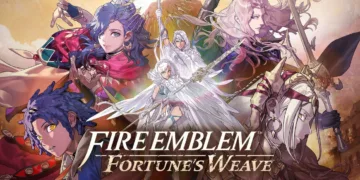
Fire Emblem: Fortune’s Weave feels like Intelligent Systems refusing to choose between those approaches. It wants the interlocking character drama of Three Houses, the mechanical discipline of Engage, some of Shadows of Valentia’s stranger experiments, and a campaign structure large enough to contain all of them. The surprising part is how often that works.
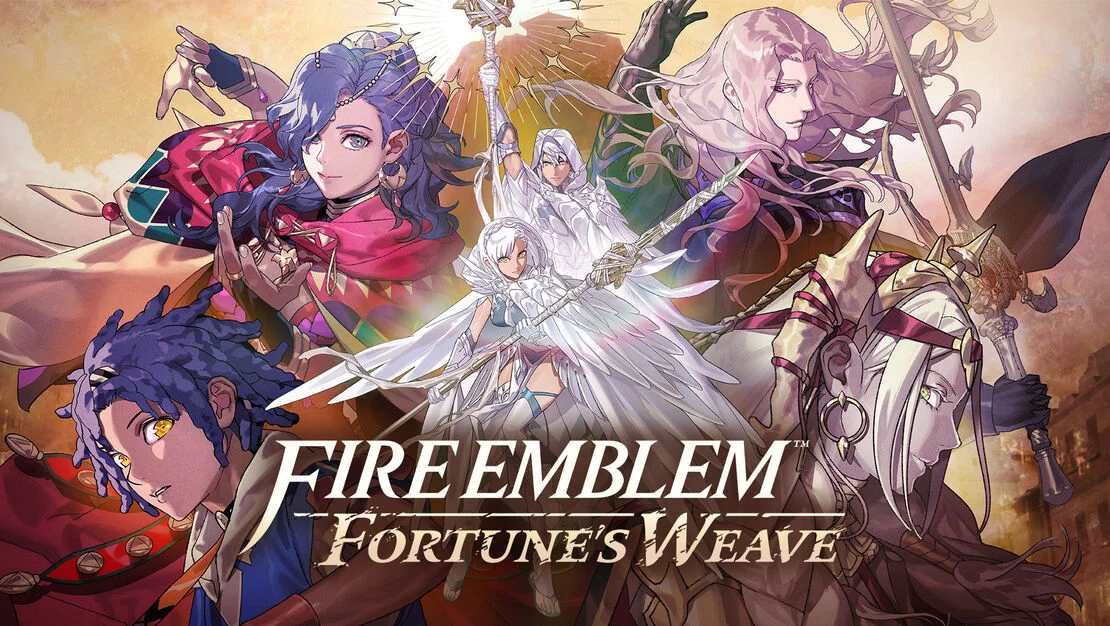
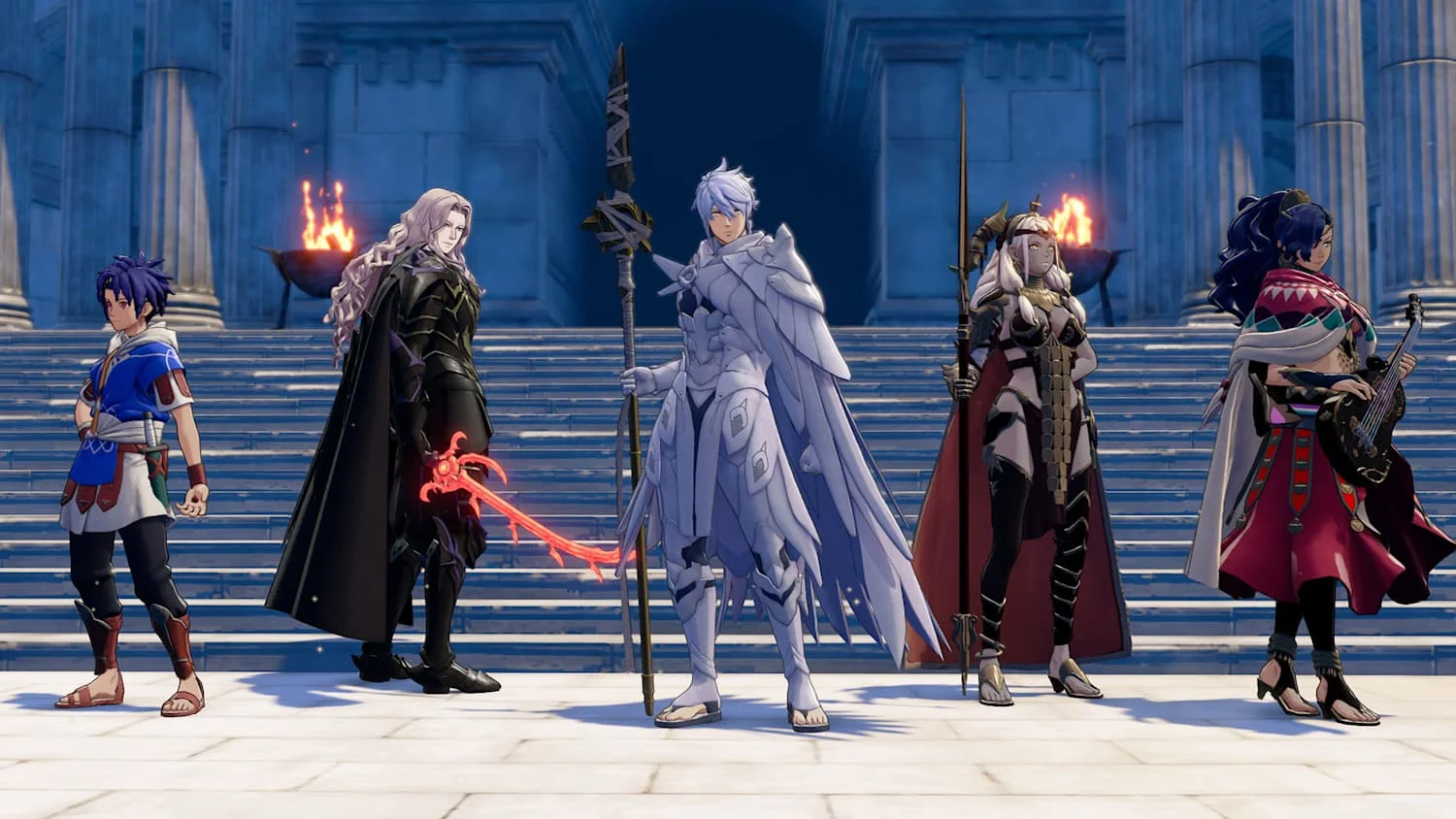
Fortune’s Weave frames its story around an undead apocalypse and then sends its customizable avatar, Eshmel, into the past. Guided by the goddess Fortuna, Eshmel needs four future heroes to survive the Heroic Games in Dagda: Cai, a village boy trying to save his father; Dietrich, a violent swordsman chasing worthy opponents; Theodora, a warrior queen carrying the concerns of her people; and Leda, a traveling performer pursuing revenge for her father’s murder.
Anyone coming from Three Houses will recognize the idea of multiple protagonist routes, but Fortune’s Weave restructures that formula almost completely. Three Houses made its factions share a substantial opening before separating them. Here, each hero begins with a distinct campaign that can be entered and left without permanently committing to one route. The stories run alongside each other, intersecting at key points while revealing different sides of the same conspiracy.
The single-save system initially sounds restrictive, yet it supports that structure surprisingly well. Completed chapters can be revisited using snapshots of the army that existed at that point, and changing one of those runs can alter what follows without wiping away everything completed later. It turns replaying a route into something closer to revising a timeline than restarting a campaign.
The same philosophy governs much of Fortune’s Weave. You can pursue recruits and side activities, move between hero stories, or leave entire stretches for another route. Later, sections of the war campaign can even be bypassed, with units adjusted so the story can continue. That freedom matters because Fortune’s Weave is enormous, and it usually lets the player decide how much of that enormity to absorb.
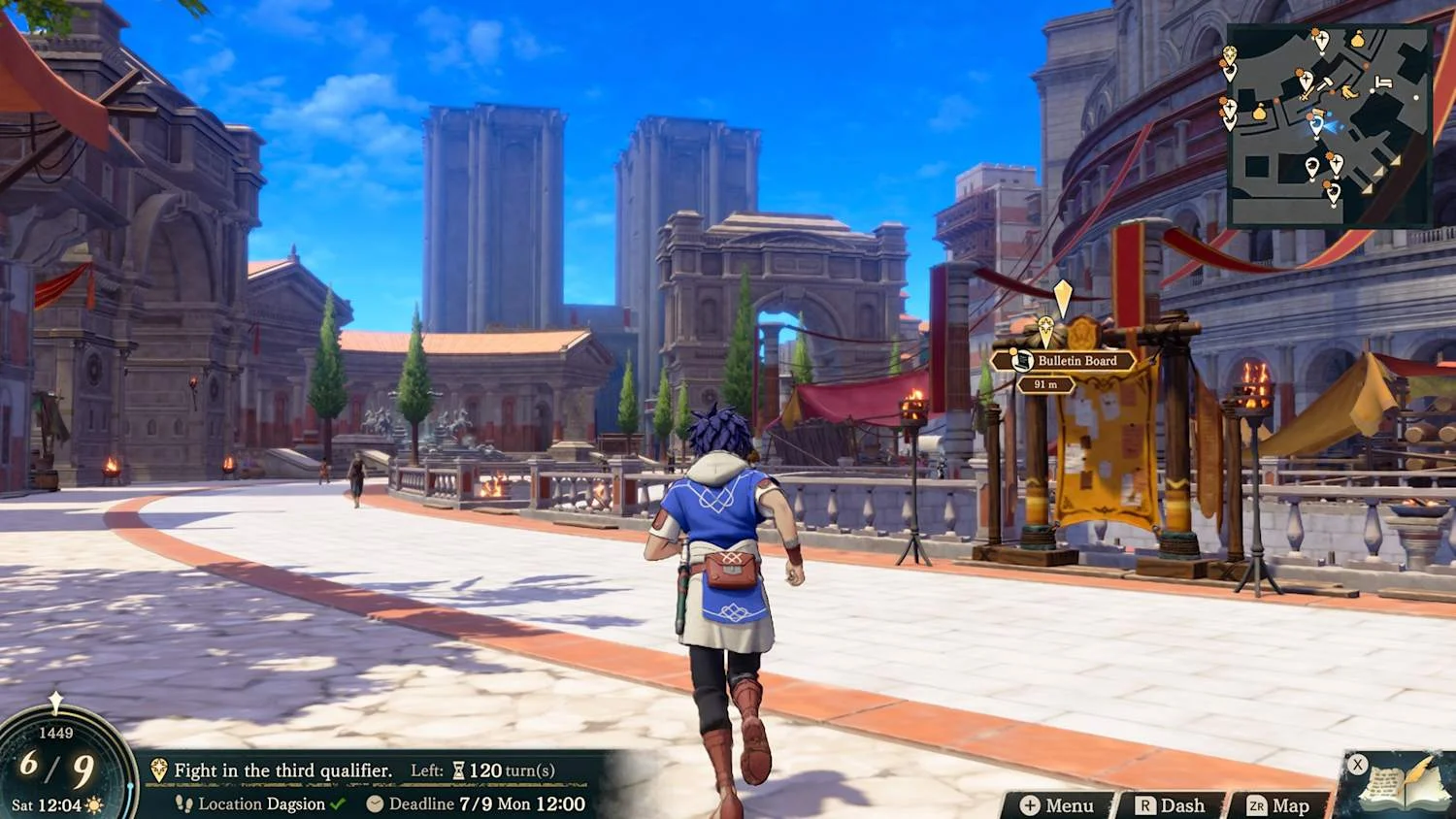
Between Heroic Games matches, Dagsion becomes a base for training, meals, recruitment, religious activities, and preparation. Outside the city sits a large world map where movement consumes time. Traveling toward a dungeon, settlement, resource node, or sidequest becomes a strategic decision because a detour for weapon materials may mean missing another weekly activity back in the capital. It recalls Three Houses’ calendar management, but gives those decisions a stronger geographical dimension.
Each protagonist changes what is valuable out there. Theodora can gather supplies and recruit battalions, Leda finds performance opportunities, and Cai can locate animals that become specialized mounts. Those activities feed into Renown, recruitment, combat preparation, or progression. Fortune’s Weave understands that a calendar becomes interesting when several good options compete for the same resource.
There is friction in that abundance. Menus are crowded, the overlapping systems can be exhausting during the early hours, and Dagsion does not always visually match the scale of the activity packed inside it. The game spends its opening stretch teaching another mechanic, currency, facility, relationship system, or map function every few minutes. It can feel as though Intelligent Systems looked at Three Houses’ monastery and decided the solution was to give every hallway three additional menus.
The tactical battles eventually justify much of that preparation. Engage set a high standard here, and Fortune’s Weave reaches it through a different kind of complexity. The traditional weapon triangle matters less than specific weapon properties, skills, unit roles, Combat Arts, and battlefield conditions. Combat Arts spend weapon durability for stronger actions, while Blaze Arts give major characters far stronger abilities at the cost of HP.
Blaze Arts leave their user easier to kill, and repeated activation builds a gauge that can temporarily increase effectiveness before eventually producing a penalty. The mechanic turns an emergency button into a resource-management problem. Spending HP to solve one side of the battlefield may simply move the danger somewhere else.
Fortune’s Weave is at its best when maps force those systems into conversation. One battle asks you to move under long-range pressure. Another overwhelms a defensive position with reinforcements until killing the commander becomes safer than trying to defeat the entire army. Escort missions can require civilians to cross a battlefield while a huge creature controls space with summoned attacks. Later maps split armies, punish static formations, introduce hazards, and demand careful movement.
One especially telling situation involves rare weapons capable of hurting undead enemies effectively. With too few for an entire squad, a magical blade can pass from one fighter to another across consecutive turns so several units can answer the same defensive problem. That is classic Fire Emblem thinking: limited resources, vulnerable units, and a map asking the player to improvise rather than solve an equation once.
The difficulty curve does not always make that sophistication visible soon enough. Normal mode can be extremely forgiving across the earlier hero routes, and free rewinds reduce the consequences of mistakes further. Blaze Arts, blessings, terrain bonuses, and specialized builds are less interesting when ordinary attacks already solve the problem. Hard difficulty puts greater pressure on those mechanics, while the later campaign pushes the player into larger battles where positioning, unit composition, and resource use finally become essential.
Persistent rewards earned across the save can provide experience bonuses, discounts, and other advantages that make later campaigns easier. That reduces repetition when starting another hero’s early missions after dozens of hours, but it can widen the gap between the quality of the combat systems and the resistance offered by the enemies.
The narrative creates a similar split between impressive construction and inconsistent delivery. Seeing the same political crisis from another hero’s position can substantially change what an earlier scene meant, and each campaign supplies another piece of the conspiracy beneath the Heroic Games. Leda’s revenge story carries particular dramatic weight, while Theodora, Cai, and Dietrich approach Dagda from different positions.
Eshmel remaining relatively distant during those campaigns is one of the smarter structural choices. Byleth dominated Three Houses partly because nearly every relationship eventually revolved around the player character. Fortune’s Weave lets its four heroes establish their own motives and relationships before Eshmel gains greater importance later. The writing supporting that structure is less consistent. The cast is huge, exposition accumulates quickly, and the mythology can become buried beneath terminology and repeated explanations. The route system is often cleverer than the dialogue carrying it.
Strong voice acting, expressive portraits, and major cinematics help carry those stretches, even when repeated conversation backdrops expose the limits of presentation.
That growth matters once Fortune’s Weave begins cashing in everything it has spent dozens of hours establishing. The world map stops feeling like a board used to collect resources and becomes part of a larger military problem. Characters gathered from different routes suddenly have reasons to occupy the same campaign. Systems that once seemed excessively generous start supporting battles large enough to use them.
Fire Emblem has tried pieces of this before. Three Houses connected daily life to war. Engage rebuilt the tactical side around expressive tools. Shadows of Valentia experimented with dungeon exploration and alternate combat spaces. Fortune’s Weave takes those separate ideas and asks them to survive inside one structure, even when that structure occasionally threatens to collapse under its own weight. Then another battle starts, your army divides across the map, an enemy reinforcement ruins the plan you had five minutes ago, and suddenly every strange little system you spent forty hours learning has a job.
The Review
Fire Emblem: Fortune’s Weave
Fire Emblem: Fortune’s Weave is Intelligent Systems at its most ambitious, combining the character-driven structure of Three Houses with tactical battles that can stand beside Engage’s best work. Its scale occasionally works against it, especially when forgiving early difficulty leaves powerful systems underused and dense exposition slows the story. Once its routes, armies, calendar decisions, and combat mechanics begin feeding the same larger campaign, those excesses start feeling purposeful. Few Fire Emblem games have offered this much freedom without losing the strategic identity that made the series endure.
PROS
- Excellent late-game tactical battles
- Four routes meaningfully intersect
- Deep, flexible progression systems
- World-map planning rewards smart choices
- Strong voice acting and presentation
CONS
- Normal difficulty is too forgiving
- Early hours overwhelm with systems
- Exposition can bury the stronger character work
- Crowded menus make management cumbersome