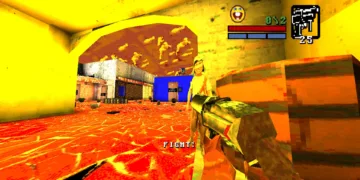




























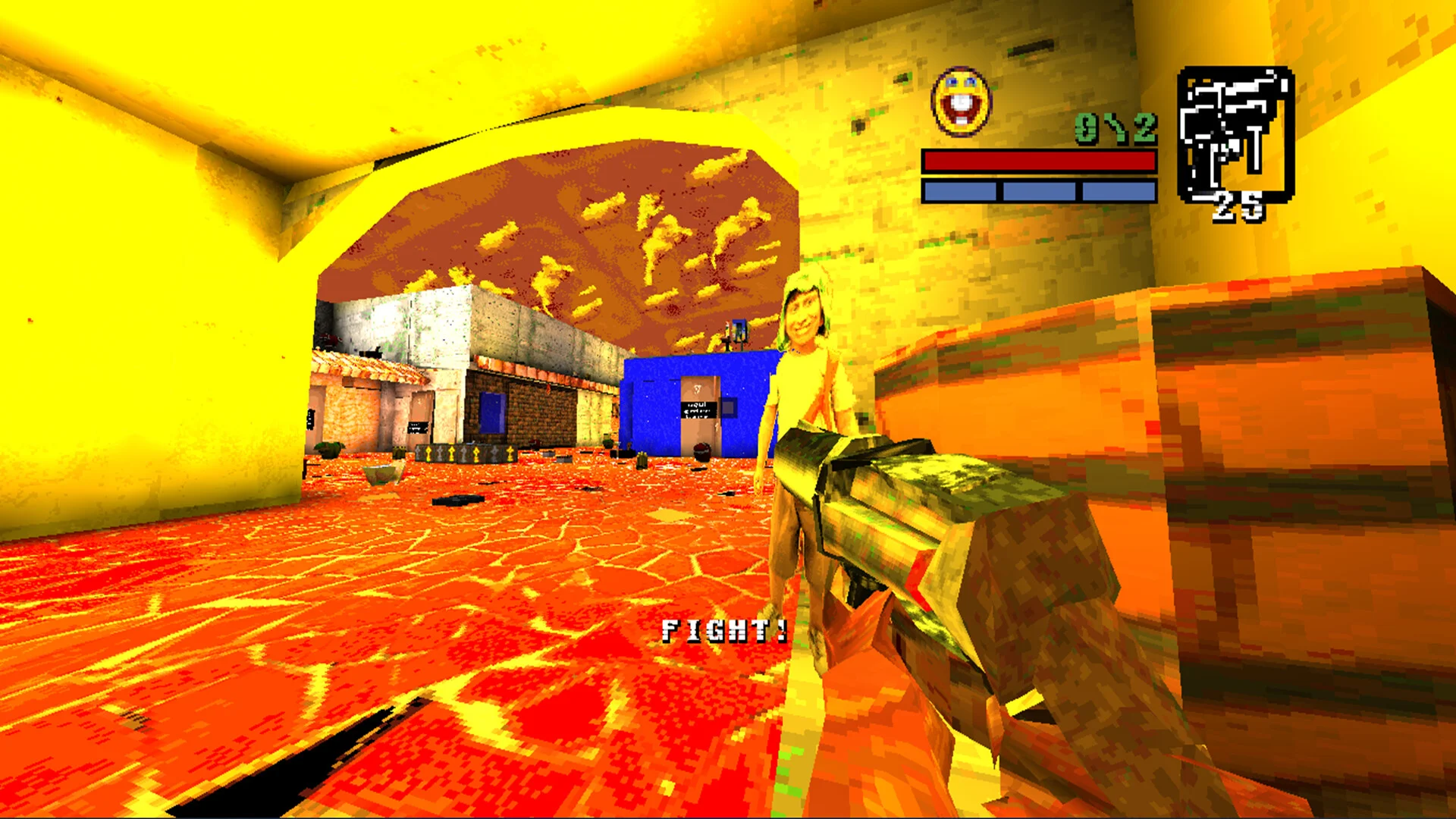

Da Silva can double jump now, and his dash makes an old-fashioned key hunt feel a little less confined. A ledge that might have been scenery becomes a possible hiding place for a secret; an arena full of gunfire offers routes above and around the crowd. Both abilities are available early, and their shared charges replenish quickly enough to keep him moving. BRAZILIAN DRUG DEALER BEFORE 4 still asks players to find silver and gold keys, as its predecessor did. The difference is how many unlikely places Da Silva can check on the way.
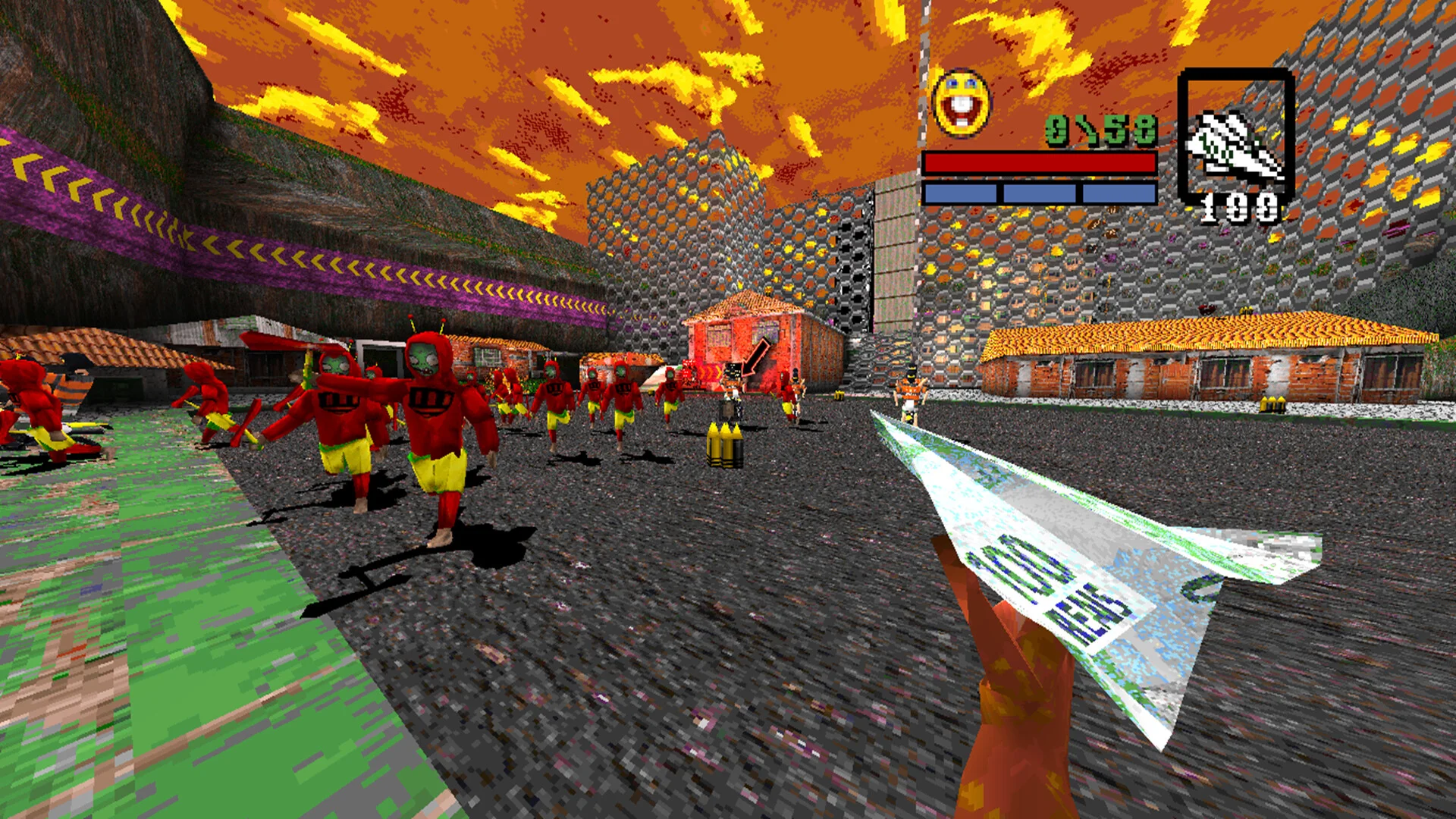
That freedom matters most when the game fills a space with enemies. A brick-bodied brute demands room to retreat, while two attackers riding a dirt bike can keep firing as Da Silva tries to reposition. Dashing helps him break away, but circle strafing remains useful, and the shooting retains the rapid, crowded feel of its Quake lineage. The sequel has added movement to that formula rather than rebuilt combat around it. It also hands out health in the form of pastel and sugarcane juice generously enough that a messy encounter rarely becomes a long setback.
Anyone returning from Brazilian Drug Dealer 3 will recognize the circumstances. Da Silva’s attempt to revive Mit Aia opened a portal to hell, and demons remain loose after his previous effort to contain them. Ronaldo McDalest takes advantage of the trouble and kidnaps the Mamadas group.
The sequel gives Da Silva another reason to shoot his way across Brazil, though its increasingly elaborate plot is less revealing than its choice of weapons. A sandal serves at close range, chimarrão becomes a flamethrower, and a miniature payphone fires projectiles. Beneath those disguises are familiar shooter functions. The pleasure lies partly in discovering what a ridiculous object does when Da Silva pulls the trigger.
That balance between recognition and surprise is where the series comparison becomes useful. Before 4 retains the id Tech 2 foundation and much of the weapon and enemy logic of 3. Its additions make the moment-to-moment play smoother and give the levels greater vertical reach, but the routes through those levels remain mostly linear. Keys come from defeating enemies or solving simple puzzles; signs and arrows help point toward the next objective. Even water can function as a way to climb. The game is willing to make a navigational shortcut look absurd if it keeps Da Silva moving.
The added mobility exposes a weakness in that approach. Reaching a secret with a well-judged double jump is satisfying because the player has spotted a route beyond the obvious one. Required first-person platforming can be less satisfying when a missed landing causes a death in a game whose shooting is considerably easier to read. Physical quicksave terminals placed within the levels provide a practical answer. They also fit the game’s sense of humor, turning an ordinary save command into another unlikely object Da Silva can walk up to and press.
Joeveno occasionally finds room for a stranger departure. After a prolonged enemy onslaught, one level shifts into a Tony Hawk-inspired sequence, complete with awkward controls. It is a brief reminder that the game’s old engine need not dictate every idea built inside it. Most of the campaign sticks closer to the key-and-combat pattern, so that detour stands out. For returning players, it may also prompt a fair question about how many other levels could have taken a comparable risk.
Visually, Before 4 has a much firmer grasp of its deliberately crude style than the word “bootleg” alone suggests. Compressed images, low-poly figures, warped textures, and a cutout HUD resembling an early Grand Theft Auto interface crowd the screen.
Portuguese signs, altered brands, and parodied personalities give the clutter a particular setting. A player unfamiliar with the references will miss some jokes, yet the game still communicates its taste for mismatched images and badly fitted objects. It even offers visual settings that let players adjust how jagged the presentation appears.
The style has a practical limit. During larger fights, dense effects and enemy silhouettes can compete for attention just when the player needs to identify a target. The soundtrack’s pounding electronic loops suit the speed of the action, while processed voices, gunfire, and unevenly loud effects can make an extended session tiring.
The Review
BRAZILIAN DRUG DEALER BEFORE 4
Verdict: BRAZILIAN DRUG DEALER BEFORE 4 gives returning players a quicker, more mobile version of the shooter they know. The double jump and dash make secrets rewarding to find, while the improbable weapons and visual clutter give the familiar Quake-like structure its character. Required platforming can frustrate, and crowded fights sometimes obscure their targets. The Tony Hawk-inspired detour hints at how far this sequel could have pushed its ideas.
PROS
- Fast, useful new movement abilities
- Inventive weapons and distinctive visual style
- - Secrets reward exploration
CONS
- Required platforming can frustrate
- Busy fights reduce visual clarity
- - Few levels depart from the familiar structure