
























Verity Crawford’s publishers have a practical problem. Their bestselling author has survived a car accident but appears unable to speak, move, or finish her series. The books still need writing. They recruit Lowen Ashleigh, a novelist with considerably less success, to supply the missing work under an established name. The arrangement preserves Verity’s commercial identity while making her actual participation unnecessary. Publishing has found a solution. The person remains a complication.
Lowen’s barely attended bookstore reading and Verity’s appearances with Gayle King, Sean Evans, and Alex Cooper establish the distance between them. One woman has an audience; the other has mostly the prospect of one. Those celebrity interviews make Verity’s authorship a public performance, something recognizable beyond the sentences she writes. Lowen is being paid to reproduce that recognition. Given her financial circumstances, reservations about the work’s literary worth are a luxury she can briefly express before accepting the money.
Michael Showalter’s Verity, adapted by Nick Antosca from Colleen Hoover’s novel, carries this professional substitution into a household. Lowen stays in the Crawfords’ snowy lakeside home to study Verity’s materials. There she encounters the author’s husband Jeremy, their surviving son, and the silent woman whose career she will help maintain. Research becomes an unusually intimate activity. So does the temptation to extend her assignment.
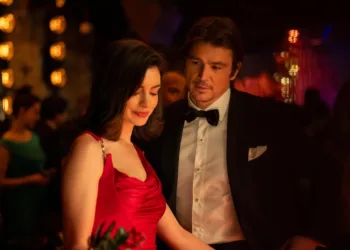
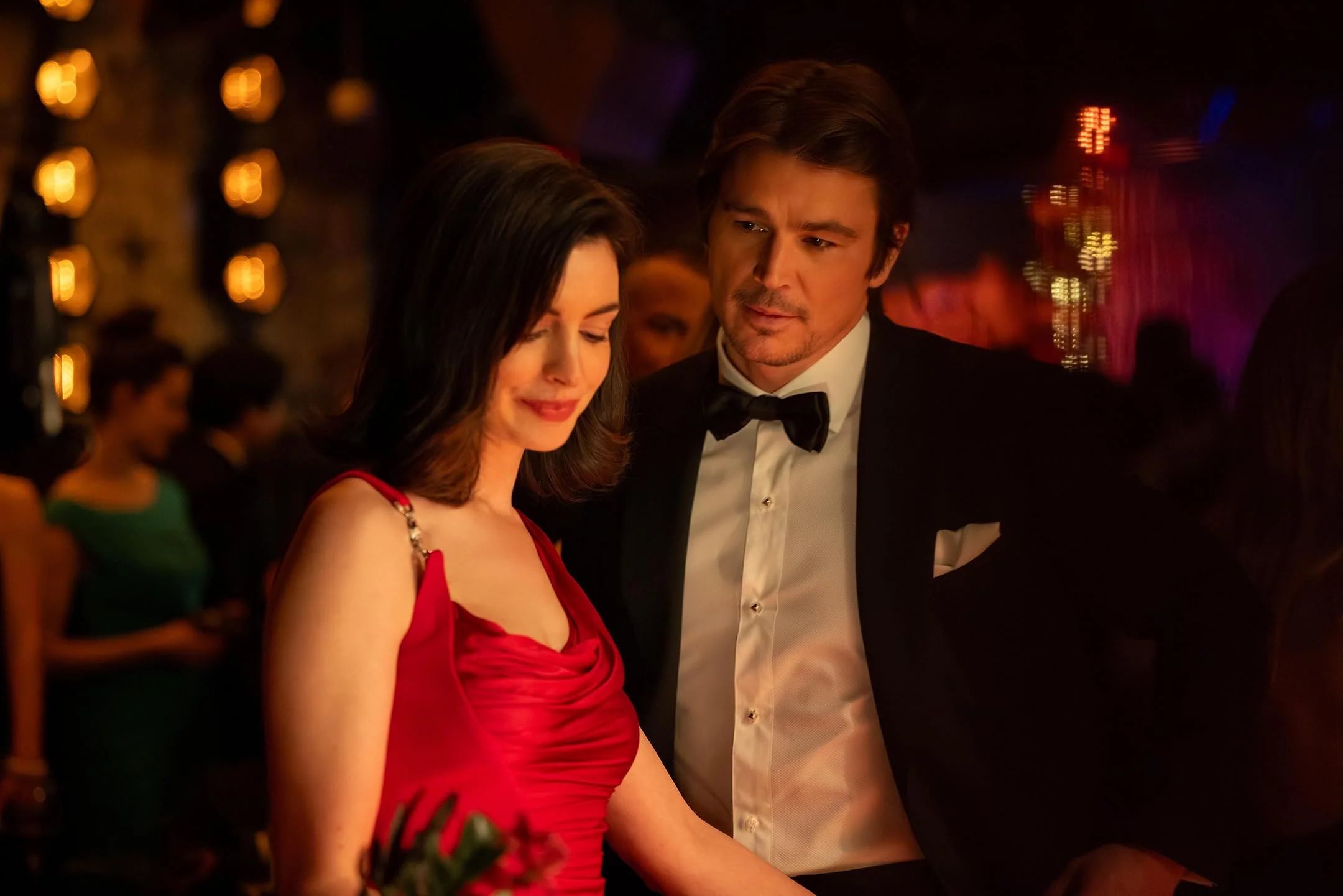
Jeremy has already earned some trust. Their first encounter involves a gruesome street accident that leaves Lowen splattered with blood; he offers his white shirt so she can make her appointment. Josh Hartnett gives that practical kindness enough weight to survive the suspicious circumstances around it. His appeal comes partly from behaving like someone capable of attending to another person’s immediate needs. In a film crowded with ominous possibilities, a clean shirt constitutes a surprisingly persuasive character reference.
The unpublished autobiographical manuscript Lowen discovers changes the meaning of her stay. Its account of Verity’s resentment toward motherhood, including purported attempts to harm her children as infants, supplies a frightening explanation for the family she has entered. Harper’s death by drowning gives those allegations an especially painful setting.
Lowen’s attraction to Jeremy now develops alongside information that could make attraction feel morally defensible. Wanting another woman’s life becomes easier to accommodate if that woman can be understood as having forfeited it. My first impulse was to read Lowen’s concern as desire acquiring an ethical alibi.
That diagnosis is too convenient. The manuscript contains claims that would alarm anyone, and Lowen’s warmth toward the surviving child gives her concern a human basis. Her own recent loss of her mother also permits an attachment to the family’s grief, though the script gives that loss little development. To dismiss her response as disguised envy would repeat the mistake the film keeps encouraging: selecting an explanation because it tidies up a troublesome person. Lowen can care about the child and want Jeremy. The difficulty lies in how each feeling helps the other become acceptable.

Dakota Johnson’s reserve is useful here. Lowen’s quiet delivery and watchful reactions leave room for competing motives without announcing their proportions. She can seem moved by what she discovers while remaining difficult to trust. Moments spent reclining and vaping rather than writing also puncture the respectable explanation for her presence. The professional visitor has become comfortable in someone else’s house. Johnson makes that comfort legible, though her subdued register sometimes leaves the mounting pressure less visible than the situation needs.
Anne Hathaway supplies the opposite problem: an abundance of expression attached to a woman who presently offers almost none. Her emphatic manuscript narration and animated flashback performance give Verity a forceful inner life, while cuts to her fixed stare leave the viewer searching for traces of it. The theatrical delivery can be entertainingly excessive. It also makes the account feel authored, shaped for an effect, at the very moment we are being invited to accept it as disclosure.
The flashbacks complicate that invitation. Hearing an allegation is one experience; watching it dramatized gives it the apparent solidity of an event. Verity repeatedly lets an account occupy the screen as history. The distinction remains intellectually available, but the images do much of their work before a viewer has reason to question them. Hathaway’s performance generates productive uncertainty about Verity’s self-presentation. The film’s method is less cautious about the authority it lends her words.
Showalter handles the developing attraction with greater patience than the horror. The house’s angular forms against the surrounding snow create a striking setting, yet its immaculate surfaces often feel insulated from the emotional disorder inside. Dark strings and sudden suggestions of Verity’s movement deliver jolts; they do less to make her presence a sustained pressure on Lowen and Jeremy. Cuts back to the apparently unresponsive woman sometimes produce a grimly comic interruption. The romance has an inconvenient witness, and the movie keeps checking on her.
That intermittent menace contributes to the uneven pace. Reading, flashbacks, and romantic proximity occupy much of the earlier stretch, with the film circling the same dangerous invitation before its later revelations accelerate matters. There is pleasure in watching these actors sustain the melodrama. Hartnett’s warmth and Hathaway’s extravagance give Johnson something substantial to react against. But the shifts into threat frequently interrupt the seduction instead of changing its temperature.
The later reversals ask us to reconsider what we have accepted. That ambition fits a story about writers and their capacity to manufacture believable selves. Its weakness is prepared earlier, in the film’s readiness to give the manuscript visual authority while withholding grounds for testing it.
Revising a judgment can be unsettling; discovering that the available evidence was arranged chiefly to demand another revision can become tiresome. Verity has enough acting intelligence to make its people intermittently persuasive, but its handling of information keeps pushing them back toward the requirements of the next reveal.
Lowen’s commission requires her to become familiar with Verity’s voice, and that familiarity encourages a much larger confidence. Reading someone closely begins to feel like knowing them. The household gives that belief practical consequences: there is a child to care for, a husband offering affection, and an author whose silence leaves interpretation largely in other people’s hands. Whatever certainty the plot briefly supplies, Lowen’s care and desire have already begun making decisions together.
Verity arrives in theaters in the United States on October 2, 2026, distributed by Amazon MGM Studios. The psychological thriller follows a struggling writer hired to complete a bestselling author’s book series, only to uncover a chilling manuscript containing disturbing truths about the family.
Where to Watch Verity (2026) Online
Full Credits
Title: Verity
Distributor: Amazon MGM Studios, Sony Pictures Releasing International
Release date: October 2, 2026 (United States)
Rating: 15A
Running time: 1 hour 45 minutes (105 minutes)
Director: Michael Showalter
Writers: Nick Antosca
Producers and Executive Producers: Alex Hedlund, Stacey Sher, Michael Showalter, Jordana Mollick
Cast: Anne Hathaway, Dakota Johnson, Josh Hartnett, Ismael Cruz Córdova, Brady Wagner, Irina Dvorovenko, K. K. Moggie, Michael Abbott Jr.
Director of Photography (Cinematographer): Guillermo Garza
Editors: Alan Baumgarten
Composer: Volker Bertelmann
The Review
Verity
Verity finds a sharp moral problem in a ghostwriter’s expanding role: understanding someone’s voice can encourage dangerous confidence about their character. Johnson’s guarded reactions, Hathaway’s theatrical narration, and Hartnett’s warmth make that uncertainty entertaining. I found Lowen’s competing motives persuasive; the machinery surrounding them earns less trust. Intermittent scares and uneven pacing weaken the atmosphere, while later reversals depend heavily on controlling information. The cast sustains a melodrama whose questions are stronger than its answers.
PROS
- Lowen’s care and desire create genuine moral tension.
- Hathaway’s narration complicates Verity’s apparent silence.
- Hartnett gives Jeremy’s kindness persuasive weight.
- The ghostwriting premise supports thoughtful questions about identity.
CONS
- Reading and flashbacks slow the earlier stretch.
- Sudden scares fail to sustain dread.
- Later reversals expose the story’s manipulation of evidence.