

























![Kingdom Hearts Collection [I-III] Review](https://gazettely.com/wp-content/uploads/2026/10/Kingdom-Hearts-Collection-I-III-1-360x180.webp "Kingdom Hearts Collection [I-III] Review: KHII Holds Steady as Newer Entries Fluctuate 40")
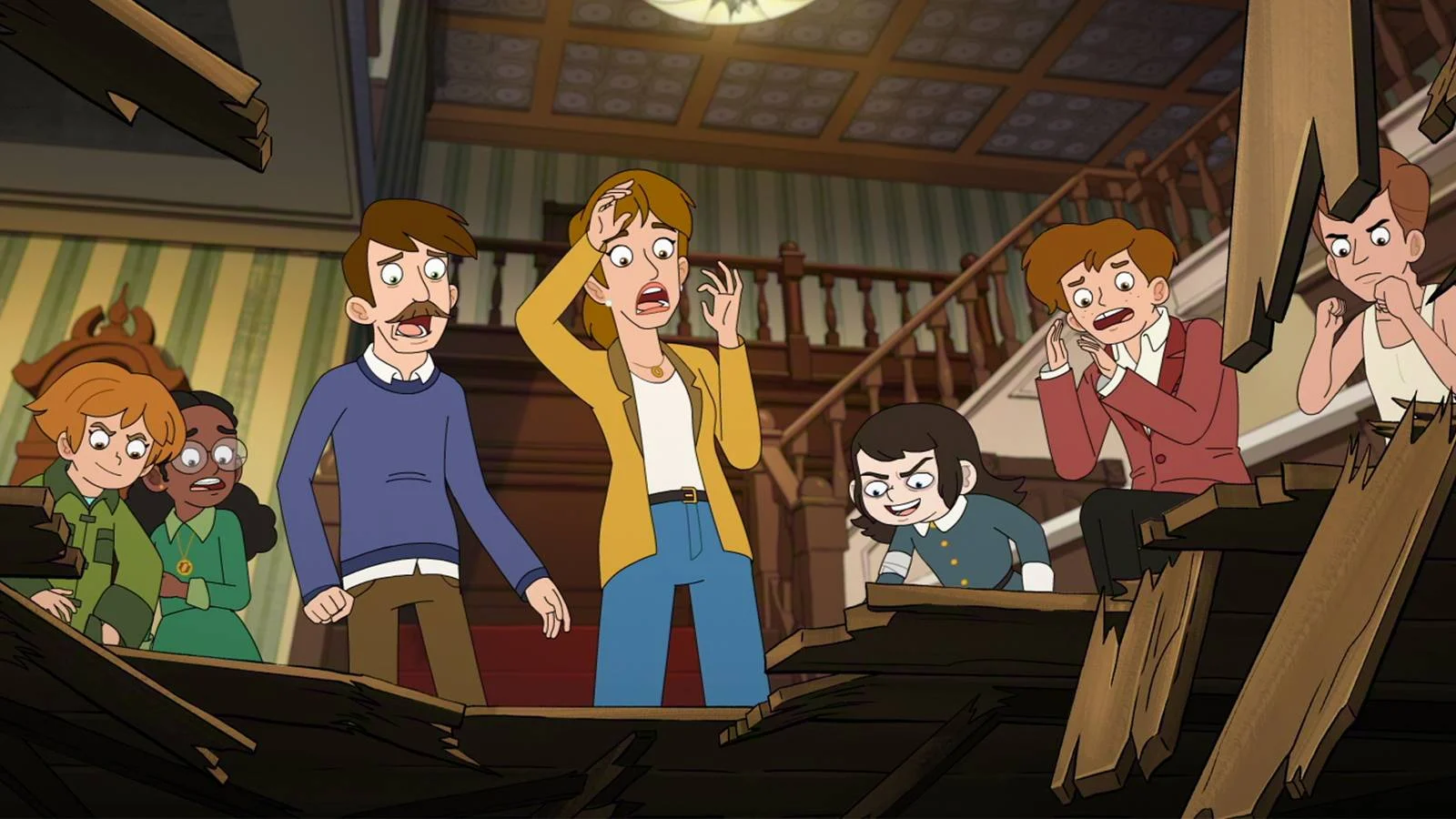

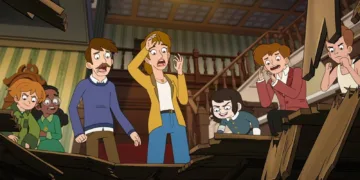
Katherine recruits supernatural concierge arms to help run the Undervale, and the arrangement works until Ben gets hurt. Her staffing solution becomes a parental failure. Haunted Hotel’s second season finds uncomfortable comedy in that transfer of responsibility: the same assistance that makes a mother’s workload bearable can endanger someone depending on her.
Katherine, voiced by Eliza Coupe, has a hotel to manage and children to raise, with supernatural disasters competing for her attention. The episode allows her exhaustion to explain the appeal of a shortcut while keeping the harm to her son visible.
Abaddon makes the household’s demands ridiculous in a different register. A demon lodged in a Victorian boy’s body, he turns the absence of mac and cheese into an emergency befitting his supernatural importance. Jimmi Simpson delivers these demands with such composure that entitlement acquires the sound of reason.
His power comes with the expectations of a child awaiting dinner. Katherine’s affectionate bond with him gives this arrangement warmth, though affection hardly reduces the work involved. The family’s capacity to accommodate difficult creatures supplies many of the jokes; it also exposes how much those creatures require from everyone around them.
That dependence extends beyond the hotel in Episode 3, “The Witch.” A forced meal of soup becomes a medical problem when Ben suffers an allergic reaction, sending the family’s encounter with a witch into an emergency-room detour. The witch needs treatment for a cough herself. Her command of the situation collapses under the practical demands of having a body.
Captor and captives become people requiring care, an indignity the episode makes wonderfully funny. The escalation works because the medical interruption changes their relationship. A figure who could impose terror now has needs that someone else must attend to.
Episode 6, “Dante Crowe,” tests another form of supernatural authority. Crowe arrives in a black Chevy Impala with the seriousness of a man accustomed to saving the world. His resemblance to the heroic types of Supernatural is easy to recognize, but the useful joke lies in what happens to the regular cast around him.
Katherine and her family become supporting participants in somebody else’s grand adventure, bewildered by the scale and self-importance of his actions. The Undervale usually measures trouble through the people who must live with it. Crowe imports a heroic perspective that leaves them watching their own surroundings become his stage.
Titmouse’s animation keeps these jokes from making danger weightless. During a tunnel chase, Esther and Abaddon continue bickering while the movement gives their escape urgency. Their familiar quarrel survives inside a genuinely threatening situation.
Purple ooze spreading through the building and bloody vines overtaking the woods give the supernatural disturbances a physical presence beyond their comic function. The household may respond to horrors with impatience or petty argument, but the animation allows those horrors to occupy space and threaten bodies. Domestic familiarity has taught these characters how to complain under pressure.
Nathan’s buoyancy raises a harder question about familiar behavior. Having learned in the first season that he died by suicide, he remains cheerful without finding peace in that knowledge. His resistance to opening up at a ghost support group exposes the distance between participating socially and making his distress available to others. Will Forte’s warmth matters here.
Nathan’s enthusiasm remains pleasurable company, which makes it easy to accept as evidence that he is doing well. The writing asks the audience to notice what that sociability leaves unspoken, without reducing every happy response to a disguise.
The night when the ghosts can leave the hotel grounds gives that distinction particularly fine expression. Nathan delights in standing in a grocery line, an ordinary inconvenience transformed into the privilege of participating in life outside his confinement. His encounter with Bridget, a lighthouse ghost voiced by Zooey Deschanel, gives that pleasure a possible future: companionship beyond the household where he already knows his place. Forte moves between excitement and fear without making either cancel the other. Nathan can enjoy the encounter and still struggle with what it asks him to imagine. His loneliness becomes perceptible through the experiences he wants.
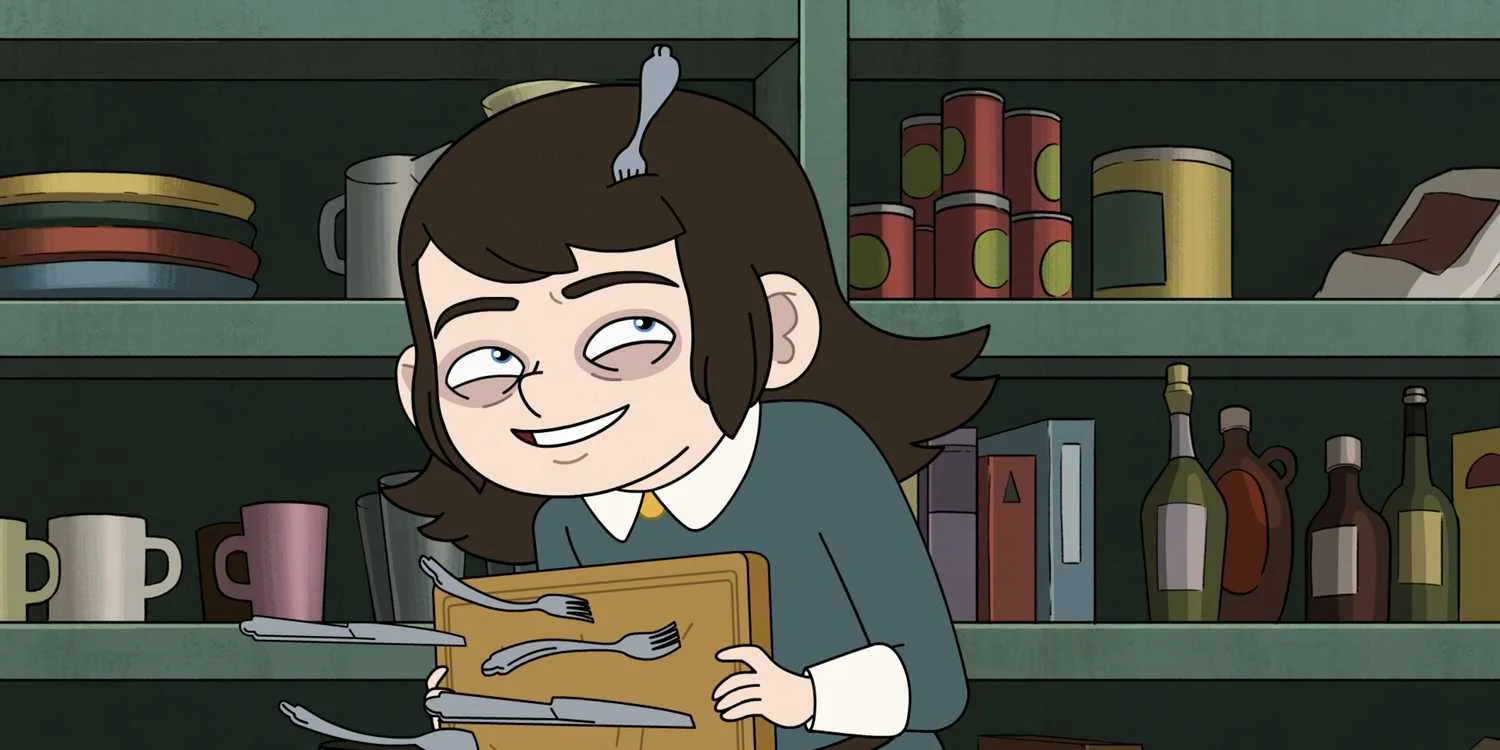
Elsewhere, Nathan attempts to rescue boys from hungry mermaids and sinks through the water. The visual gag exposes a physical limitation his eagerness has failed to consider; wanting to help cannot give him the necessary body. His emotional predicament has a related obstacle.
Resolving his unfinished business could require leaving the family he loves. The familiar language of “moving on” carries a promise of relief, yet the show’s supernatural rules attach separation to that promise. Nathan’s reluctance has a cost, but departure cannot be treated as uncomplicated success when belonging is precisely what he has struggled to find.
The season is less attentive to the possibilities introduced by Shayna, the living squatter in the attic who was mistaken for a ghost. Her departure allows an ancient evil to enter the hotel, making her presence consequential before the family even considers her personality.
Natalie Morales supplies a dry counterweight to Nathan’s enthusiasm and Esther’s appetite for the occult. Yet Shayna’s intermittent appearances leave that arrangement insufficiently developed. Keeping her on the property matters enormously to the hotel; the writing gives less sustained attention to what being tethered there means for her. Nathan receives the emotional inquiry that this new form of confinement also invites.
With eight episodes against the first season’s ten, the return is shorter, though its finale earns the decision to look backward. “The Visit” revisits Nathan establishing the Undervale, changing the meaning of the building the family now inhabits. Renovation alongside ghosts initially gives the montage the pleasure of shared activity. As time passes and visitors fail to arrive, including Katherine and her children, the same project becomes a record of isolation. The hotel’s existence proves how much Nathan did to make room for company. It cannot prove that company would come.
The brief ambulance imagery gives that accumulated absence a terrible weight without supplying a complete explanation for Nathan’s death. Katherine’s failure to visit belongs to the history of his loneliness, but the episode’s emotional force need not become an accusation that she could have known everything he concealed.
When brother and sister express their happiness at having each other, the simplicity of the exchange draws its strength from the montage. Katherine is present in the building where Nathan once waited for her. Their affection answers that particular absence while leaving his need for connection ongoing.
Haunted Hotel Season 2 premiered on Netflix on October 9, 2026. The animated horror-comedy series returns to follow a single mother and her two children as they manage a ghostly hotel inherited from their deceased uncle while contending with chaotic spectral guests and resident demons.
Where to Watch Haunted Hotel Season 2 Online


Full Credits
Title: Haunted Hotel Season 2
Distributor: Netflix
Release date: October 9, 2026
Rating: TV-MA
Running time: 25–30 minutes per episode
Director: Erica Hayes
Writers: Matt Roller
Producers and Executive Producers: Matt Roller, Dan Harmon, Chris McKenna, Steve Levy
Cast: Will Forte, Eliza Coupe, Skyler Gisondo, Natalie Palamides, Jimmi Simpson
The Review
Haunted Hotel Season 2
Haunted Hotel Season 2 finds sharp comedy in the demands that survive supernatural power. Its witches need treatment, its demon needs dinner, and Nathan needs company that cheerfulness cannot secure. Will Forte gives that last need emotional precision, while the finale turns the Undervale’s history into a painful account of waiting for others. Shayna’s intermittent development leaves the expanded household uneven, but Nathan’s story sustains a thoughtful challenge to the comforting promise of moving on.
PROS
- Comedy grounded in caregiving and dependence.
- Forte’s sensitive handling of Nathan’s enthusiasm and distress.
- Animation preserves danger amid domestic bickering.
- A finale that deepens the hotel’s emotional significance.
CONS
- Shayna’s stop-start integration into the ensemble.
- Limited exploration of what confinement means for Shayna.