




















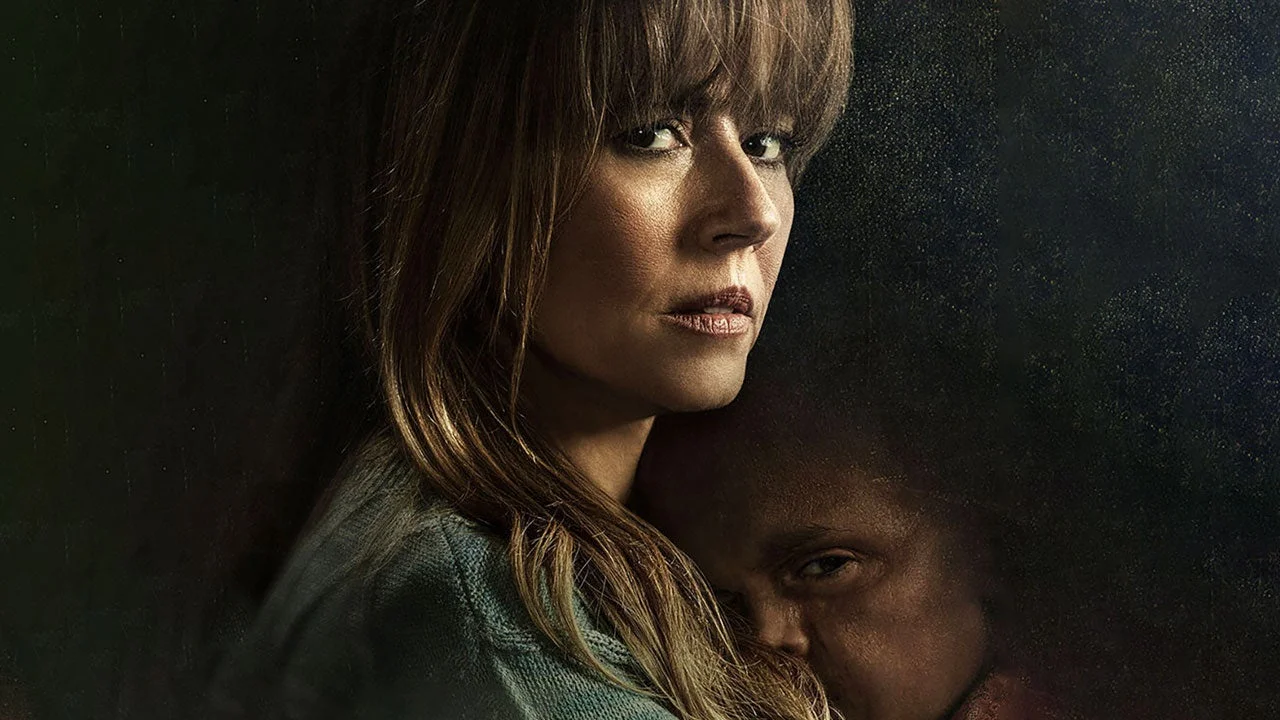

Pamela Voorhees buys her son a machete as part of a mail-order camping kit, and the tent never stood a chance of getting our attention. In Crystal Lake, this is an affectionate purchase for a boy who wants to enjoy the outdoors. For anyone familiar with Friday the 13th, the packing list contains a career forecast. The scene gets an uneasy laugh from letting Pam remain a loving mother while the audience supplies the horrible future. Nobody needs to wink. The blade has representation.
That recognition becomes less comfortable once Jason is allowed to be an ordinary eleven-year-old. Callum Vinson gives him enthusiasm and a friendship with fellow outcast Grace, while Linda Cardellini’s Pam tries to protect him from the cruelty of other children. The camping kit belongs to that effort. Then Jason drowns while counselors Claudette and Barry are occupied with each other. A familiar piece of franchise history acquires the weight of a child whose pleasure we have just watched. The joke catches in the throat.
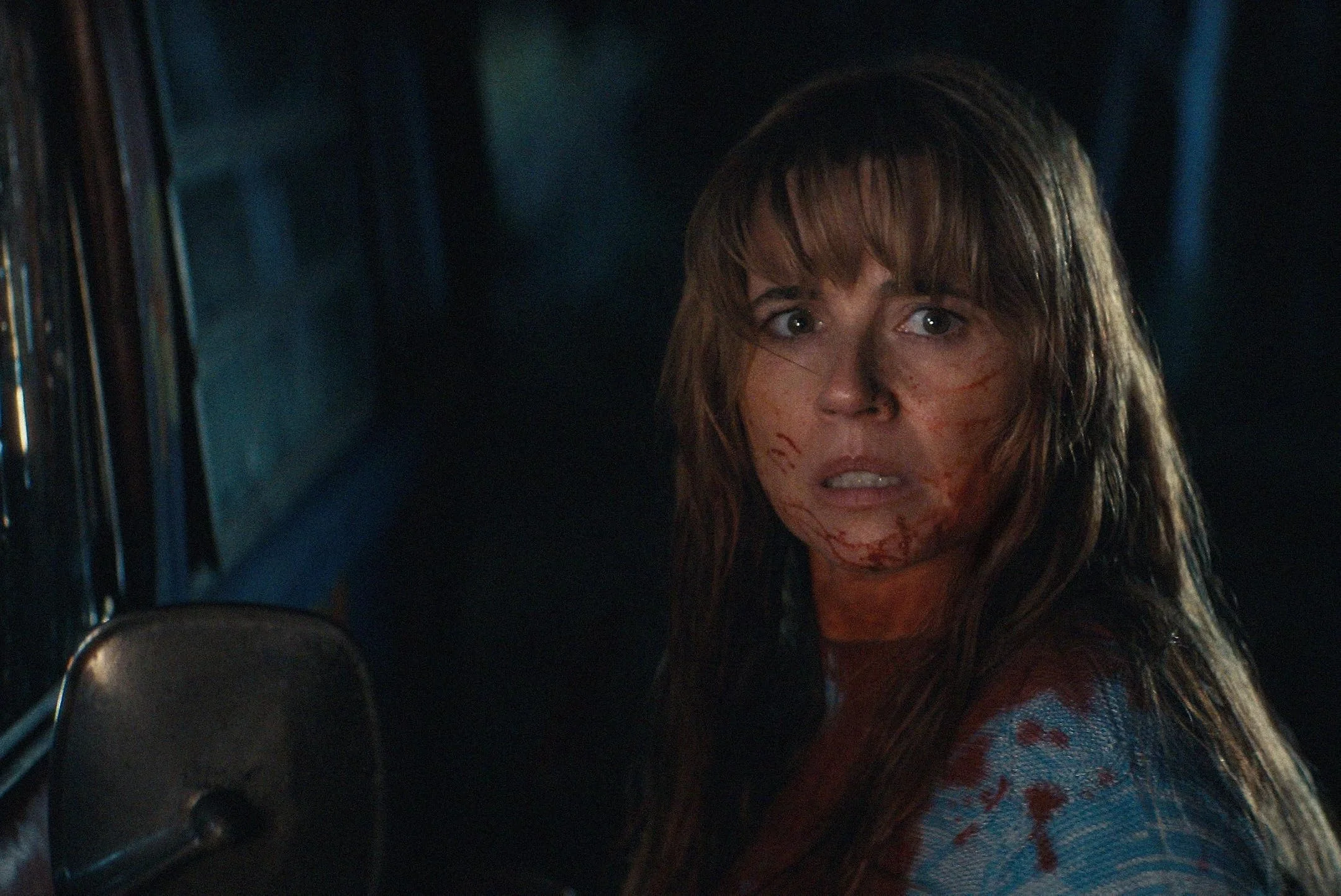
Brad Caleb Kane’s eight-episode series relocates the Voorhees story to the early 1970s and gives Pam the lead. After the drowning, her son’s unrecovered body keeps loss suspended between bereavement and desperate possibility. She returns to the lake, resisting the town’s efforts to bring her back into ordinary life. The pilot also provides a ferocious fight that swings between frightening violence and grotesque comedy. That combination promises a show capable of making us care about Pam and recoil from her within the same hour. Sustaining it proves harder than establishing it.
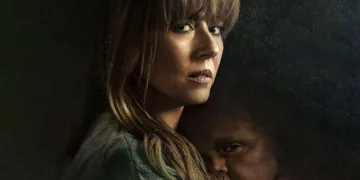
Cardellini gives Pam’s grief a stubborn, obstructive force. Her visits to the water make mourning an activity, something she continues doing while other people propose recovery. In the scenes with Jason, protecting him gives her behavior a clear purpose; after his death, the same intensity has nowhere safe to go. Cardellini carries the tenderness into the anger, so Pam’s violence feels connected to the woman we met rather than delivered by a replacement character. The performance keeps that connection alive even when the writing changes direction abruptly.
Grace supplies a particularly uneasy outlet. Played with vulnerable sweetness by Gwendolyn Sundstrom, she has an abusive home and a genuine connection to Jason, giving Pam’s interest in her a plausible beginning. Their relationship tests the danger inside Pam’s need to remain someone’s mother. Grace has reasons to welcome care, but the audience has reasons to distrust its source. These scenes produce suspense without needing to conceal a corporate secret: attention that might help this child can become possessive in the hands of the person offering it.
William Catlett’s police chief, Levon Brooks, introduces a different kind of tension through his invitations to bowling and town picnics. His attempts to coax Pam back into company have a sweetness that survives the increasingly alarming circumstances.
Catlett makes the courtship convincing enough to complicate his investigative duties, and Cardellini leaves Pam’s response usefully uncertain. Affection, dependence, and the convenience of having a sympathetic police chief remain difficult to separate. Every invitation carries the risk that Levon is offering a suspect the reassurance he ought to be seeking himself.
The season becomes less persuasive when those relationships give way to the accumulation of clues. Men arrive asking about Pam. An ominous corporation and memories of a locked yellow door advertise explanations to come. Levon’s journalist sister Briana investigates the buried connections, but the mystery spends a long stretch promising significance instead of producing it. Most episodes run at least fifty minutes, a generous allowance for asking who Pam used to be. A question can survive that duration; it needs changing stakes to justify the screen time.
An EST-style self-improvement retreat offers the middle stretch its clearest comic idea. The language of empowerment meets a woman whose capacity for decisive action is already a public-safety concern. The early-1970s setting earns its place here because the retreat gives Pam an era-specific vocabulary for her discontent. Yet an episode built around that collision keeps extending a joke whose premise becomes apparent quickly. The platitudes are funny. Their persistence starts to resemble the very therapeutic endurance exercise the show is teasing.
The murders provide substantially less gentle stimulation. Faces are sliced away, bodies come apart, and the violence pursues excess with admirable professional commitment. Washed-out colors, grimy exteriors, stalking viewpoints, freeze-frame cuts, and screeching orchestral cues give the series a rough throwback texture; cheerful soundtrack choices rub against the carnage. Those choices accommodate the pilot’s movement from fear to laughter. The problem is the space around the set pieces. A spectacularly ruined face gives an episode a peak, but it cannot make all the preceding investigation feel necessary.
The sixth episode increases the pressure and reworks familiar events from the original film, before episode seven, “Friday…,” travels to 1959. Its melodramatic color scheme and conspiracy-thriller concerns give the flashback a distinct identity. Female hysteria, pharmaceutical interests, and Cold War fears become concrete pressures in Pam’s earlier life. There is an episode here with its own dramatic subject, rather than another installment circling the lake and waiting for permission to explain the yellow door.
Its placement creates a different problem. The concentrated account of Pam’s past also reshapes Jason’s condition and survival, shifting attention from the choices we have watched toward explanations held in reserve. Revising the mythology is fair game; making that revision carry so much of the season’s understanding of its protagonist is less satisfying. The finale supplies confrontations, but they arrive after a late redistribution of the information needed to read Pam. Episode seven asks us to reconsider the woman Cardellini has spent six hours making legible, using evidence the series kept filed in another decade.
Crystal Lake premieres on Peacock on October 15, 2026, with international distribution on platforms like Sky and NOW. Produced by A24 as an expanded prequel series to the iconic Friday the 13th franchise, the horror drama explores the early years of Camp Crystal Lake through the story of single mother Pamela Voorhees.
Where to Watch Crystal Lake Online
Full Credits
Title: Crystal Lake
Distributor: Peacock, Sky, NOW
Release date: October 15, 2026
Rating: TV-MA
Running time: 45–60 minutes per episode
Director: Michael Lennox, Celine Held, Logan George, Quyen Tran
Writers: Brad Caleb Kane, Victor Miller
Producers and Executive Producers: Brad Caleb Kane, Marc Toberoff, Victor Miller, Robert M. Barsamian, Robert P. Barsamian, Tyson Bidner, Stuart Manashil
Cast: Linda Cardellini, William Catlett, Callum Vinson, Zachary Branch
The Review
Crystal Lake
Linda Cardellini gives Crystal Lake a Pamela Voorhees whose tenderness and violence feel disturbingly connected. Her relationships with Grace and Levon generate uncertainty that the elaborate conspiracy struggles to match. The gruesome kills and rough period texture deliver, but stretched episodes and a late concentration of backstory weaken the season’s momentum. The self-help retreat could have started by teaching the show to let go of a few minutes.
PROS
- Cardellini sustains Pam’s emotional continuity.
- Grace and Levon complicate her relationships.
- Extravagant violence mixes fear with dark comedy.
- Period visuals and sound support the slasher tone.
CONS
- The retreat episode overstretches its comic premise.
- Conspiracy clues produce too little dramatic movement.
- Late explanations displace development through Pam’s choices.







