













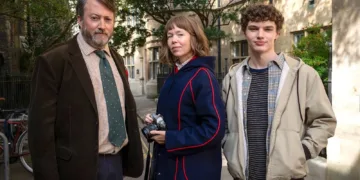










John Mildmay-White’s father-in-law has a warning for him: participating in a documentary could leave him looking like an upper-class fool. Mildmay-White laughs it off. He thinks the debate is worth having. It’s an appealing exchange in Orban Wallace’s Our Land, partly because it acknowledges the awkward arrangement behind every documentary interview. Someone agrees to speak, then entrusts their words and appearance to a filmmaker. For a landowner discussing public access to his family’s estate, that requires some confidence that curiosity will survive the editing.
Wallace gives Mildmay-White room to express both openness and anxiety about losing land held across generations. Hugh Inge-Innes-Lillingston, another estate owner, considers managed access and cheerfully acknowledges the social baggage of his inherited name. Their presence matters because Francis Fulford supplies such an easy opponent.
Fulford treats his sprawling Devon property as a private garden, dismisses the public as irresponsible, and makes a racist assertion about Black people’s interest in the countryside. An interview documentary builds an argument through the people it selects and the attention it gives them. Here, the quieter owners introduce concerns that Fulford’s abrasive certainty could otherwise drown out.
The distinction between ownership and access needs to remain clear throughout this discussion. The Right to Roam campaign, represented by Nick Hayes, Guy Shrubsole, and conservationist Nadia Shaikh, seeks wider opportunities for responsible recreation in England and Wales on land that can remain privately owned.
Mildmay-White’s fear of failing his family inheritance is understandable, yet it doesn’t settle the question of allowing someone to walk across that inheritance. I appreciated the film’s willingness to let these attachments register. A person can care sincerely for an estate while having considerable power over other people’s experience of it.
Wallace supplies a different timescale through the opening animation, created by May Kindred Boothby with words by Robert Macfarlane. An old tree anchors an account connecting present ownership to William the Conqueror’s distribution of land after 1066.
Animation can compress centuries without making an audience struggle through a procession of dates; here, it helps make an inherited arrangement feel like something created through decisions. That perspective usefully complicates the owners’ family accounts. The prologue offers an accessible historical frame, although its compression leaves little space for the intervening changes that a fuller history would require.
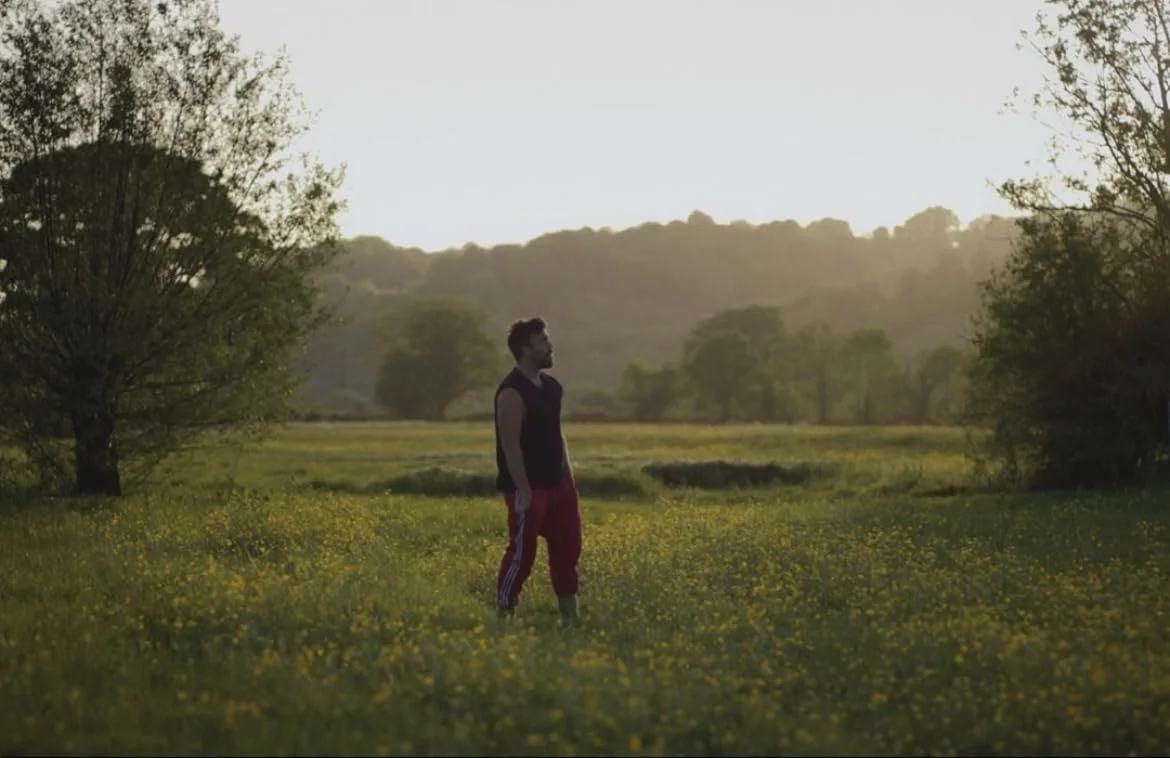
Jamie Wolfeld’s photography gives the discussion an immediate attraction. Woodland, fields, and rivers offer a persuasive answer to the question of why anyone wants access in the first place. I found this invitation effective: the countryside becomes a place to spend time, with pleasures that the interview arguments can make sound abstract. Beautiful photography has its evidential limits, though. A desirable place tells us little about how increased use would affect it. The images generate interest that the documentary’s practical passages still need to satisfy.
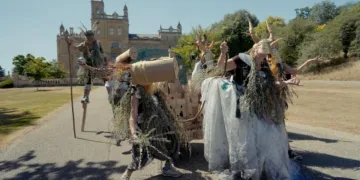
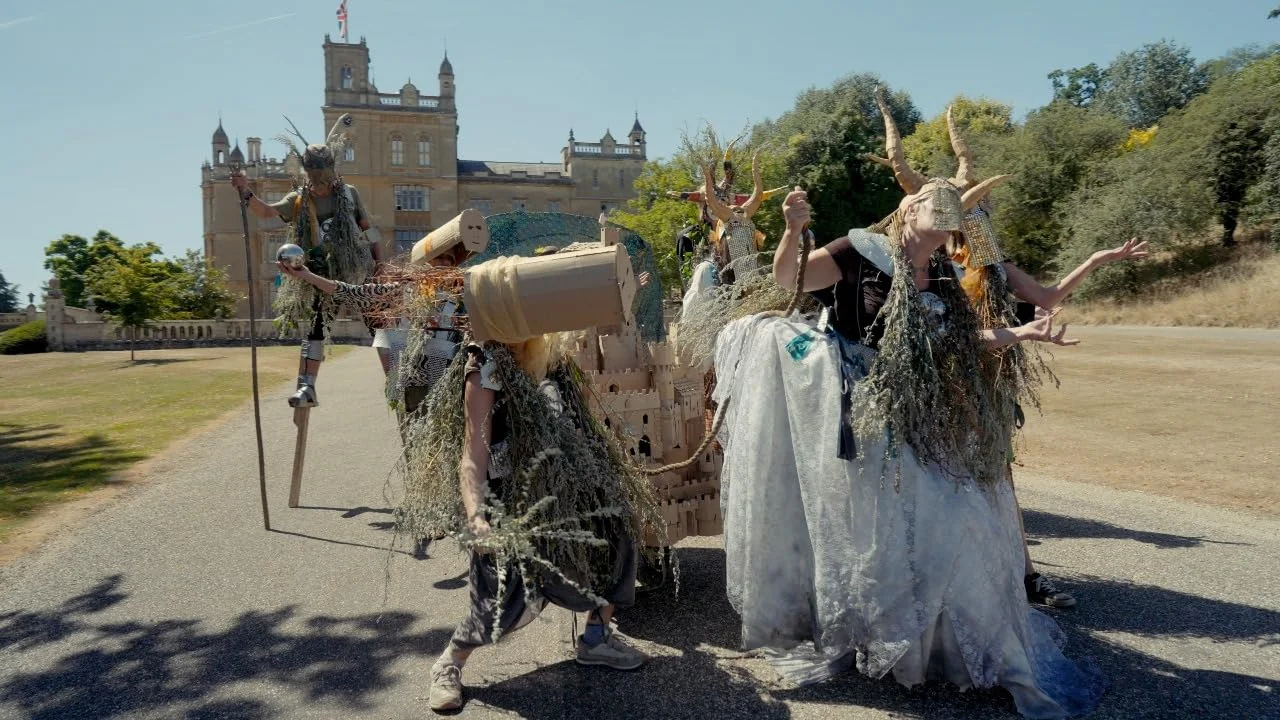
The campaign’s gatherings give that interest a social form. At the Englefield Estate protest, masks, leafy costumes, musical instruments, and morris dancing turn a collective trespass into something resembling a folk celebration. These details establish a movement with its own pleasures and customs.
They also make the film’s invitation quite specific. A viewer attracted by this atmosphere may feel welcomed immediately; someone curious about access but indifferent to the pageantry gets less assistance from it. The festive footage communicates enthusiasm readily, while questions about the management of shared space remain elsewhere.
There is no major confrontation to give these activities a conventional dramatic climax. Wallace lets the documentary move through testimony, gatherings, and changes of perspective instead. That is a sensible choice for a campaign whose everyday aim is people walking peacefully through the countryside. Manufacturing the expectation of a showdown would distort the activity being defended. The absence of a clash leaves the film dependent on how much each new encounter develops the discussion.
Kinder in Colour provides a particularly useful development. The collective walk, commemorating the 1932 Kinder Scout mass trespass, brings Black people and other people of colour visibly into the campaign. Against Fulford’s assertion of disinterest, participation itself becomes evidence.
The sequence also gives Shaikh’s account of exclusion something concrete to attach to: people assembling to claim a place in a landscape where they have felt unwelcome. Legal permission and a sense of belonging are different questions, and this gathering helps explain why changing access rules might leave other barriers to address.
The pheasant-shooting footage has a sharper, less expansive function. Fulford distrusts the public’s conduct around wildlife while permitting an activity organised around killing birds. It is reasonable for Wallace to place that practice within a discussion of stewardship.
It raises questions about which uses an owner accepts and which visitors he trusts. Still, the hunt cannot answer concerns about litter, animal disturbance, or the effects of increased recreation. Its force comes from exposing a contradiction in one participant’s position, and the film risks giving that contradiction too much argumentative weight.
The later move to Scotland is valuable because it introduces an arrangement already operating. John Grant, the 13th Earl of Dysart, welcomes wider access on his land and discusses educating visitors. His participation changes the discussion’s possibilities: ownership, responsibility, and public enjoyment can coexist in the same account.
The Scottish Outdoor Access Code gives that coexistence a practical basis, with access tied to responsible conduct. This is where Wallace’s combination of interviews and place becomes especially productive. An owner describes accommodating visitors, giving the campaign an example that an attractive landscape or exuberant protest cannot supply.
I wanted the film to spend longer examining that example. The code receives limited explanation, and the Scottish passage offers little investigation of difficulties or how competing responsibilities are handled. The Dartmoor wild-camping dispute, including the reversal of the initial ruling against camping, supplies another encouraging development without much attention to the arguments behind it.
These omissions matter because Grant’s account opens a practical line of inquiry that could address the measured owners’ anxieties. His emphasis on education deserves sustained attention: what visitors need to learn, how they receive that guidance, and how an estate responds when someone ignores it.
Our Land premiered out of competition at the 82nd Venice International Film Festival and expanded internationally to streaming and theatrical platforms. The powerful documentary investigates the 2009 murder of Indigenous leader Javier Chocobar in northern Argentina, examining historical colonialism, systemic property theft, and an ongoing struggle for ancestral land rights.
Full Credits
Title: Our Land
Distributor: Netflix, Strand Releasing
Release date: August 31, 2025 (Venice Film Festival), March 5, 2026 (Argentina)
Running time: 2 hours 4 minutes (124 minutes)
Director: Lucrecia Martel
Writers: Lucrecia Martel
Producers and Executive Producers: Benjamin Domenech, Joslyn Barnes, Santiago Gallelli, Matías Roveda
Cast: Javier Chocobar
Director of Photography (Cinematographer): Ernesto De Carvalho
Editors: Jeronimo Perez Rioja, Miguel Schverdfinger
Composer: Alfonso Olguin
The Review
Our Land
Our Land makes the desire for wider countryside access easy to understand. Its thoughtful landowner interviews, inviting photography, and collective walks give the campaign human texture. I appreciated how the Scottish example brings ownership and public enjoyment into the same conversation. Wallace leaves that example insufficiently examined, however, particularly around visitor responsibilities and practical difficulties. An engaging introduction to the cause, with some of its most useful questions left open.
PROS
- Landowner interviews complicate easy stereotypes.
- Animation makes the historical argument accessible.
- Landscape photography gives access an immediate appeal.
- Kinder in Colour makes participation concrete.
CONS
- Compressed history leaves intervening changes unexplored.
- Protest pageantry offers limited help to uncertain viewers.
- Scottish access rules and Dartmoor arguments receive insufficient examination.







