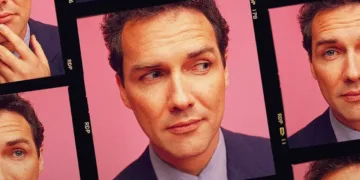



















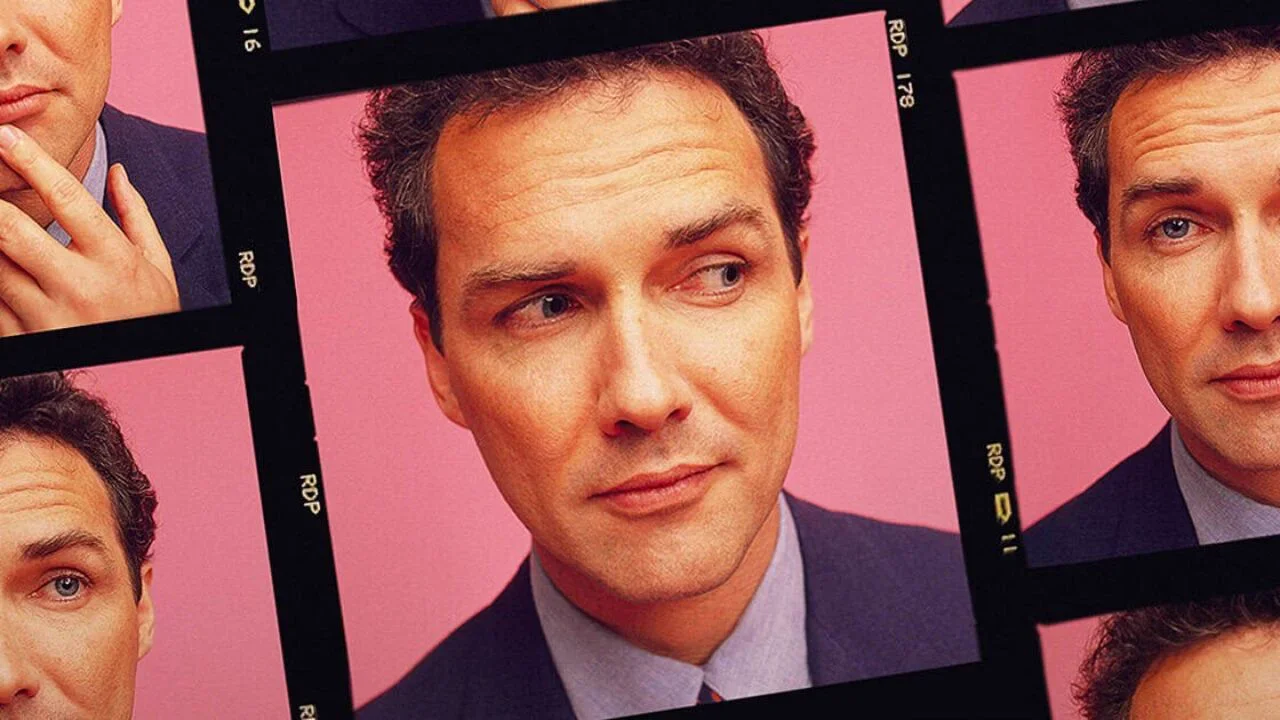

Norm Macdonald says he never went to college. Judd Apatow supplies footage of him at Algonquin College. A biographical question has been answered, technically, yet Macdonald gets the laugh for having made the answer necessary. Even the evidence against him becomes usable material. Watching Norm: The Tale of Norm Macdonald, I began to suspect that its subject had arranged a remarkably comfortable afterlife: he could continue misleading interviewers, and someone else would handle the paperwork.
His audiobook narration extends that arrangement. Apatow gives a man who treated autobiography as an opportunity for invention considerable authority over the story being assembled from his remains. Onscreen corrections occasionally establish a firmer factual footing, though the voice keeps pulling us back toward uncertainty. Macdonald understands the pleasure of withholding an answer. The documentary understands it too. Their interests are so closely aligned that a potentially awkward question arises: who here is prepared to interrupt the entertainment?
The search bars that appear between subjects make the film’s method explicit. A topic gets typed, another collection of clips arrives, and we follow Macdonald through stand-up, Saturday Night Live, late-night appearances, radio, and podcasts.
Howard Stern’s account of watching him online for comfort supplies a persuasive reason for this structure. Apatow and editor Jake Hostetter preserve the pleasure of continuing to watch someone whose next sentence can upset the apparent purpose of the conversation. A talk-show interview becomes an unstable little social contract.
That instability is funny enough to sustain considerable repetition. Macdonald’s halting delivery makes the listener work out how much apparent incompetence to tolerate, then questions the listener’s confidence in having spotted incompetence at all. The archive allows us to encounter this thinking across different hosts and formats. Apatow’s selection demonstrates a comic intelligence that survives changes of venue without needing a parade of newly recorded testimonials to certify it.
Still, the lack of fresh interviews has a cost. Earlier public conversations offer abundant appreciation, anecdotes, and performances of friendship; they provide fewer opportunities to pursue a contradiction after it stops being amusing. The film can tell us that Macdonald lied about his education.
It has limited means of examining what those inventions protected, or how living alongside them felt. I found myself wanting someone to ask the next question and remain there long enough to make evasion inconvenient. Then there is the Bob Saget roast, which makes that wish seem a little too prosecutorial.
Macdonald arrives with deliberately feeble, antiquated jokes, drawing on an old joke book associated with his father. At an event organized around competitive humiliation, he offers material so conspicuously unsuitable that the performance becomes an objection to the assignment.
His persistence matters. An isolated bad joke could pass as miscalculation; a sustained procession makes the audience reconsider what kind of transaction it has come to watch. The affection for Saget eventually becomes explicit, although the refusal to supply effective cruelty has already expressed it.
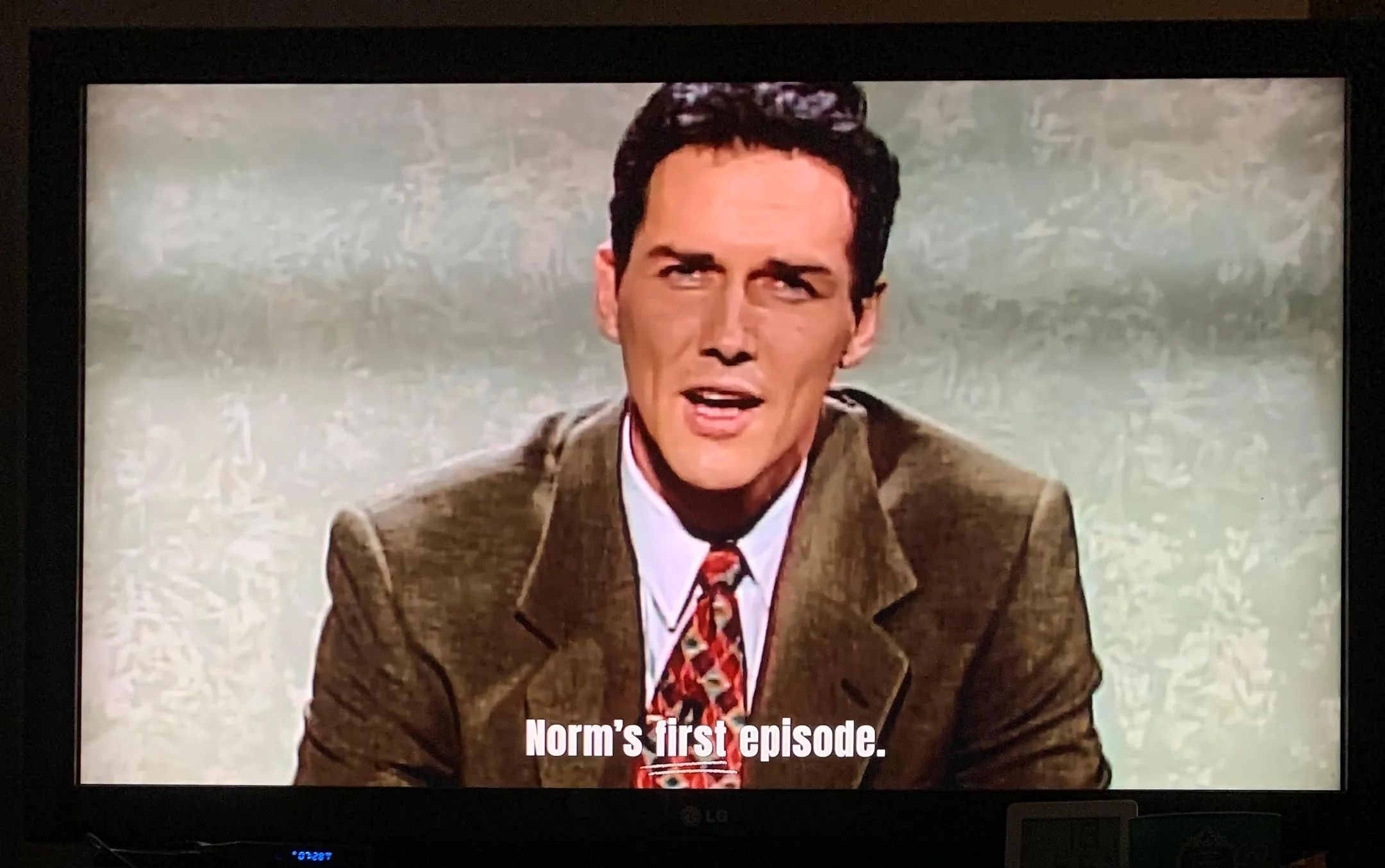
I had been treating concealment as a way of keeping other people outside. Here, the elaborate comic maneuver lets tenderness enter a format designed to punish it. Macdonald uses the wrong language for the occasion because the occasion’s approved language cannot accommodate what he wants to say. Apatow’s decision to preserve the performance gives us something a direct statement about his sensitivity could scarcely establish.
The difficulty comes when affection is asked to explain his judgment elsewhere. His repeated O.J. Simpson jokes on Weekend Update turn insistence into a comic method: the subject keeps returning because Macdonald refuses to grant the surrounding machinery its preferred distance from it. The film connects his dismissal to NBC executive Don Ohlmeyer, Simpson’s friend. Macdonald’s willingness to incur a professional cost gives this material force. The genial face and casual delivery belong to someone capable of making repetition uncomfortable for his employer.
His later sympathy for Roseanne Barr and Louis C.K. demands a different examination. The apologies and explanations, followed by his account of feeling less free to develop material publicly, show the limits of a personal code organized around loyalty.
The Saget roast establishes that loyalty can produce an inventive act of kindness. It cannot settle what forgiveness requires when the conduct being discussed affects people outside the friendship. The film’s archive preserves Macdonald explaining himself, while its affectionate momentum leaves too little sustained pressure on the explanation. His willingness to risk disapproval remains visible; the adequacy of his reasoning receives less attention.
His medical privacy unsettles my demand for answers again, on firmer ground. Macdonald kept his leukemia diagnosis private for roughly nine years before his death in 2021. Treating that silence as another puzzle to solve would accept the celebrity audience’s most dubious assumption: that prolonged familiarity creates a right to disclosure. A fabricated college history and an undisclosed illness restrict our knowledge in radically different ways.
His stand-up about the language of cancer makes the distinction tangible. He questions the expectation that sick people must now wage a battle, recalling a time when a person could simply become ill and die. The joke identifies a script imposed on suffering. Courage must be performed, illness must acquire an adversary, and death risks sounding like an inadequate effort. Knowing what he withheld gives the material an additional pressure without turning it into a medical confession.
I no longer wanted the same kind of access I had wanted earlier. His comments about faith, admitting fluctuations in belief, also resist the reassuring account of a comedian who eventually acquired all the answers. Apatow allows uncertainty to remain audible. Yet protecting that uncertainty need not prevent closer examination of his public arguments. The film is strongest when its fragments make these distinctions possible, and weakest when the warmth surrounding them threatens to smooth the differences away.
In the footage of his final Letterman appearance, Macdonald allows an expression of love to become unusually direct. The man whose pauses could leave a host wondering where the joke was going now lets emotion affect the performance. Watching it, I had little interest in deciding that the evasions elsewhere had been stripped away and the authentic person had finally appeared. The evasions were his work too. Here he chooses to speak differently to someone he loves, on the same public stage where he had spent so much time making certainty difficult.
Norm: The Tale of Norm MacDonald premiered globally on Netflix on October 16, 2026. Directed by Judd Apatow, the biographical documentary explores the life and career of the legendary deadpan comedian, utilizing archival footage and audio recordings to let Macdonald tell his own story.
Where to Watch Norm: The Tale of Norm MacDonald (2026) Online


Full Credits
Title: Norm: The Tale of Norm MacDonald
Distributor: Netflix
Release date: October 16, 2026
Rating: R
Director: Judd Apatow
Producers and Executive Producers: Judd Apatow, Ross Dinerstein, Amanda Rohlke, Josh Church, Zoe Rogovin, Jon Liebman
Cast: Norm MacDonald
The Review
Norm The Tale of Norm MacDonald
Apatow gives Macdonald considerable control over his own remembrance, with funny, moving, occasionally frustrating results. The archive captures a mind capable of turning a failed roast into an act of love. Its affection leaves his public judgments insufficiently tested, though its respect for his medical privacy feels earned. I wanted sharper questioning; I also came to distrust the assumption that understanding someone requires extracting every answer.
PROS
- Archival editing preserves Macdonald’s unpredictable comic thinking.
- The Saget roast reveals tenderness through comic invention.
- Illness and faith receive thoughtful treatment without forced certainty.
- Search-bar transitions give the sprawling archive a clear organizing method.
CONS
- Biographical contradictions receive limited independent questioning.
- Later controversies receive insufficient scrutiny beyond Macdonald’s explanations.