

























The visual effects team on “Project Hail Mary” says weightlessness was its biggest headache, and the solution blended wires, hand-built rigs and digital repair work to make Ryan Gosling float.
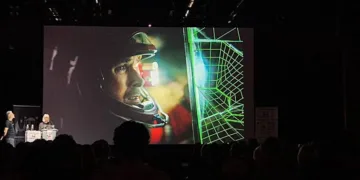
Supervisor Paul Lambert, an Oscar winner, and co-supervisor Mag Sarnowska broke down the process at the View Conference in Turin on October 16. “Zero-G was probably my personal biggest concern going into the movie,” Lambert said. His team lobbied the production to film aboard the so-called vomit comet, the aircraft that creates brief stretches of weightlessness. The film’s spaceship sets were too large and elaborate to recreate on board, so Gosling performed on wire rigs, including a rotating harness.
Removing the wires solved only part of the problem. When a suspended body still looked like it was hanging, artists nudged his arms, legs or torso into more convincing positions and added drifting objects to sell the effect. Lambert said Gosling insisted on doing his own stunt work, spacewalks included. Artists tracked his on-set performance and rebuilt it inside digital environments, which let cinematographer Greig Fraser pick fresh camera angles without discarding the take.
Earlier accounts show how physical the work was. Stunt coordinator Eunice Huthart described a manual spinner rig operated by a rope team, a system built to let performers move freely on every axis. Gosling has called the harness work painful, though he has said the strain suited a character who is out of his depth. Ryland Grace, the schoolteacher turned astronaut, was meant to flail rather than glide.
The same restraint shaped the sky. Lambert and Sarnowska used European Space Agency star maps and kept the imagery close to real astronomy instead of filling frames with colorful nebulae. A camera in space, Lambert said, would not capture stars at all, and near the bright planet Adrian the background stars largely vanish. Puppetry gave Rocky, the alien companion, a physical presence beside Gosling. Lambert called the early experiments “literally a mad science lab.” Amazon MGM released the Andy Weir adaptation in March. The film now streams on Prime Video.