



























Cancelled flights leave B-67 short of players for Greenland’s national football championship. Before questions of tactics or form can become urgent, there is the problem of getting the squad to the tournament. Brandon Scott Smith and Derek Sullivan Smith’s documentary No Place for Football follows a competition compressed into roughly one week, where an ordinary travel disruption can consume a substantial portion of the tournament. There is little room for rearrangement. The weather has no particular interest in the fixture list.
B-67’s predicament invites sympathy, but calling them underdogs needs qualification. The club from Nuuk has a history of domestic success. These players arrive with expectations, rivals, and a reputation to defend. Their vulnerability belongs to the conditions under which they compete, rather than to some permanent inability to win. Keeping that distinction in view makes their ambition easier to respect. They want the trophy, and being admirable participants would be an unsatisfactory substitute.
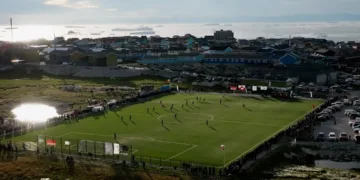
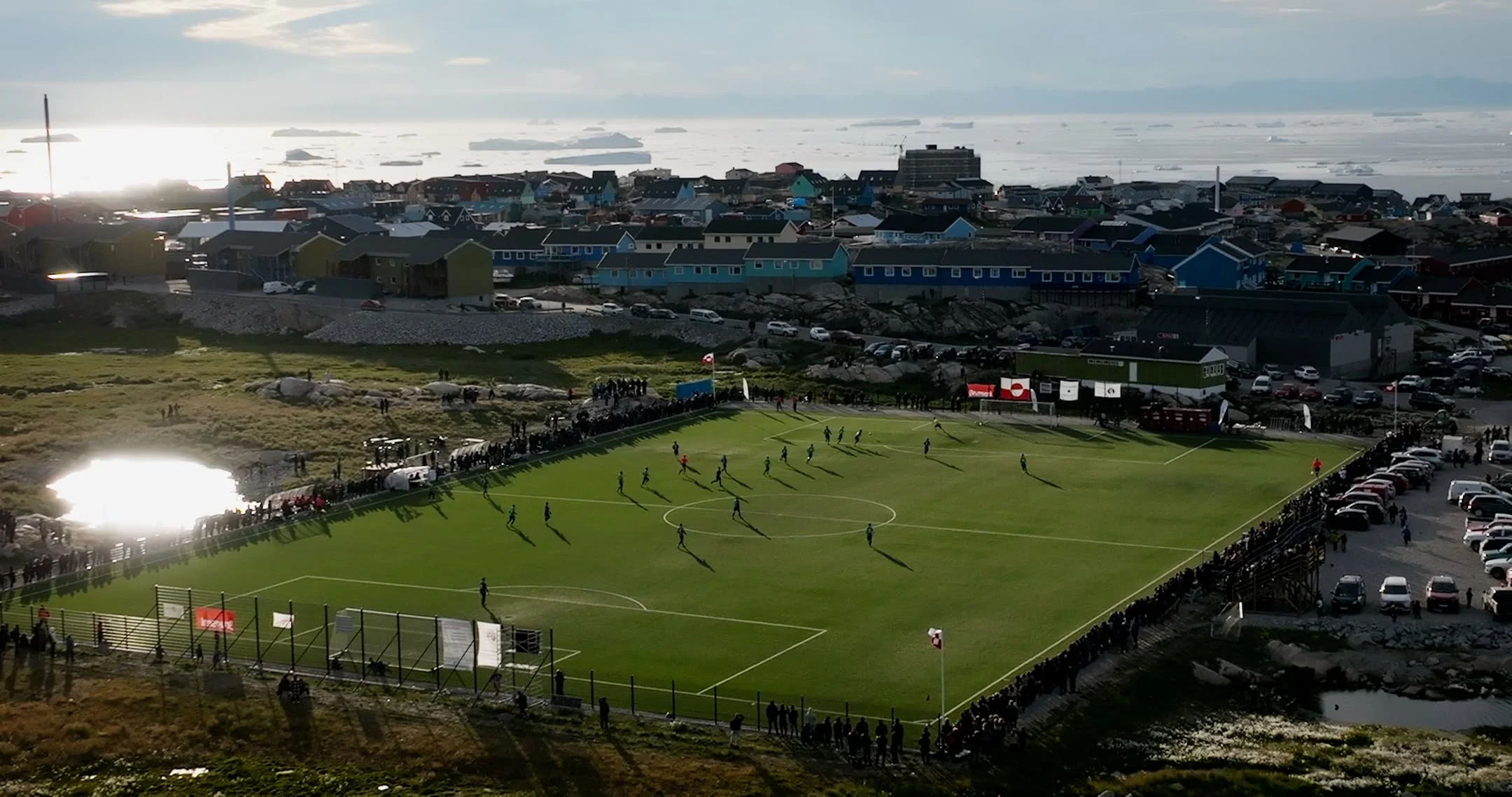
The directors photograph football pitches beside icebergs, water, and expanses of rock. Their wide shots make the grounds look startlingly small, but those rectangles of organized activity also register as deliberate human decisions. Someone has established a place to play here.
Tents and gazebos serve as changing facilities; a brief outdoor season restricts opportunities for competition; distances between communities make assembling opponents difficult. The landscape supplies both the film’s visual appeal and the practical explanation for its difficulties. An iceberg can improve the composition without improving anybody’s afternoon.
There is a danger in these images, too. To an outsider, the setting can become such an attraction that the inhabitants appear to exist chiefly as evidence of human persistence. The film partly resists that temptation through its attention to preparation and responsibility. These are people conducting a familiar activity under demanding conditions, with expectations and habits of cooperation. Greenlandic football has its own internal life. It does not begin when a camera arrives to find the scenery remarkable.
The restrictions on international participation give this local competition an additional pressure. Players discuss how difficult it is to attract scouts or pursue football abroad. Their championship carries ambitions that have few other available outlets. Official recognition matters because it can affect access, but the players hardly need an outside institution to certify that their rivalry means something. The film is most persuasive when these two truths remain together: local significance is already present, and restricted opportunity still has a cost.
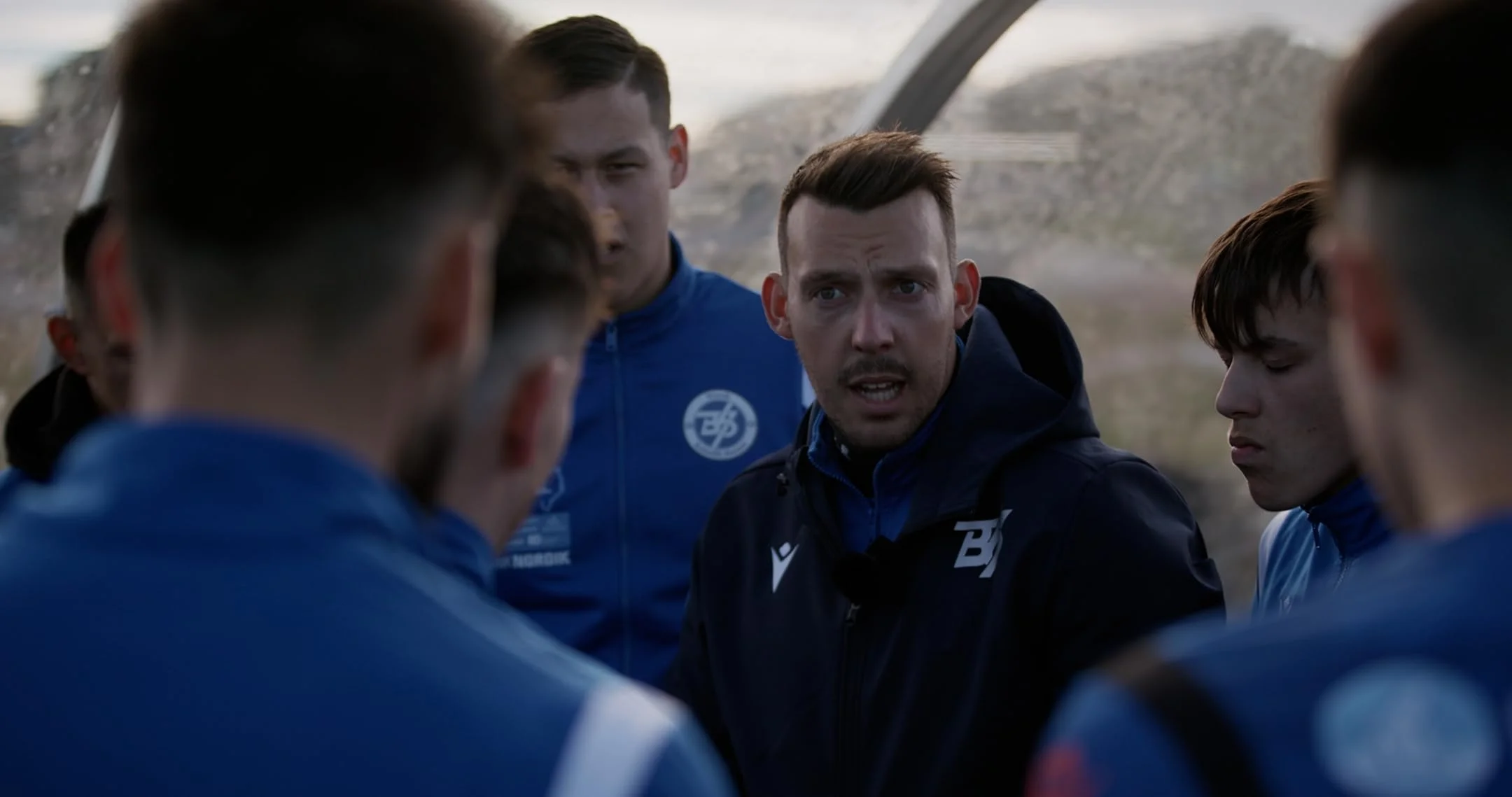
Captain Patrick Frederiksen gives that significance a practical form. He takes responsibility, communicates with teammates, and helps rally the group, while coach Nicolai Nielsen leaves him room to exercise authority. Leadership emerges through an existing relationship between players.
The improvised shelters and encouragement around matches provide a convincing picture of people sustaining something together. When Nielsen reacts enthusiastically to a goal while watching footage, his investment is almost disarmingly ordinary. He cares about the play in front of him. The camera happens to be there.
I initially found it easy to read this unpaid football as a reassuring escape from the professional game’s commercial machinery. Then the players’ accounts of inaccessible opportunities made that reading feel rather convenient.
It costs the spectator nothing to admire a life without lucrative contracts. The person living it might still appreciate a chance to play elsewhere. Their attachment to B-67 does not cancel that wish, and the documentary gives us enough testimony to resist treating limited prospects as a blessing. The pleasure of this tournament deserves recognition without requiring its participants to be grateful for every restriction surrounding it.
Nielsen’s account of loneliness brings a different qualification. Having arrived from Denmark, he speaks about separation from his partner and family. A squad can provide purpose and company while leaving other absences painfully intact. His testimony prevents the easy claim that football resolves isolation. The quieter soundscape helps here: environmental sound and occasional music from players’ phones allow companionship to feel situated, with pauses and spaces around it. Collective enthusiasm remains something people experience intermittently, alongside the rest of their lives.
As the tournament takes over, however, the film becomes less interested in those surrounding lives. The build-up to B-67’s meeting with rivals N-48 uses slow motion, energetic montage, and carefully paced editing to concentrate attention on the competition. This is effective sports filmmaking. The skill on display and the participants’ investment provide sufficient grounds for suspense; a worldwide audience is unnecessary for an exhausted player to care deeply about the next passage of play.
Yet the accumulation of match coverage also makes parts of the film feel longer and less revealing. Once the initial difficulties have been established, further football does not always deepen our understanding of the people playing it. The directors can generate anticipation, but anticipation gradually becomes the principal relationship they offer us with the squad. We learn to want a result for these men without learning enough about what surrounds that desire.
That limitation is particularly noticeable because the film has already supplied glimpses of another possible inquiry. Frederiksen is shown hunting seals, an activity that places him outside the familiar duties of a sports documentary’s captain. Nielsen can explain what he misses and why his life here feels lonely. Frederiksen’s hunting offers a different kind of access, through observation, but it remains a glimpse. I wanted the film to stay with him long enough to understand how the responsibility he assumes among his teammates fits into the life waiting beyond the tournament.
No Place for Football premiered at the DocLands Film Festival on May 3, 2026, before expanding to digital platforms like Apple TV and Amazon Prime Video. Directed by Brandon Scott Smith and Derek Sullivan Smith, the sports documentary follows a football club from Nuuk, Greenland, as they travel north and overcome extreme environmental and personal hurdles to compete in the world’s shortest football season.
Where to Watch No Place for Football (2026) Online




Full Credits
Title: No Place for Football
Distributor: Siloam Road, Good Shoes Inc, Apple TV, Amazon Prime Video
Release date: May 3, 2026
Rating: PG
Running time: 1 hour 31 minutes (91 minutes)
Director: Brandon Scott Smith, Derek Sullivan Smith
Writers: Brandon Scott Smith, Derek Sullivan Smith
Producers and Executive Producers: Brandon Scott Smith, Derek Sullivan Smith
Cast: Patrick Frederiksen, Nicolai Nielsen, Jimmy Jensen, Søren Kreutzmann, Noah Mølgaard
The Review
No Place for Football
No Place for Football finds real significance in the effort required to assemble a team, sustain a rivalry, and compete without much prospect of being noticed elsewhere. Its landscape photography and match editing make that commitment tangible. I was less satisfied by how readily the tournament displaces the lives surrounding it. Nielsen’s loneliness and Frederiksen’s seal hunting suggest a richer portrait that the film only begins to pursue.
PROS
- Landscape photography connects beauty with practical hardship.
- Frederiksen’s leadership grounds the sense of community.
- Nielsen’s testimony complicates easy reassurance.
- Effective editing builds genuine competitive suspense.
CONS
- Match-heavy stretches slow the pacing.
- Players’ lives beyond football receive limited attention.