













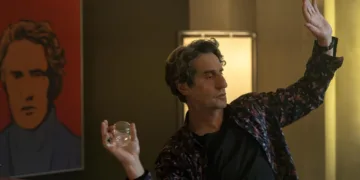












The rabbis who appear in Planet Israel draw incompatible political obligations from a shared religious inheritance. Some reject the identification of Judaism with nationalism; a military chaplain advocates Palestinian expulsion and settlement. Elsewhere, an Orthodox woman declines to judge Netanyahu’s leadership because her concern is obedience to God. Placed together, these encounters expose the difficulty of treating religious identity as a reliable guide to political conviction. Even the withdrawal from politics has consequences when religious authority is being enlisted to justify state action.
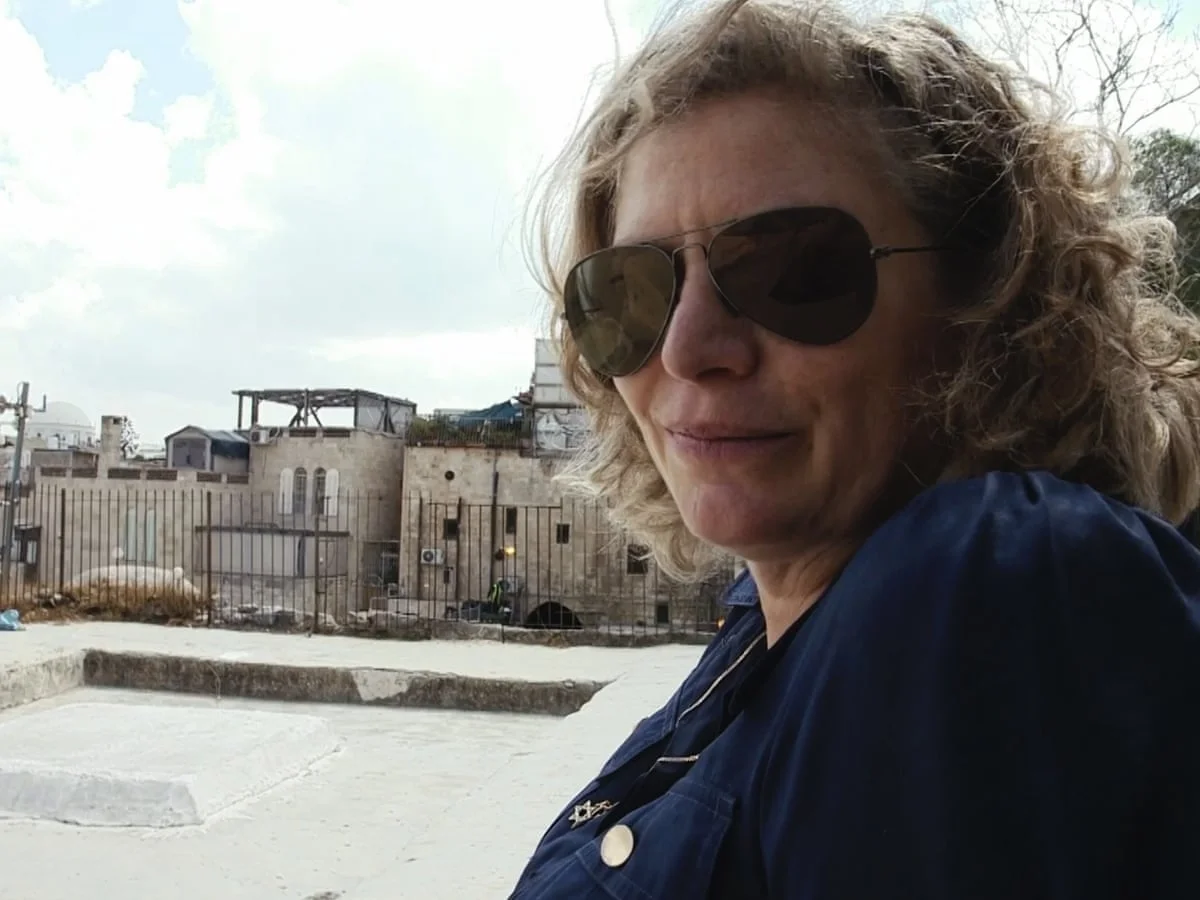
Gillian Mosely approaches these disagreements from a British-American Jewish background and a family history of rabbinical scholarship. Her position outside Israel matters because it separates attachments that nationalist rhetoric seeks to bind together: belonging to a people, inheriting a religious tradition, and supporting a government. The rabbis resisting that fusion, inside and outside Israel, prevent the disagreement from becoming a tidy division between an enlightened diaspora and a belligerent homeland. Cultural inheritance travels, yet it acquires different obligations according to who interprets it and where they stand.
Returning to the conflict after The Tinderbox, Mosely makes the Hamas attacks of 7 October 2023 an early, explicit presence. The footage establishes the horror behind contemporary Israeli fear before she investigates support for the destruction of Gaza. This is an essential part of her inquiry. A documentary asking how fear becomes politically usable must acknowledge the violence that gives it immediate force. Mosely’s concern is how that fear becomes an enduring demand for allegiance, including acceptance of actions that would otherwise invite moral resistance.
Her historical account reaches through the Balfour Declaration, British rule, partition, and Palestinian displacement, while tracing the influence of Jabotinsky’s revisionist Zionism on Netanyahu’s political inheritance. The useful distinction here is between a tradition and its eventual dominance.
By presenting competing strands of Zionism, Mosely allows Israeli nationalism to emerge as something developed through political choices. Yet the breadth of this historical passage also creates a burden. Moving rapidly across imperial policy, religious identity, displacement, and contemporary government can make continuity easier to perceive than the differences between successive moments.
The documentary becomes firmer when it follows identifiable methods of securing consent. Its account of authoritarian leadership connects unresolved trauma with militarized education, the normalization of extreme positions, media control, attacks on opponents, and religious justification. These categories could become a portable checklist applied indiscriminately to different countries.
Archive footage of Yoav Gallant announcing restrictions on electricity, food, water, and fuel gives the argument a specific governmental voice. His description of the enemy as “human animals” shows dehumanization entering an announcement about the conditions of civilian life. The political mechanism is audible in the statement itself.
Mosely’s interviews with psychologists and other contributors offer a less secure explanatory framework. Memories of pogroms and the Holocaust help illuminate the relationship between Jewish historical consciousness and expectations of danger. The difficulty arrives when this becomes a diagnosis of a society. Collective memory cannot account evenly for the chaplain advocating removal, the religious dissenter, the passive supporter, and the politician cultivating fear.
The film’s own encounters reveal those differences. Its psychological argument is most persuasive when it explains susceptibility to political persuasion; it becomes reductive when trauma appears to carry the explanatory weight of ideology, institutions, and deliberate decisions.
The discussion of Israeli news coverage gives this argument a material dimension. Mosely describes a public receiving limited images of Palestinian suffering while independent journalistic access to Gaza is restricted. Here, moral distance is produced through the information people encounter.
This helps explain how radically different understandings of the same war can circulate within Israel and abroad, without requiring a theory of national character. It also places a responsibility on the documentary’s street interviews. Disturbing expressions of indifference reveal what particular people will say on camera, but their force cannot establish how representative those speakers are.
Mosely’s visible presence makes the investigation personal, sometimes at the expense of discovery. Her nods during expert interviews and expressions of disbelief in street exchanges tell us how she receives each answer. They can make the encounters accessible, though they also narrow the space in which a viewer might weigh an answer independently. Smaller interruptions, including a restless dog and lawnmower noise, preserve something of the untidy circumstances surrounding the discussion. These details briefly loosen the presenter-led format, allowing a conversation to occupy a physical place instead of functioning solely as an illustration of the argument.
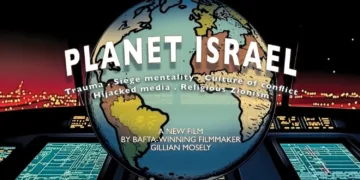
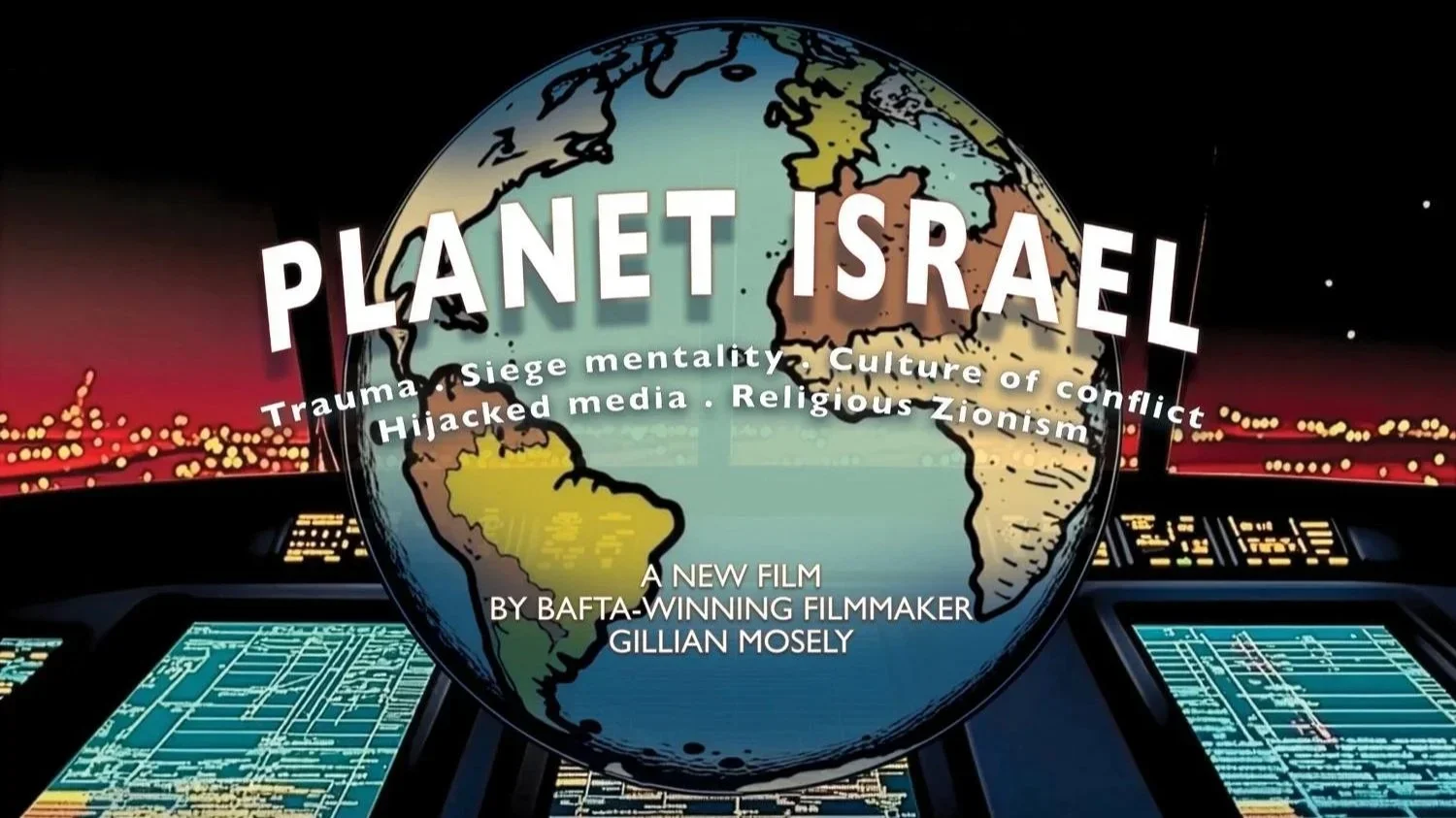
The AI-generated animation is a more damaging attempt to escape that format. Animation can distinguish an explanatory passage from recorded testimony, but the unstable hands and incorrectly rendered Israeli flags introduce visual carelessness into a film preoccupied with identity and historical interpretation. A national symbol carries particular weight here. Getting it wrong weakens the sense that the illustration has been considered with the attention demanded by the subject. Alongside archive footage and interviews, these generated images offer a smoother, less particular visual language, interrupting the documentary’s contact with people and places.
Another difficulty appears in Mosely’s suggestion that Israeli actions fuel antisemitism. Her diaspora perspective makes the international circulation of anger an appropriate concern, but the formulation leaves responsibility dangerously blurred. Jews outside Israel cannot be made answerable for a government’s conduct, and prejudice against them remains the responsibility of those practising it. The film has spent considerable effort separating Jewish belonging from nationalism. This claim risks restoring the association at precisely the point where the argument crosses from Israeli politics into Jewish life elsewhere.
Mosely’s appeal to healing and ethical connection carries a related problem of scale. Her account of authoritarian persuasion names institutions capable of shaping education, public information, and the use of force. Personal reflection may help someone resist those institutions, but it leaves the means of changing them indistinct. The documentary can identify how religious teaching becomes a political instrument with greater precision than it can explain how an appeal to shared humanity might alter the distribution of power.
The late interviews with displaced Palestinians amid Gaza’s rubble change the terms of the encounter. After sustained attention to Israeli identity and the psychological explanations of consent, Palestinians speak from within the destruction Mosely condemns as genocide. Their testimony has a directness that the historical exposition and generated imagery cannot supply. Its placement also exposes the limits of organizing so much of the film around the people whose attitudes it seeks to explain. The displaced speakers require attention to what has happened to their lives, and to the decisions governing what they can do next.
Planet Israel premiered at UK independent screenings and festivals on June 8, 2026, and is available to stream via virtual theatrical screenings on Kinema. Directed by BAFTA-winning filmmaker Gillian Mosely, the documentary investigates the psychological mindset, media consumption, and generational trauma shaping contemporary Israeli public opinion and state policies following the events of October 7.
Full Credits
Title: Planet Israel
Distributor: Media Lab, Kinema
Release date: June 8, 2026
Rating: 15
Running time: 1 hour 37 minutes (97 minutes)
Director: Gillian Mosely
Writers: Gillian Mosely
Producers and Executive Producers: Gillian Mosely, Lucy Lyon, Richard Melman
Cast: Gillian Mosely, Avi Shlaim, Daniel Bar-Tal, Patty Abozaglo, Julia Chaitin, Rabbi Yaakov Shapiro
Director of Photography (Cinematographer): Lucy Lyon
Editors: Alethea Lyndsay
The Review
Planet Israel
Planet Israel is strongest when Mosely’s diaspora perspective exposes disagreements within Jewish identity and traces how governments recruit inherited fear. Its archive and religious encounters give that inquiry substance. The psychological explanation is less convincing, while careless AI imagery weakens a documentary concerned with the control of representation. Palestinian testimony brings necessary directness, arriving late in an investigation whose appeal to healing leaves political accountability insufficiently developed.
PROS
- Distinguishes Jewish belonging from state allegiance.
- Grounds authoritarian persuasion in concrete evidence.
- Powerful Palestinian testimony.
CONS
- Trauma framework risks flattening political differences.
- Distracting errors in AI animation.
- Blurred responsibility in the antisemitism argument.
- Palestinian perspectives arrive late.