























Before the harvest god receives an offering in Banquet for Fools, somebody has to obtain the food and carry it to the shrine. Those provisions have weight, take effort to replace, and could sustain the party on its next expedition. Surrendering them gives worship a material cost. The ceremony extends backward into the work of preparing for it, through decisions about what can be spared and how far it must travel. Religious belief becomes easier to understand when its demands occupy the same bag as dinner.
Across Invimona, supernatural protection belongs to everyday life. Settlements depend on chanters who repel ghosts; conversations register anxiety about the peppura harvest. Intercessions require cultivating divine favor and crafting personal holy items, while nature-oriented magic emphasizes summoning and disabling. Even creating a spell involves supplying its name and drawing its icon. Hannah and Joseph Games give their invented pagan culture practices the player must perform and relationships the player must maintain. Its unfamiliarity gradually becomes intelligible through use, without requiring every custom to have a recognizable historical equivalent.
The four guards at the center of this expedition belong to the Vollings, whose religious history includes abandonment by their patron gods. Serving a powerful lord, the party investigates the disappearance of Din Varens, a settlement on the recently settled island. That mystery sends them through a landscape where present livelihoods occupy ground marked by older societies and surviving powers. Their occupation matters: these are armed employees entering other people’s settlements, with obligations that extend beyond satisfying the player’s curiosity.
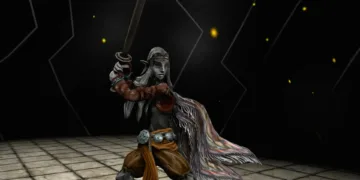
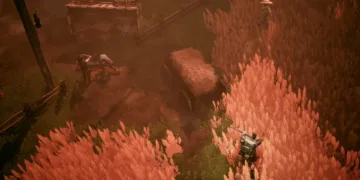
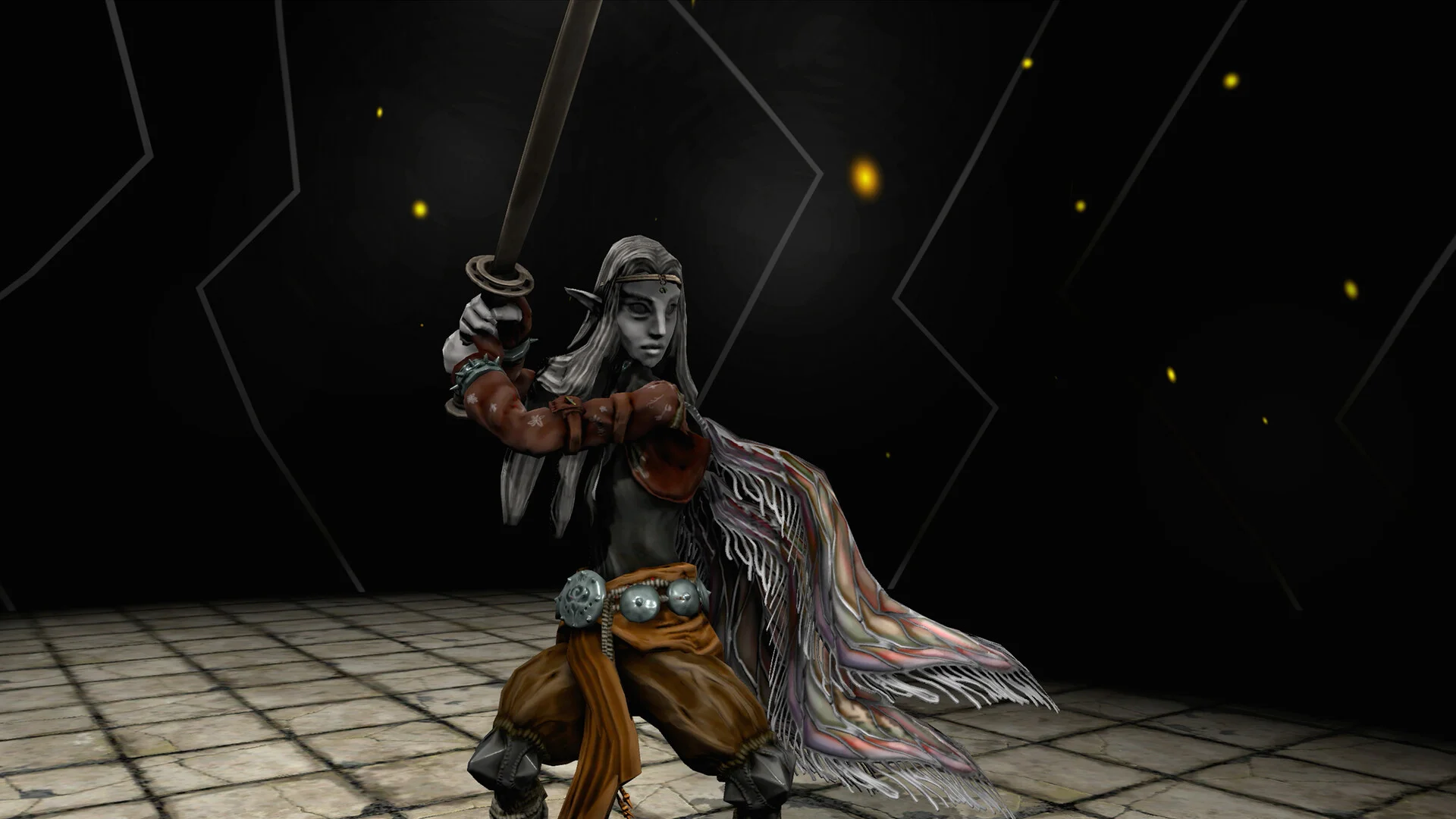
The visual language makes those encounters feel unusually tangible. Claylike figures move with a stop-motion gait across detailed pre-rendered landscapes, their apparent softness lending even an armed expedition the vulnerability of little bodies placed in a much larger world. The sparse lyre-led music, threaded with electronic elements, brings an archaic sound into contact with something harder to place. Together, image and music resist making the setting comfortably familiar. Their textures encourage close inspection, although the ornate interface and dense scenery can also make text and small objects difficult to distinguish.
Learning to read this world takes several forms. There is no automatically maintained quest record, conversation history, or trail of objective markers. Scrolls occupy inventory space; journal entries and map annotations require the player’s own work. Remembering when a guard captain appears at the gate becomes part of knowing that person. The resulting knowledge has a different character from following a marker: it includes someone’s routine, a landmark’s position, the meaning of a document retained because it might matter later. The player’s notes preserve an evolving interpretation of the island.
Travel tests that interpretation against material circumstances. Ferries charge fares and serve limited routes; a boat eventually widens the party’s options while leaving geography consequential. Food can spoil, and a guarded campfire offers relief because an expedition has needs. The comparison with Dragon’s Dogma is useful here: both give preparation and intermediate encounters enough weight to make distance significant. Banquet for Fools places particular emphasis on becoming conversant with a locality. Knowing which route is affordable, where protection exists, and what supplies will survive the journey is a practical education in living there.
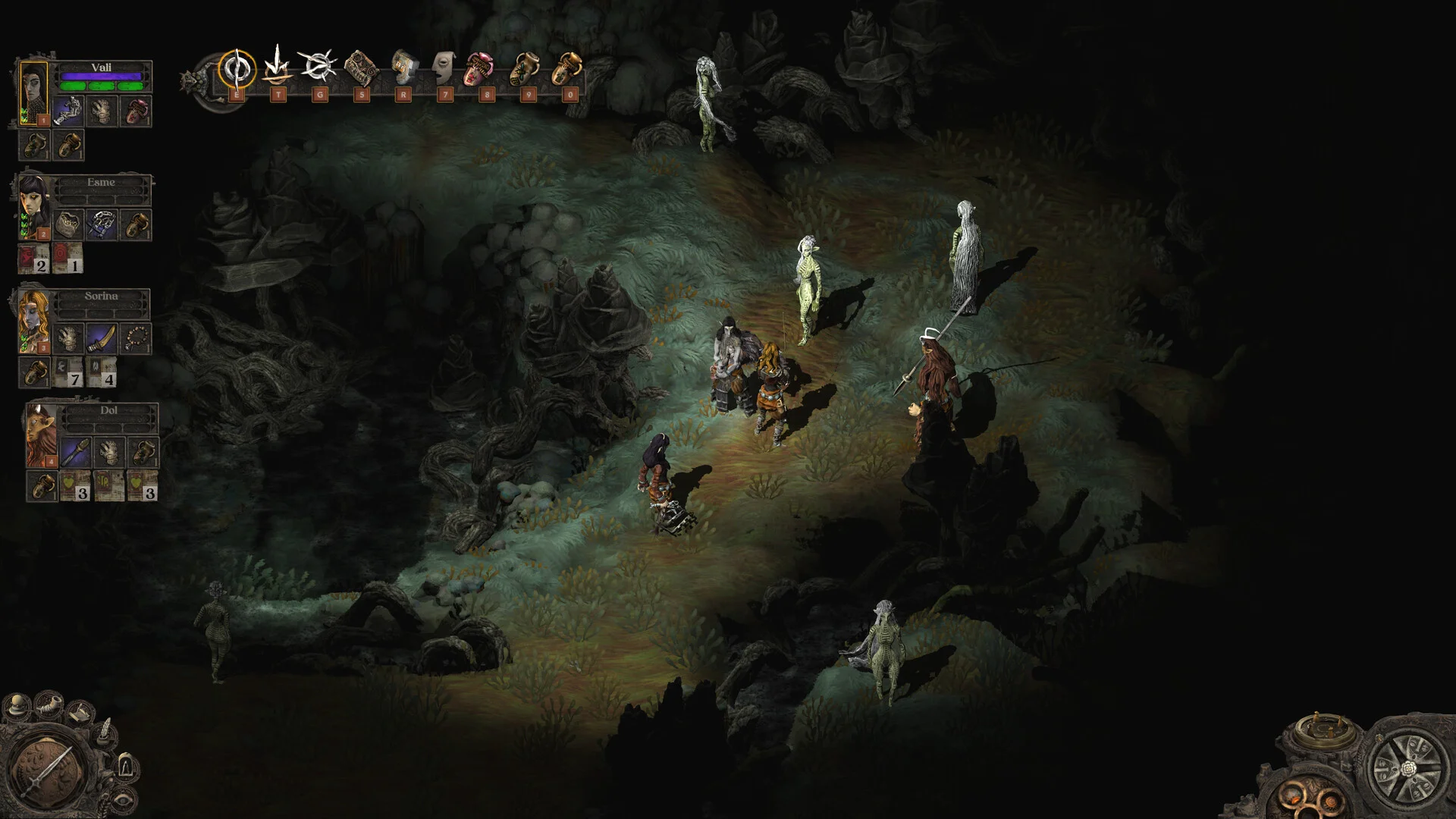
The encounters give that education social substance. An enormous swarm troubling a meadery connects adventuring to the production of something people make and sell. Party members contribute to conversations, giving a group of generated characters a collective presence within these exchanges. A side quest also brings their service to a wealthy lord under scrutiny, disturbing the comfortable assumption that armed visitors are useful by definition. The frontier’s limited law gives their employment a political dimension. Their ability to help and their authority to intervene remain separate questions.
Combat carries another kind of cultural exchange, combining forms that have traveled through different RPG traditions. The combat dome recalls Parasite Eve in its meeting of movement, action readiness, and paused targeting, while responsibility for several companions belongs to the party-based computer RPG. Each character has a recharging action bar. Opening the dome pauses play and permits target selection within a radius determined by weapon reach. Outside that selection, movement and active defensive inputs keep the player physically involved. Calling this simply old-fashioned misses the unusual arrangement of its parts.
That arrangement produces wonderfully practical violence. Pinning a strong opponent gives allies an opening; charging a cluster scatters bodies and breaks its advantage. A weapon’s swing has an arc that matters, and stepping beyond its visible reach can avoid contact. Kicks, grapples, and knockdowns give the guards ways to survive through improvised cooperation. The physical comedy of ragdoll reactions coexists with the seriousness of protecting a party far from reliable supplies. These actions fit people making their way through hostile territory with whatever leverage they can find.
The demand for cooperation also exposes the system’s weakness. Directly controlling one character while switching among companions means delegation must work. Larger encounters divide attention between separate action bars, positioning, and defensive needs; companions can disregard assigned behavior or run around without contributing. At that point, tactical responsibility becomes difficult to exercise. The problem lies in the gap between an instruction and its execution. A demanding encounter can reward a better plan, but an ally who fails to act makes the value of that plan uncertain.
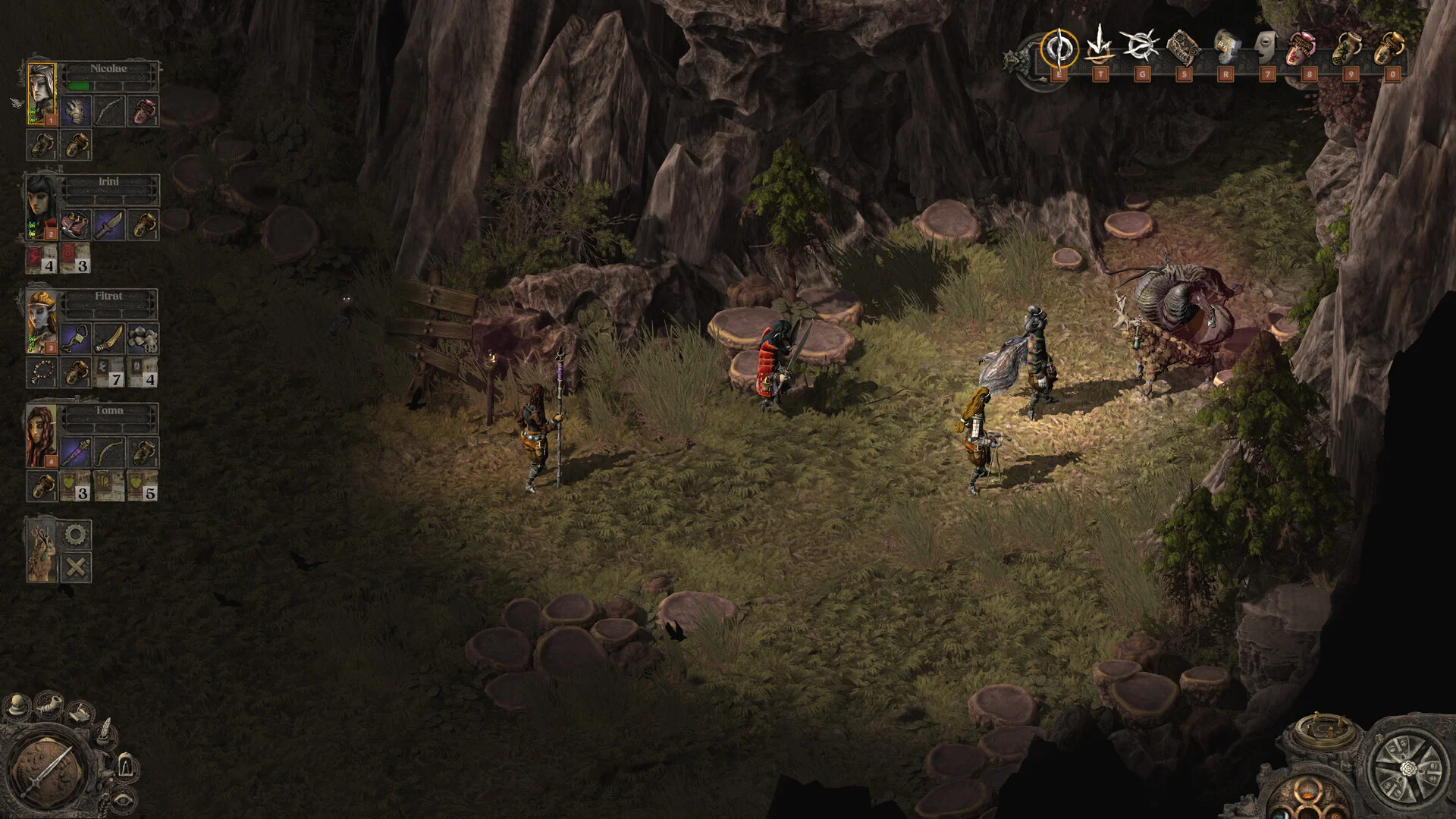
Exploration has its own failures of communication. A direction pointing vaguely toward a marsh or mountainside can consume considerable searching, especially when schedules make the correct location useful only at certain hours. More damaging is a clearance task left unresolved because one minor enemy survives in an overlooked corner, without adequate feedback identifying the missing condition. Remembering a routine rewards attention because the information exists to be learned. An unexplained completion requirement offers little basis for inference. The game’s confidence in the player occasionally exceeds its care in supplying evidence.
Repeated journeys can lose their purpose, too. Disabling running in towns stretches routine healing and supply trips through large settlements such as Rozafir. Distance initially establishes vulnerability and gives encounters weight; later, the same route may require time without revealing anything further. Admiring the island’s slow accumulation of familiarity leaves ample room to question these delays. Its strongest demands change what the player understands or how the party prepares. Some stretches of walking merely postpone the next useful decision.
Yet the routes themselves gradually change because many defeated enemies do not return. The party’s work makes previously dangerous ground safer, allowing a journey once organized around survival to become routine. A later walk through Invimona carries the memory of what used to make it difficult, even as the need to pay such close attention begins to fade.
The Review
Banquet for Fools
Banquet for Fools gives its invented culture substance through the work of inhabiting it: carrying offerings, learning routines, and preparing for journeys. Its tactile world and unusual mixture of RPG traditions make that education rewarding. Unreliable companions, obscure completion conditions, and overstretched return trips sometimes undermine the attention it asks for. Even so, Invimona earns a distinctive familiarity through customs and routes the player gradually comes to understand.
PROS
- Religious customs meaningfully integrated into play.
- Exploration builds practical knowledge of local life.
- Physical combat rewards improvised cooperation.
- Tactile visuals and an evocative musical palette.
CONS
- Companion AI can disregard instructions.
- Vague guidance and unclear quest completion feedback.
- Slow town traversal stretches routine errands.
- Dense presentation can obscure text and objects.