























Learning to air-dash makes the gap beside Queen’s Domain’s first save point suddenly worth revisiting. Across it waits a piece of cooked meat that permanently increases your maximum health. It’s a small reward, placed somewhere you could encounter before having the means to reach it, and finding it gives returning a particular pleasure. You remembered a possibility, acquired a skill, and came back. Freshly Baked Games builds much of its first-person action RPG around that satisfaction, gradually giving you reasons to reconsider places you thought you understood.
The Holy Sword Endu supplies the dash, with additional Wind Gems increasing the number you can chain together. Distant ledges start to look inviting. Broken stretches of masonry suggest routes. Because the ability remains available with another weapon equipped, that freedom becomes part of how you inhabit the island rather than something you keep retrieving from an inventory.
There’s excitement in the movement itself, particularly when a crossing stretches your judgment of distance, but the lasting effect is anticipation. Walking through familiar ground, you begin noticing places to return to before you know how you’ll reach them.
That growing confidence sits against an appropriately miserable arrival. Prince Beruim comes to the Isle of Neasied seeking his father, whose expedition disappeared while confronting the awakening Queen Siraatsu. A shipwreck leaves him poorly equipped, and a soldier’s gift of a rusty sword offers little reassurance against the local wildlife.
Returning to find that soldier and another injured man dead gives the opening’s vulnerability a human scale. The scattered dialogue, notes, and inscriptions keep the expedition’s failure present without crowding out the player’s own discoveries. The search for the king provides direction; finding a foothold on the island supplies the immediate emotional stakes.
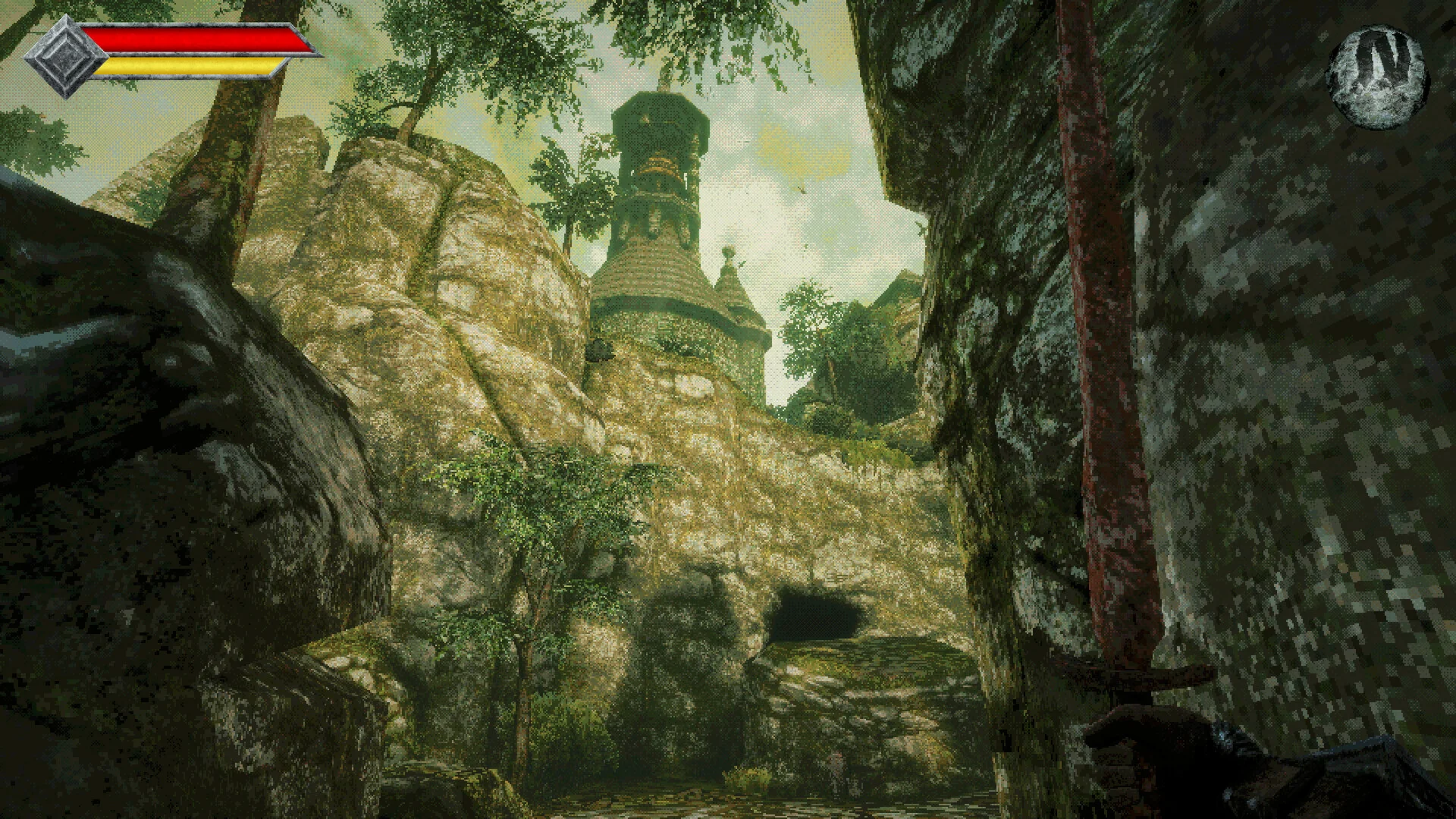
Neasied rewards the attention that foothold requires. Coastal paths connect ruined structures, underground passages deepen apparently modest locations, and shortcuts bring distant excursions back into recognizable territory. With a compass and no map, those connections must settle into your memory. That can feel wonderfully personal: recognizing a structure means knowing something useful about where you are.
It can also mean wandering while trying to recover a route. The dithered textures and low-poly scenery help give places a recognizable character, with sunlit vegetation and crumbling stone offering some relief from the crypts below. The island remains inviting enough to inspect after it has become dangerous to cross.
Combat makes sure that invitation retains some tension. Running drains the stamina that determines attack strength, so hurrying toward a creature can leave you delivering a feeble opening blow. Waiting for the meter to recover produces a slower exchange of approach, commitment, and retreat.
A charged attack feels satisfying partly because preparing it leaves time to worry about missing. When it fails to connect, the lost opportunity is painfully clear. Early fights against small, ratlike insects can feel almost embarrassing, yet their ability to hurt you teaches caution before the opposition becomes imposing enough to seem deserving of it.
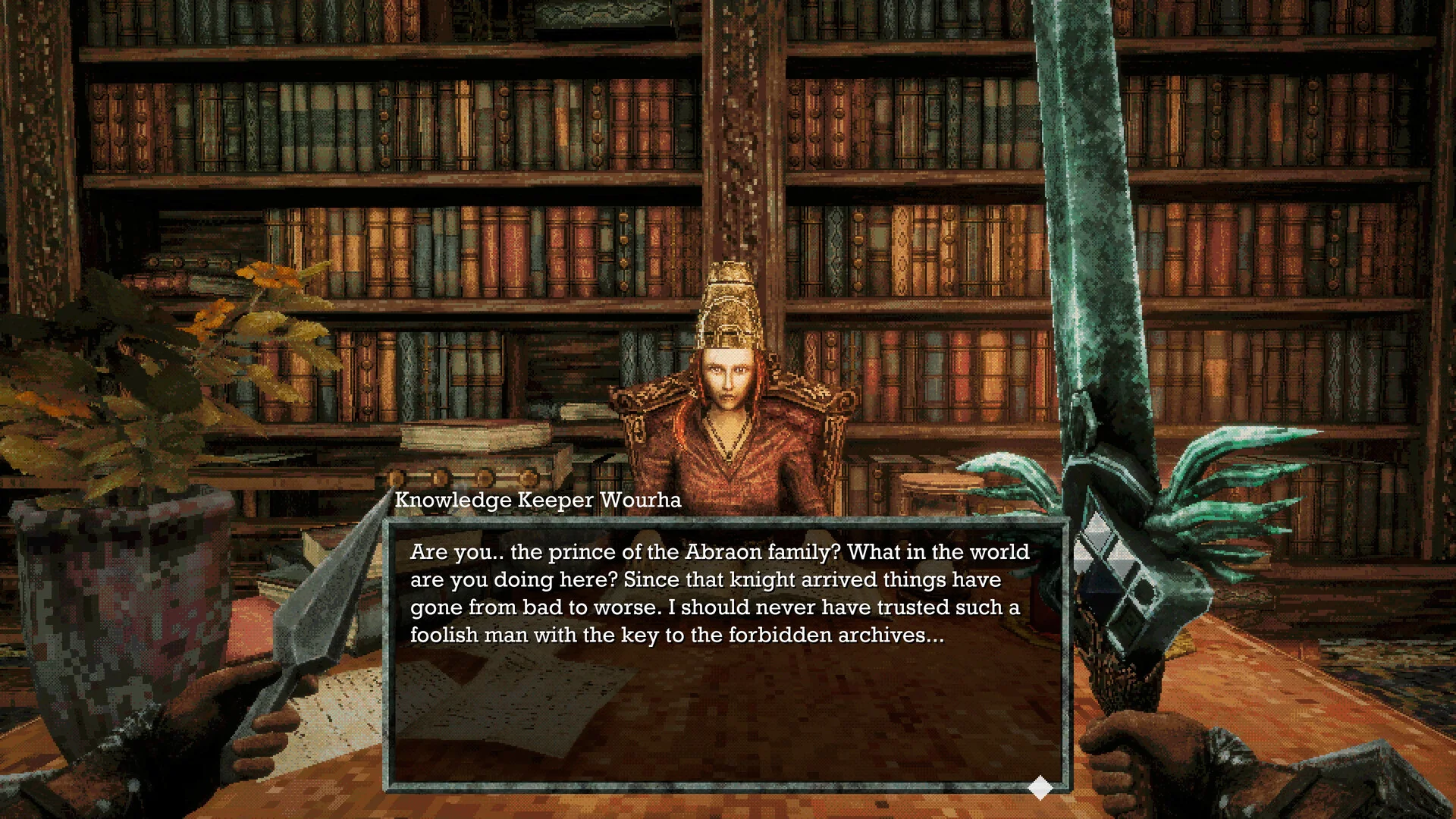
Familiarity makes those exchanges less timid. Skeletons that shrug off slashing attacks give you a reason to carry something blunt, while the three melee and three secondary equipment slots leave room to respond. Recharging throwing weapons provide something useful to do while creating distance, though their damage also depends on current stamina.
Endu’s dash lets you escape an attacker’s reach without granting invulnerability, so movement still asks for judgment. Confidence comes through learning how to handle the creature in front of you, and the equipment that once felt inadequate starts to acquire familiar uses.
Returning safely matters because saving is manual at monuments. Push too far without recording progress and a death can erase discoveries alongside the time spent reaching them. Resting restores you while repopulating enemies, giving the route back its own demands.
Weapon growth through use helps make those repeated fights productive, but it doesn’t remove the disappointment of losing a worthwhile excursion. The pressure works best when you can recognize the risk you accepted. Having found an item or opened a path, deciding to continue becomes a small argument between curiosity and the wish to keep what you’ve earned.
Some enemies undermine that pressure through their own limitations. A boss in the Tower of Knowledge can expose an arm through a closed doorway and accept damage while unable to reach the player. Other opponents struggle to answer attacks from inaccessible positions.
There can be a guilty pleasure in exploiting these situations, but they weaken the sense of surviving through hard-won familiarity. Reaching an awkward ledge with a reward placed on it makes the island feel generous toward experimentation. Reducing a trapped boss to an exposed target leaves an encounter feeling strangely vacant.
The equipment is much better at rewarding experimentation. A cestus uppercut adds height that can be combined with the air dash, giving an apparently combat-focused purchase a second life in exploration. The magical torch used to light three gargoyle statues also functions as a weapon; reaching the third statue requires applying your growing mobility to the surrounding geography.
These discoveries make possessions worth revisiting, too. Weapons improve with use, and some rusty ones transform. A skeleton pointing toward a concealed passage encourages the same attentive habit outside the inventory. Looking closely keeps producing things to try.
That pleasure becomes less reliable when the game asks you to notice objects that barely separate from their surroundings. Brown herbs can disappear into muddy ground textures, turning a useful reward into something easily walked past. There’s little satisfaction in searching a floor because the pickup is difficult to see.
Later searches for collectibles tied to the true ending can stretch patience further, with weaker guidance than the earlier discoveries provide. Returning through repopulated areas adds danger to the uncertainty. Seeking help may get that search moving again, but it changes the experience: you’re following someone else’s directions through a place that had encouraged you to form your own.
The Review
Queen's Domain
Queen’s Domain makes an unfamiliar island feel like somewhere you’ve earned the right to know. Endu’s air dash turns remembered gaps into invitations, while versatile equipment gives curiosity practical rewards. Learning the combat’s patient rhythm brings welcome confidence, though exploitable enemies sometimes puncture the danger. Hard-to-see pickups and obscure late-game searches can wear down that affection. For players happy to learn a place through observation and experimentation, its discoveries make the effort worthwhile.
PROS
- Air dashes make familiar locations exciting to revisit.
- Connected geography rewards memory and observation.
- Equipment encourages experimentation beyond combat.
- Patient fighting creates a satisfying growth in confidence.
CONS
- Exploitable enemies weaken encounter tension.
- Pickups blend into ground textures.
- Obscure late-game collectibles prolong searching.